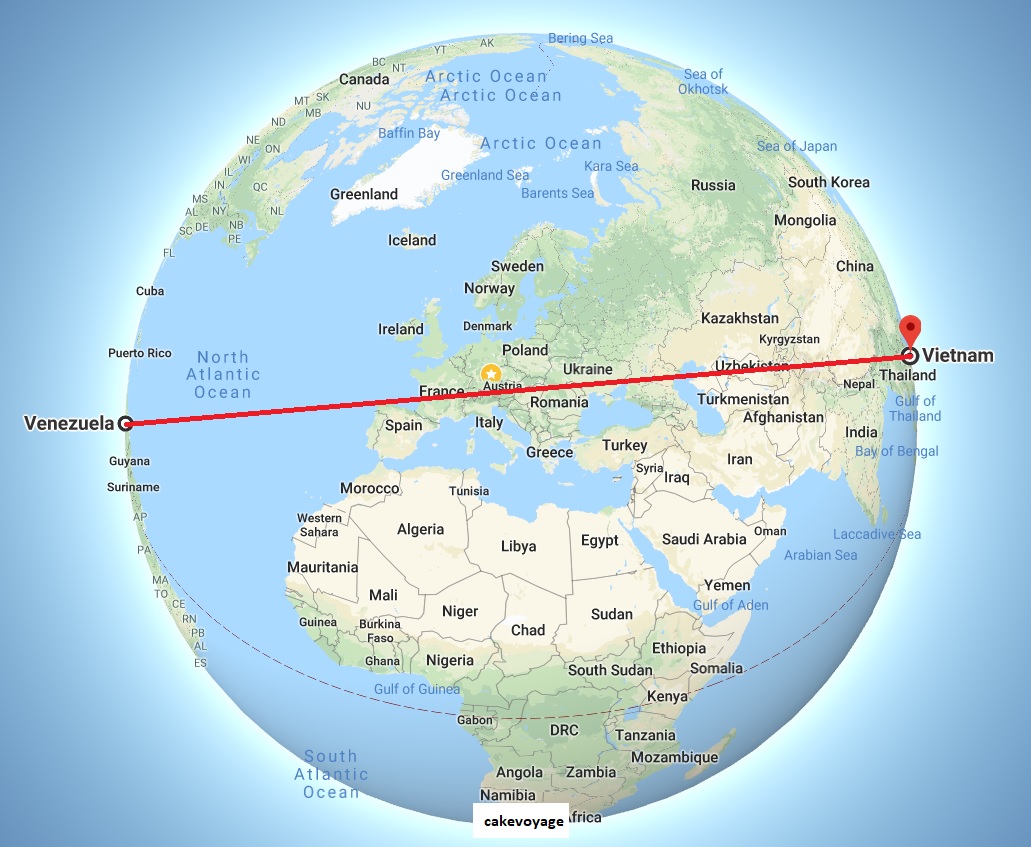

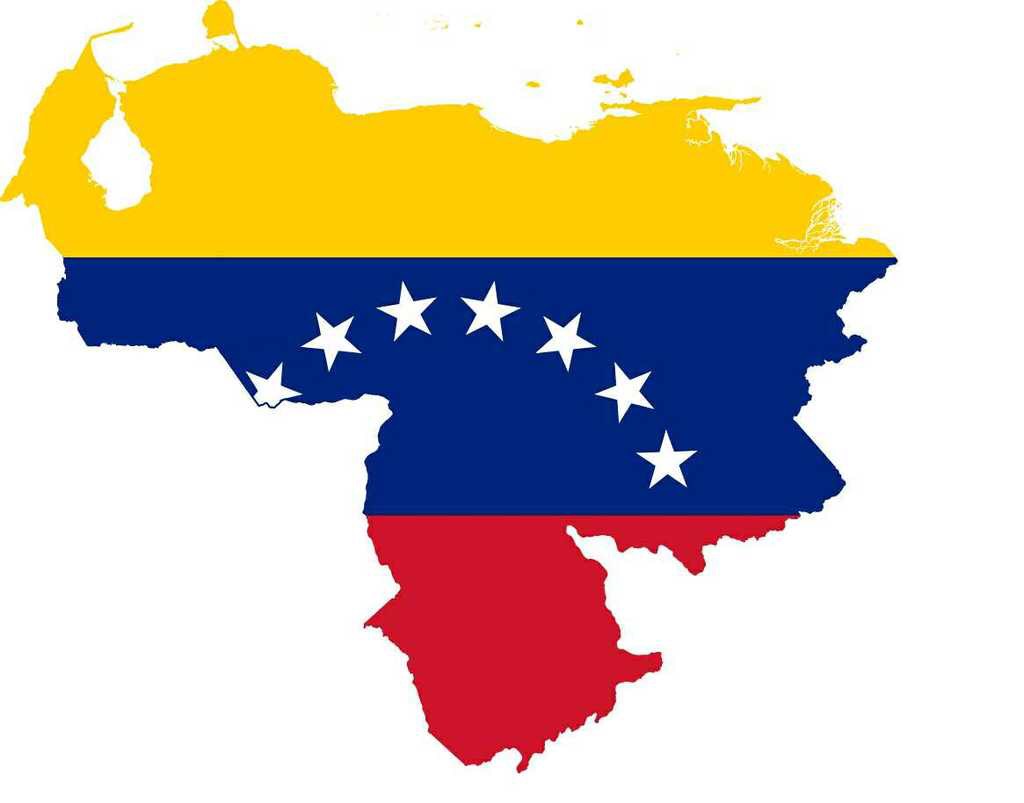
Venezuela is a country in South America. In recent months, it has made more and more news in the world because of the political upheavals that are taking place. But why did it come to them? Many hear Venezuela immediately remember that this is Uvo Chavez’s side. At the end of the 20th century, he was elected president because of “21st Century Socialism.” His ideas are to reshape the country through the redistribution of wealth and comprehensive social programs financed by oil revenues. His political vision is in contrast to the actions of many of the parties that governed him. That is why it has become extremely popular with the population and, until its death in 2013, achieved several electoral victories. On the international political scene, however, Chavez has been sharply criticized for his authoritarian style of government, for the media’s statehood, and for his reckless economic policies. What begins during his reign is deepened under Nicholas Maduro, who was elected president in 2013 in contested elections. Under Maduro, Venezuela has increasingly focused on a dictatorship, accompanied by a systematic suppression of the free press and a dramatic decline in the economy. Already in 2017, amid several months of bloody protests with more than 100 casualties, Maduro took away the powers of parliament, in which the opposition has a majority since late 2015. For its part, the parliament, which considers itself the only democratically-legitimate representation of Venezuelan citizens, is voting on a project to form a provisional government and hold new free elections. Parliament Speaker Juan Guido has announced to thousands of protesters the country’s interim president. The United States and many Latin American countries immediately confirmed their support for it. However, observers are not convinced that he will actually take over the country, as opposition parties are divided and the army apparently continues to support Maduro.
Venezuela has the largest oil reserves in the world. However, in recent years the country has been made less and less oil. Crude oil production, which brings 95% of all foreign exchange earnings to the country, declines from 3.5 million to 1 million barrels per day. Refineries produce less and less gasoline. According to observers, the reason for all this is the corruption and mismanagement of the state oil monopoly PDVSA. In 2013, when Maduro assumed power, the price of crude oil fell to a historic low. When Chavez came to power, the share of oil exports was about 70% of the country’s total exports. In 2013, it reached 98%. That is, Venezuela produces almost nothing else. Critics see the cause of this development in excessive government intervention in the economy. High prices are forcing many businesses to cease operations. Mining, industry as well as agriculture are collapsing. In 2018, the economy contracted by almost 20 percent. Local currency inflation reaches 1 million percent! The IMF estimates inflation for 2019 at 10 million percent. Despite the introduction of state-owned cryptocurrency, the so-called A ‘petro’ whose purpose is to stabilize the economy, this is not happening so far.
As a result of the economic crisis, most Venezuelans live in poverty. Many of them are starving. But even those who still have a job are barely surviving. With the new monthly minimum wage of € 5.90, they can only afford some basic products. And if they find them on the market, because the state almost does not import food and goods for daily use, let alone produce them. Millions of Venezuelans are sick today – as a result of years of malnutrition or diseases that have returned to the country, such as malaria and tuberculosis. Since 2011, infant mortality has almost doubled. It is difficult in less than 20 years to make one of the number 1 countries on your continent such a wreck, but as you can see it is not impossible. 🙁
But that’s enough for politics and economics. I am not some analyst from an overview political show. First of all, Venezuela is a real equatorial jungle that offers so many captivating views as if the nature of the place “deliberately enhances” the colors and contrasts. It is as if you go there to see, feel and feel the greatness of Mother Nature, to get to know her as she was created millions of years ago and in her true self. In Venezuela you can see black caimans, anacondas, capybaras, piranhas, tapirs, ants, octopuses, cougars, armadillos – a true animal paradise. In the southern part of the country lies the Guiana Mountain Land, which is among the wildest places on the planet. This territory has been preserved intact for millennia, and the only people who live there are Indians whose lives are much like those of their ancestors from the distant past. The highest waterfall in the world – Angel (1054 m) is located in the Guiana Mountain Land.
Although food is currently not available in Venezuela, I will try to describe the traditional flavors in the country’s cuisine. The locals do not sit down for breakfast without arepas. Corn tortillas are also an appetizer they order at restaurants, topped with fried bananas. Green bananas are used to withstand heat treatment. Because the texture of banana is fleshy, it like bread when breaded. The seafood delicacies are also an integral part of the Venezuelan menu. The sweet-salty combinations are of favorite flavors, such as cachapa – small, sweet, thick corn pancakes with white queso de mano cheese which resemble Bulgarian taste but has the texture of mozzarella Pour over the pancakes with melted sugar. Frijoles (black beans) is the traditional side dish for Pabellón criollо – a dish with torn veal stewed with onions and garlic. All this is poured with tomato juice and left to boil. It is traditionally served with fried bananas. Rice can be added to all this culinary abundance. This dish is considered national and is something like an emblem for local cuisine. For breakfast between meals, tequenos (a traditional recipe for the city of Los teques) are often made – funnel from dough filled with soft cheese that, when fried, melt in your mouth, literally.
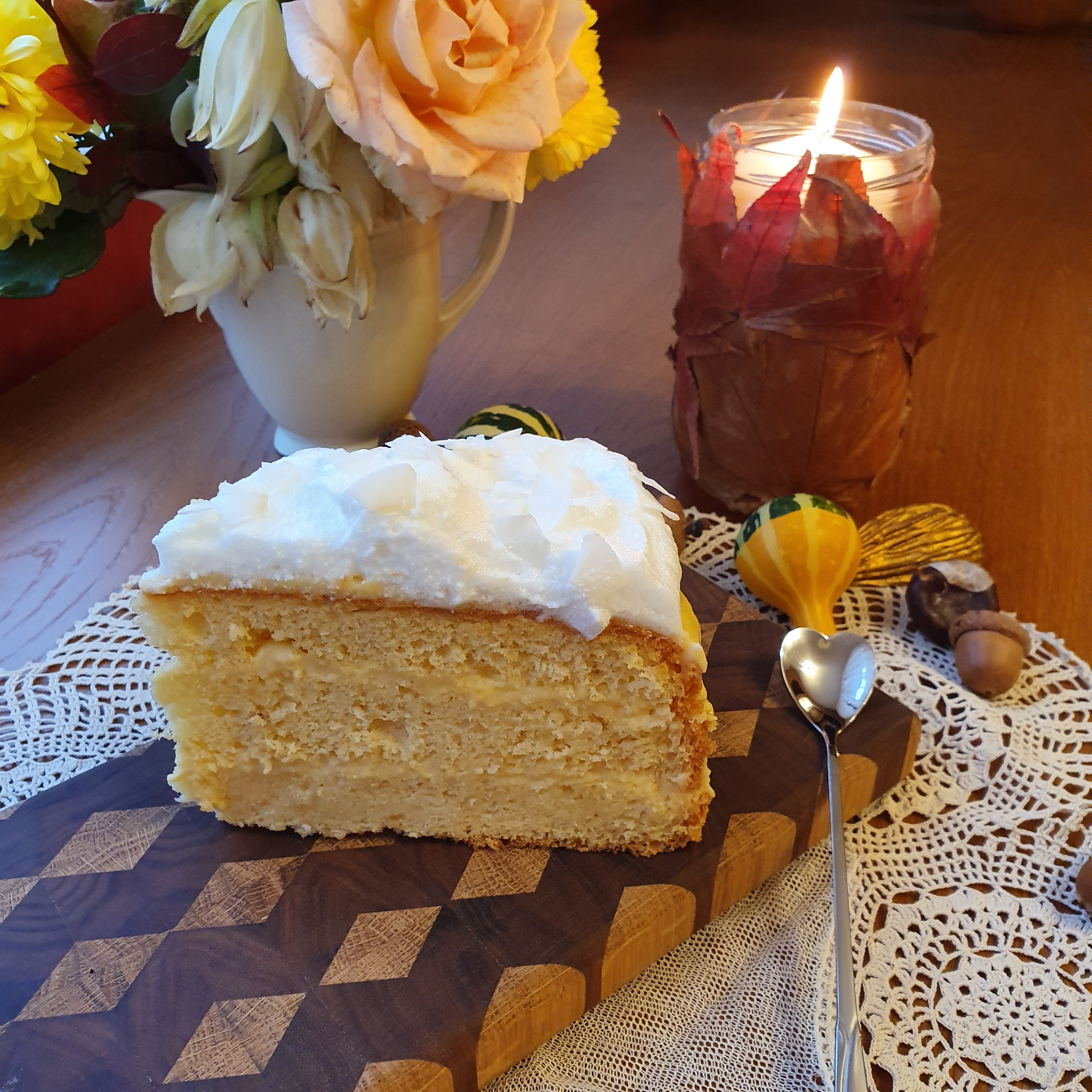
The approaching Christmas and New Year holidays are accompanied by a delicious pan de jamon bread rolled up on a roll filled with ham and raisins. And as for cakes – the traditional cake is torta tres leches – a cake with three milks. I have already prepared it for you in Albania. That’s why it’s drop out. Another commonly made cake in Venezuela is quesillo. I didn’t, because it looks like caramel cream in a pan. 🙂 I chose something else for you – Bienmesabe. Light cakes with coconut cream and meringue to finish. Here are the products you need:
For cake:
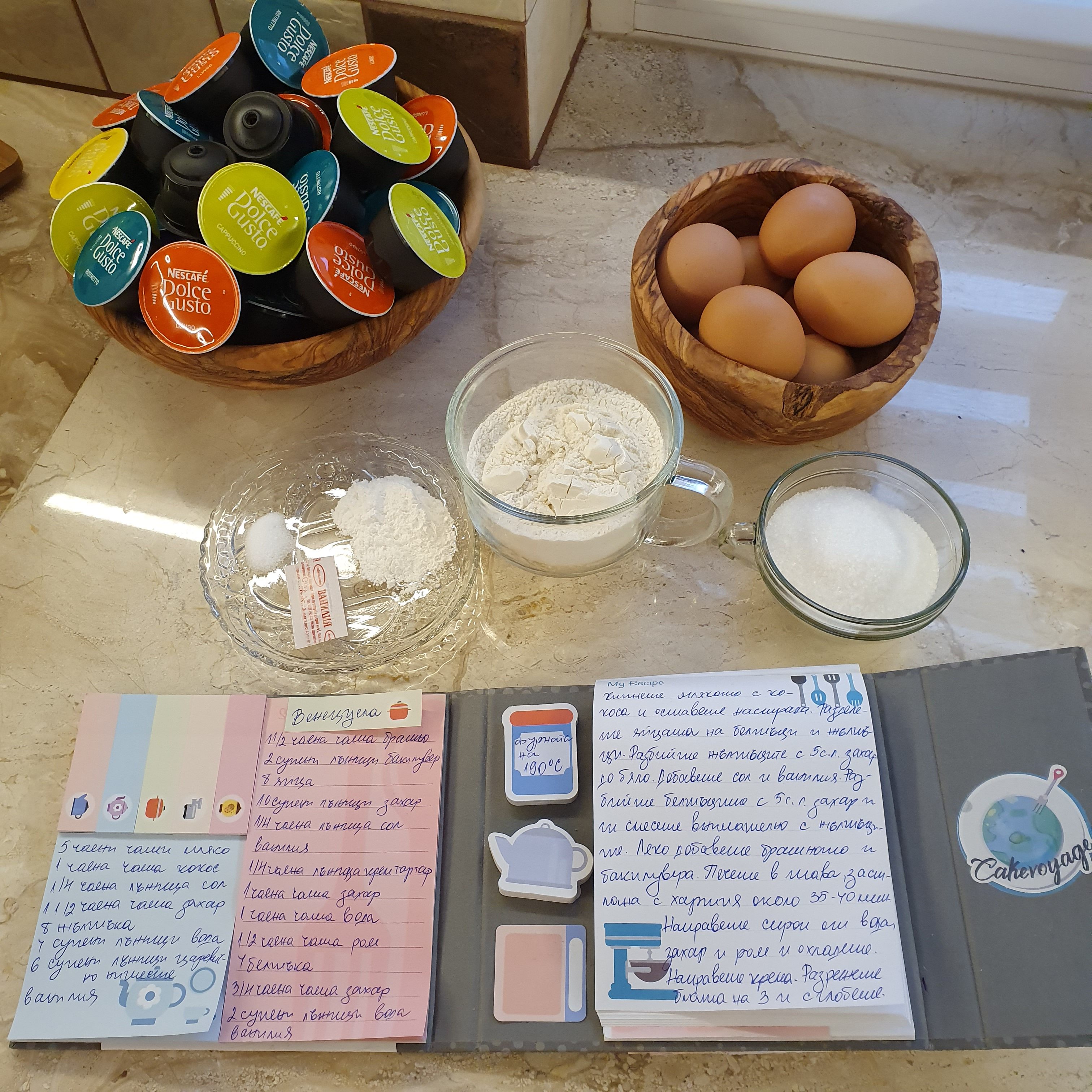
1 1/2 tea cup a cup of flour
2 tablespoons baking powder
8 large eggs
10 tablespoons sugar
1/4 teaspoon salt
vanilla
1/4 teaspoon cream tartare
For syrup:
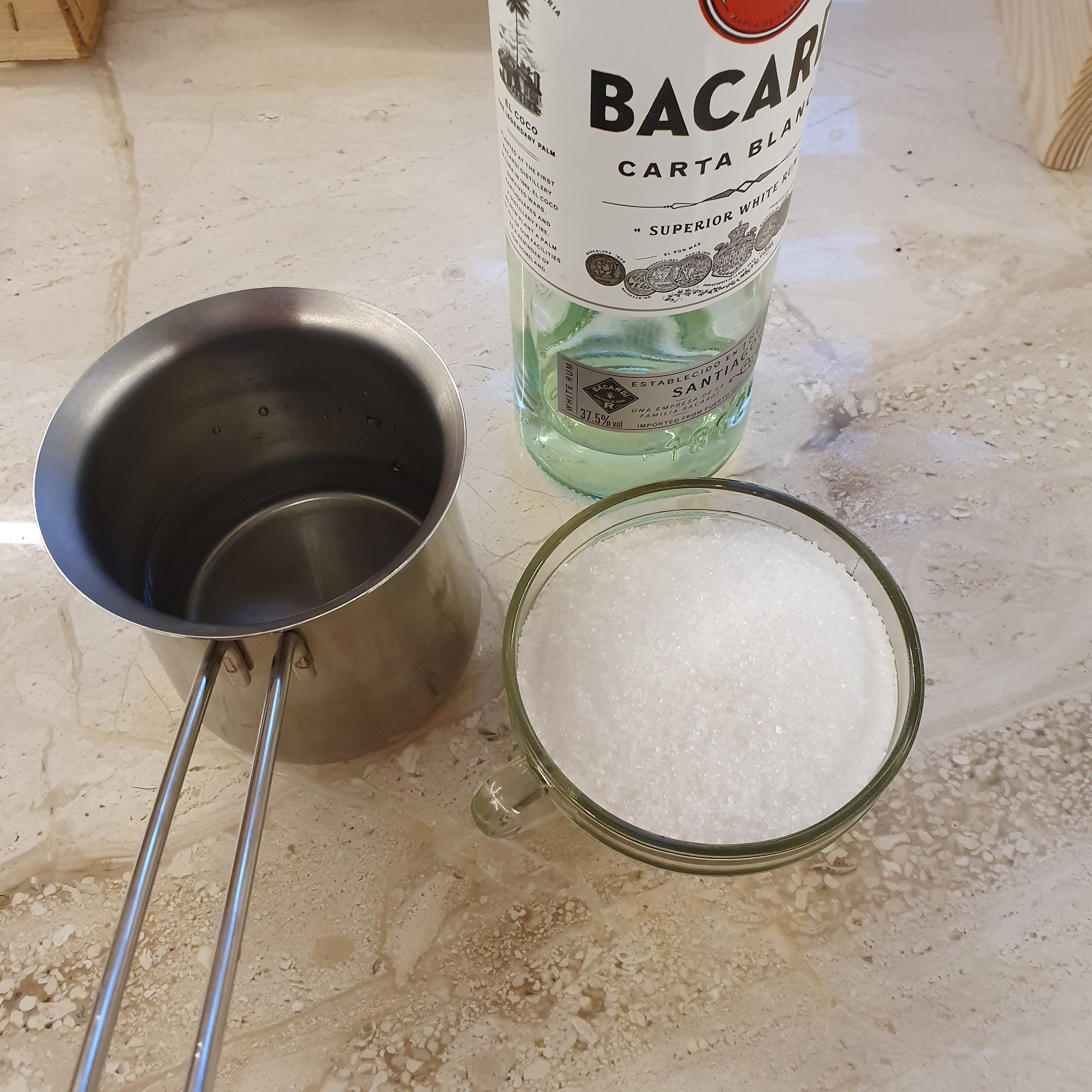
1 tea cup of water
1 tea cup sugar
1/2 tea cup of rum
For the cream:
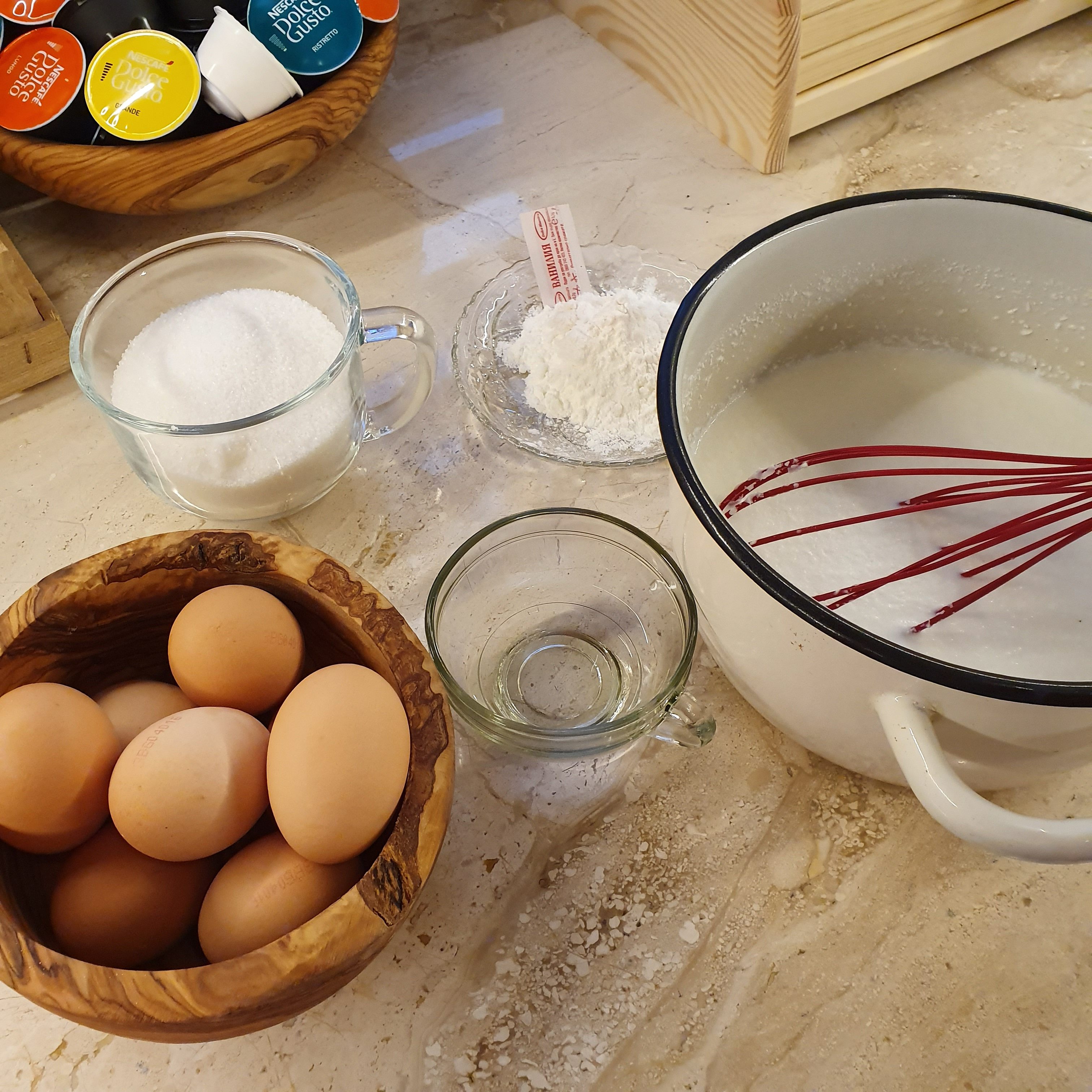
5 tea cups of fresh milk
1 tea cup of coconut
1/4 teaspoon salt
1 1/2 tea cup sugar
8 yolks
4 tablespoons water
6 tablespoons cornstarch
vanilla
For merengue:
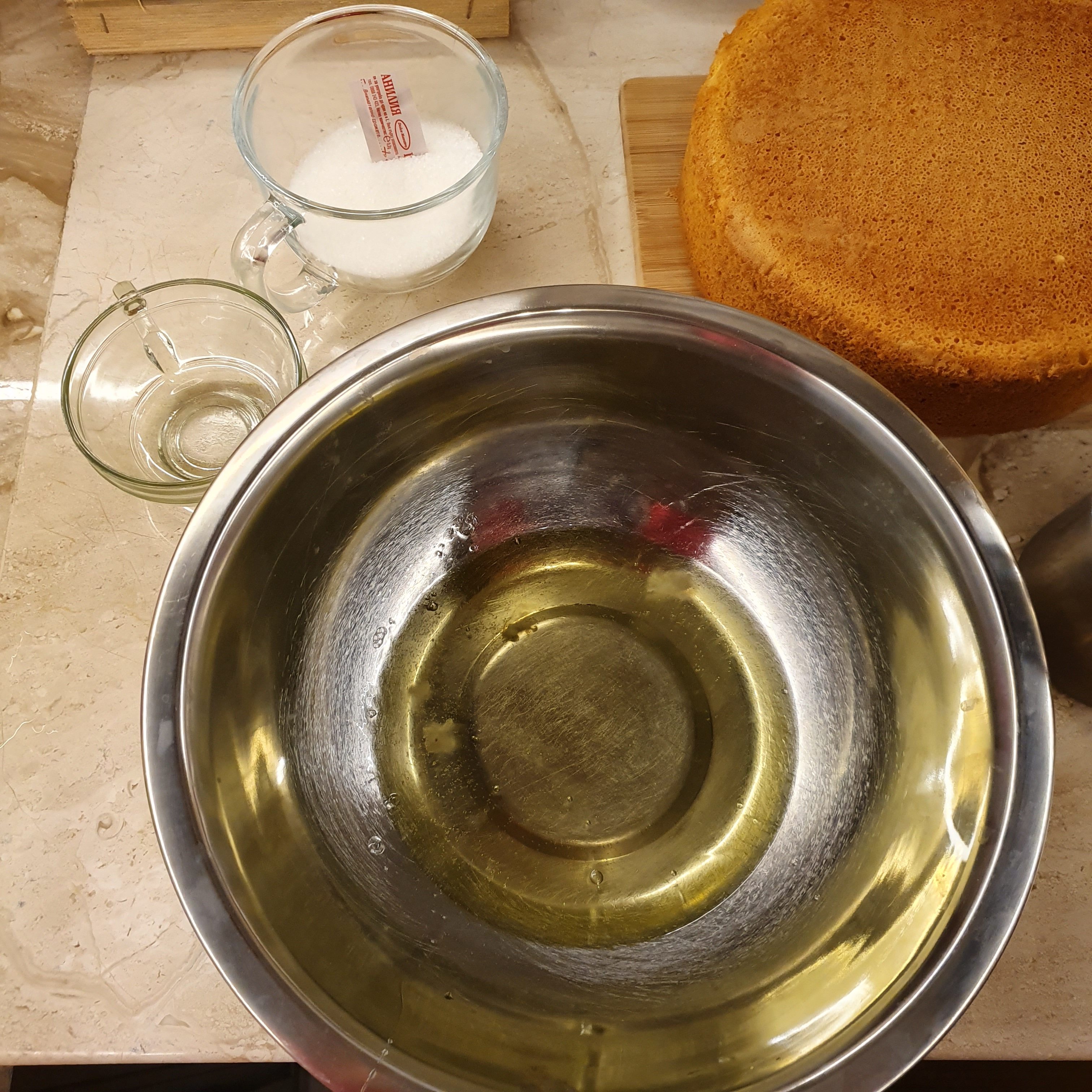
4 egg whites
3/4 tea cup sugar
2 tablespoons water
vanilla
Steps of preparation:
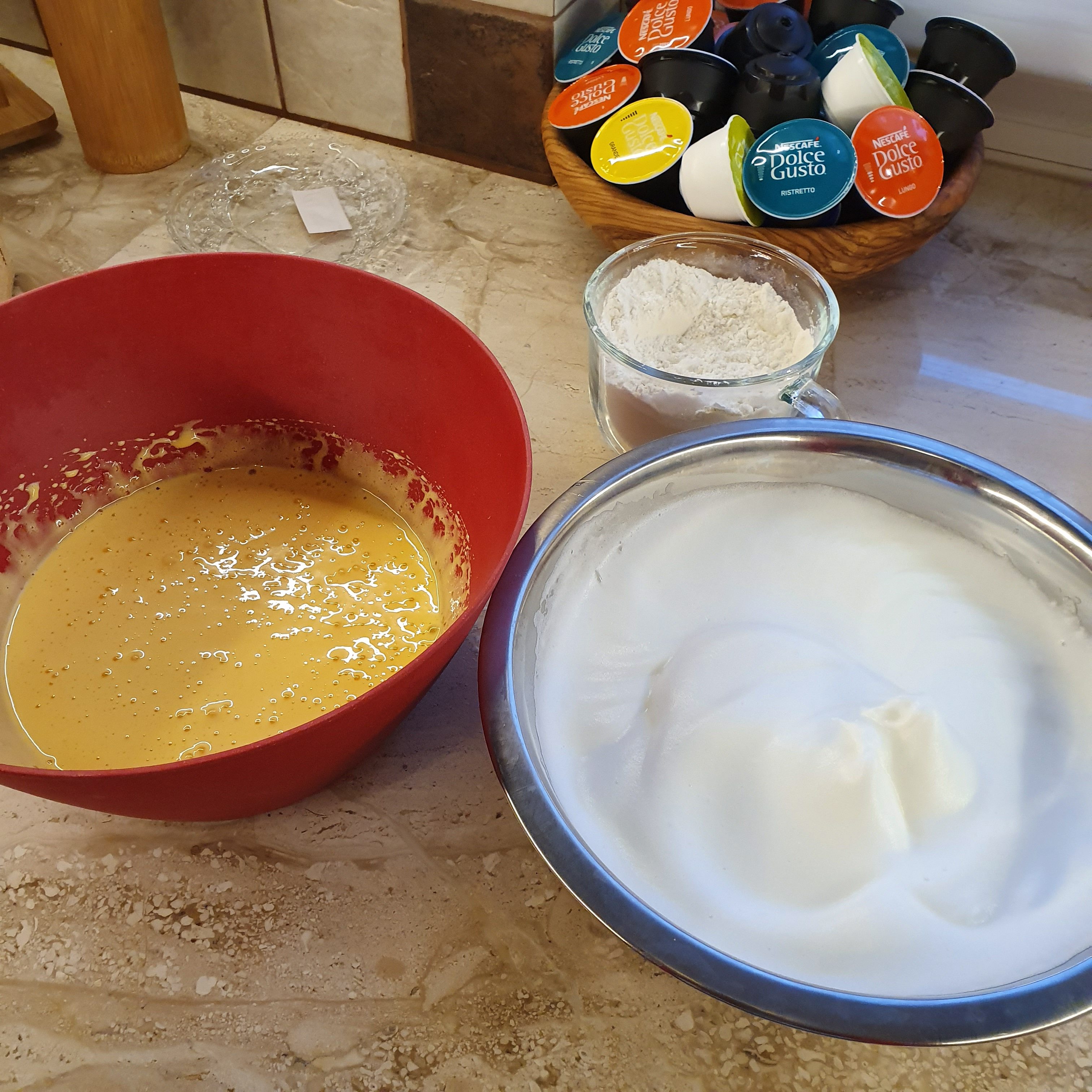
Separate the eggs yolks and whites. Beat the egg white with 5 tablespoons of sugar and salt until soft peaks. Separately beat the yolks with the remaining 5 tablespoons of sugar until whitened and doubled in volume.
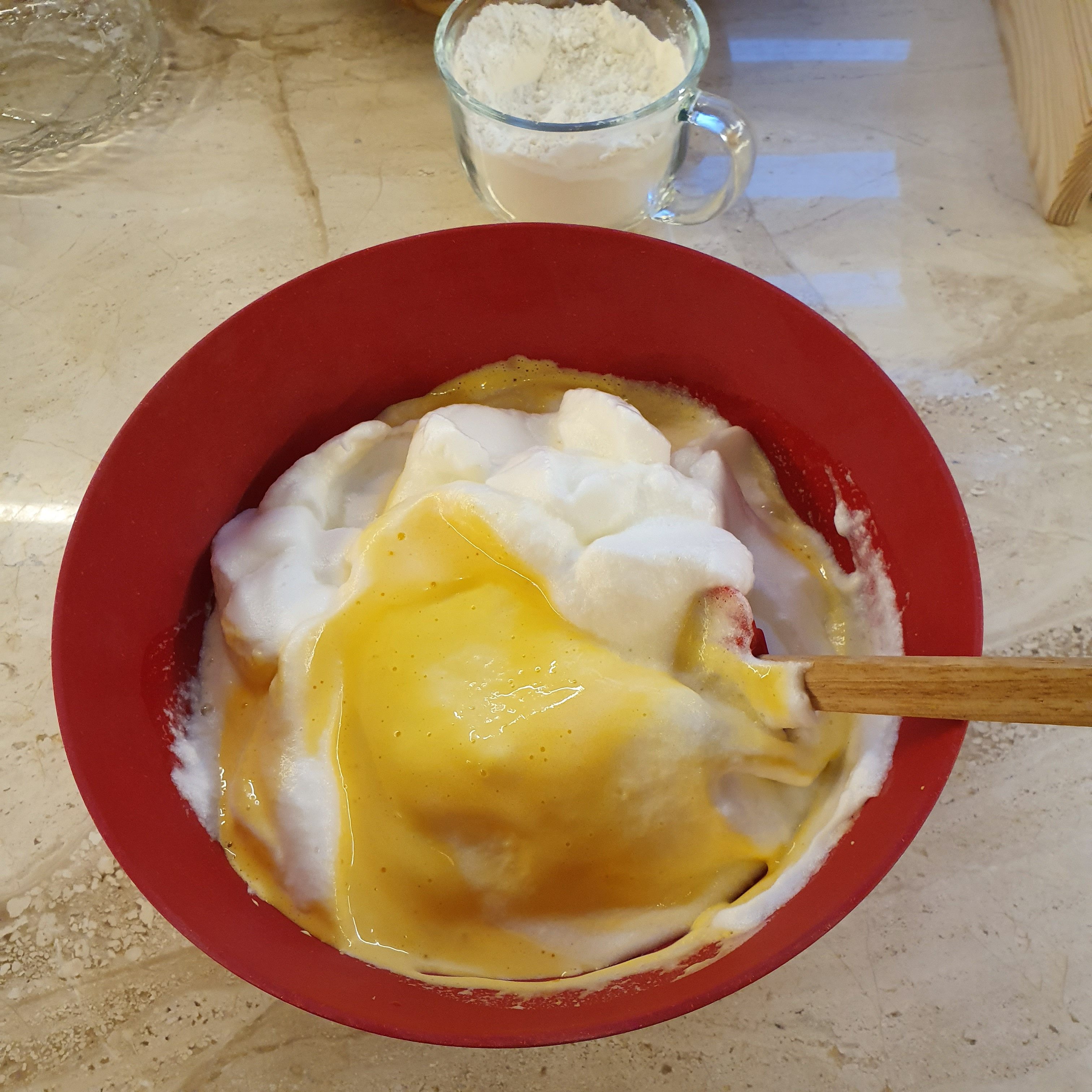
Gently mix the two mixes, add the vanilla and stir with a spatula until blended. Stir by the bottom of the bowl to bring more air into the mixture.
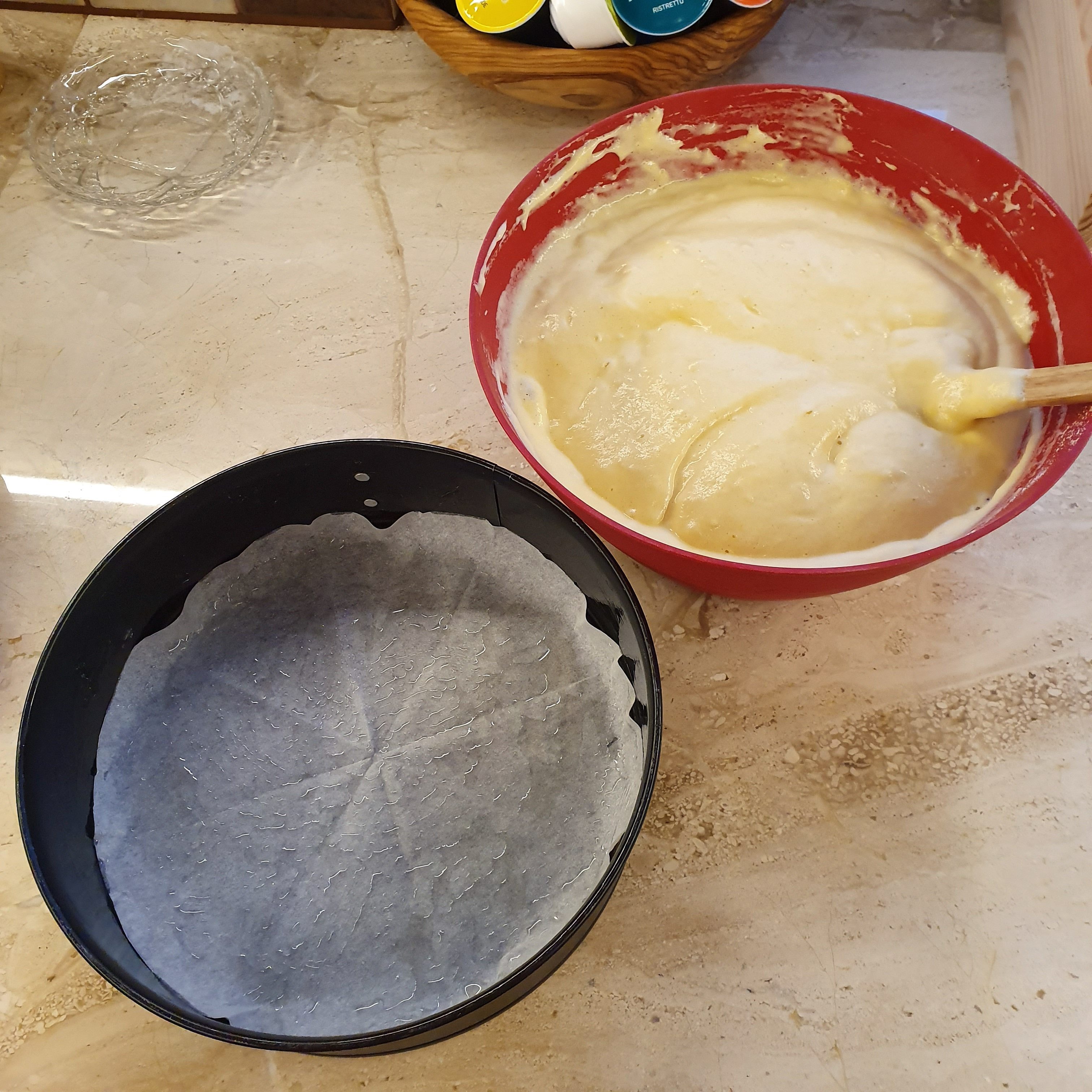
Slowly add the mixed flours and baking powder and mix lightly until homogeneous. Cover a baking tray with paper about 23 cm in diameter. Grease the paper and the walls of the form and pour the mixture.
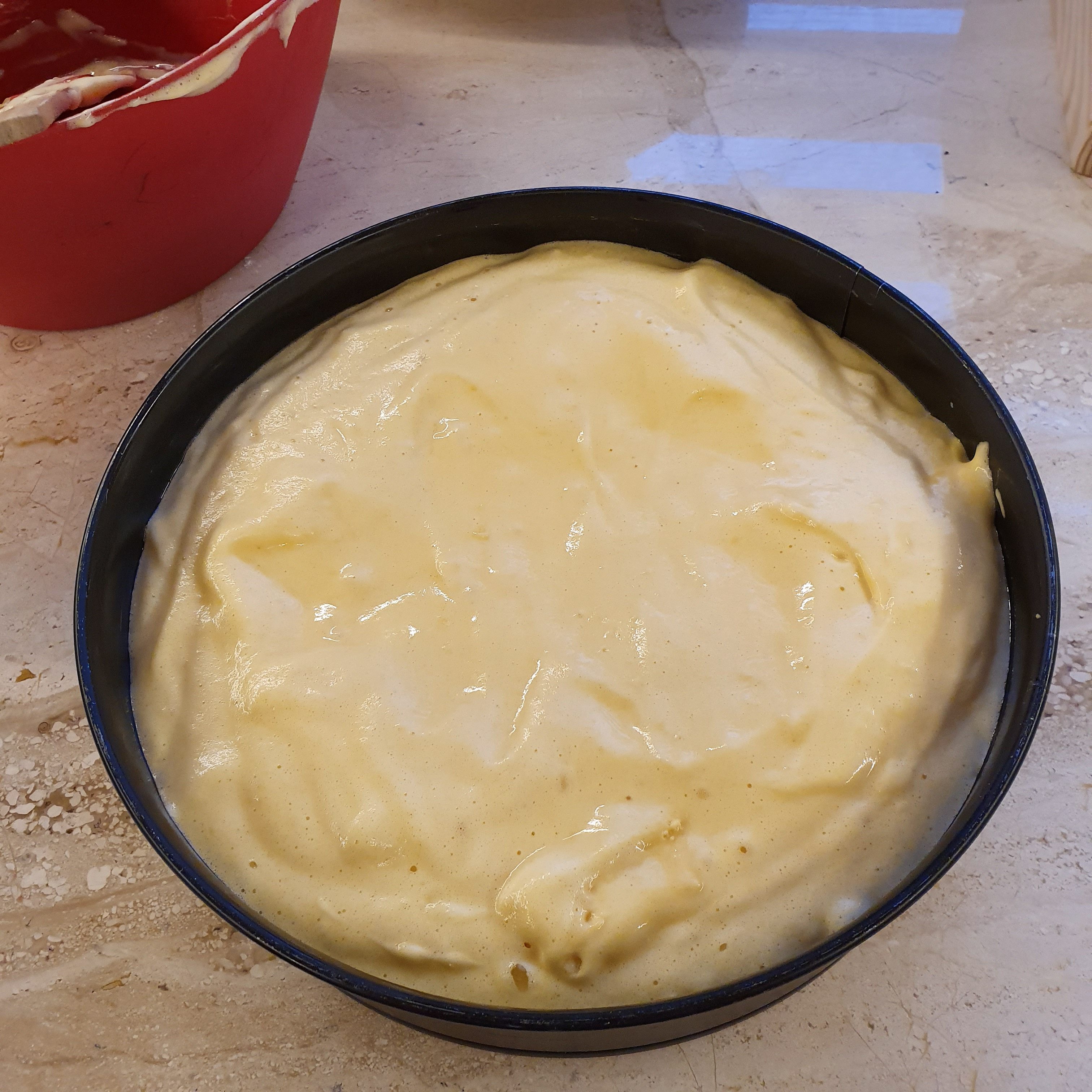
Bake for about 40 minutes in a preheated 190 degree oven. Or until a wooden skewer comes out of the cake.
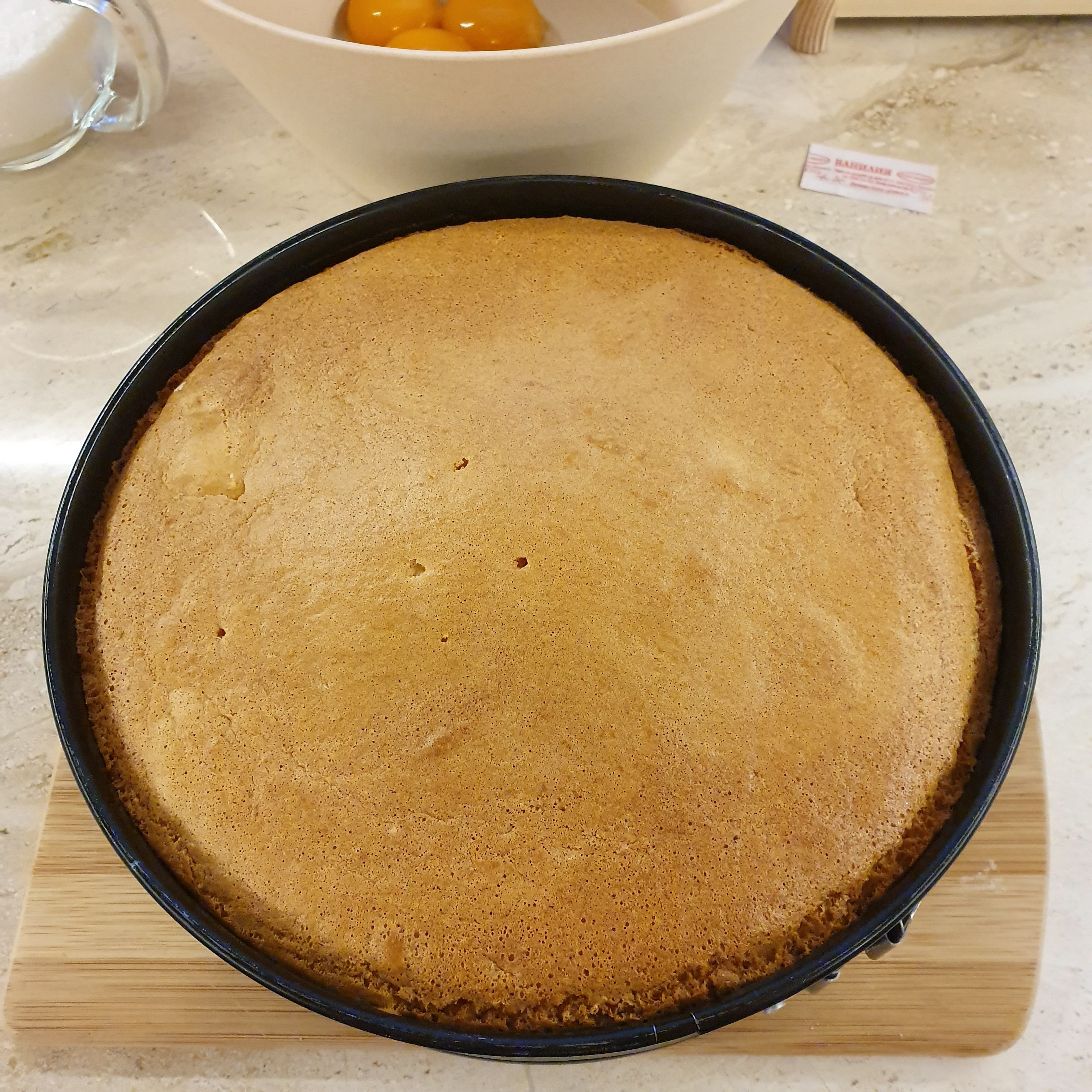
Remove the cakes from the oven. After cooling, turn it slightly upside down until it has cooled completely.
It’s time to tackle the cream. Pour the milk along with the coconut into a saucepan and bring it to a boil.
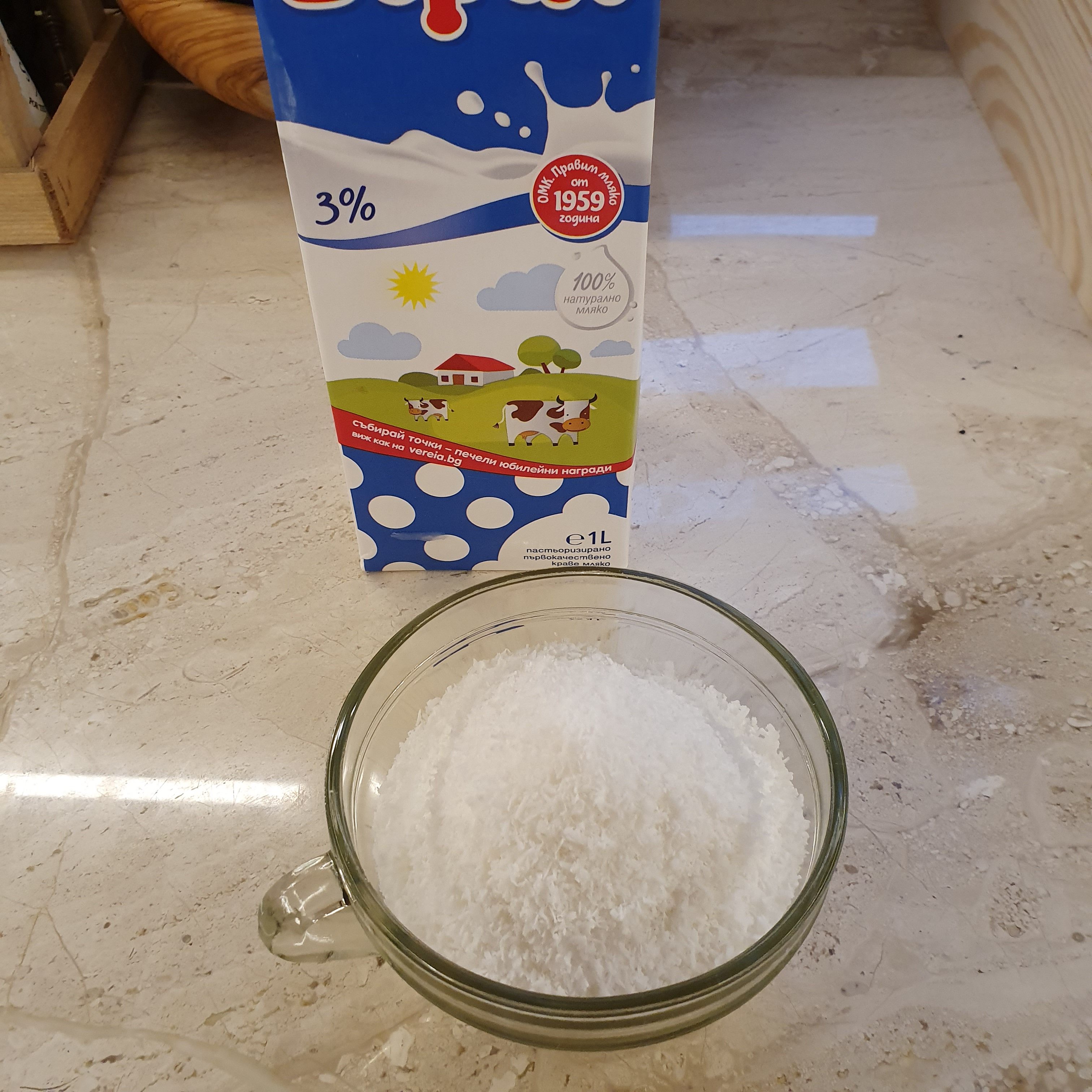
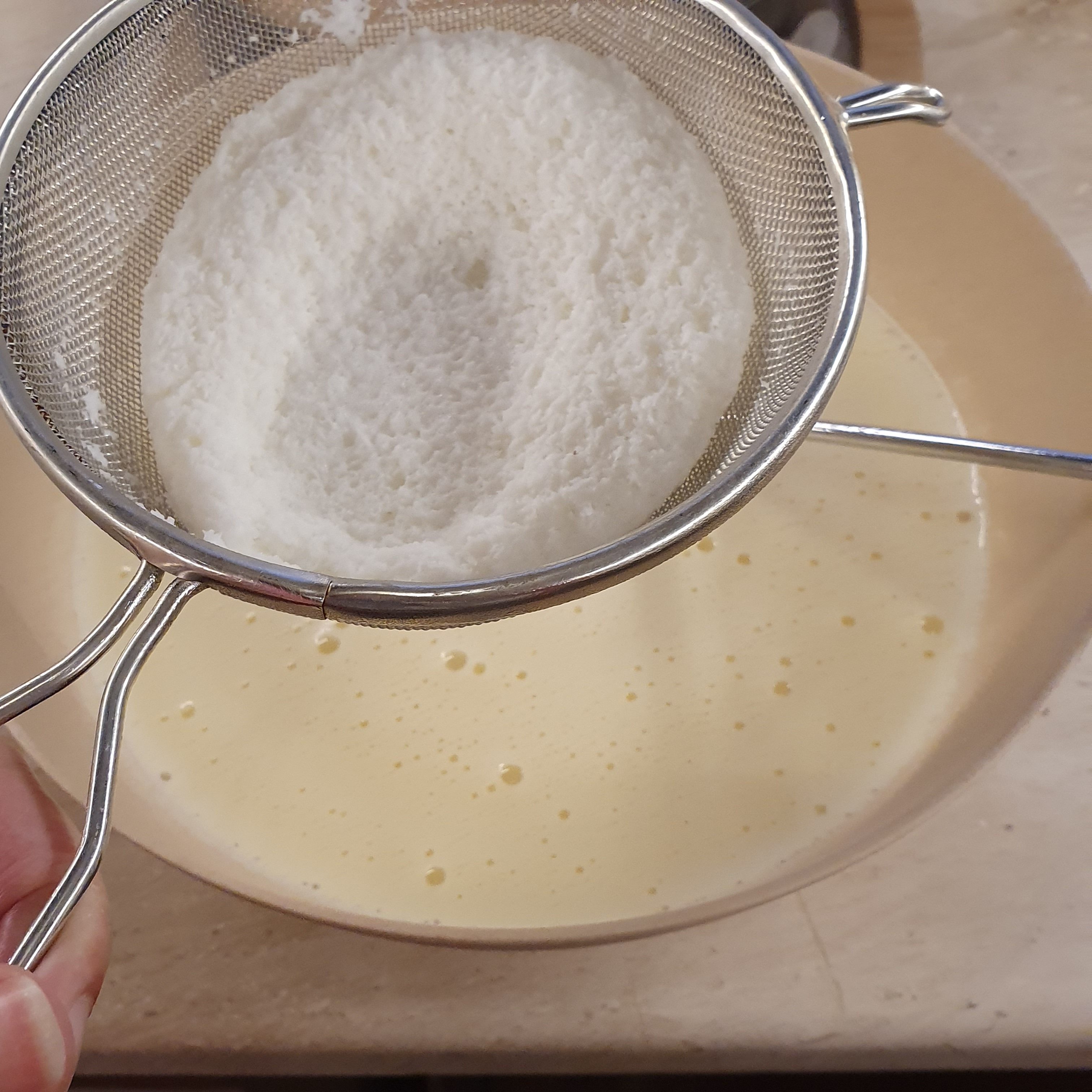
Then pull it aside to stand for a while. Beat the yolks with the sugar until white. Mix cornstarch with water until dissolved and add the liquid to the yolks. Beat well. Add the strained fresh milk to a thin stream. Add salt.
Boil to medium heat. Do not be tempted to increase the temperature because the cream will burn. Have patience and strong hands because these creams require at least half an hour of cooking and continuous stirring. Finally, when the cream is ready, add the vanilla.
Remove it from the hob and cover it with fresh storage foil to prevent it from catching the crust. Cool it completely before assembling the cake.
Let’s make the syrup now. Put the water and sugar on the stove and cook until the mixture thickens. Pull it to cool and add the rum.
We leave the meringue at the end. There are many ways to do this. I personally prefer to make it with hot sugar syrup, but this recipe described otherwise and decided to stick to it. In a water bath, whisk together the proteins, water and sugar until thick meringue. I still prefer my way. The egg white mixture has a more glossy appearance.
Now let’s assemble this deliciousness. Using a serrated knife or thread, cut the cake into three cakes. There are also special pastry utensils to help in such cases, but I do not, because there is no place left in the kitchen from my pastry stores. Place one cake on a serving platter. Using a brush, soak it with syrup without overdoing it.
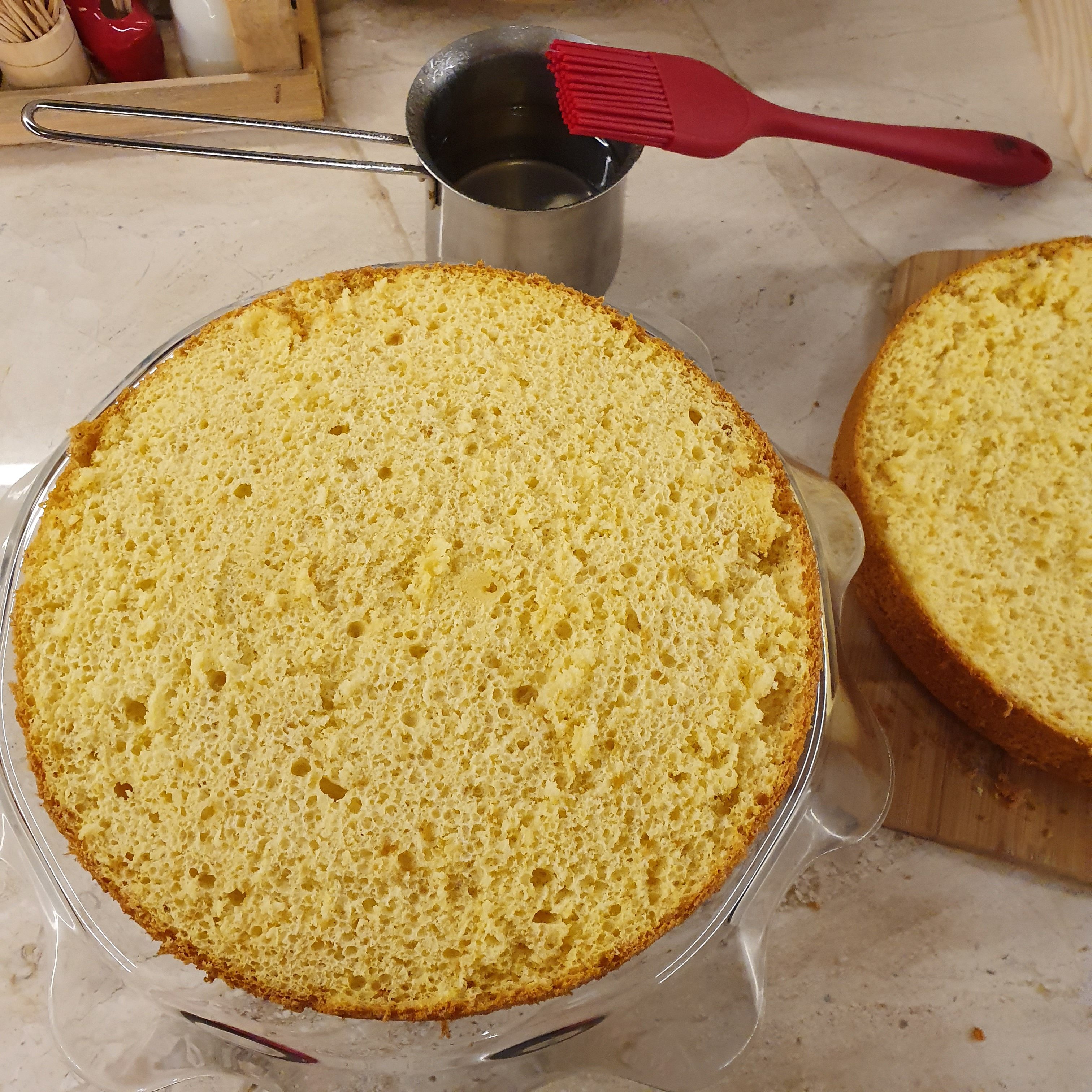
Spread 1/3 of the cream on top.
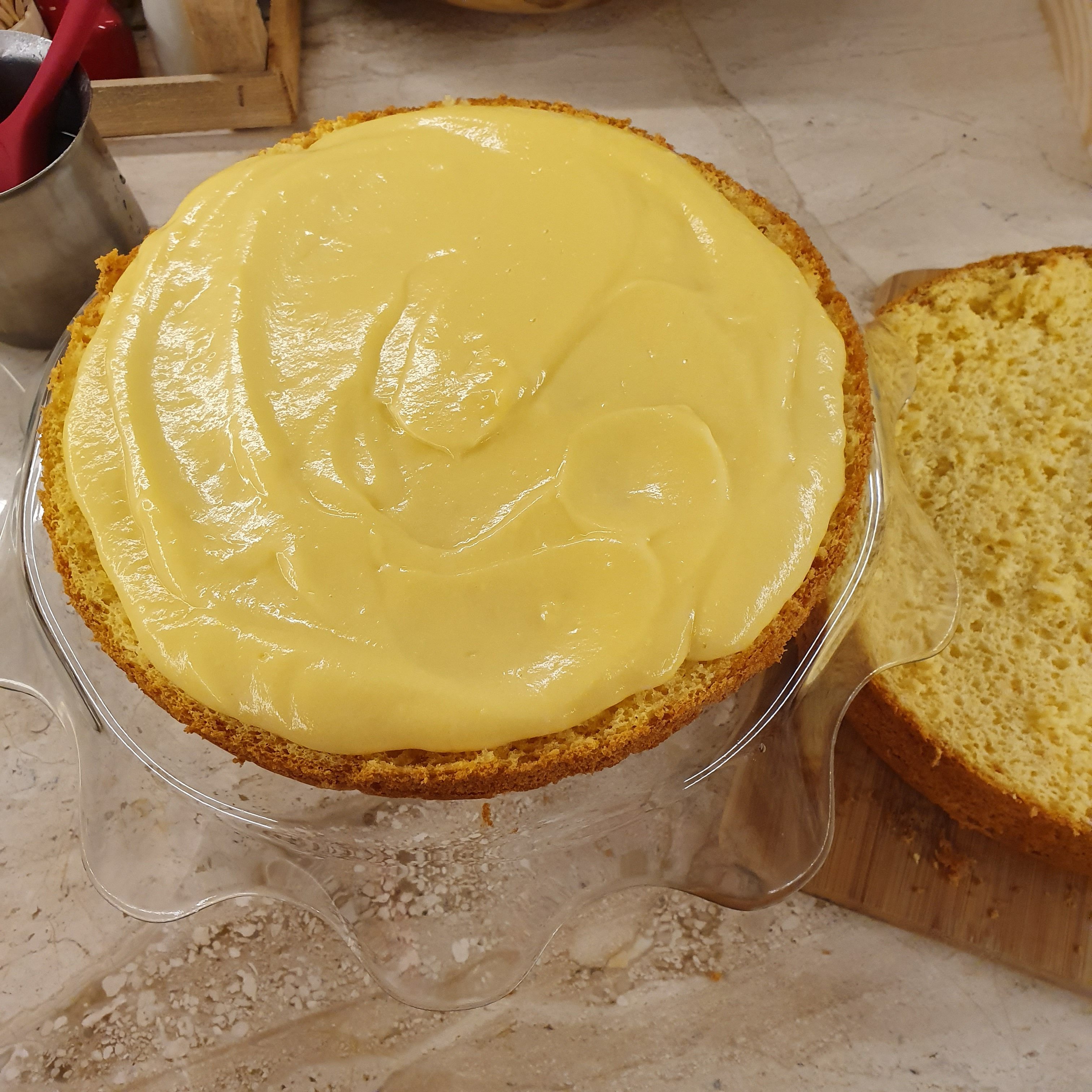
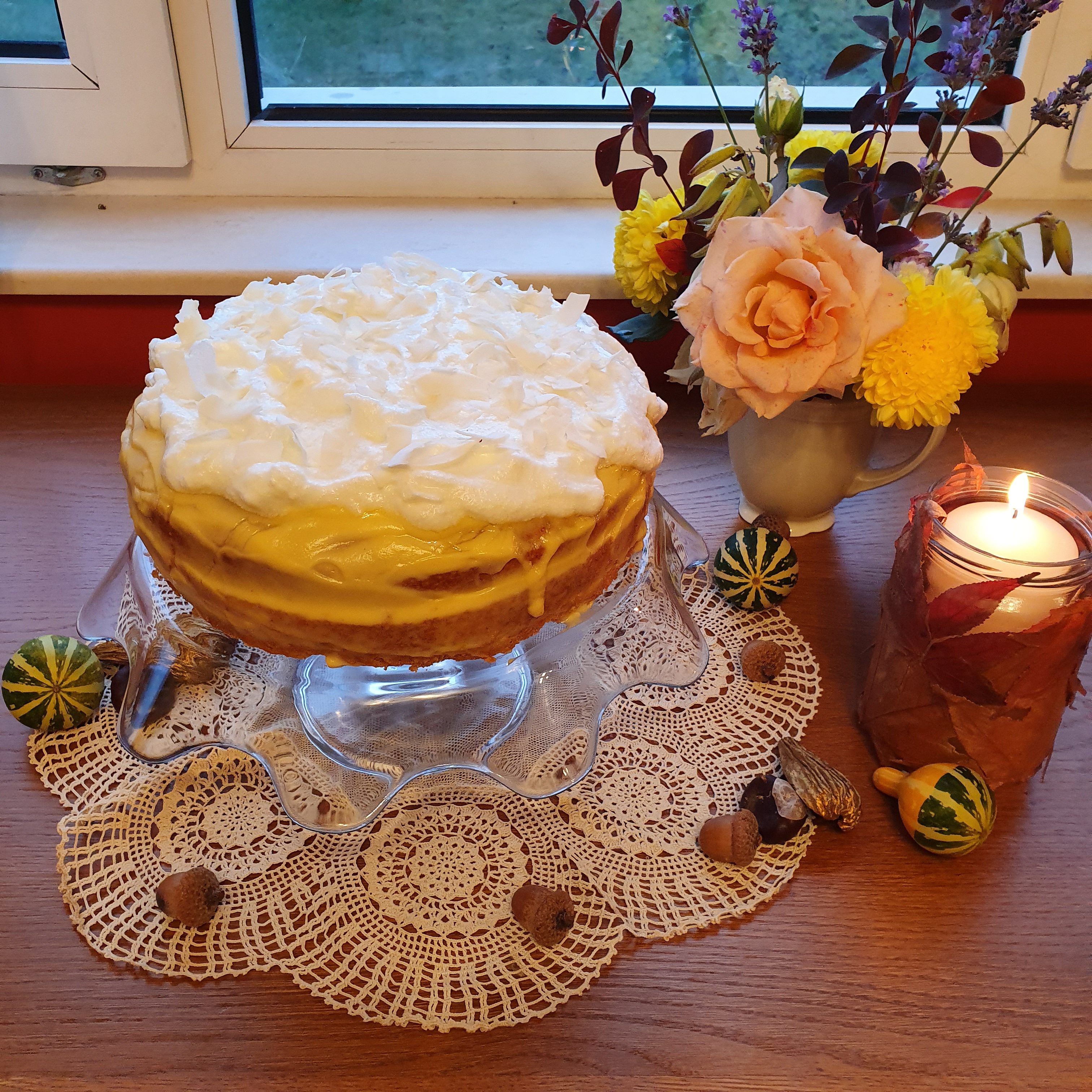
With the remaining two cakes, repeat the procedure. Top the meringue over the cream and decorate to your liking. I used coconut flakes for the coconut cream, but I don’t think it would be a bad idea to add any nuts or chocolate. 😉
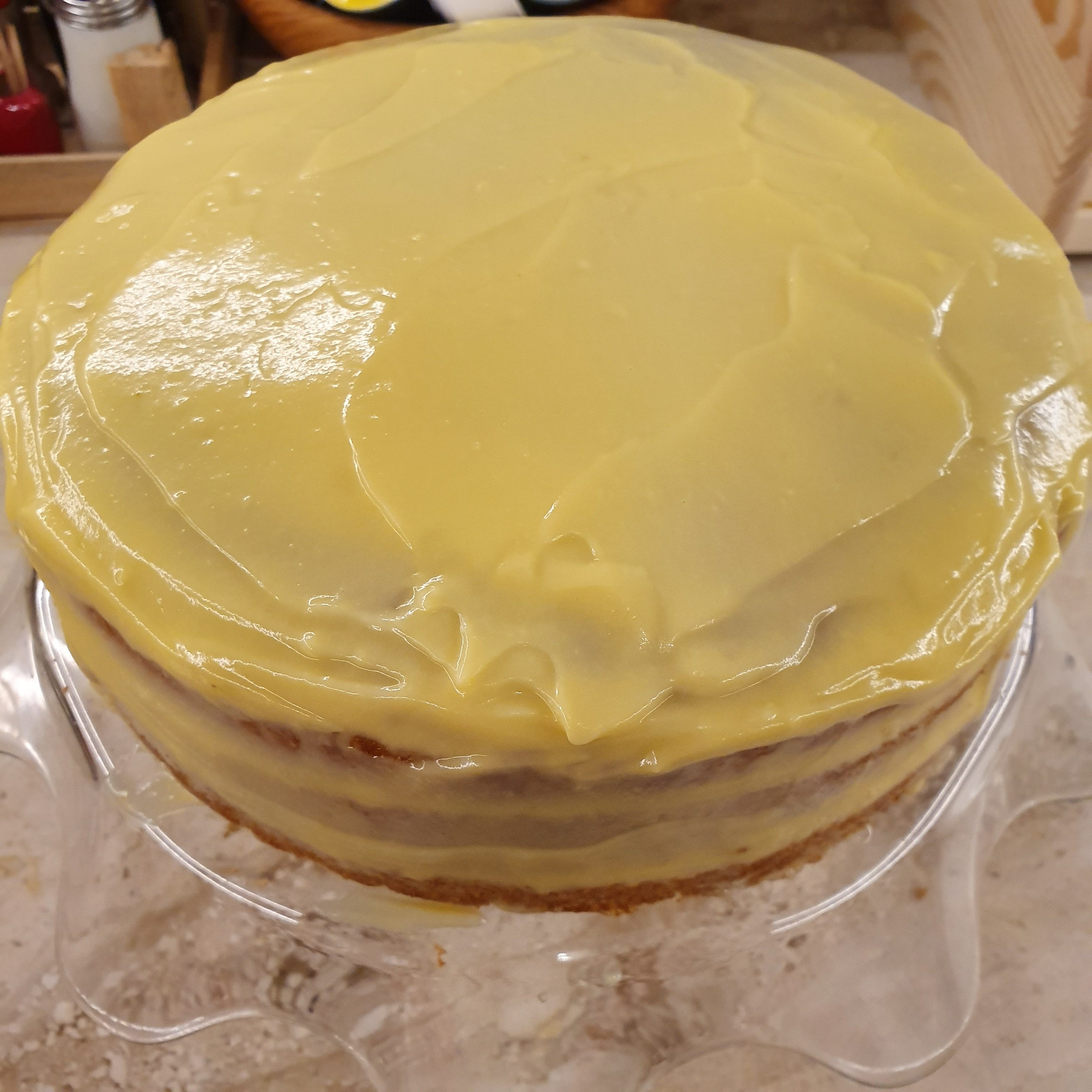
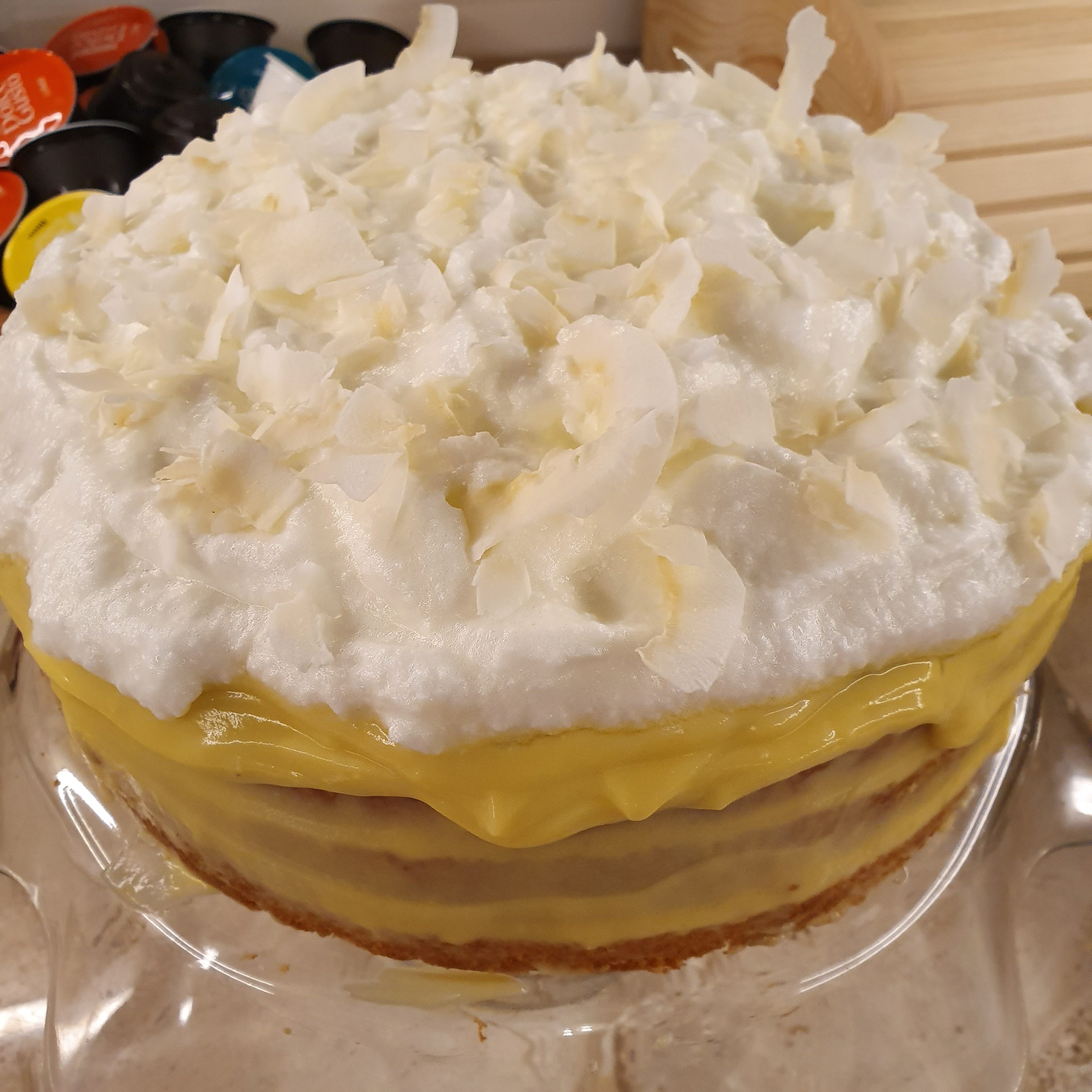
Leave in the fridge for at least a few hours to absorb the cake before serving. Excluding the use of coconut in the recipe, the cake is pretty classic in taste, which in no way means anything wrong. Personally, I really like cakes with such classic cake cream. I was reminded of my childhood when my mother used to make them. The taste is balanced and the cake is light. On my scale of difficulty is about 4. Nothing complicated it is to perform. Although it is a very depressing season outside, the fog it stands for two days, and the moisture and cold directly pierce you to the bone, in my kitchen Italian music sounds and smells like vanilla. This manages to compensate for the surrounding gray. Adding a bouquet of the last blooming flowers in the garden and a scented candle, and maybe I’ll survive. 🙂
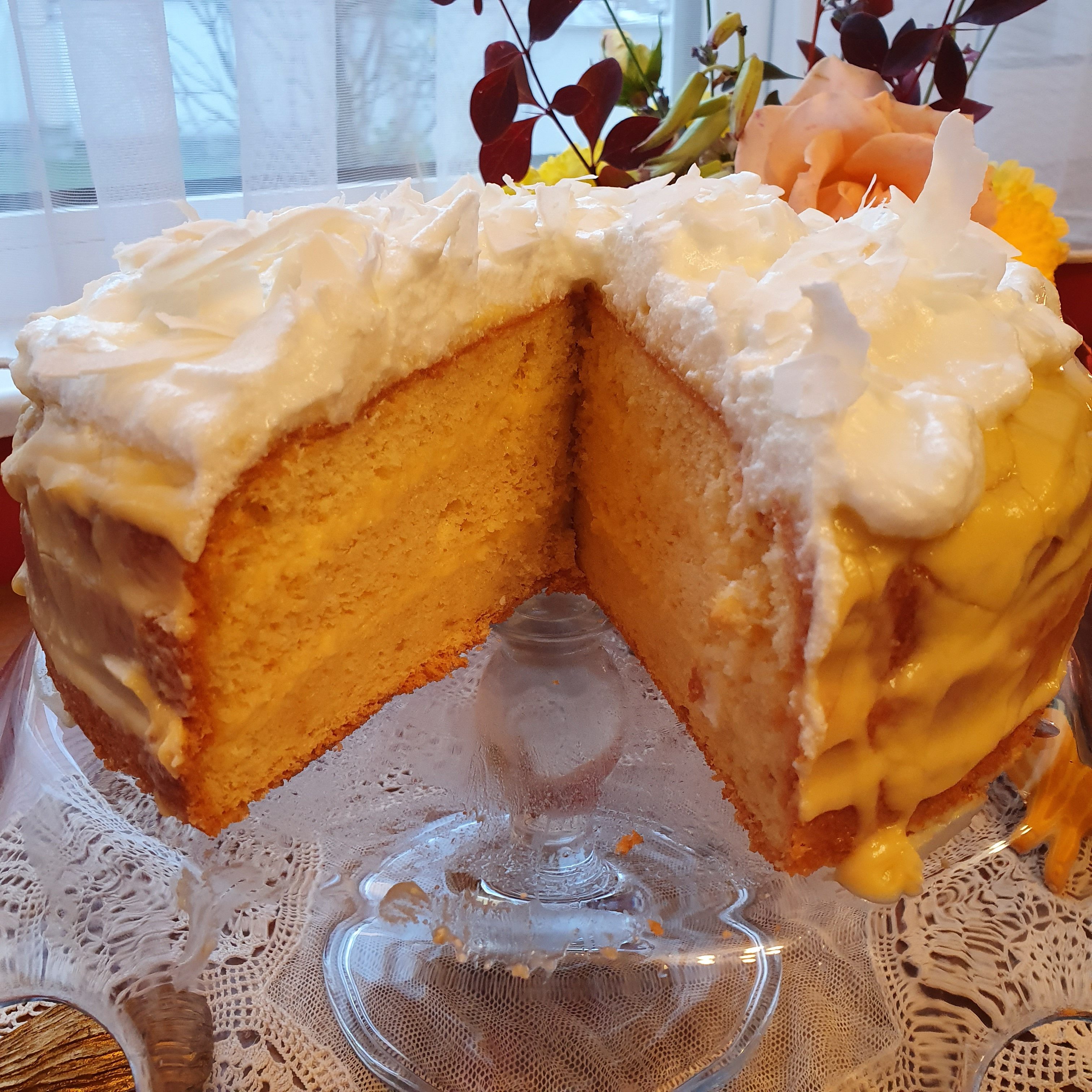
I leave you because I’m going to come up with ideas for the upcoming Christmas. My favourites. 🙂 When the kitchen will be dominated by cinnamon and ginger. All kinds of cookies will be baked, buns will be made and decorate the holiday cakes. I can not wait.
Next destination – Vietnam.