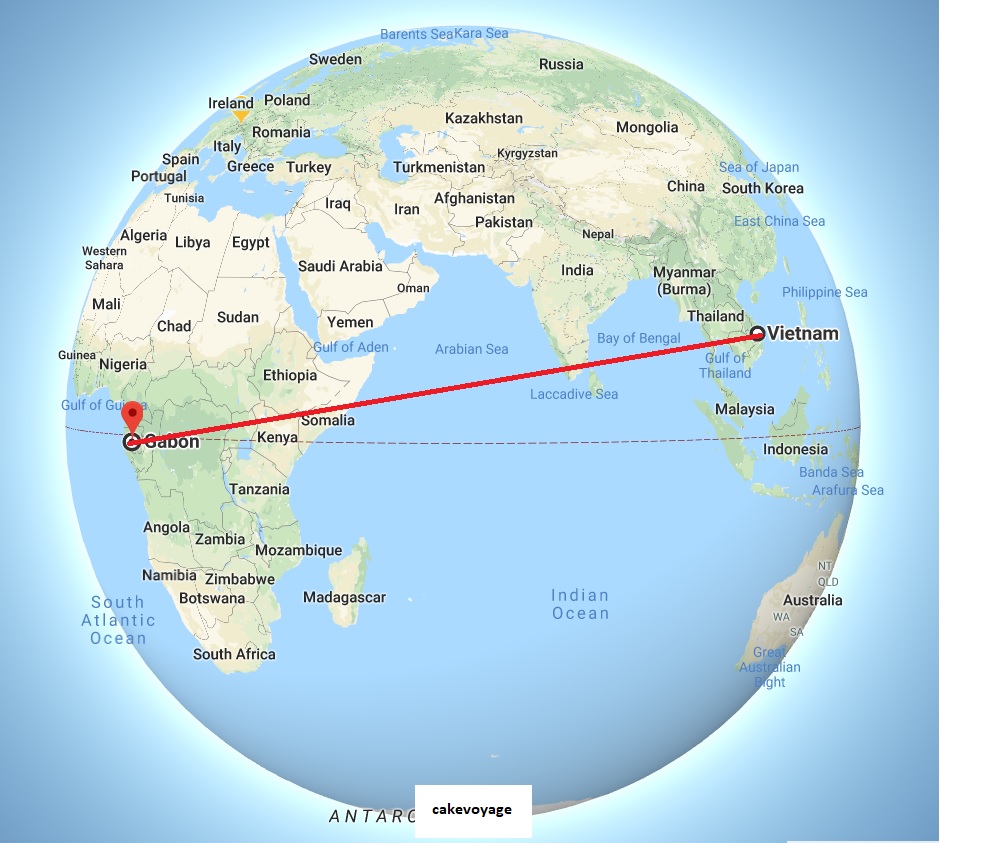

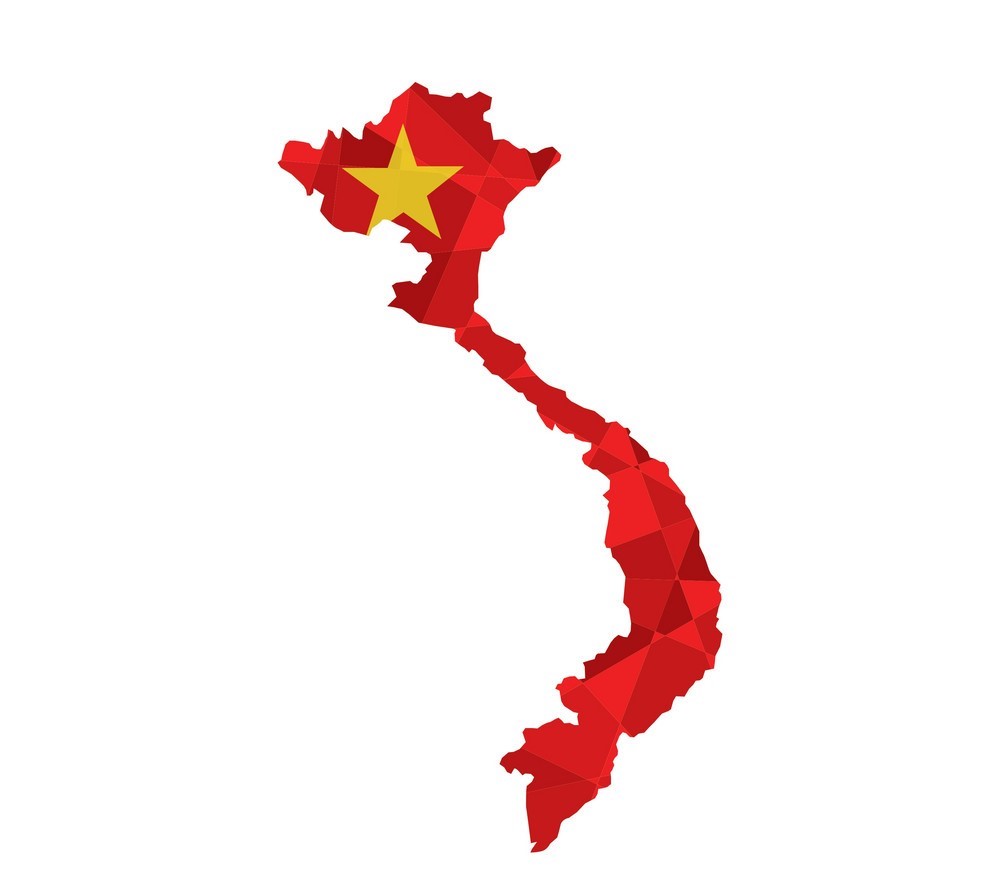
Undoubtedly, until recently, Vietnam was mainly familiar with the tragedies of the Vietnam War. However, the Vietnamese view the war as part of a successful decolonization process – victory over the French and the withdrawal of Americans is part of their nation-building. Many landmarks in the war-related country reflect these views. Historic sites in Saigon have been transformed into memorials and museums that glorify the triumph of the nation – the Ku Qi Tunnels, the War Remnants Museum and the House of Unification are only a part of them.
The location of Vietnam makes the country a cocktail of different cultures. The Dai Viet civilization ruled the north and later throughout the country, and remnants of Chinese influence over it can be seen in many historic buildings. To the south of the Buddhists, Dai Viet lived the Cham people, who, unlike them, professed the Hindu religion. Their culture often pitted them against their northern neighbors. The Cham kingdom later disappeared because of the Dai Viet invasion, but their heirs still live in Cambodia and Malaysia.
Vietnam is often called the country of chaos. If in a big city like Hanoi you decide to cross streets, you should know one thing – traffic never, never, but never really stops, even though the traffic light is green for you. So boldly dive into the traffic and whatever your saber shows. 😀 Motorcycles are everywhere, There are about 37 million motorcycles and only 2 million cars registered in 90 million inhabitants. The Vietnamese carry such huge loads of their motorcycles that they directly refute the laws of physics.
In some shops, a local specialty – roow ran (snake wine) is sold. And yes, it is exactly what it sounds like – rice wine with a canned snake in the bottle. By the way, there is no problem in Vietnam for children to buy alcohol quite legally in stores. Many Vietnamese restaurants serve iced tea for free, and locals always leave less of their drink. They never finish drinking tea, water or whatever they drink there. Many Vietnamese raise little pigs for pets, but on the other hand, some of them eat doggie…. 🙂
All Vietnam residents celebrate their birthday at one day- the Tet day- Vietnamese New Year, and almost 40% of them carry the Nguyen family. 😮 Locals avoid eye contact. If you look into their eyes for a long time, they will think that you do not trust them or want to harm them. This does not prevent them, instead of polite time conversations, from asking you how old you are, whether you are married, or what your salary is in order to get to know you better. Obviously the cultural differences between us and them are by no means small.
Only in Vietnam have I heard that they have a separate god of the kitchen. His name is Ong Tao and just before their new year, he flies to the god of heaven to inform him of who how he behaved during the past year. At the heart of Vietnamese cuisine is the Asian Principle of Five Elements. The combination of these five fundamental elements must be present in every dish. They are: spiciness (metal), acidity (wood), bitterness (fire), salinity (water) and sweetness (earth), corresponding to five organs: bile, small intestine, large intestine, stomach and bladder. Vietnamese dishes also include five main ingredients: powdered element, water or other liquid, minerals, proteins and fat, and Vietnamese chefs try to have five colors in their dishes: white (metal), green (wood), yellow (earth) , red (fire), and black (water). Customers, for their part, try food in Vietnam through five of their senses: the arrangement attracts the eyes, the sounds come from the crunchy elements in it, the five spices used are felt with the tongue, the aromatic herbs used in cooking touch the nose, and the dishes that are consumed with their hands, they are also felt by touch. In general, the number five is everywhere.
The principle of Yin and Yang is applied in the composition of food, thus achieving a body-friendly balance. The method concentrates on the “temperature properties” of the ingredients. Certain dishes are only served in specific seasons. This creates a contrast between food and the environment. For example, duck meat, considered “cool”, is served in the summer with ginger fish sauce, which is “warm”. Chicken, which is ‘warm’ and pork, which is ‘hot’, are eaten in winter. The various types of seafood that go from “chill” to “cold” are served with ginger, which is “warm”. Spicy food (“hot”) is usually balanced by something sour (“cold”). Cooking and eating are extremely important in Vietnamese life and culture. Salt is considered a link between the worlds of the living and the dead. The wedding of the newlyweds is served with the traditional dessert Bánh phu thê (rice stuffing and local pea wrapped in palm leaves), which should remind the newlyweds of perfection and harmony. The basic principle is that the food is fresh. Most meats are cooked for a short while, and vegetables are eaten mostly raw. If vegetables are to be cooked, they are cooked or fried very lightly. Vegetables and herbs are always present in the dishes. Broths and soups are also widespread. Presentation is especially important – the servings served with Vietnamese dishes are usually multicolored and arranged in an eye-pleasing manner.
During the Nguyen Dynasty, the 50 best cooks in the kingdom were chosen by priests of the Goddess of the upper heaven to serve the king. There are three meals in the royal court for the day; 12 dishes were served for breakfast and 66 each (50 main and 16 desserts) for lunch and dinner. The most read dish is everything tổ yổn – soup from swallow nests(swallow nests today can only be the most expensive animal products, needing about $ 2500 per kilo). Dishes of shark fins, sea snails, deer tendons, bear paws, rhino skin and more are among the dishes that are typical for this kitchen. There were very strict requirements for preparing food for the King. Cooking water was taken from only 4 well-defined water sources, and rice came from only one royal plantation. Ceramic rice cookers were used only once. No one except the priests and, of course, the cooks had no right to touch the food. After preparing the dishes, the plates were tried by eunuchs, then given to the wives of the king and only then to the king himself, who ate alone in a separate, sounded room.
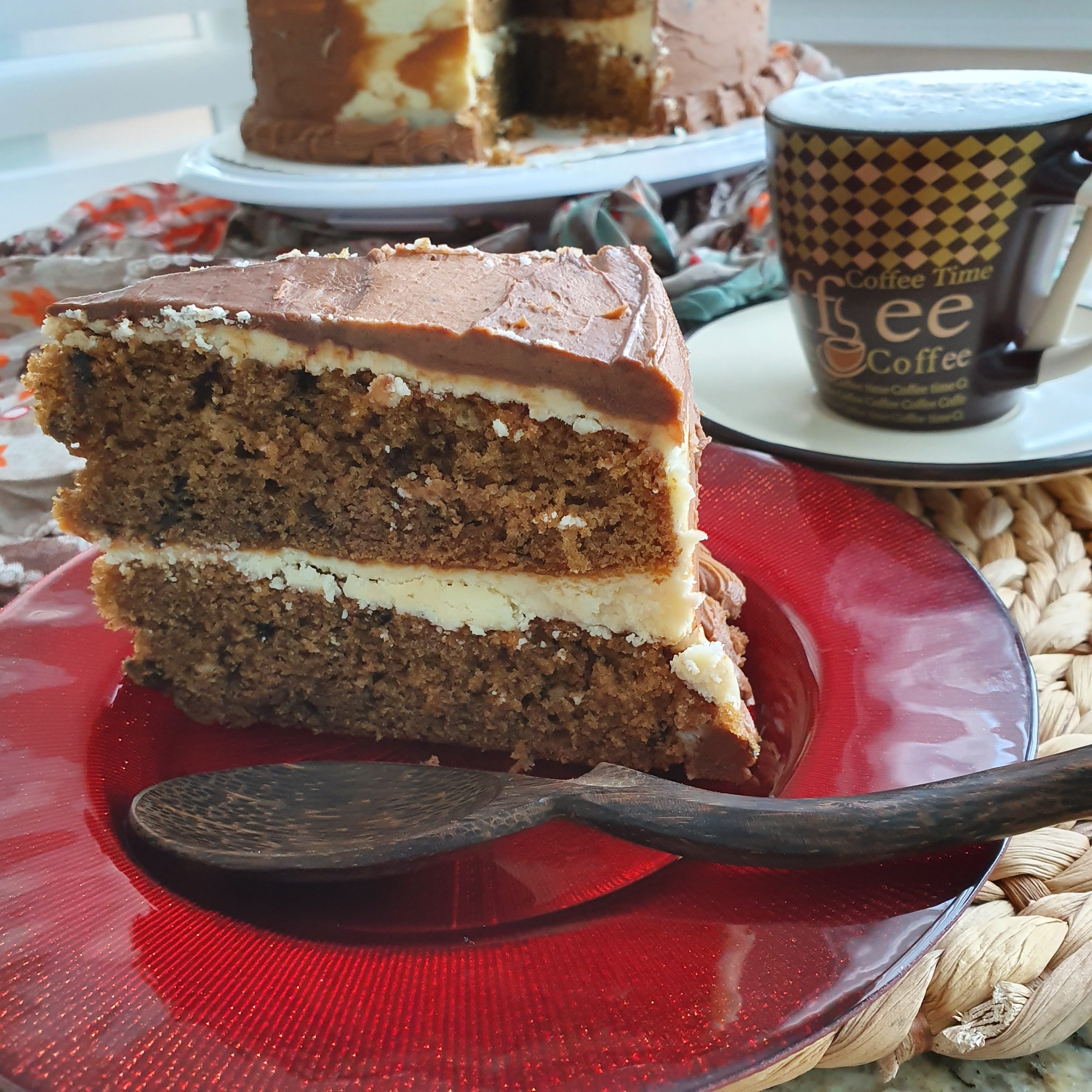
I can still write a lot about this interesting country, but I’m afraid it will pester you. That’s why I’m coming to my word. I chose to make a very coffeen cake – Vietnamese iced coffee cake. Here are the products you need:
For coffee fudge:
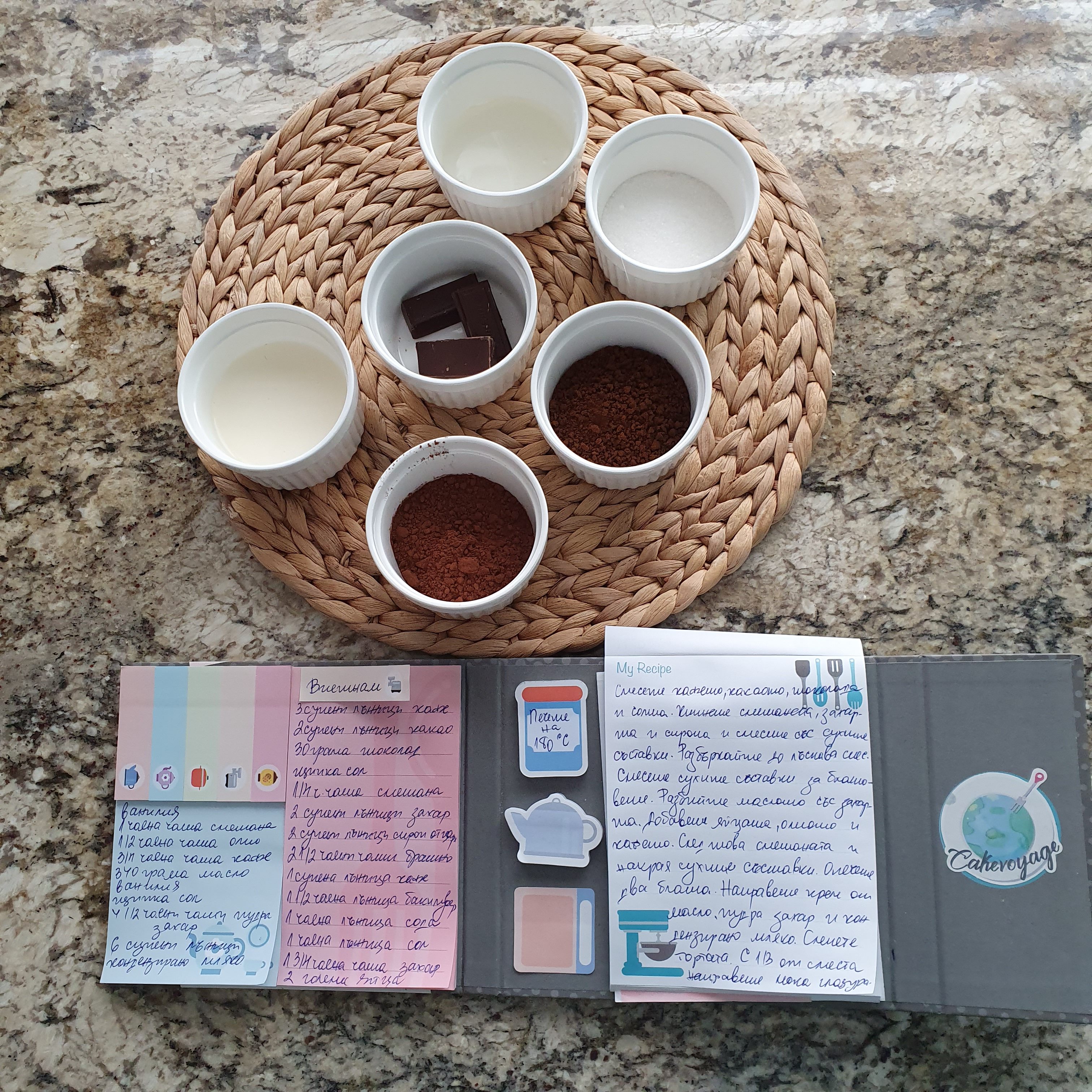
3 tablespoon coffee
2 tablespoon of cocoa
30 grams of dark chocolate
pinch of salt
1/4 tea cup of cream
2 tablespoons sugar
2 tablespoons corn syrup
For cakes:

2 1/2 tea cups of flour
1 tablespoon of coffee
1 1/2 teaspoon baking powder
1 teaspoon of baking soda
1 teaspoon salt
1 3/4 tea cups sugar
2 large eggs
vanilla
1 tea cup of cream
1/2 teaspoon oil
3/4 tea cup coffee
For the cream:
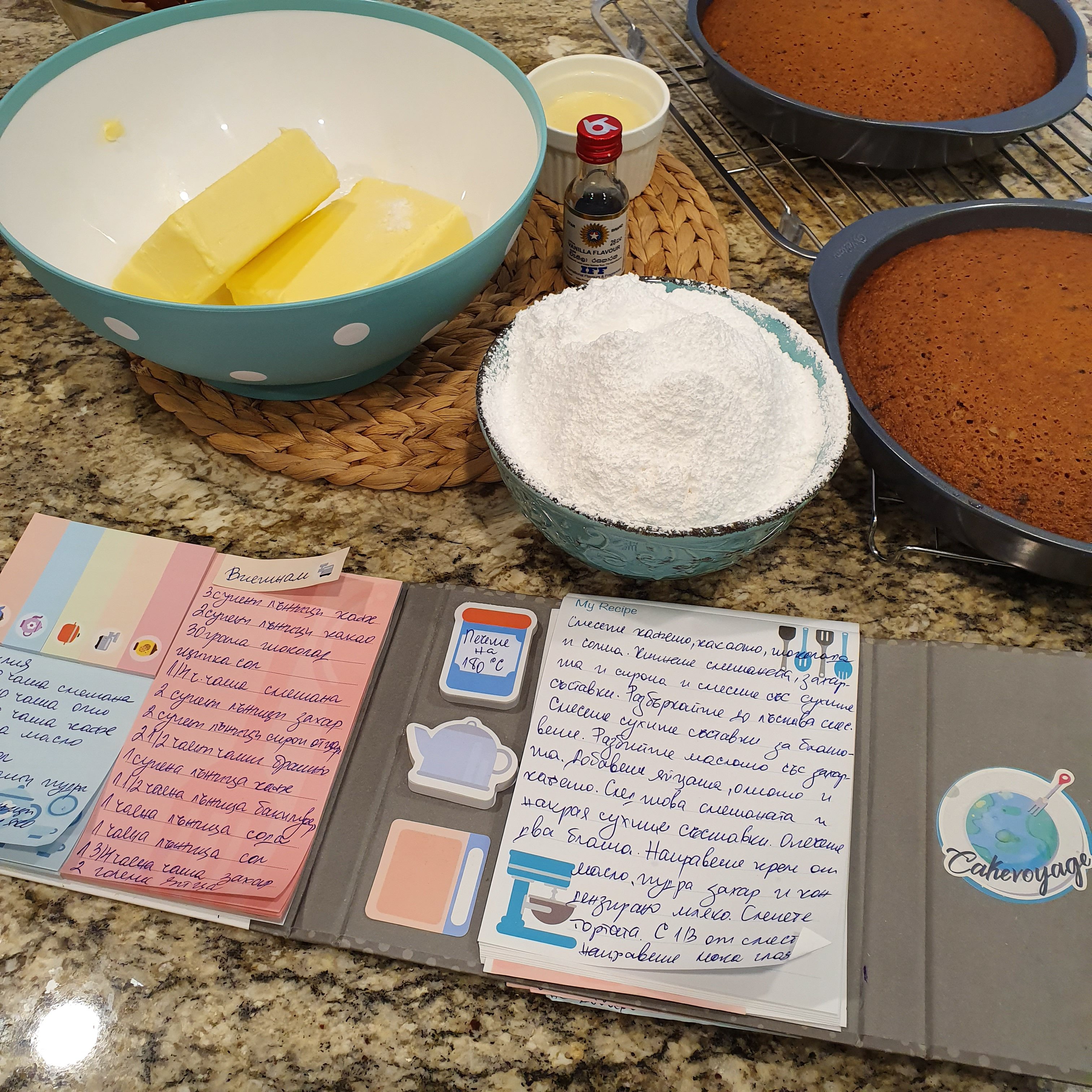
340 grams of butter at room temperature
vanilla
pinch of salt
4 1/2 teaspoons powdered sugar
6 tablespoons condensed milk
Steps of preparation:
Mix coffee, cocoa and chopped chocolate. In a small saucepan, heat the corn syrup, salt, sugar and cream. Pull off the stove and pour the mixture over the dry ingredients. Stir the fudge until smooth. Allow it to cool well.
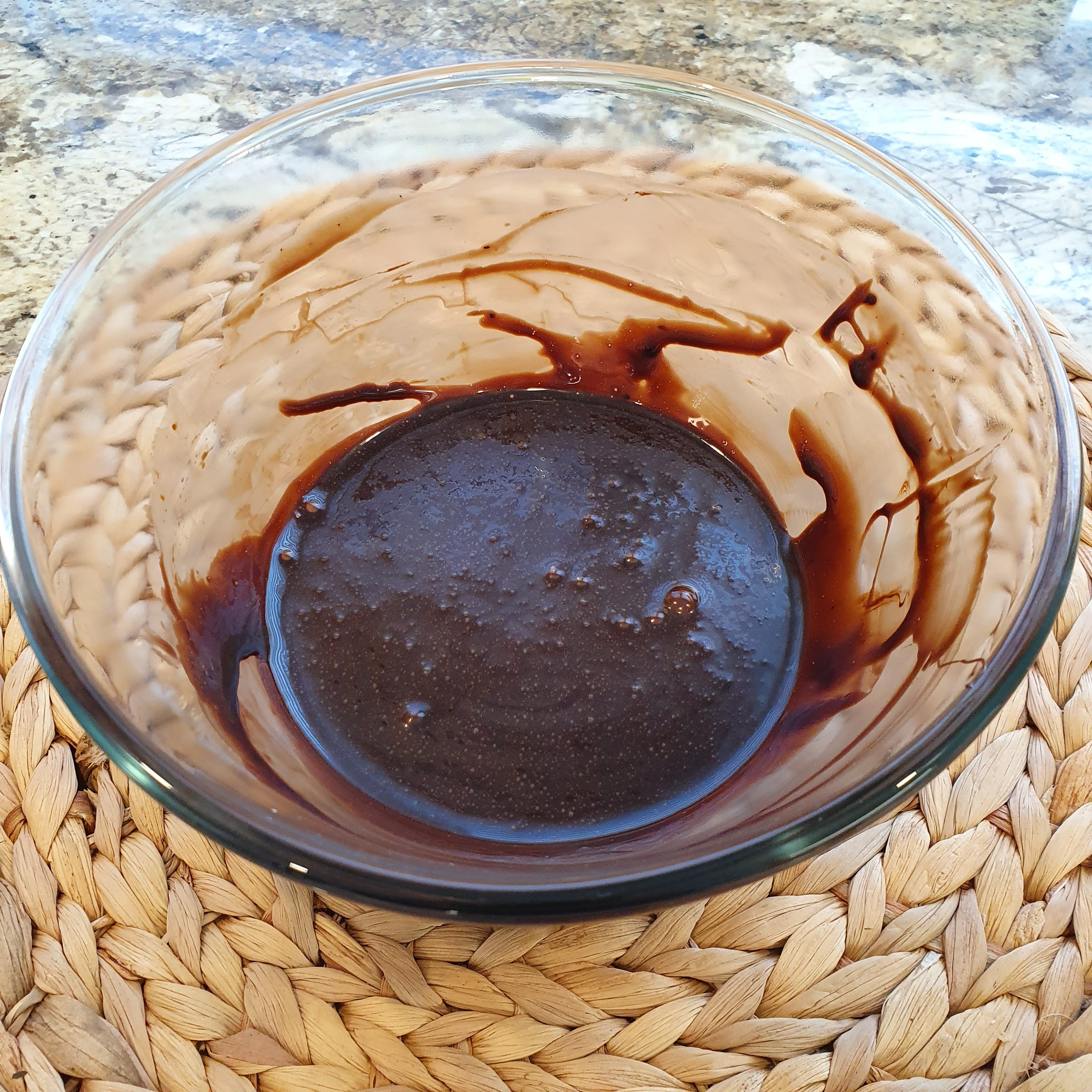
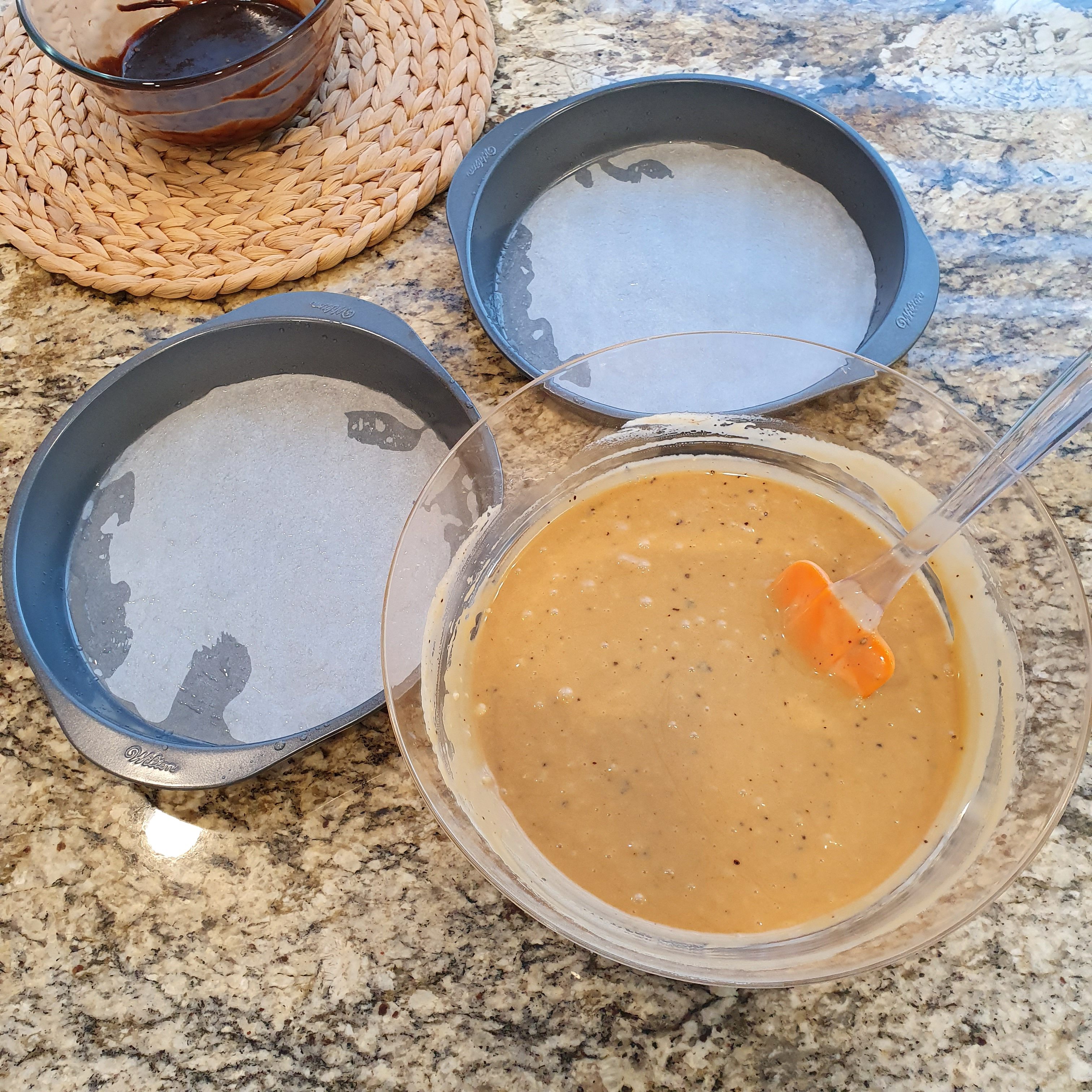
Prepare two 22 cm diameter trays by greasing them and placing baking paper on the bottom. Turn the oven on to 180 degrees. Beat the sugar and the eggs until white. Add the cream, oil and cold coffee gradually. Mix the broth with salt, baking powder, coffee and baking soda. Add the dry to the wet mixture and finally add the vanilla. Divide the dough into your trays evenly.
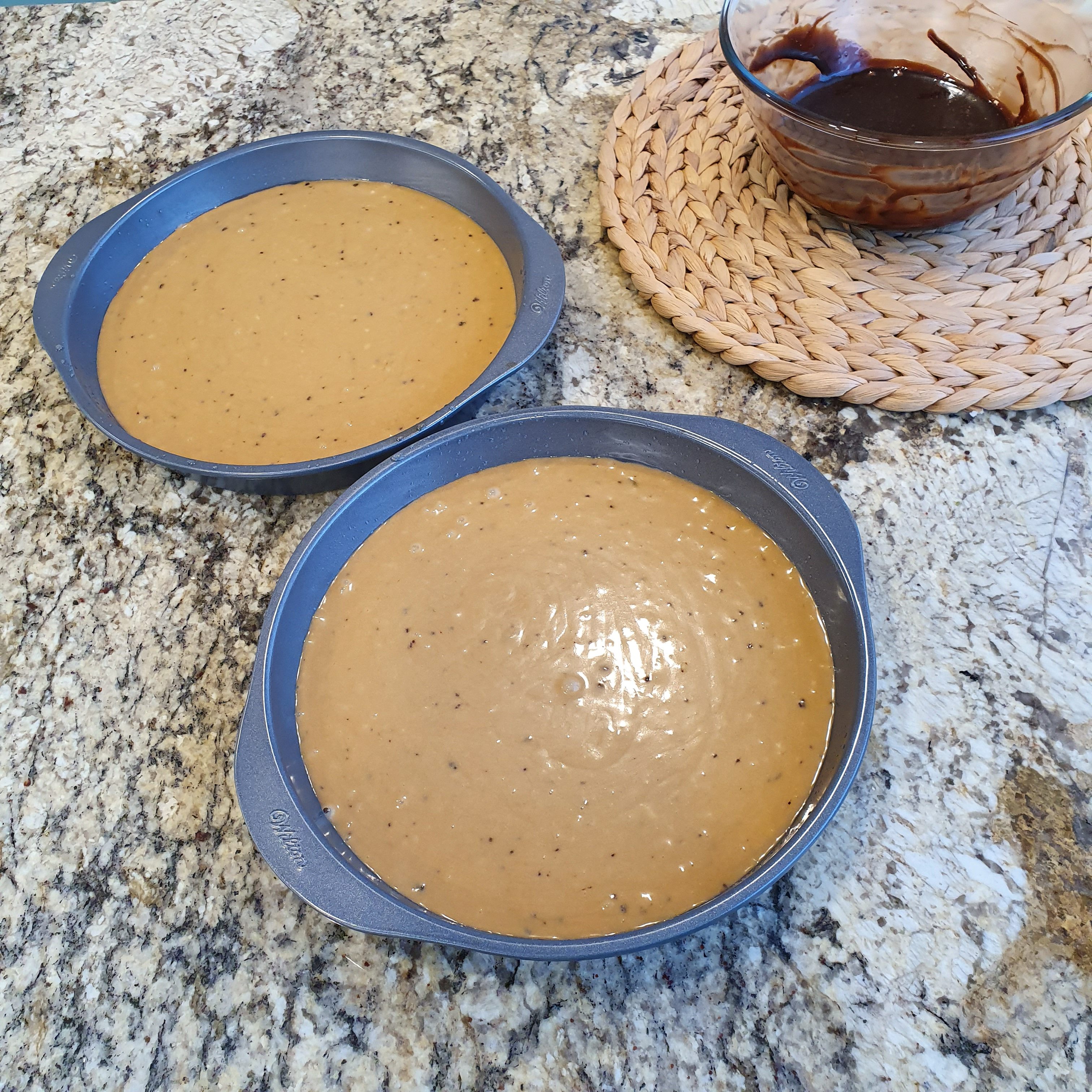
Bake for about 30-40 minutes or until a wooden skewer stuck in the middle comes out dry.
Remove the pans to cool for about 5 minutes and then remove the tops on a wire rack. Turn them upside down. Allow them to cool completely for at least 20 minutes.
Make a cream by starting to beat the soft butter at a slow speed with the mixer. Gradually add the sifted powdered sugar. Finally add the condensed milk and vanilla. Beat until smooth cream.
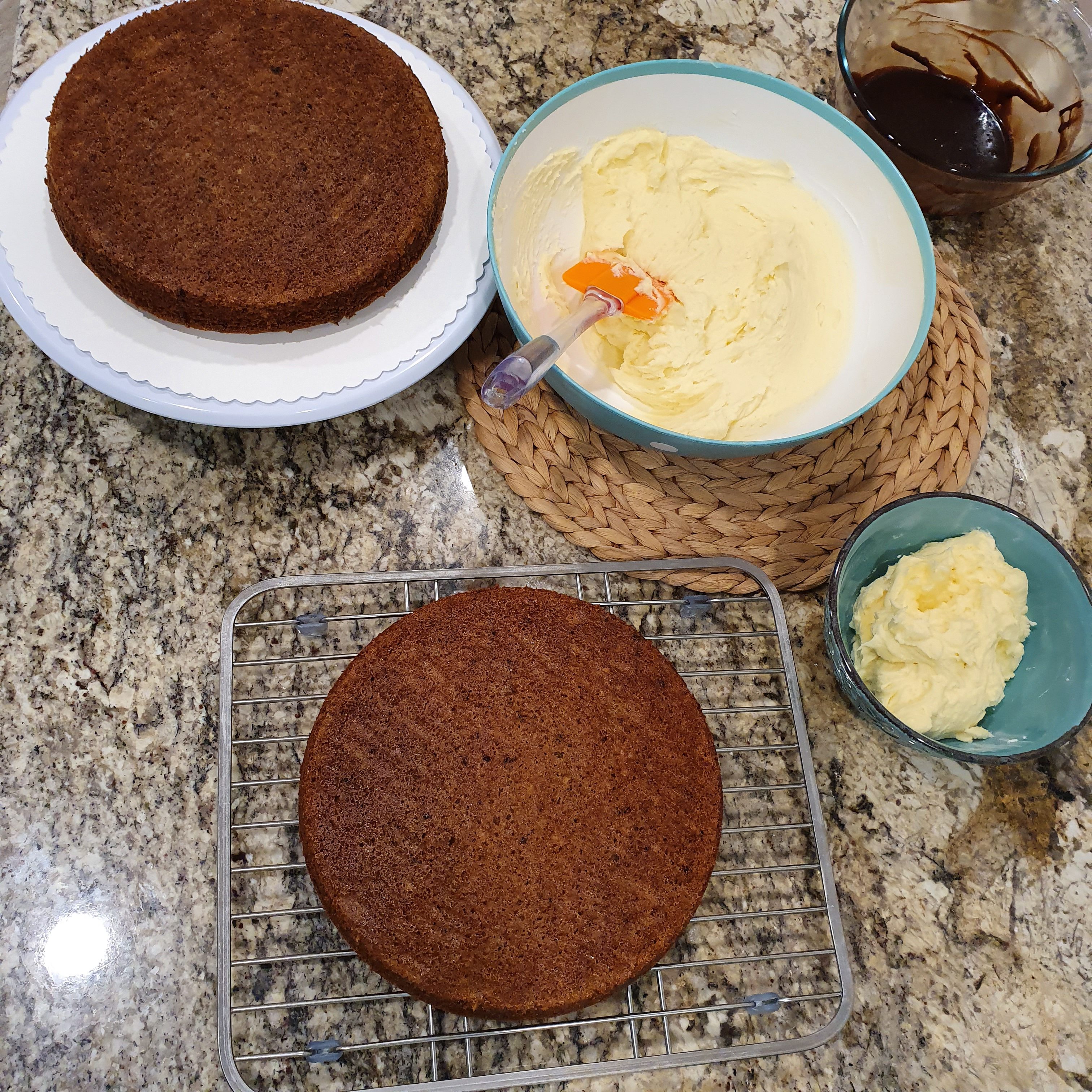
Separate 1/3 of the cream. Divide the rest between the two cakes and spread the cake on all sides. Leave it for 10 minutes in the refrigerator to cool.
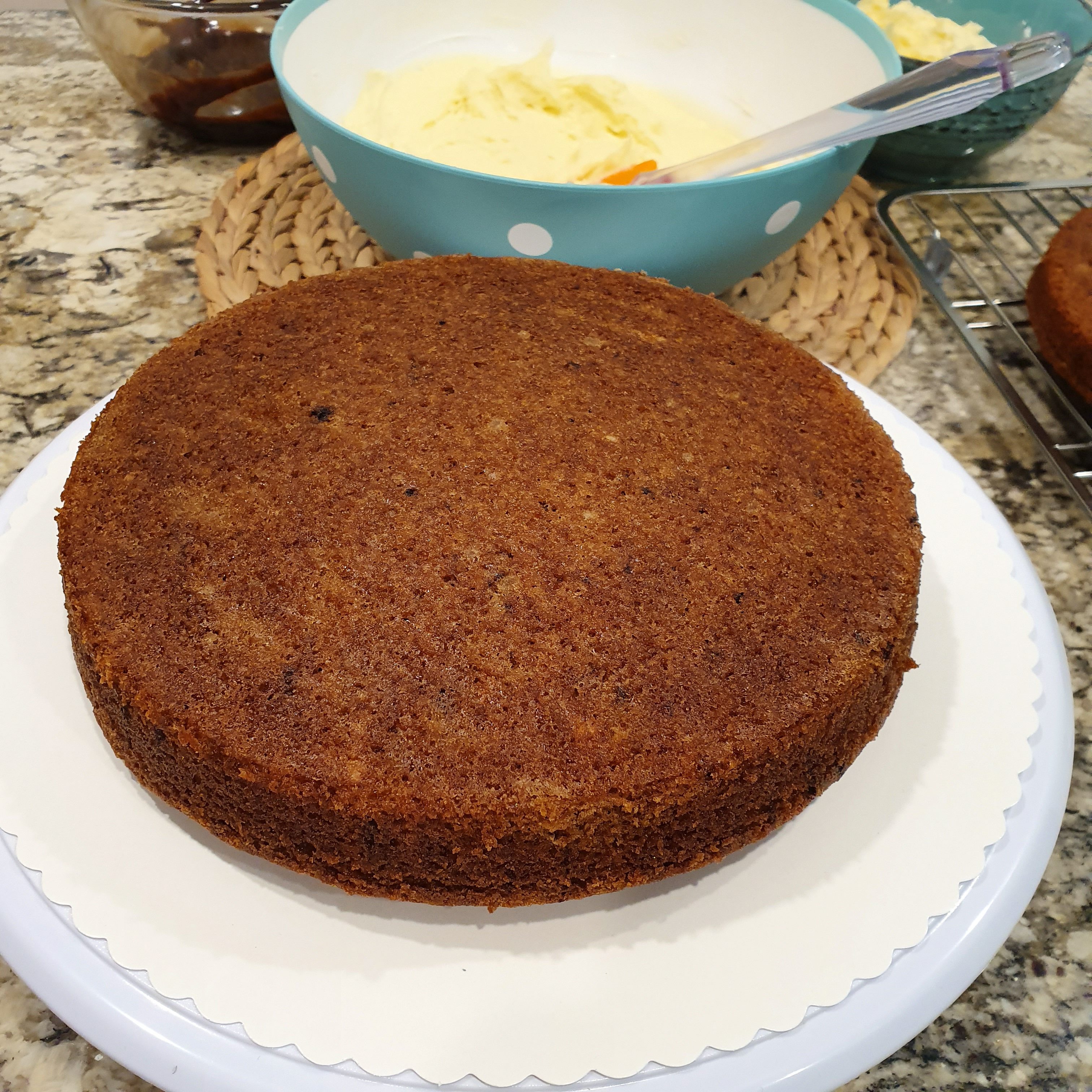
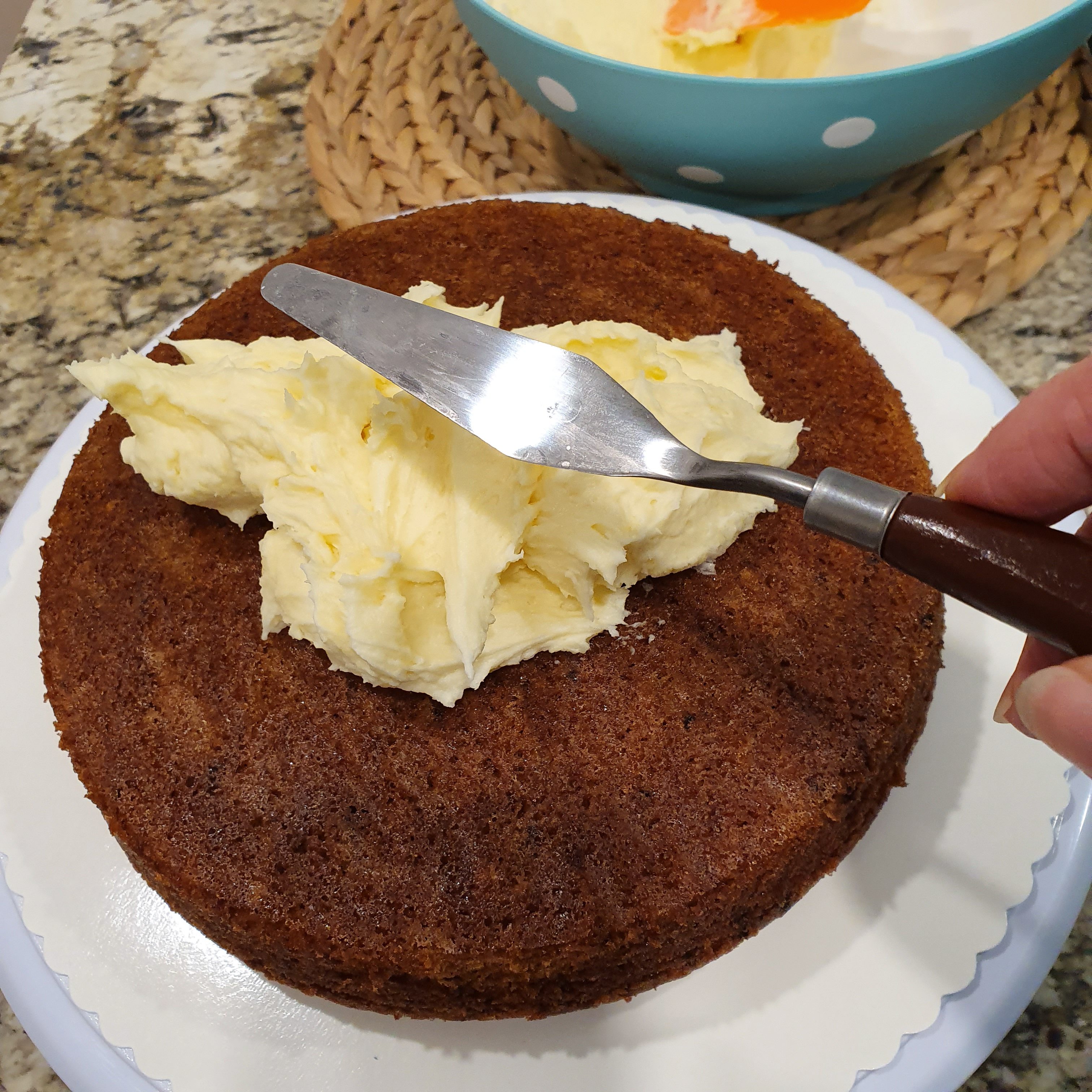
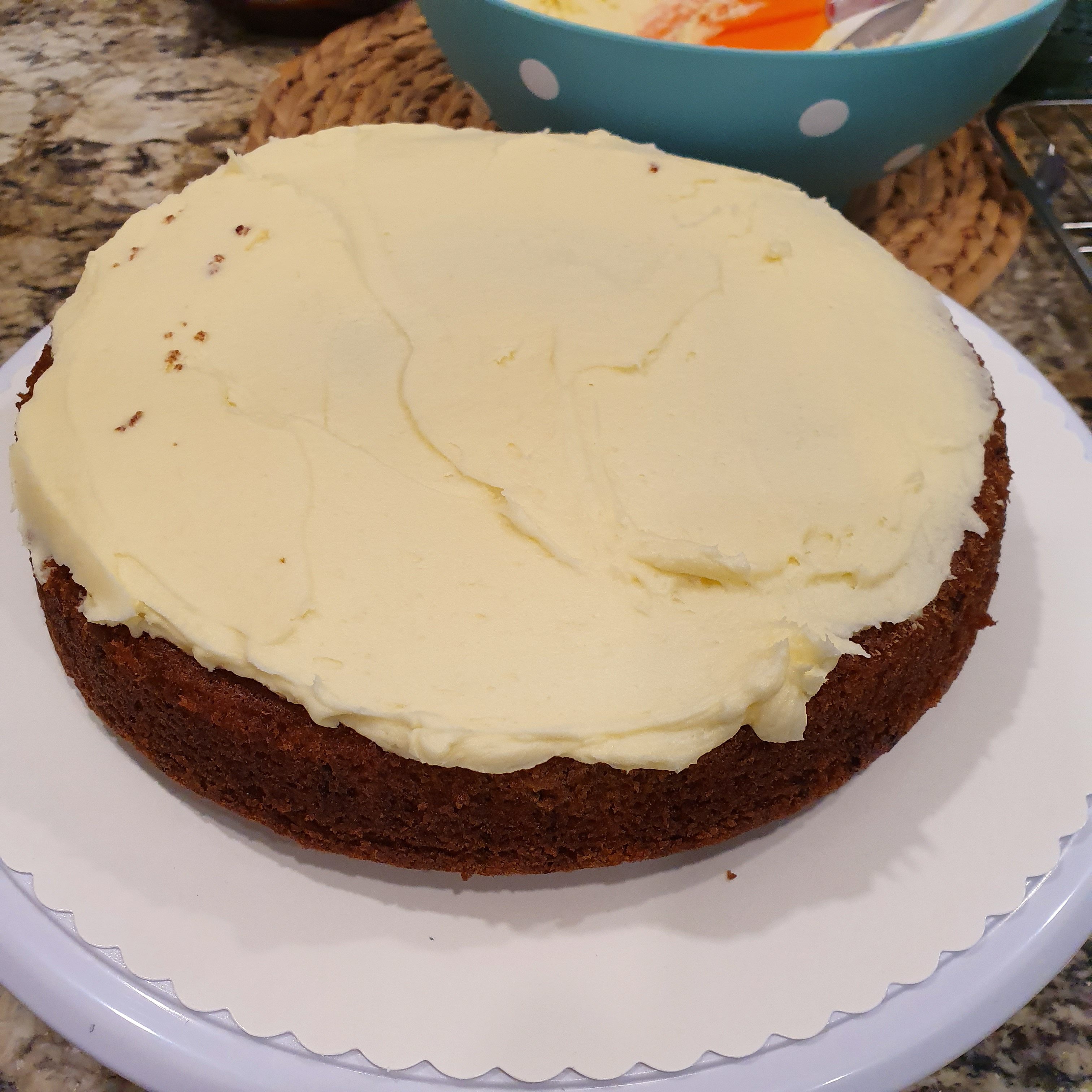
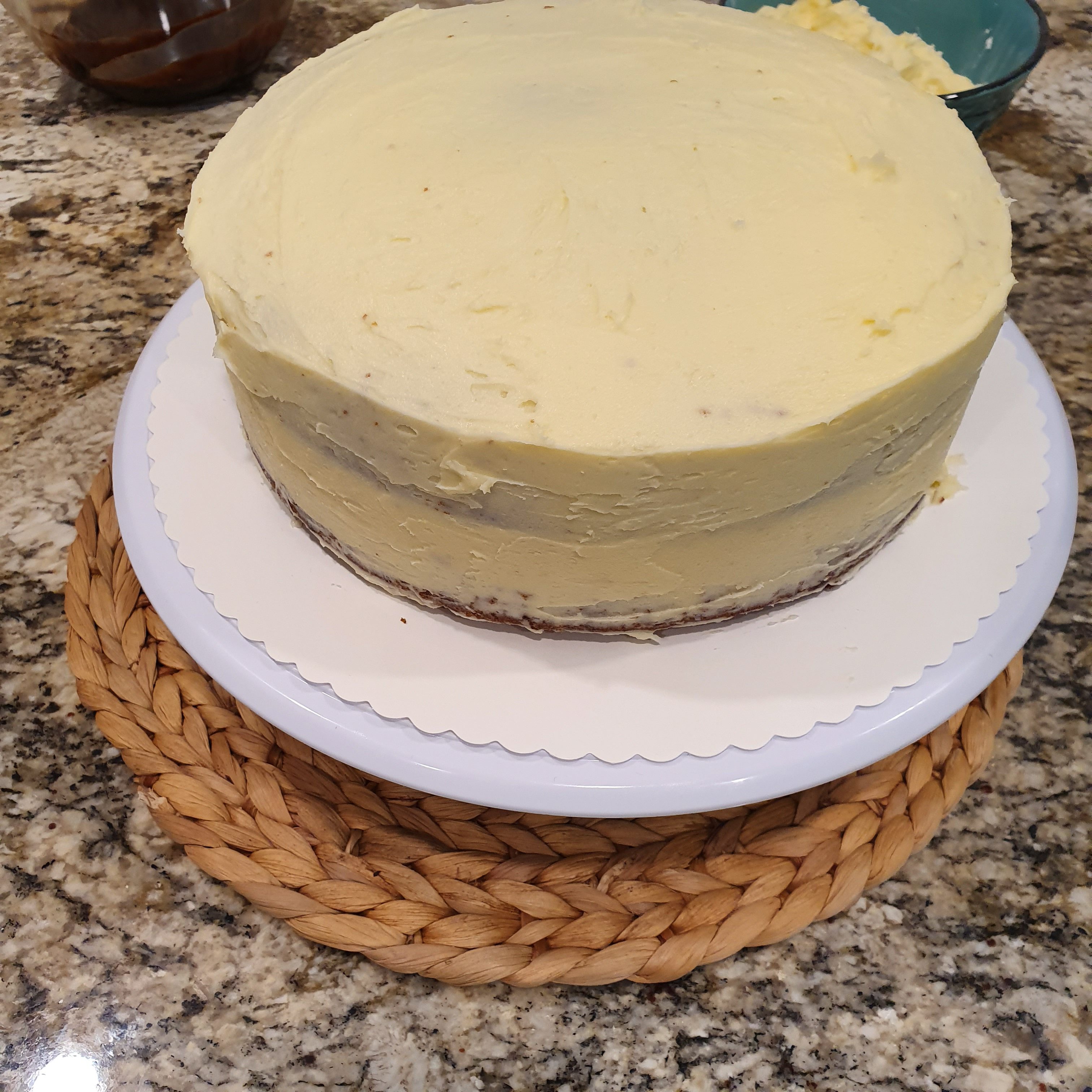
Mix the remaining 1/3 of the cream with the coffee fudge by dividing the mixture into three and add a different amount of fudge to make three shades of mocha.
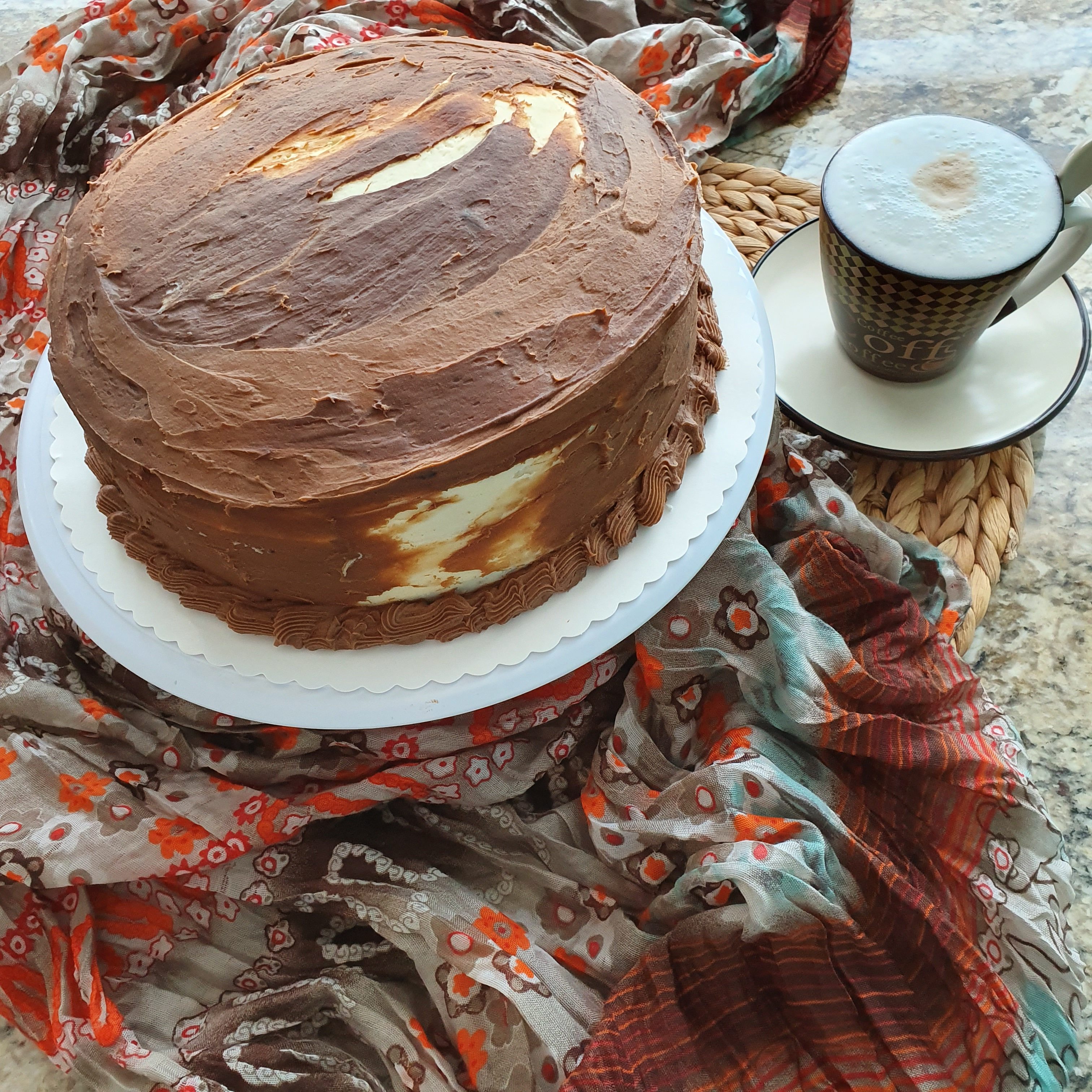
Remove the cake from the refrigerator and decorate with the remaining cream as you see fit.
Leave the cake for a few hours in the refrigerator. Before serving, take it to stand at room temperature for a while or cut it immediately. The more you like the butter cream.
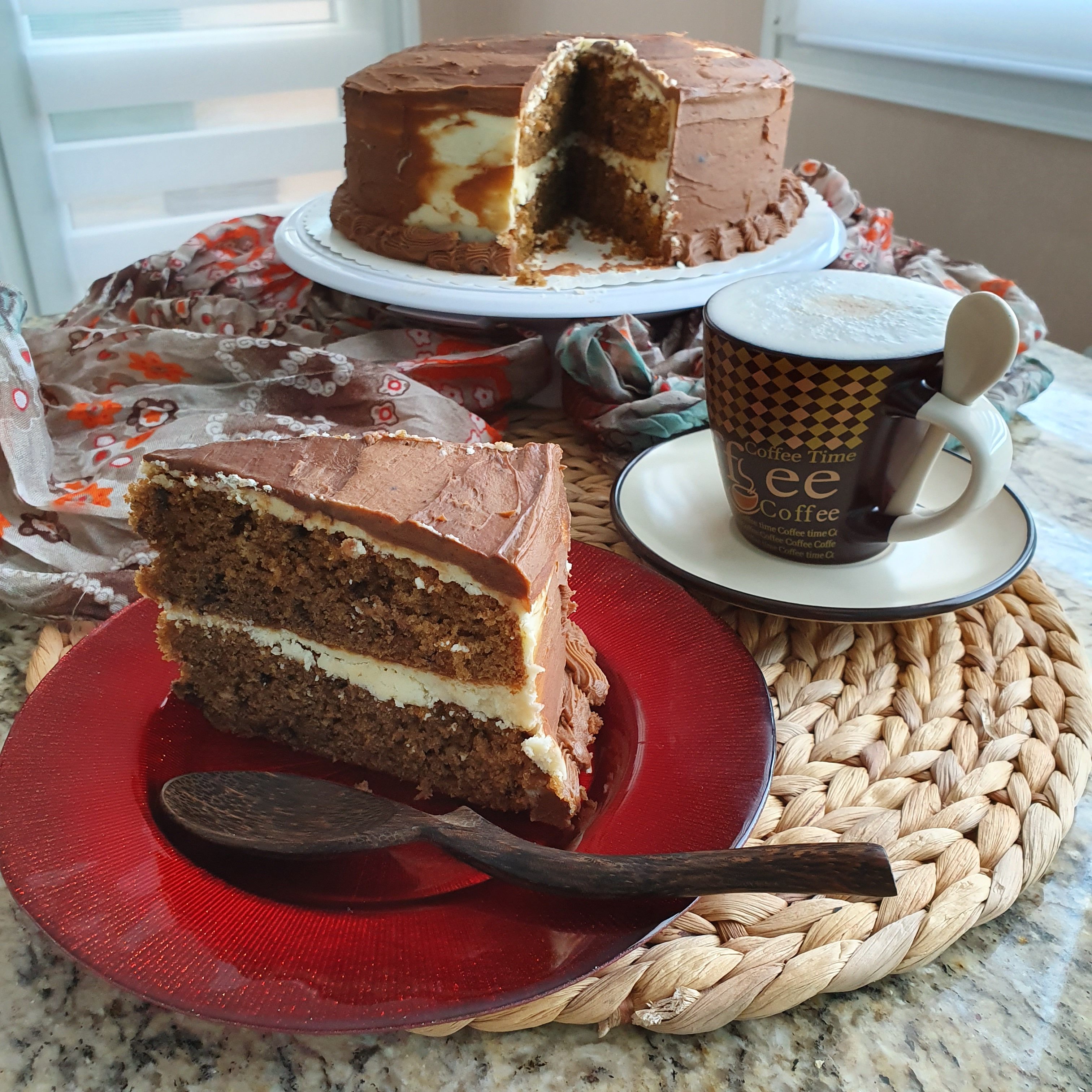
It was a pleasure to make this cake. The taste is very rich and the coffee takes you everywhere. On a cold December day, it is perfect to add to a cup of hot cappuccino. Mmmmmmm. Try it yourself.
Next destination – Gabon.