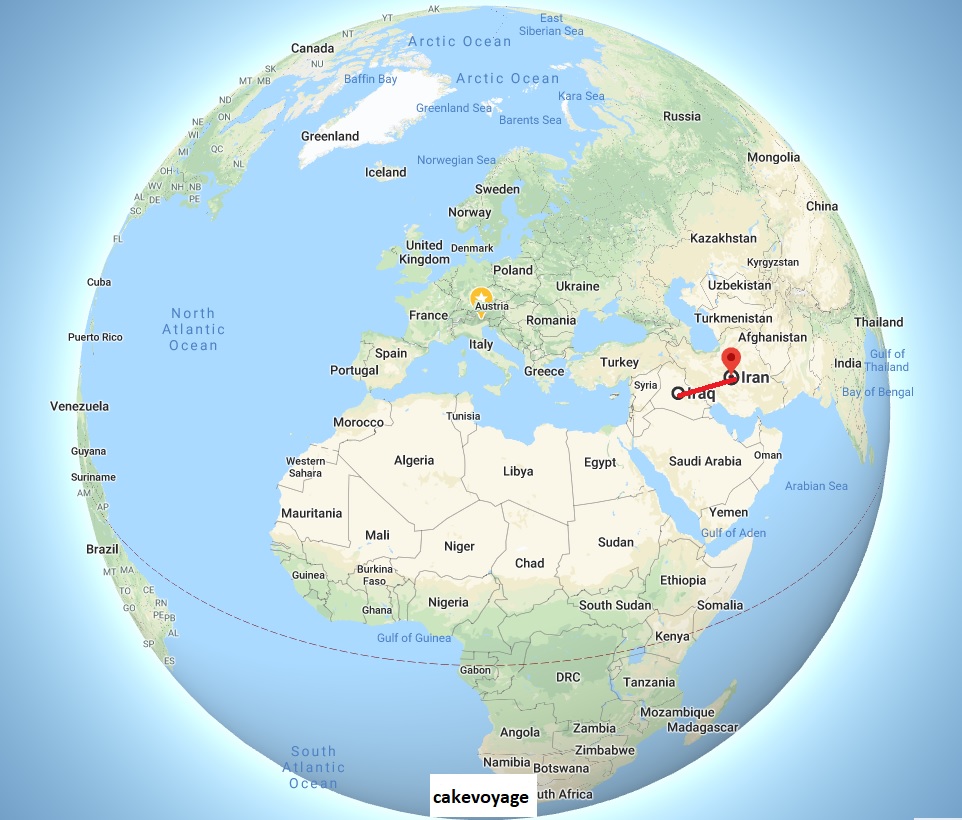


In my mind, when I hear about Iraq, my first association is the Gulf War, Saddam Hussein, devastation and terror. It is a pity that this is the first thing that comes to mind about a country that is considered the cradle of civilization, because it is in these lands that the oldest human civilization developed – the Sumerian. The first writing was created in these territories 6000 years ago and from that moment the written documentation of human history began. The successors of the Sumerians were Babylon and Assyria, and after them Persia. In order for Muslims to come in the seventh century, today’s territory of Iraq became part of the Righteous Caliphate. A century later, Baghdad (today’s capital of Iraq) was built. It became the largest multicultural city of the Middle Ages with its one million inhabitants and the largest scientific center during the Islamic Golden Age. For five centuries, Baghdad has been the center of the Arab and Islamic worlds.
I don’t want to write about this Iraq of my time. For the atrocities, the killings of Iraqis by their own president and his aides and by outside forces who invaded the country to defend the people from the dictator. It’s still too soon everything that happened and the layers of history haven’t settled down enough to see who’s right and who’s wrong. History is still just politics, and I am not told about politics at all. I will only say that any kind of violence is unacceptable to me. Human life should be the most precious thing for all and it should be valued and protected. Wars are insane and disastrous. But which am I to judge. History will have its say when it should. That is why I will write about culinary traditions and culture.
Iraq and its cuisine are rich in spices such as coriander, allspice, saffron, cardamom, mahleb, ginger. I have always imagined their scent, and I walk the streets of Baghdad and around me are people like in the tales of Aladdin and Ali Baba, women like Scheherazade, magicians and caliphs. 🙂In fact, I don’t know if that’s the case, and I don’t plan to see everything with my own eyes any time soon. In their kitchen place is also olive oil, almond oil, pine nuts, poppy seeds, sesame seeds, cinnamon sticks. The preferred meat is lamb, but the menu also includes fish, which is strung on wooden skewers and smoked on embers. Like the Turks, Iraqis eat a lot of vegetables, rice and yogurt. Beef and poultry are often prepared with fruit. Camel meat often has a place on the table. Usually the meat is cut into strips and cooked with onions and garlic. Iraqi chefs cook almost all parts of the animal, including the legs, brain, eyes and ears. There they prepare foot “patcha”, sheep’s head, stomach and broth, which are cooked for hours. Wheat, barley and rice are present in almost every meal in Iraq.
In the country, 95% of the population are Muslims and the consumption of pork is unacceptable to them. During Ramadan Bayram, all locals eat before dawn. The food they eat is called suhur and includes various cereals as well as bananas. Everything you eat should be eaten and digested slowly. This helps them with hunger during fasting, which can reach up to 16 hours a day. After the sun sets, Iraqis begin eating a dish called iftar, followed by a variety of appetizers, bread, lentil soup and fresh fruit. The typical meal in Iraq starts with a small appetizer like kebab. The soup is served afterwards, but it is not eaten with a spoon, but is sipped directly from the bowl. The main dish is most often lamb with rice. Other popular dishes you can find on the Iraqi table are quzi, which is roasted stuffed lamb, and kibbeh, which is minced meat with nuts, raisins and spices. For dessert they can offer you a fruit salad with jelly fruit.
Most locals eat pastries and desserts for breakfast or serve them as a gift to the host when visiting. Pumpkin pudding and baklava are among the favorite desserts of Iraqis, although they prefer to eat raw fruits at the end of each meal. Candied lemons, grapefruits and oranges are also revered. The coffee is brewed in a copper pot and served in beautifully painted cups. Before brewing, the coffee beans are heated and cooled nine times so that they can be cleared of all unnecessary impurities that can spoil the taste of coffee. Its taste, like that of tea, is very different from the one we know, because people there put coffee and tea beans in a spice called hel (cardamom). I drank such coffee in Jordan. It was rather strange for my taste and I would by no means describe it as unpleasant. Just as different. But when a person is in an Arab country, he gets used to the bouquet of aromas, which seems to float in the air. That’s how I hated saffron in Egypt – I constantly felt it on my palate, intrusive and strong. Don’t get me wrong – I love Arabic cuisine, most of it, and I love spices. At home I have over 50 jars with all kinds of flavors. I take them wherever I travel. It’s just that in these countries the air is saturated with very intrusive odors and the aroma comes in more. 🙂
I have prepared Halawa Dihiniyaa for you. Sometimes the names dihniyya and dihina are used, all of which derive from the name of the purified butter (dihin hurr), traditionally used in the making of the cake, which gives it its characteristic alluring aroma. As a rule, almost no one makes such oil at home. It can be found in many places in Iraq where traditional sweets are sold, but arguably the best is bought by confectioners in bazaars adjacent to the Shiite shrine in Najaf, south of Baghdad, which explains why it is sometimes called Halawa Najafia. In fact, visitors to Najaf are always expected to buy a few cans of butter for family and friends. 🙂 From existing eighth-century recipes, we know that similar desserts were made, albeit differently named. Then they are called khabees and faludhaj. There is a recipe in a 15th century cookbook Kitab al-Tibakha by the famous historian Ibn al-Mubarrid of Damascus, in which he even calls the cake halwa duhniyya. A 19th-century Lebanese cookbook, Kitab Tadhkirat al-Khawateen wa Ustadh al-Tabbakheen, contains a recipe for habi made with sugar syrup. Such a dessert, even with the same name has certainly existed for many centuries. While neighboring countries are abandoning the tradition of making this cake in Iraq, it continues to be present at the table. Unfortunately I used plain oil as there was no one to bring me a dihin hurr from Baghdad. 🙂
Here are the necessary products:

1 cup fresh milk
1 tea cup fat (50% butter+ 50% vegetable oil)
2 tea cups sugar
2 tablespoons honey or date syrup
2 tea cups flour
1 teaspoon cardamom
1 1/2 tea cups coconut
1 tea cup walnuts
Steps of preparation:
Put the milk, fat, sugar and honey on the stove to simmer for 10 minutes on medium heat.
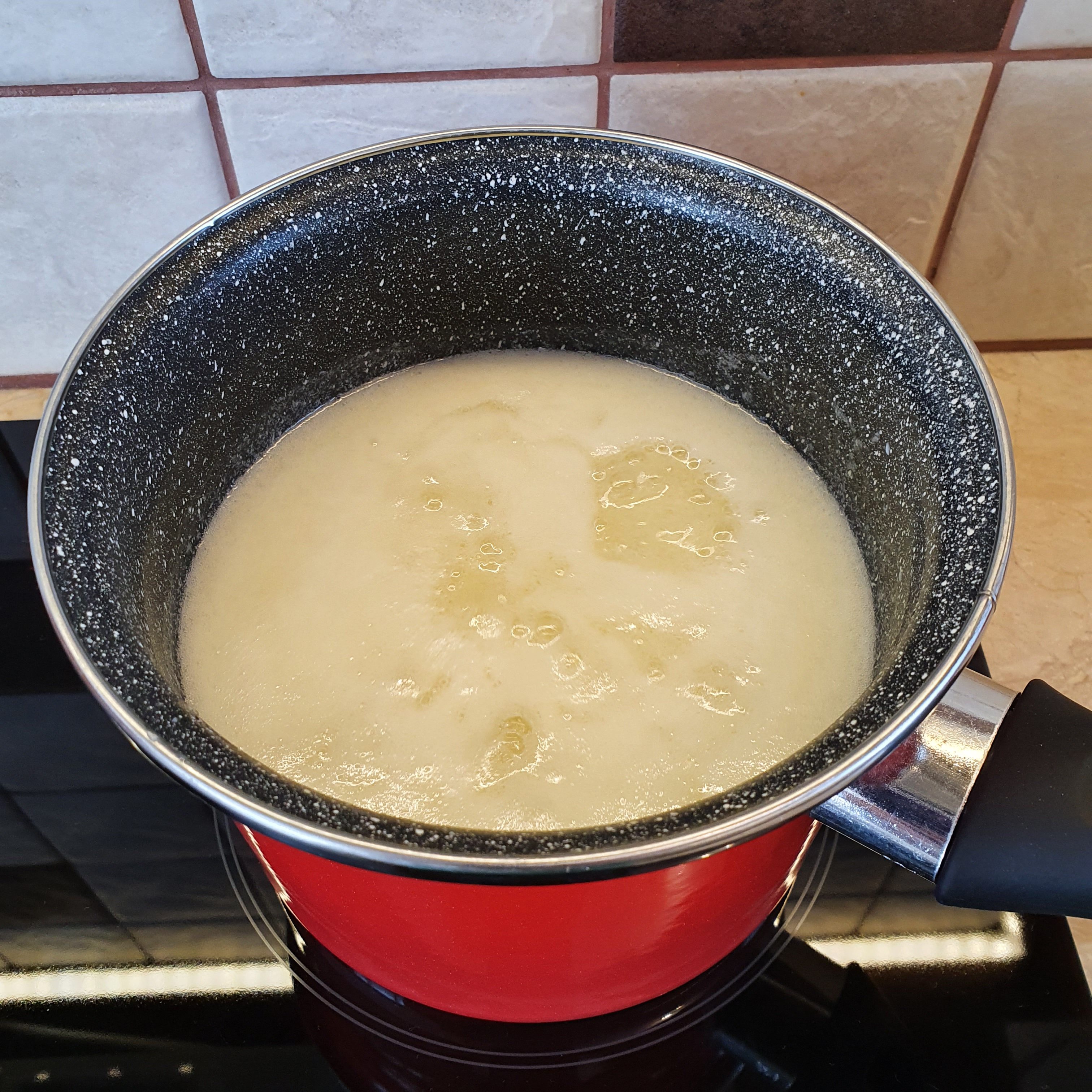
Then add the flour and beat on low speed with the mixer until homogeneous. Finally add the cardamom. The consistency of the mixture is very similar to semolina halva.

Grease a pan and sprinkle half the coconut on the bottom and walls.
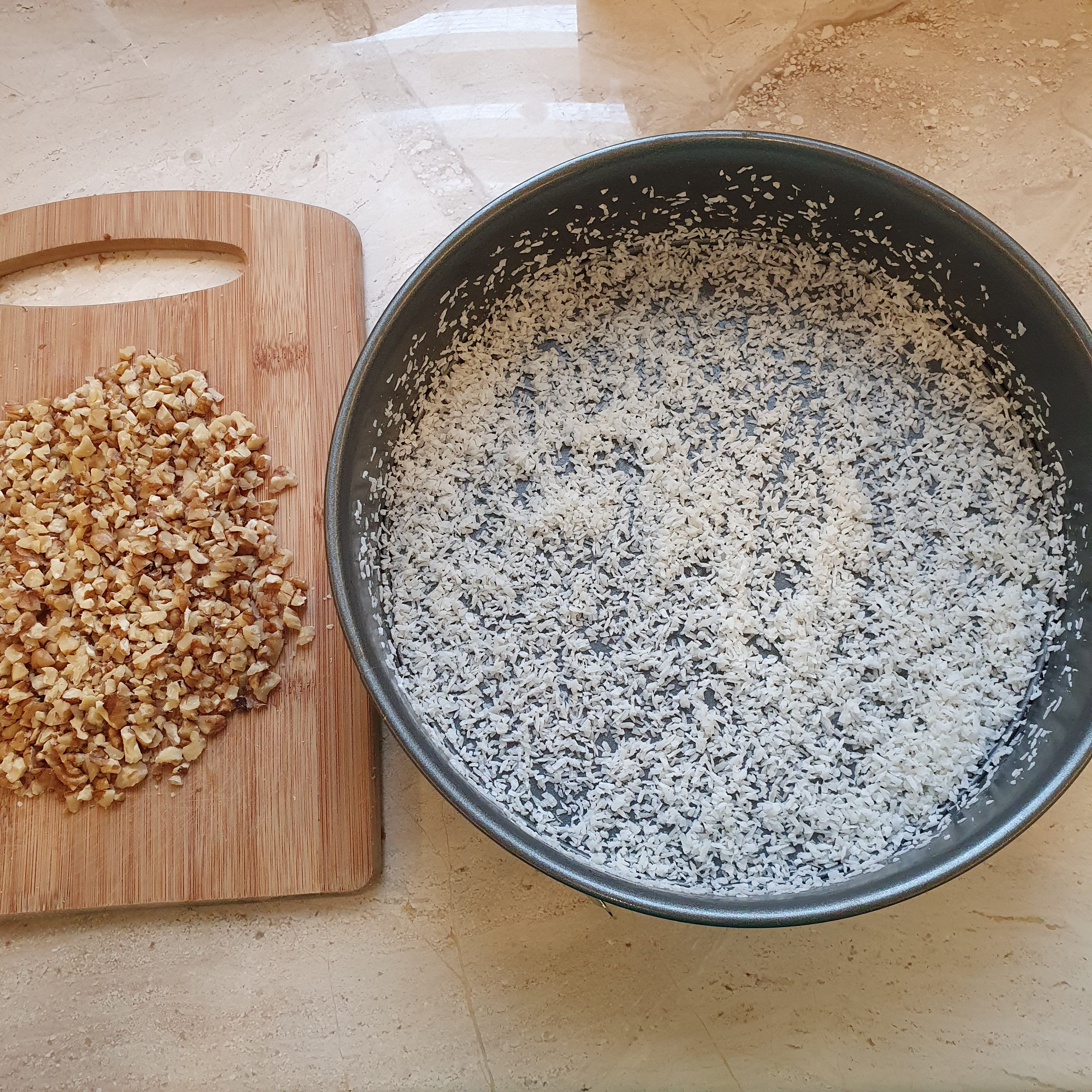

Pour the cake mixture and sprinkle with the remaining coconut.


Bake for 40-45 minutes at 170 degrees. Allow to cool well.
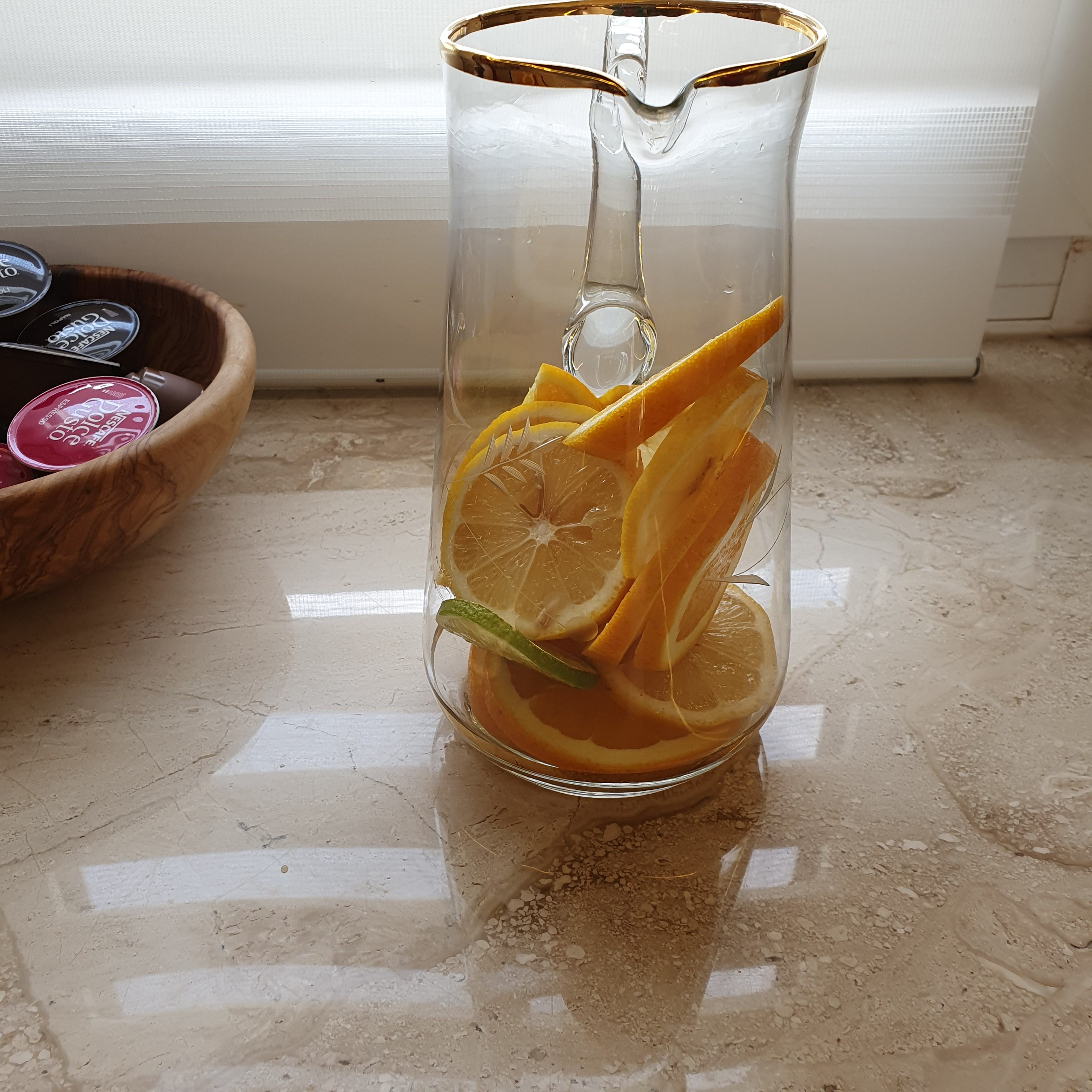
While the cake was baking, I decided to make fresh lemonade. I cut lemon, lime, orange into slices.
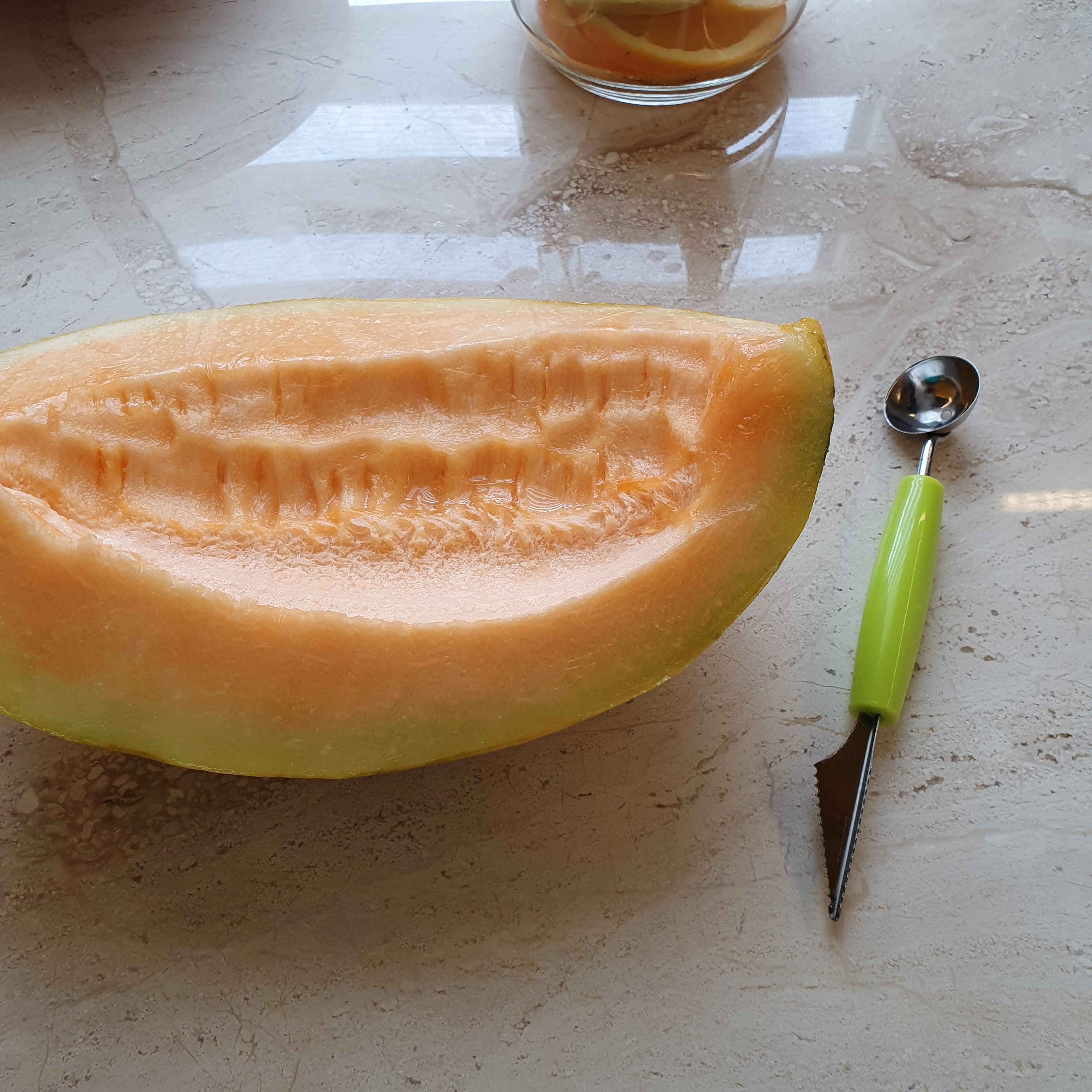
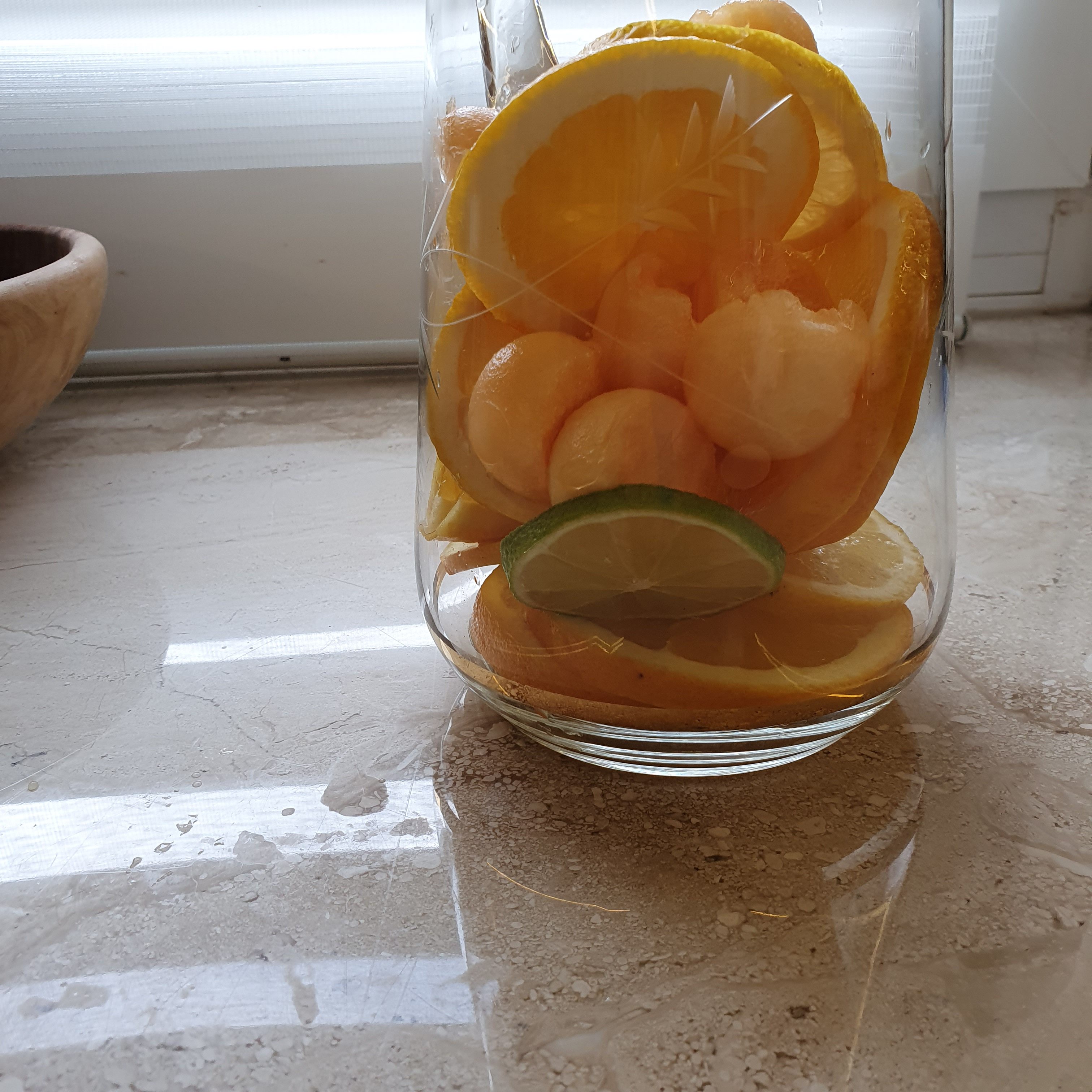
I made a few balls of melon with a special device.
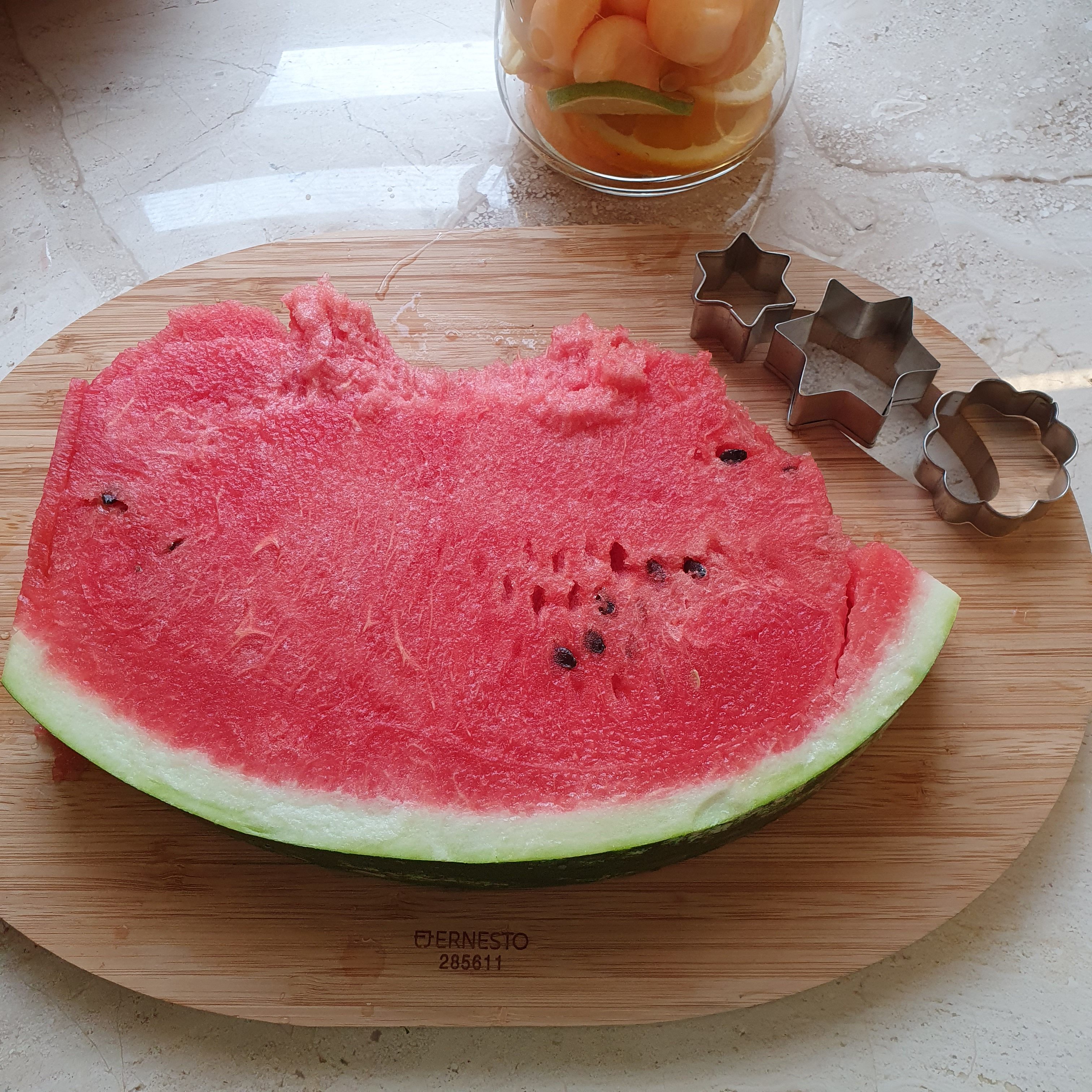
I cut stars and flowers out of a watermelon.
I filled the jug with water and added mint for freshness. Very nice drink for summer days. You could do it with sparkling water. You can add some alcohol… at the moment I can’t think of what would suit, but you can let your imagination run wild. 🙂
Do not allow the cake to cool completely, because it will be difficult to separate it from the walls of the pan. I slowed down and it was hard to get out. 😀

The cake is delicious. It is crispy on the outside and slightly sticky on the inside. This is a fairly common effect in Arabic pastries. I like it, I don’t know about you. Scale The difficulty scale is 2 out of 10. I’m happy, I still found something sweet that looks like a cake from Iraq. 😉


Next destination – Iran.