

“For you I will go to the end of the world”. If you hear these words from someone you happy man. Or he just tells you he plans to visit Ushuaia together. 🙂 This city is the most southernmost city in the world and is part of Argentina. Although Chile says the southernmost city is Puerto Williams. In Ushuaia you will enjoy the beautiful views of the mountain peaks that remind Switzerland if you are disregarded the ocean around. You will be able to see the “Fin del mundo” sign and if you wish to go to Antarctica.You will see the many small islands marked by end-of-world lights, seals and bouncing penguins. Argentina is most often associated with hot tango and people woven with passion. But Argentina and many other things – football (say Argentine can change repeatedly wife, but the football club – never); people obsessed with their appearance who are subjected to many plastic operations; the country with the highest number of psychiatrists per capita; the country that changed five presidents in 2001 within 10 days; the birthplace of the current head of the Roman Catholic Church who has once served as a bar staff in Buenos Aires. Argentina is also Maradona – the idol of generations of football fans. Or Messi – the magician with a ball in his legs. Argentina is Evita Peron, the woman, a symbol of freedom and feminism. In the country, each political party has its own brand of beer, and the famous Colgate toothpaste in Argentinean Spanish is translated “Hanged”. Here was born also the famous revolutionary of the last century, Ernesto Che Guevara, and not in Cuba, as some have erroneously thought. Argentina is the third largest beef producer in the world, and Argentine steak is known to be one of the world’s most delicious and big. It has been one of the world’s leading wine producers since the 16th century, and is currently the 5th largest winemaker in the world. Although large in size (2.8 million square kilometers), with its insignificant population of 38 million, this country is among the rare in the world. And why is it that man understands when he sinks into the windy dust of the southern desert steppe called Patagonia. A symbol of geographic distance and adventurous longing, this mythical land occupies an area (including the Chilean part) almost as much as Western Europe, and inhabits no more than one and a half million people. I can not finish the short description of Argentina without mentioning the kataratas – the Iguassu waterfalls. What dread and awe have experienced Alvar Nunes Cabeza de Vaca and his companions, as first Europeans who have faced this terrible water avalanche? It is said that when for the first time Eleanor Roosevelt sees Iguasu exclaiming “The Poor Niagara!”. The legend tells that one of the local gods decided to take a local girl, Naipi. She, however, fled a canoe with her deadly beloved Taroba on the Iguaşu River (in the native language i-wassu means “great water” from where the river’s name). The God (like any god) was angry at this self-will and cut the river into two, thus vowing to the two young and in love to an “endless fall”. That’s right, the gods do not acknowledge a denial. Out of legends, Iguasu brings a mixture of admiration, quiet horror and awareness of your own nothingness. Frames from him have been seen in many movie productions, one of them being the last episode of Indiana Jones. I hope I will soon see with my eyes all that I am writing to you now. Maybe this year …;)
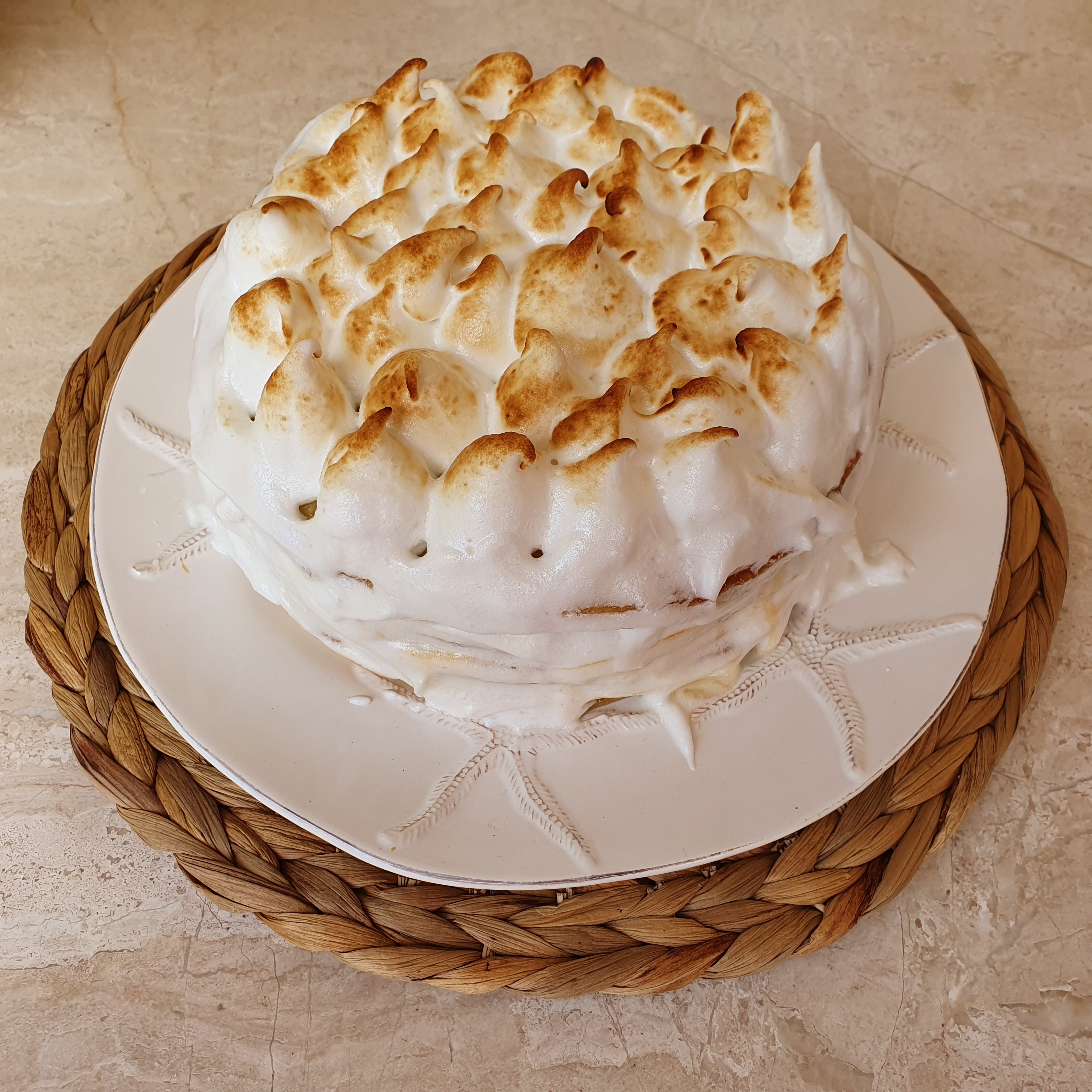
But let’s talk about food. Argentines have a very serious attitude and demand for food quality, just like the Spaniards and the Italians. The heritage of the two Mediterranean nations on culinary culture in Argentina is clearly perceptible to this day. The difference between the North and the South is significant – let’s not forget that these are 3694 km distance and climate ranging from tropical to subpolar. The northern regions use many ancient products such as corn, manioc, bananas and chili peppers, while Patagonia clearly feels the influence of settlers from Central and Northern Europe. Although the long over 5000 km of Atlantic coast suggests that fish and seafood are valued and widely used, the Argentinean culinary icon is definitely the beef. For years, the country of tango and football has been the world’s first beef consuming per capita According to the latest statistics, the Argentine eats nearly 57 kilos a year and is second only to the Uruguayan. Just to compare – in the European Union, the consumption does not exceed 20 kg per person. “El-asada” or “La pañilla” (roasted beef) is a religion for all Argentinians, whether citizens or from the village. The reason for the supreme quality of Argentine beef is the hundreds of thousands of square miles of pampas, where the noble breeds of cattle grazed to the full and live in complete freedom, guided and guarded by the legendary gauchos. A frequent company of roasted meat is the Chimichuri Sauce, which has hundreds of variations, and sometimes its ingredients are more than 20. Outside of the roasting, some of the most emblematic of Argentina dishes are meat again. For example, Pucero is a dish that has the name of a pot where various meats, along with pork legs, sometimes smoked sausages, pulses and vegetables. In the Creole “Pucero” add corn, potatoes, manioc and dried meat. “La Carbonada Cryolla” (also an emblem of national cuisine) is a sweet-salty dish, baked for the last 10 minutes in carved pumpkin and made from lean veal with many aromatic spices, vegetables, pulses and fruits. The dish, whose modest name “Matambre” (a hunger killer) has nothing to do with culinary reality, is a wonderful roll of beef stuffing with stuffing. Like Italians and French, Argentines like to have breakfast for a variety of pastries – muffins, croissant with and without fillers. But if there is a dessert that symbolizes Argentina, it is the omnipresent “Dulse de leche” – a dense, lightly caramelized milk with sugar and vanilla. They smear it on slices, eat it with pancakes , fill with it tiers. In my cake is also on central place. I chose for you to make “Rogel” cake. Layers of fine, crispy peel covered with “Dulse de leche”, complete with velvety measure. Sometimes it also occurs under the name “Alfajor Rogel”, because it is reminiscent of alfajores (Argentine pastries with corn flour and stuffing from Dulce de léche). Today is a nice holiday – St. George’s Day. At home there is a person with a name day and this is my gift to him. Here is the recipe:
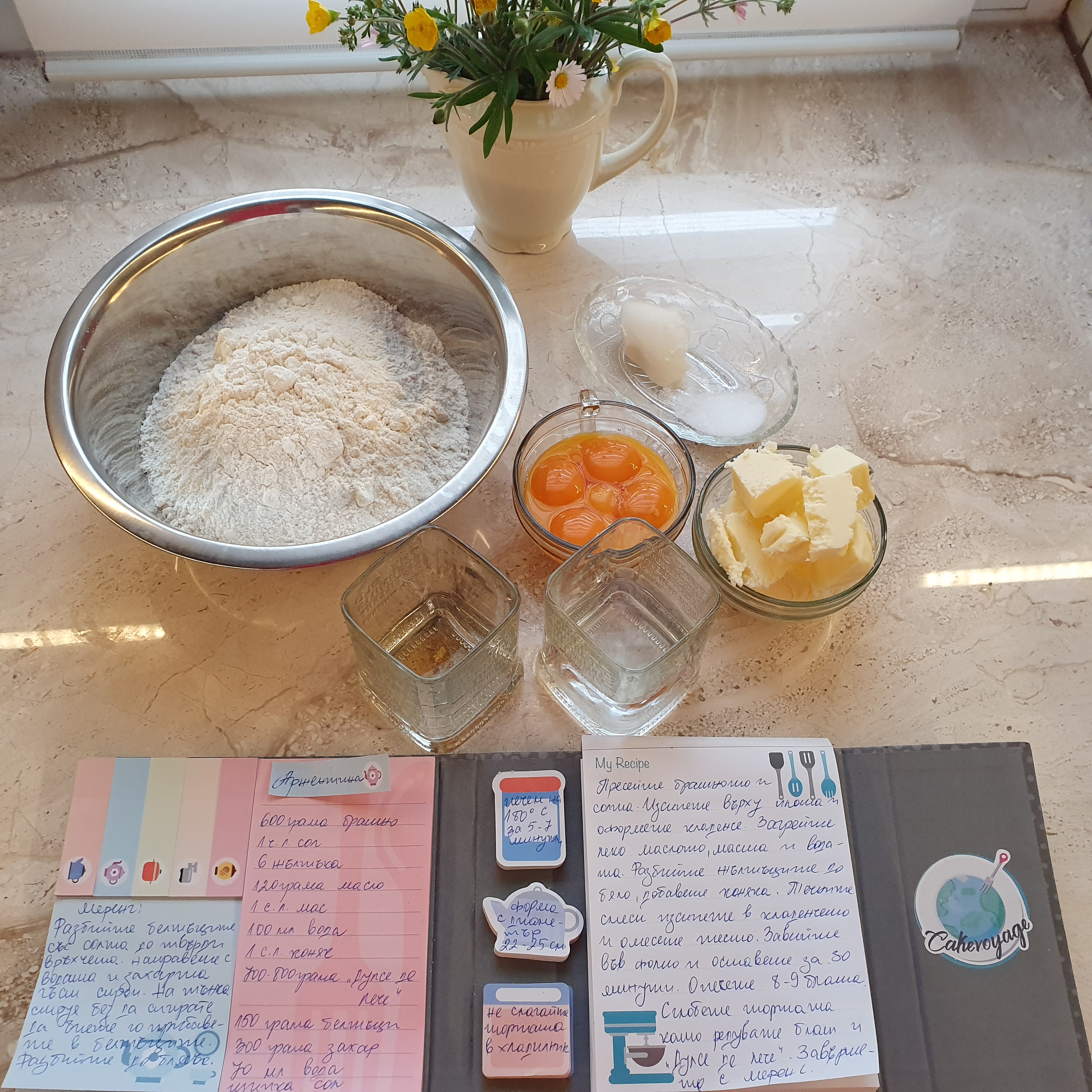
For cake:
600 grams of flour
1 teaspoon of salt
6 yolks
120 grams of butter
1 tablespoon of margarine or lard
100 ml of water
1 tablespoon of cognac
For Cream:
700 – 800 grams “Dulse de leche”
For decoration:
150 grams of egg white
300 grams of sugar
70 ml of water
Pinch of salt
Steps of preparation:
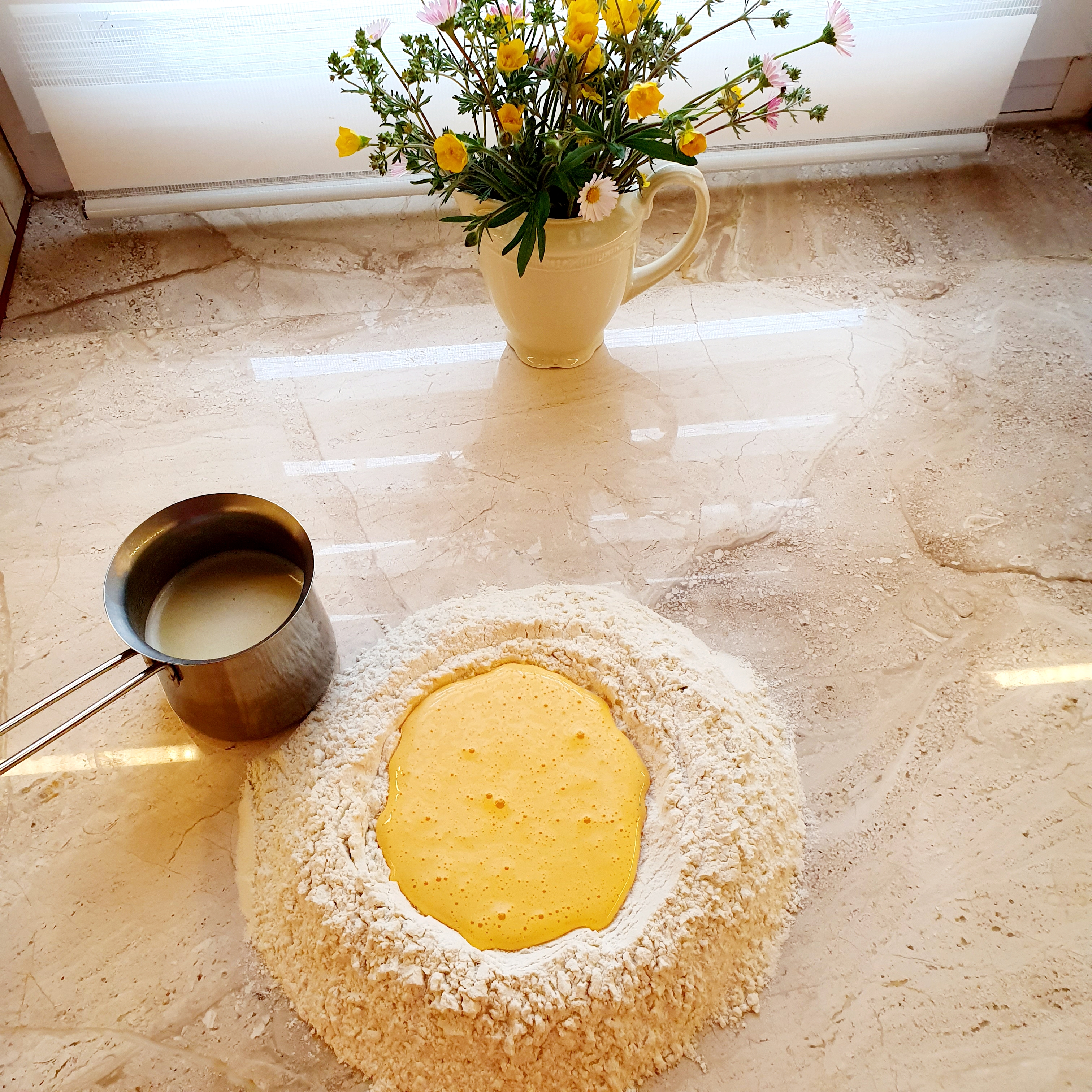
Sift the flour together with the salt and form a well on the kitchen top. Heat oil, grease, and water while mixing. Beat the egg yolks to white and stir with the cognac. Pour the mixture with the yolks and the one with the fat into the well and gently knead the dough.
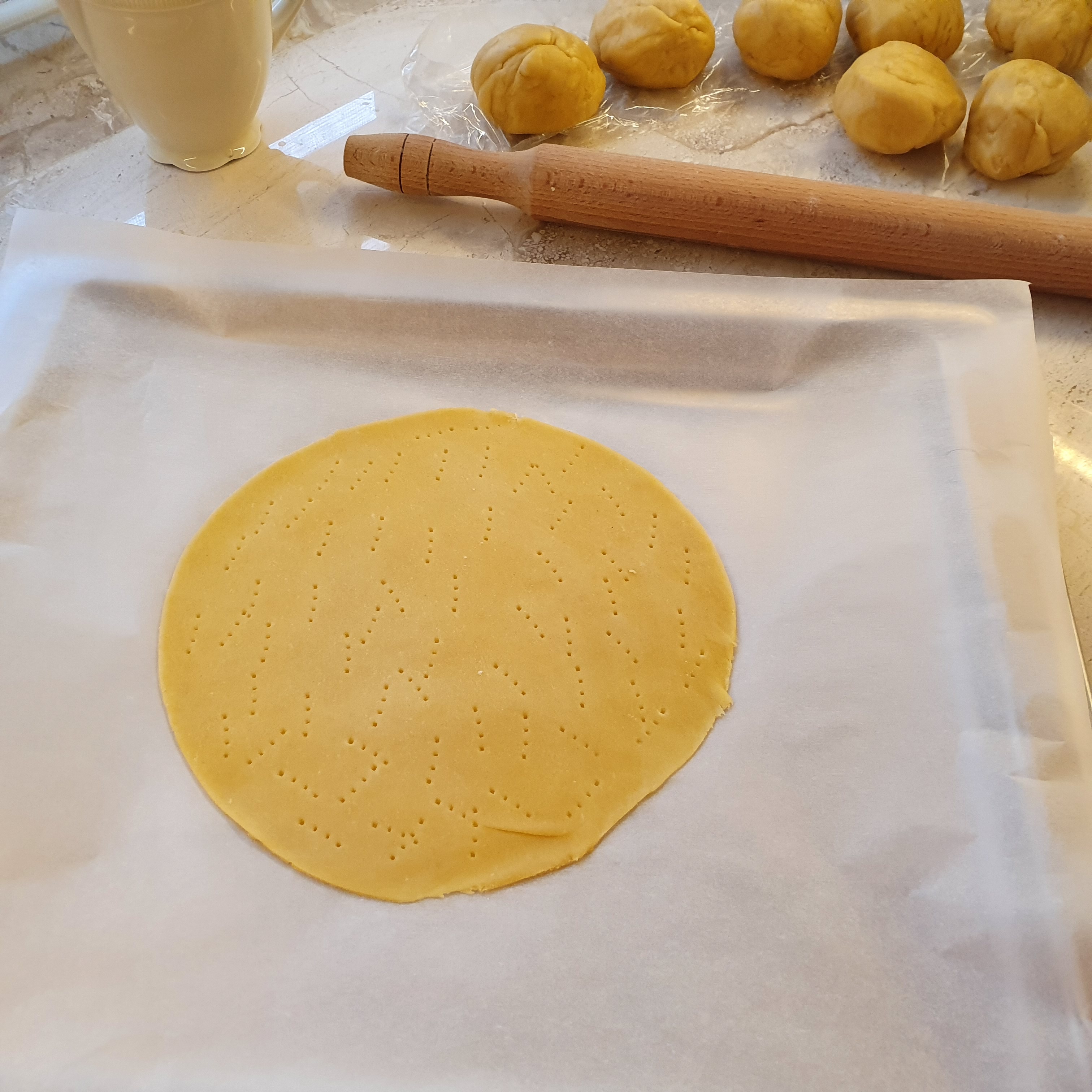
Form a ball and wrap it in a foil for fresh storage. Let it rest for 30 minutes at room temperature. Divide the dough into 8 or 9 balls and roll off each 2 mm thick bark with a diameter of between 22 and 25 cm. Form the correct circles with a template or the moving base of a cake baking mold. Push the cake with a fork so that they do not rise when baking and place them in an oven heated 180 degrees. Bake each bark for 5 to 7 minutes.
When all the bats are baked and cooled, it is time to assemble the cake. Bring a sufficient quantity of “Dulce de leche” between each bark. Do not press the barks so they do not break.
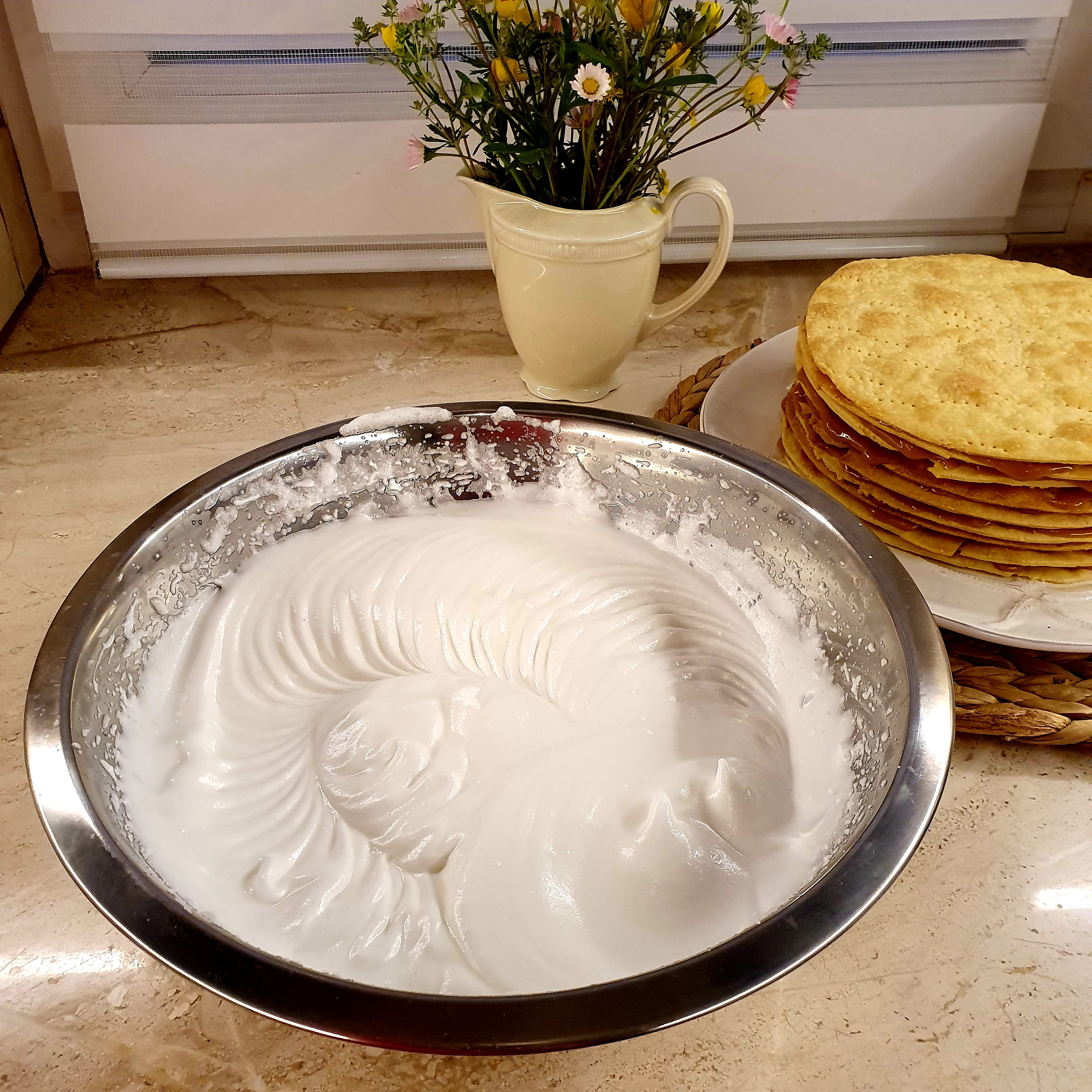
It is time to prepare the merengue. Beat the egg whites with salt to firm tips. On the hob, make sugar syrup from water and sugar while bubbling get up large bubblesOn a thin stream, while smash with a mixer, add the hot syrup to the egg whites. Be careful not to drop it on the stirrers. Finally, you should get a dense and shiny meringue. Use posh cakes or casually with a spatula, smear the egg whites mixture on top of the cake. Use a kitchen burner on the meringue to finish the final look of the cake. It is not recommended to leave it in the fridge because it will soften the swamps, but if you soften you, you can ignore this indication.
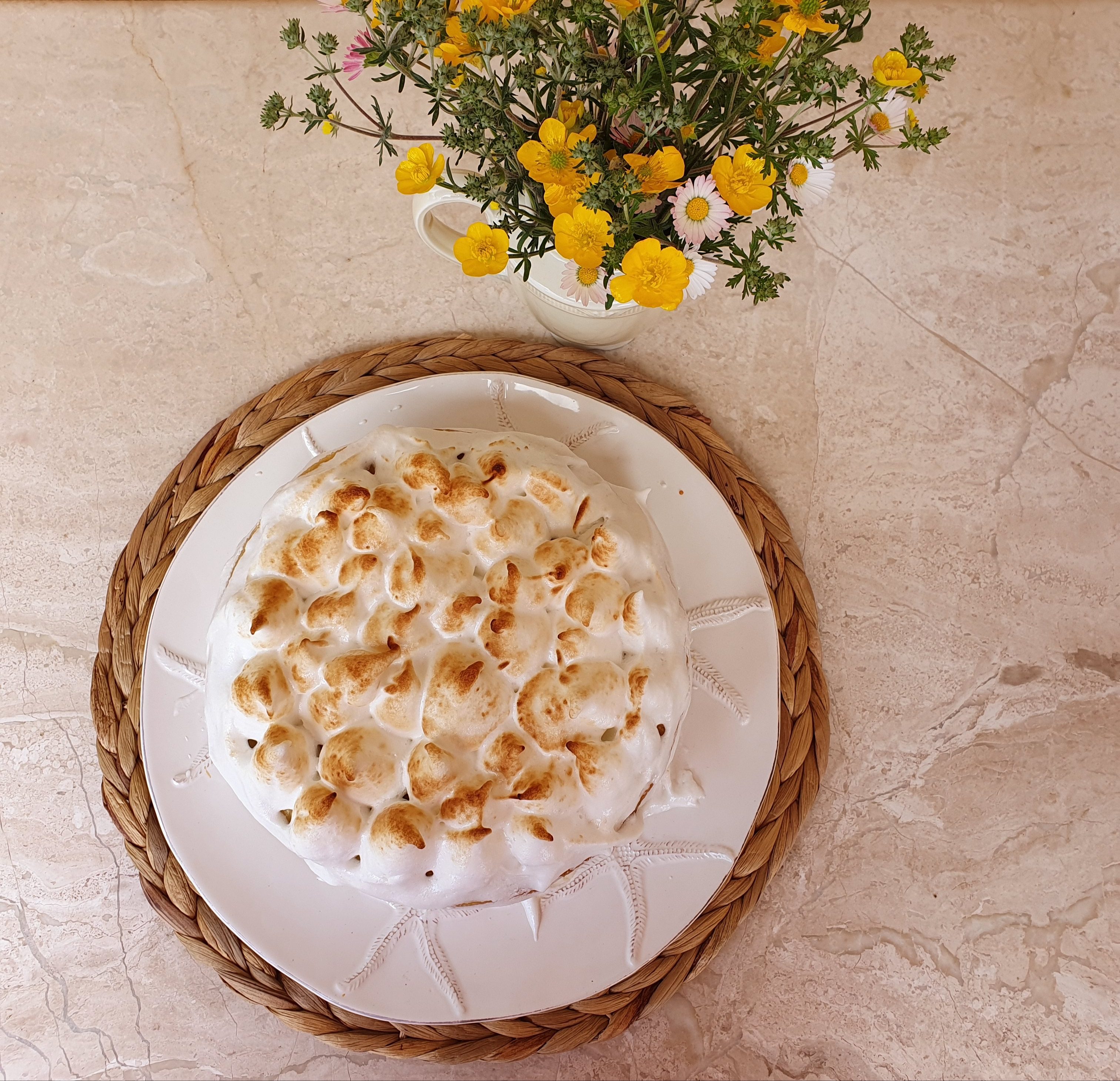
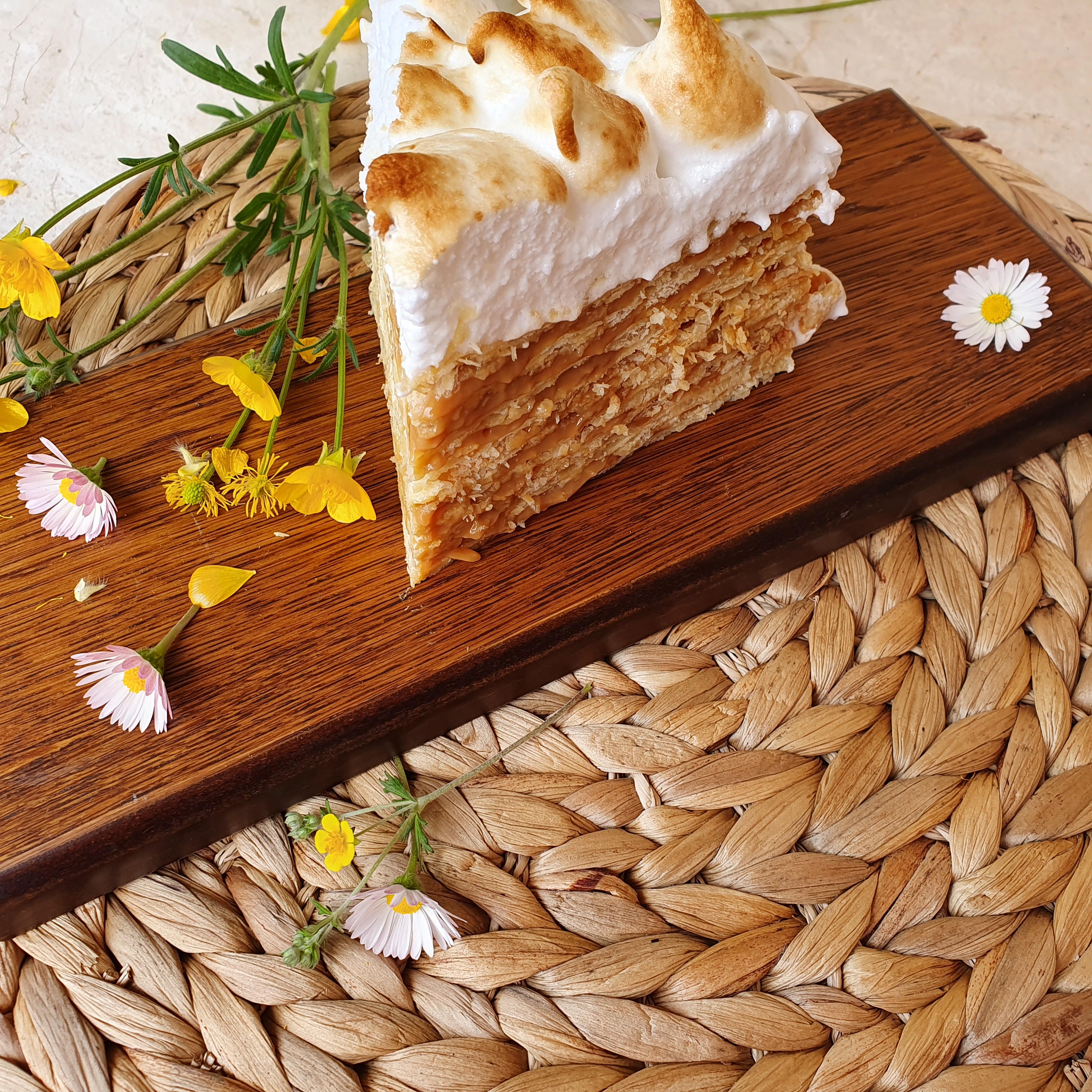
This is from me and from Argentina. I prepared a cake with one of the three most important culinary symbols of the country – “Dulse de leche”. If you cook a steak at home and make Matte tea for serving with the cake, you will have tried all three symbols. Enjoy! And if you have a holiday at home, rejoice your relatives with something you have done yourself, for so your heart will be on the plate and believe – it is always visible! 🙂
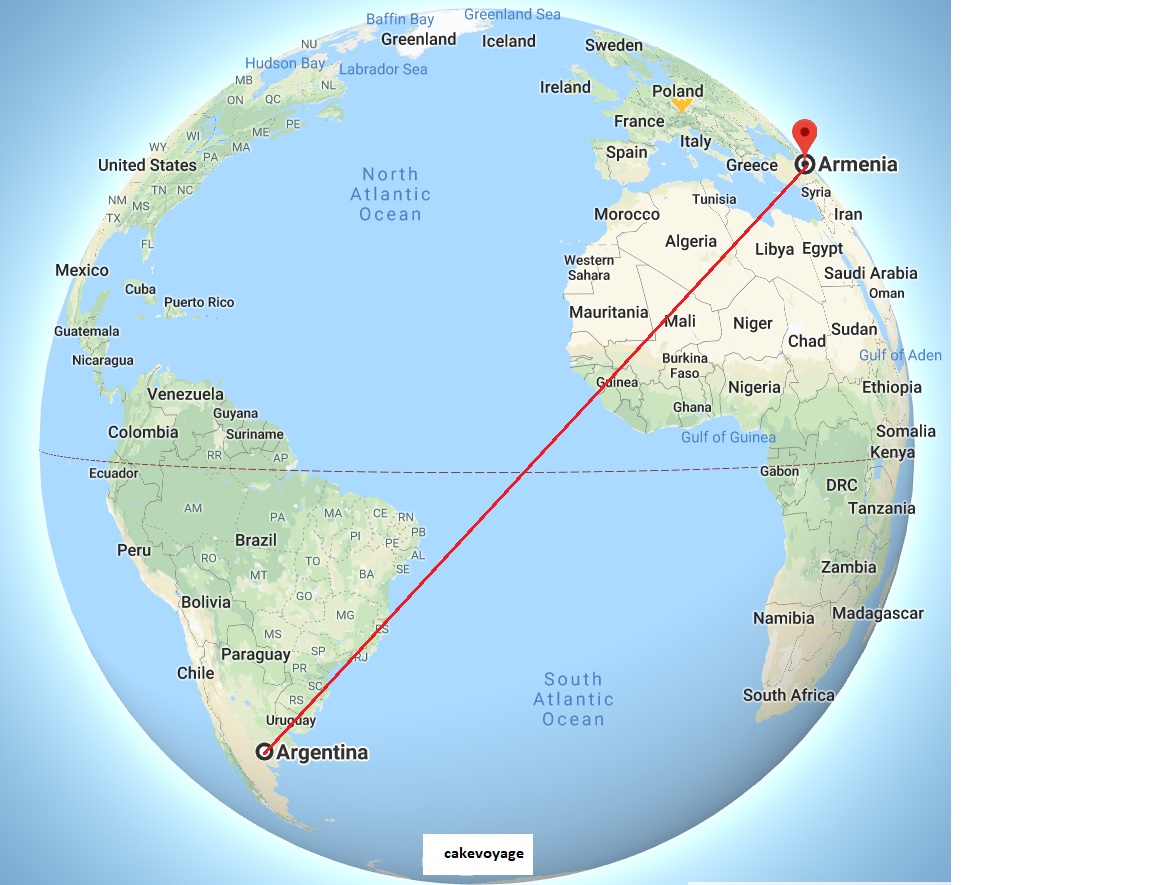
Next destination – Armenia.

I will immediately take hold of your rss feed as I can not find your email subscription hyperlink or e-newsletter service. Do you’ve any? Kindly allow me realize so that I could subscribe. Thanks.
Sweet blog! I found it while browsing on Yahoo News. Do you have any suggestions on how to get listed in Yahoo News? I’ve been trying for a while but I never seem to get there! Thank you
Very good written story. It will be supportive to anybody who employess it, including me. Keep up the good work – looking forward to more posts.