
They call them the Australian Thai paradise of tropical islands. The Coconut (Keeling) Islands are located 2,750 kilometers from Perth in Western Australia. They are strategically located midway between Australia and Sri Lanka in the Indian Ocean. The island archipelago consists of two atolls (North Keeling Island and South Keeling Islands) and 27 coral islands, but only two of them are inhabited. These are West Island, which is the capital and where the airport is located, and Home Island. The current population of the Cocos (Keeling) Islands is approximately 600. 80% of the residents practice Sunni Islam and the two main languages spoken are the Cocoanut Malay dialect and English.

We’ve all heard of the dwarf states. In fact, the Cocos Islands are one of the smallest countries in Asia. They were discovered by the English captain Keeling in 1609. The Cocos Islands have been under the administration of Australia since 1955. The official flag of the country is the Australian one, and unofficially, theirs is flown everywhere – a green cloth decorated with a coconut palm, a crescent moon and the Southern Cross. The Southern Cross is a characteristic symbol of these lands. The crescent moon represents the faith of the Malays and the palm tree represents what the natives do most of their lives.
Captain William Keeling was the first European to see the islands in 1609, but they remained uninhabited until the nineteenth century when they became the property of the Cluny-Ross family. Queen Victoria granted the islands in perpetuity to the Clunis-Ross family in the 19th century. For more than 150 years, the Clooney-Ross family has “ruled” the Cocos (Keeling) Islands. Members of the Clooney-Ross family have at various times declared themselves “kings” and applied to have the islands declared a kingdom. In the 1970s, the dissatisfaction of the Australian government with the feudal style of administration of the island by Clunis-Ross grew. In 1978, Australia forced the family to sell the islands for AU$6,250,000 using the threat of compulsory acquisition. Now the islands are a possession of Australia – an external territory. They are managed by an Australian administrator. A council of the islands decides the issues of local self-government. The monarch is the Queen of England.
Most of the natural forest on South Keeling Islands has been replaced by coconut plantations or other introduced species, while the vegetation on North Keeling Island is still indicative of the flora that naturally developed around the Coconut Islands. 61 endemic plant species have been recorded on the islands. No mammals are found, and the gecko is the only recorded terrestrial reptile on the islands. Both atolls feature an almost intact coral atoll ecosystem with the outer reef slopes descending to the sea floor. Marine life recorded in the areas around the atolls includes over 500 species of fish, 100 hard corals, 600 species of molluscs, 200 species of crustaceans and nearly 100 species of echinoderms. There are also many birds.
Coconuts are mainly produced on the islands, and the necessary food products are imported. As you can imagine with a population of less than 600 people and a lack of traditional foods and products it is not expected to have a pile of cake recipes. 🙂 That’s why I bravely took a British recipe and will make it for you – Squidgy chocolate cake. Here are the necessary products:
for the cream:
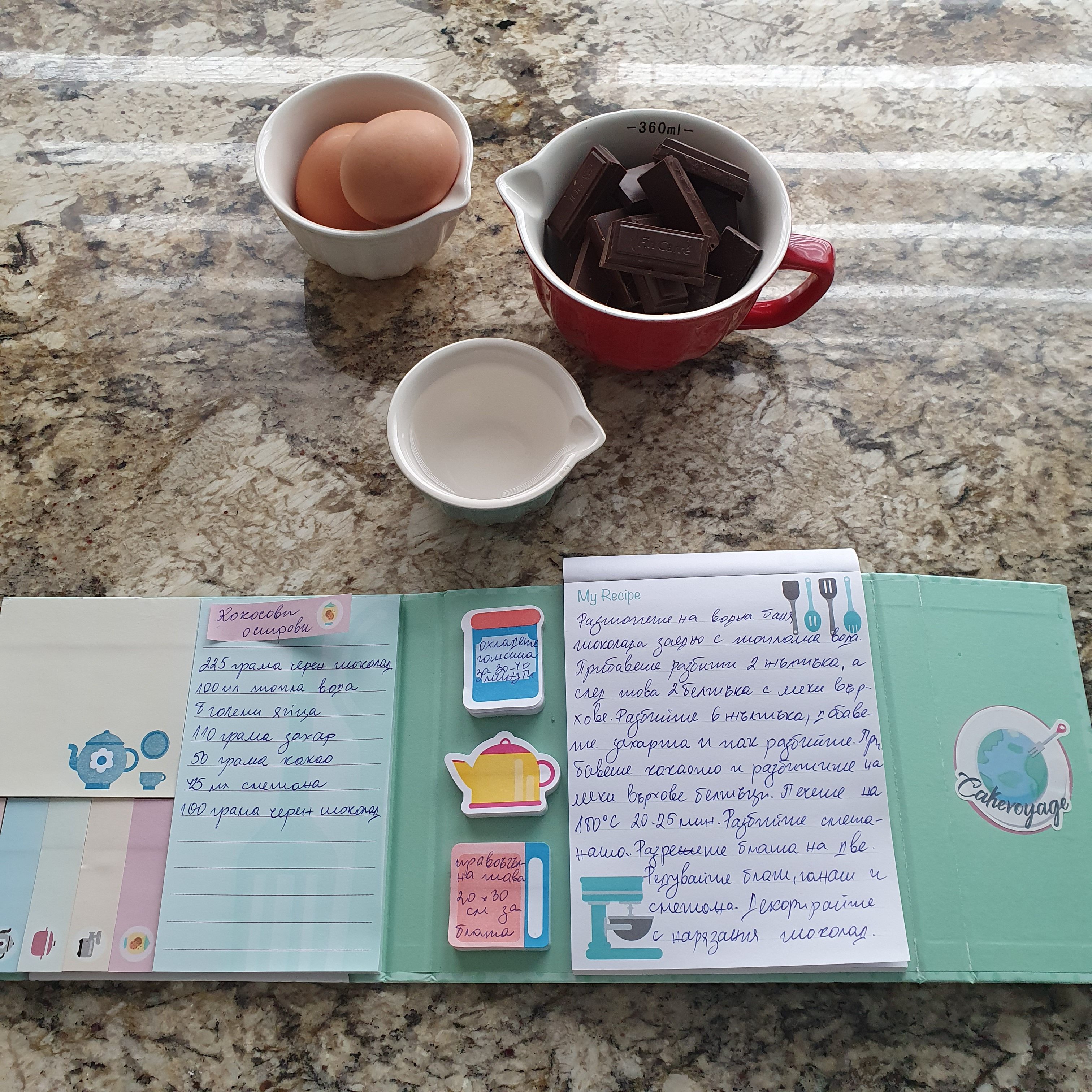
225 grams of dark chocolate
100 ml of warm water
2 eggs
for the cake base:
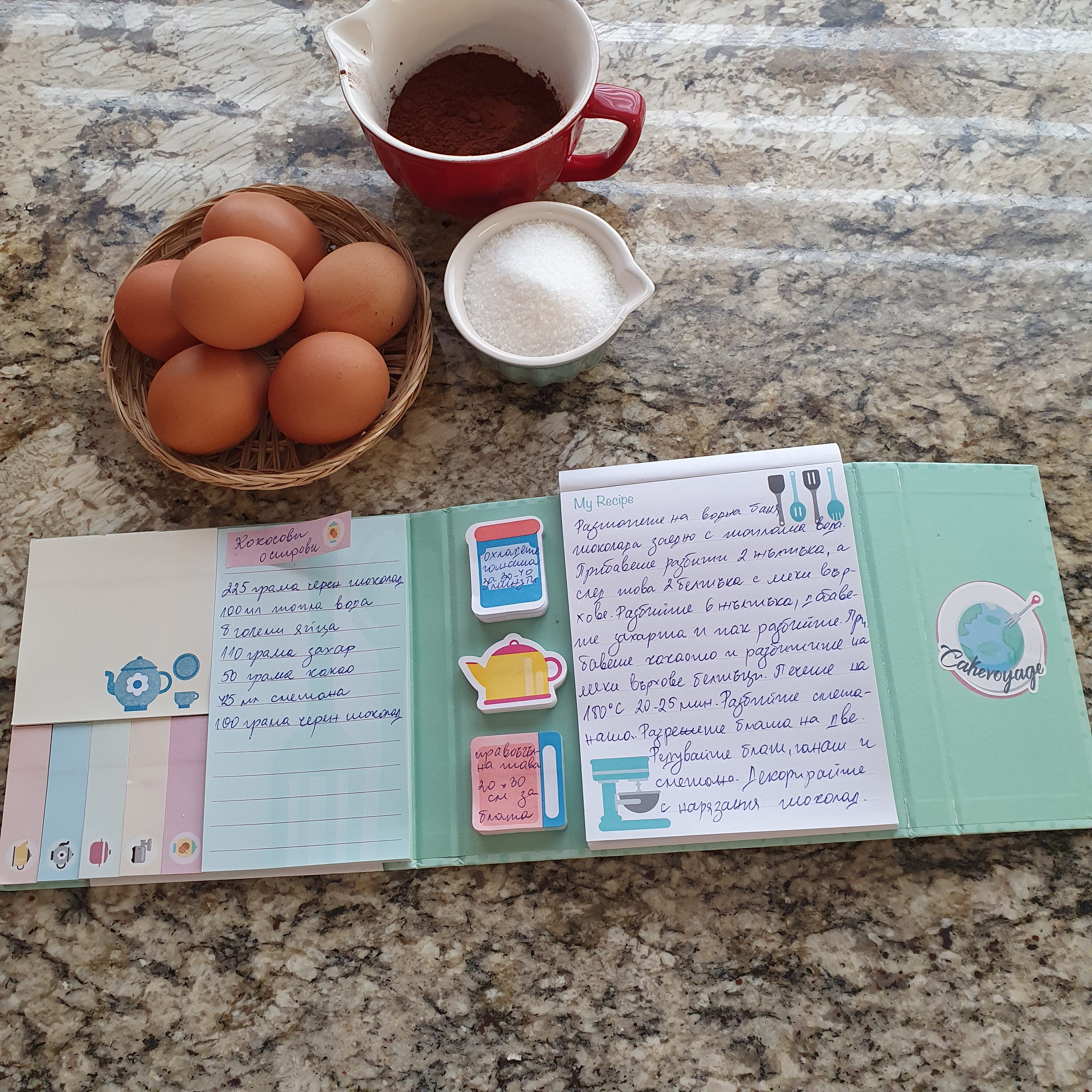
6 eggs
110 grams of sugar
50 grams of cocoa
for cream and decoration:
425 ml cream
100 grams of chopped dark chocolate
Steps of preparation:
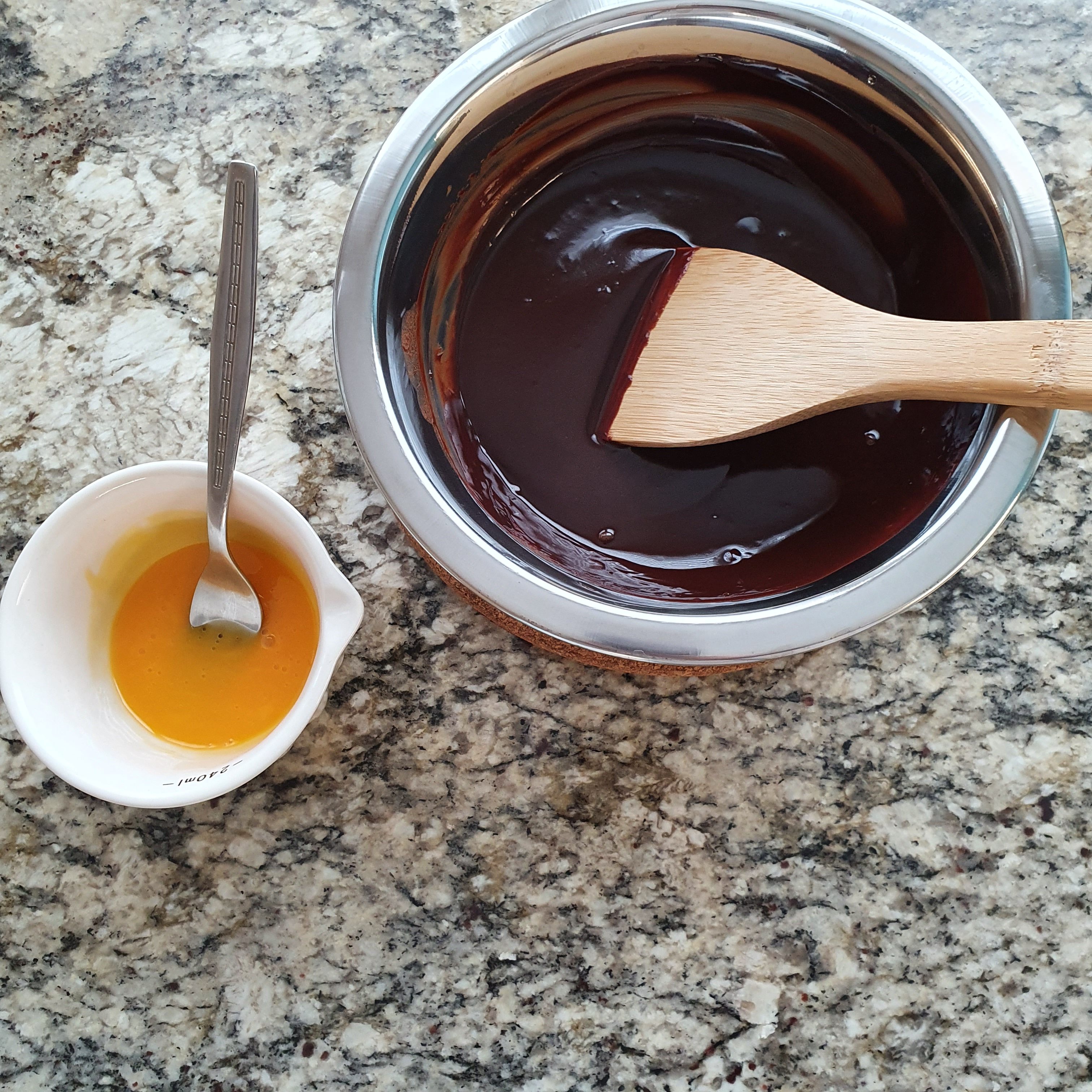
Melt the chocolate in a water bath and add the warm water. Blend for a few minutes until the mixture is shiny and smooth. Separate the eggs into yolks and whites. Lightly beat the egg yolks and add them to the chocolate mixture. Stir vigorously until homogenous.
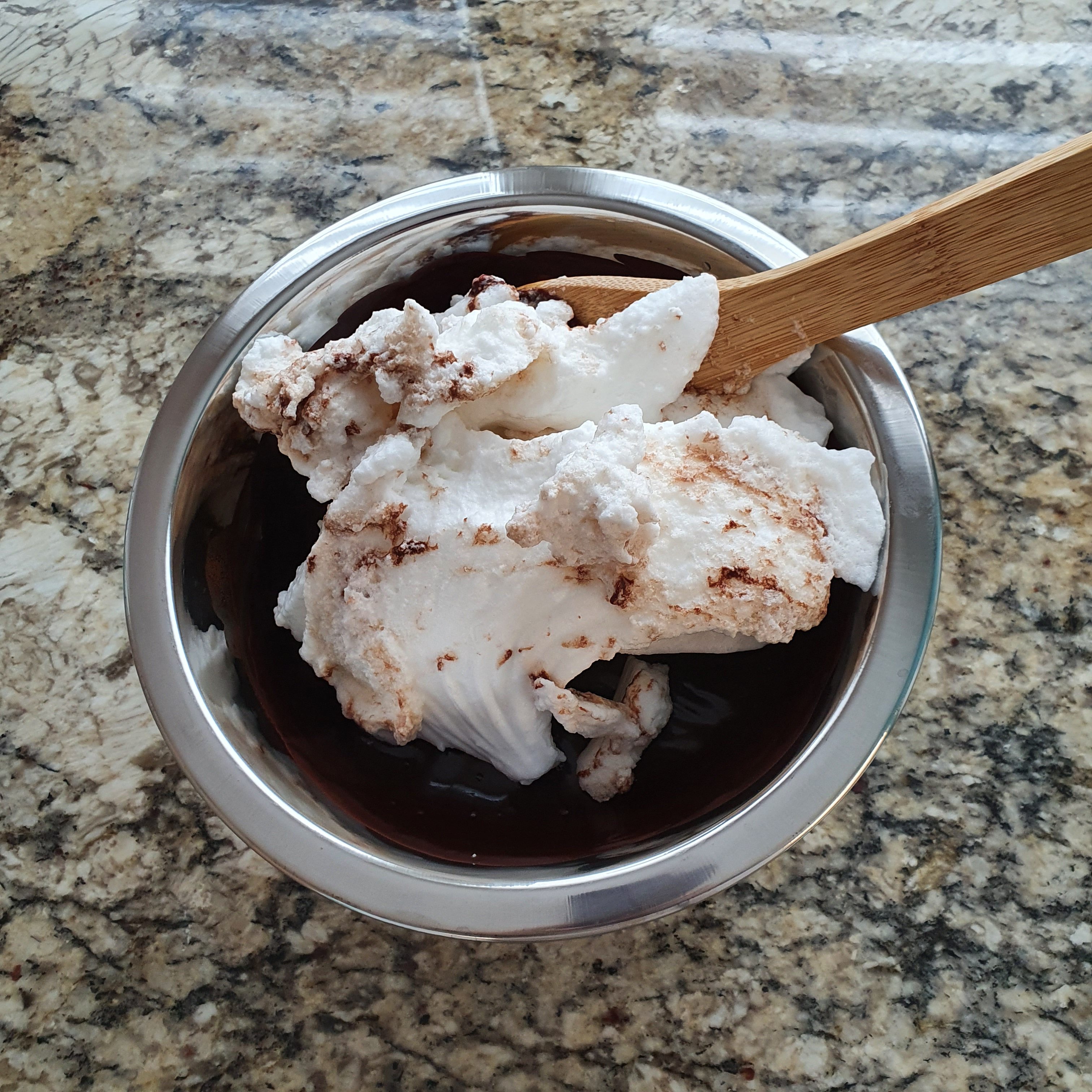
Separately, beat the egg whites until they begin to form soft peaks. Add them to the chocolate mixture and carefully stir, scooping from the bottom up, so as not to lose the air in the egg whites.
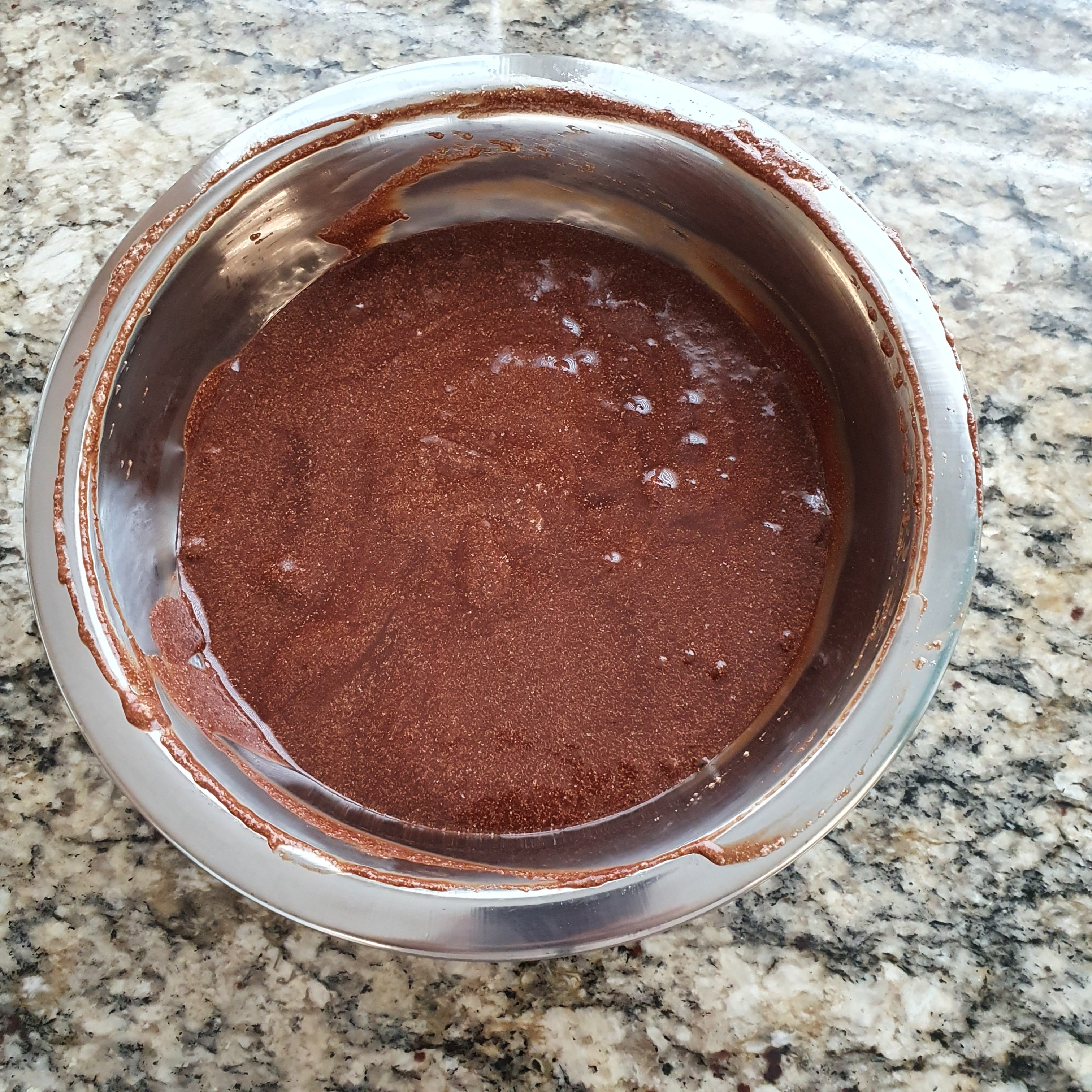
When everything is mixed, cover the bowl with cling film and place in the fridge to chill until it’s time to assemble the cake.
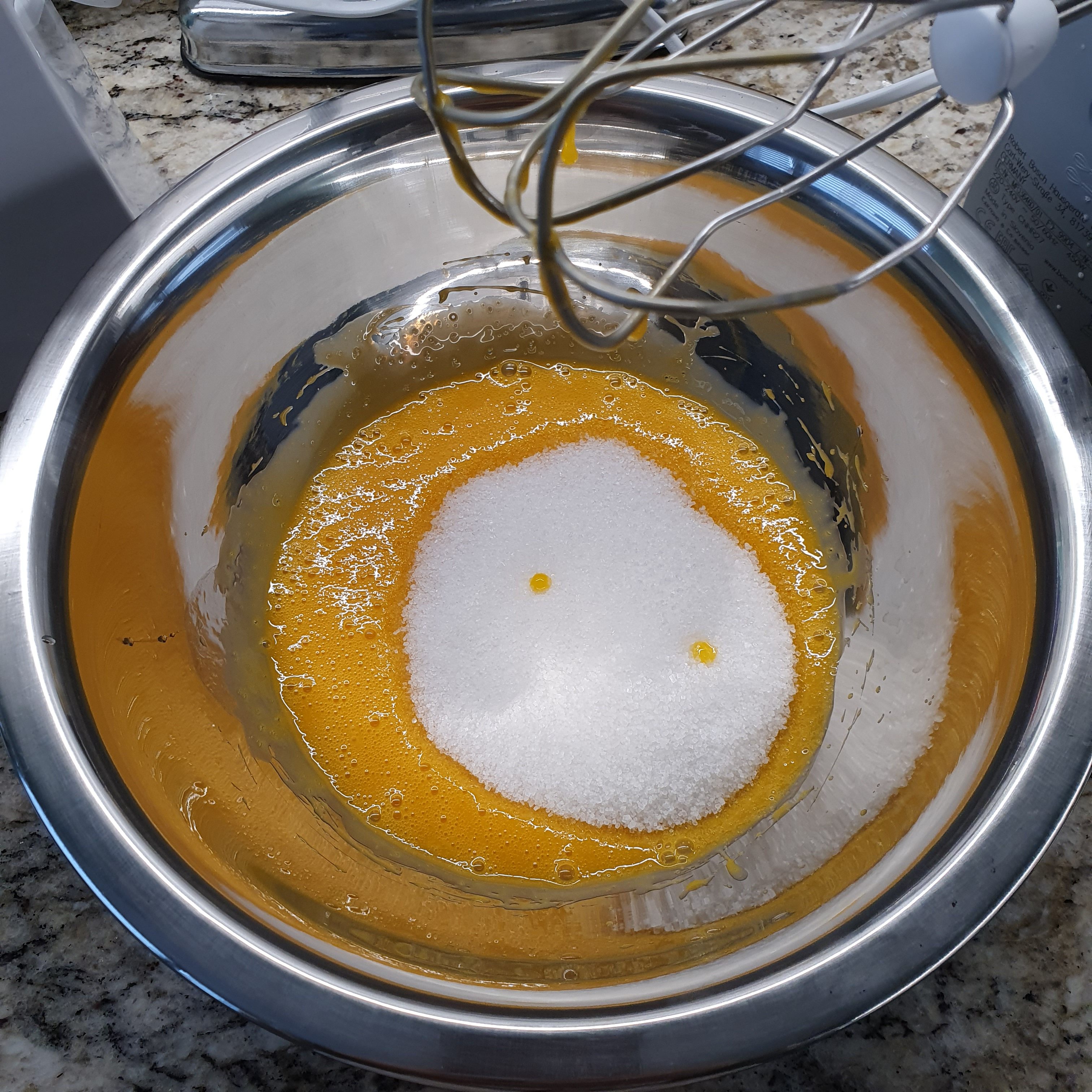
For the base of the cake, we separate yolks from whites again. Lightly beat the yolks and then add the sugar. We beat a little more, but not until white.
Add the cocoa and stir until absorbed.
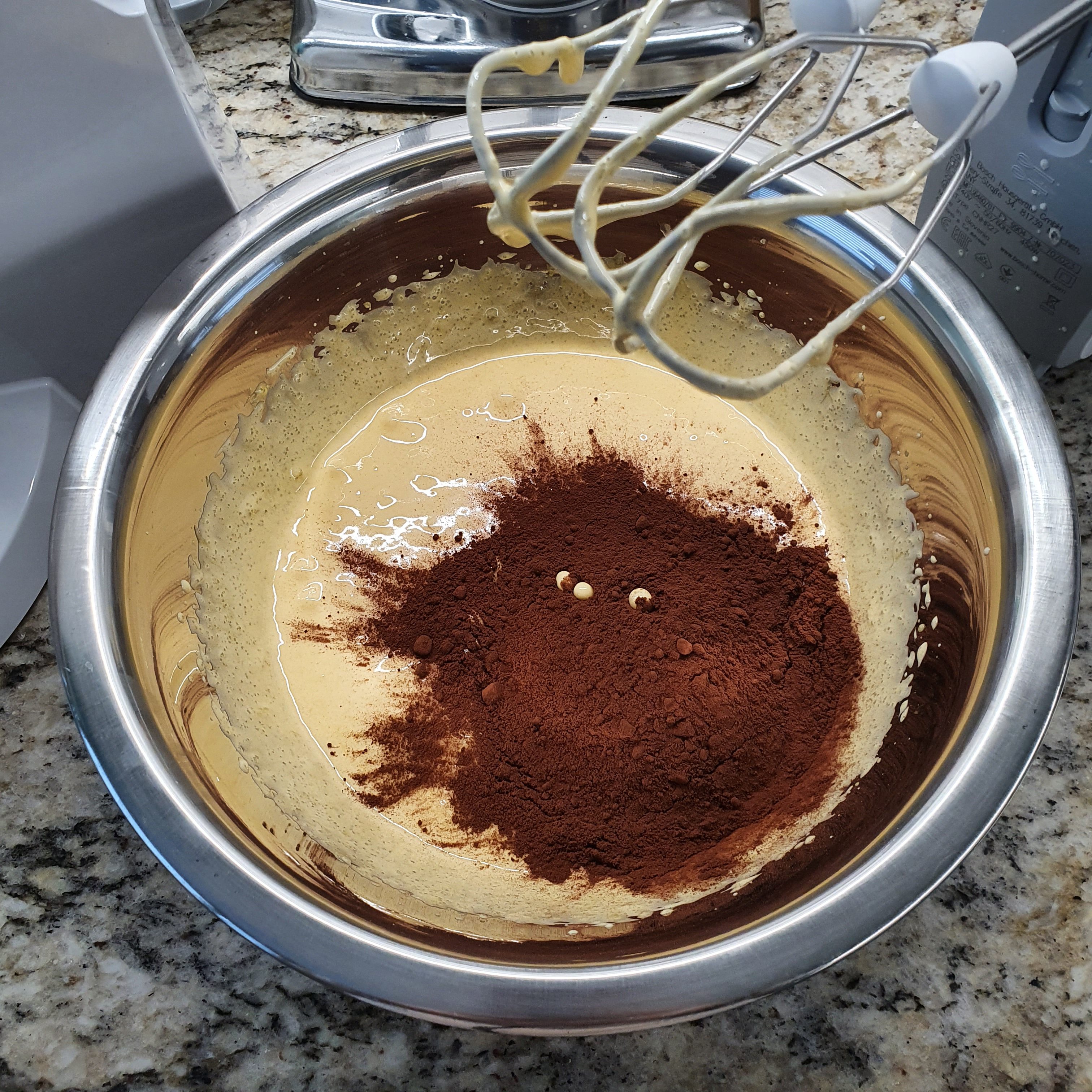
Beat the egg whites separately to soft peaks. Add them carefully to the mixture and mix until homogenous. Line a 20×30 cm rectangular tray with paper, leaving the paper slightly over the edge of the tray.
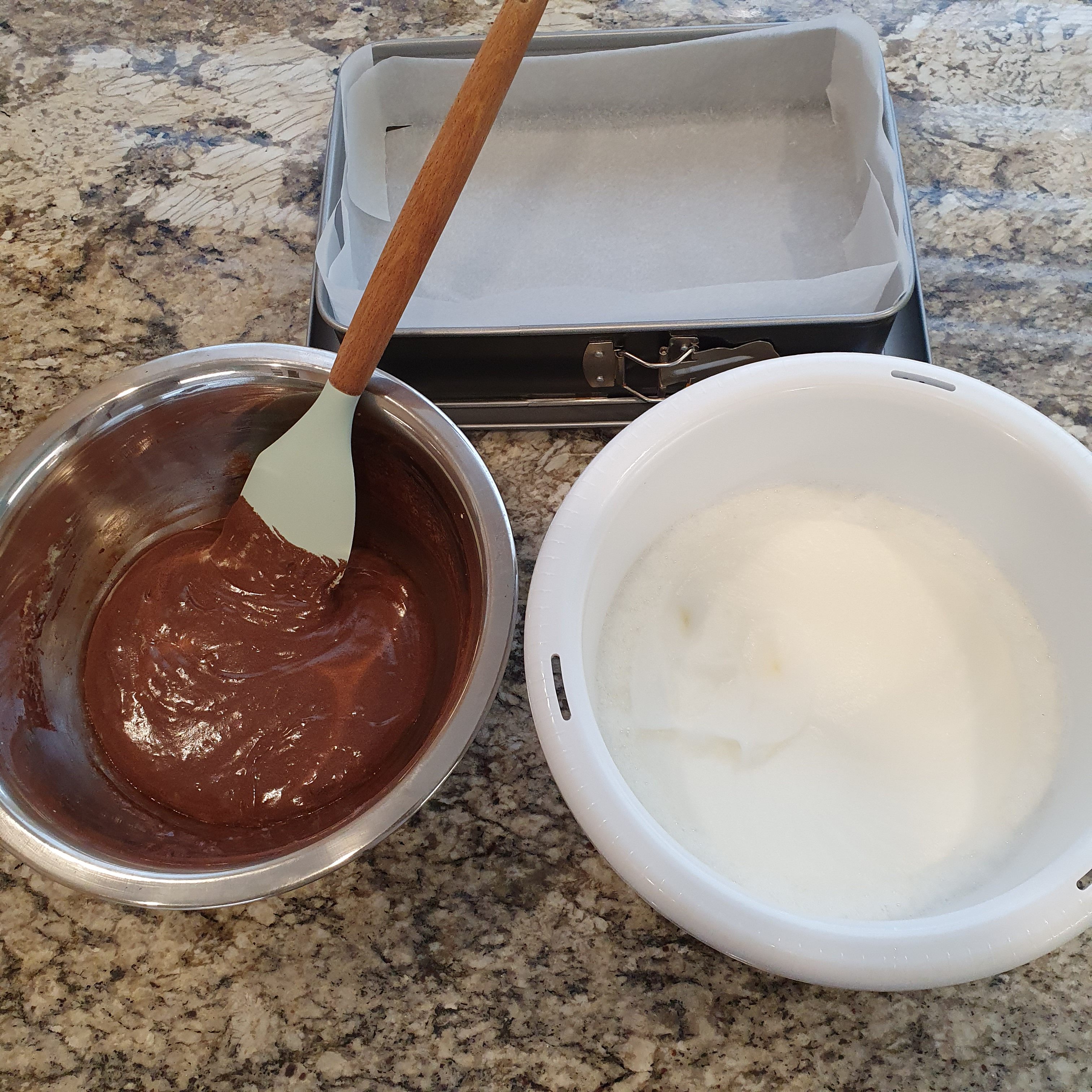
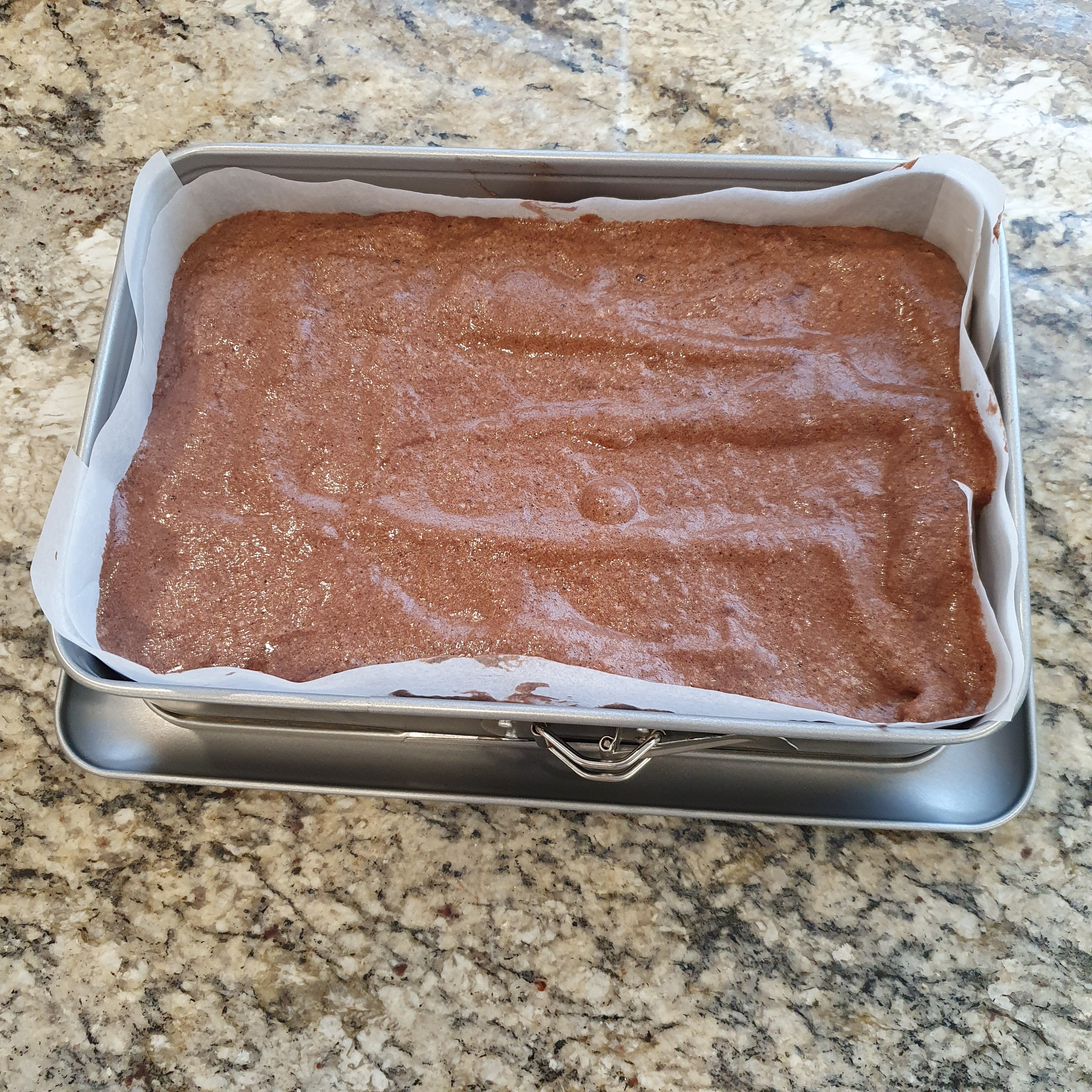
Bake in a preheated oven at 180 degrees for 20 to 25 minutes.
Note that the base of the cake is similar to a souffle and after it puffs up during baking it is quite normal for it to fall slightly afterwards.
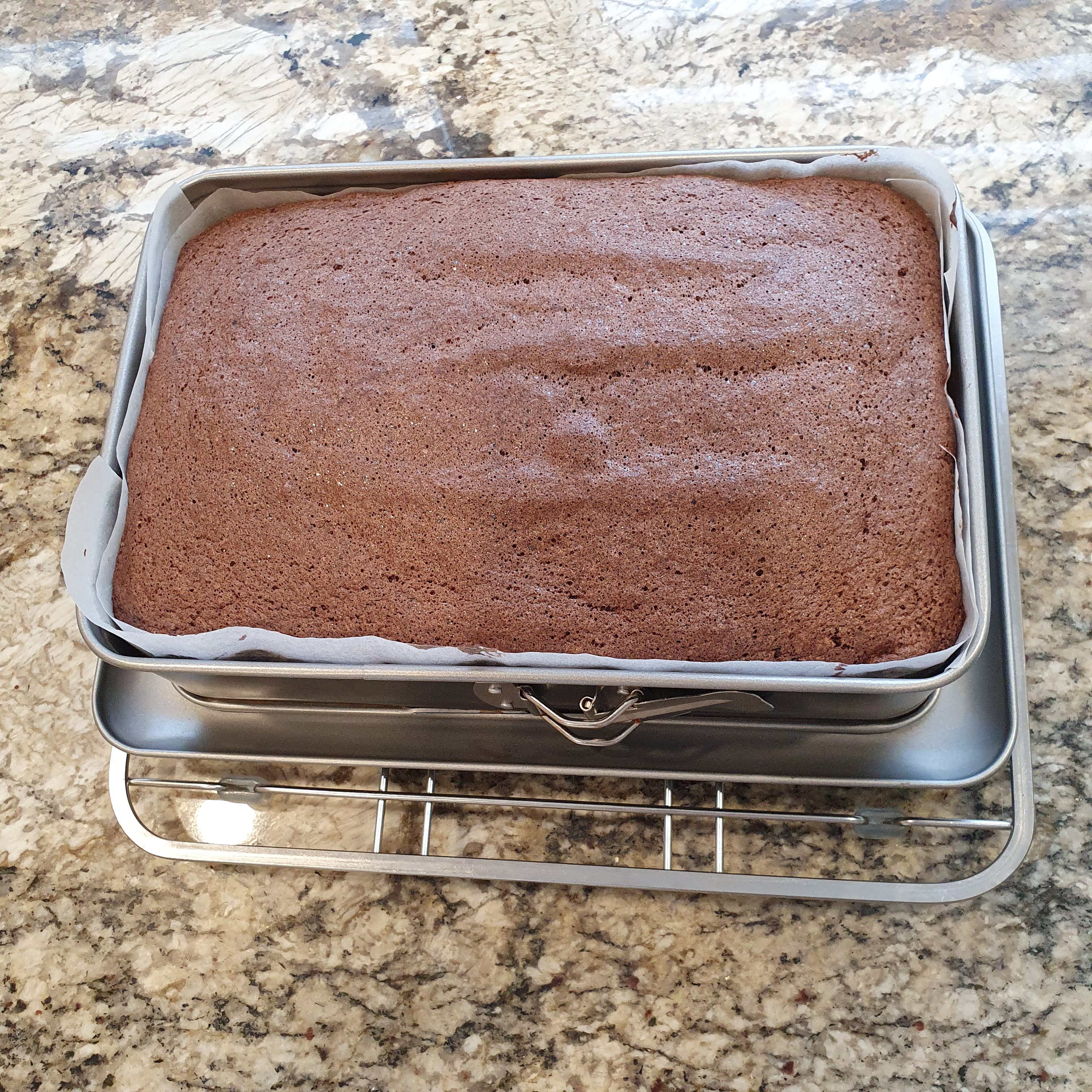
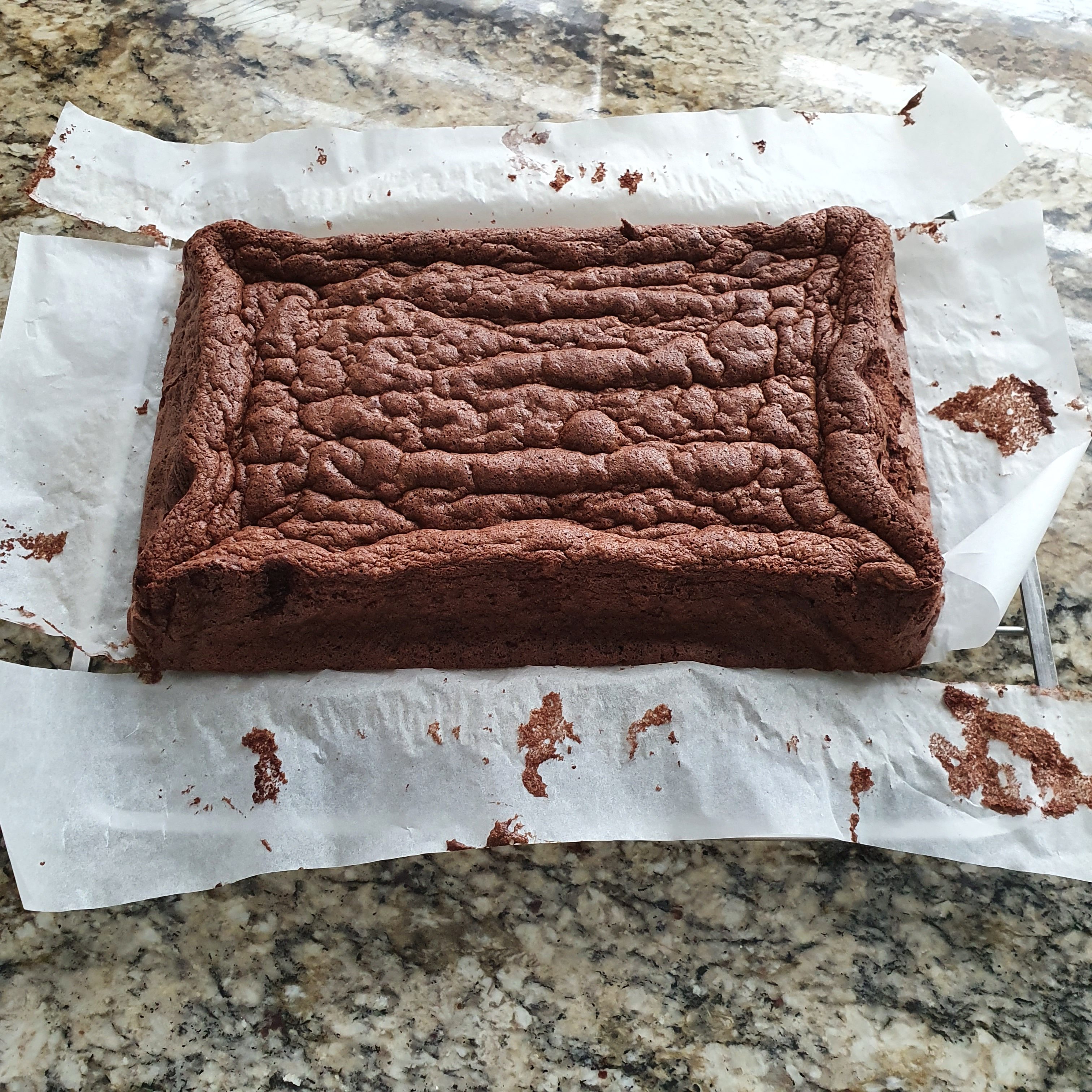
While the base is cooling, whip the cream to soft peaks and chop the dark chocolate.
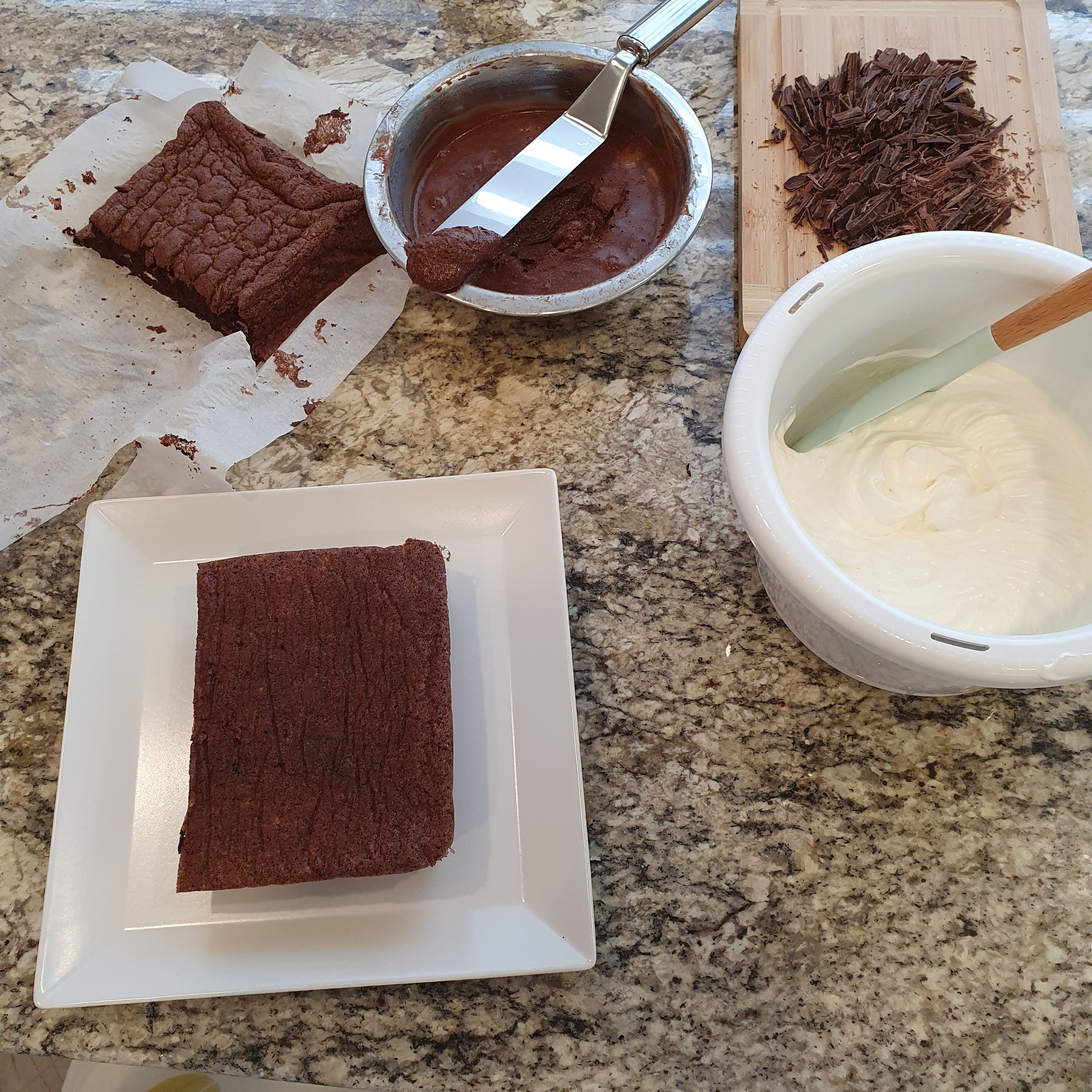
When the base has cooled completely, cut it in half down the middle. Place one portion on a serving plate. Spread with half the chocolate cream.
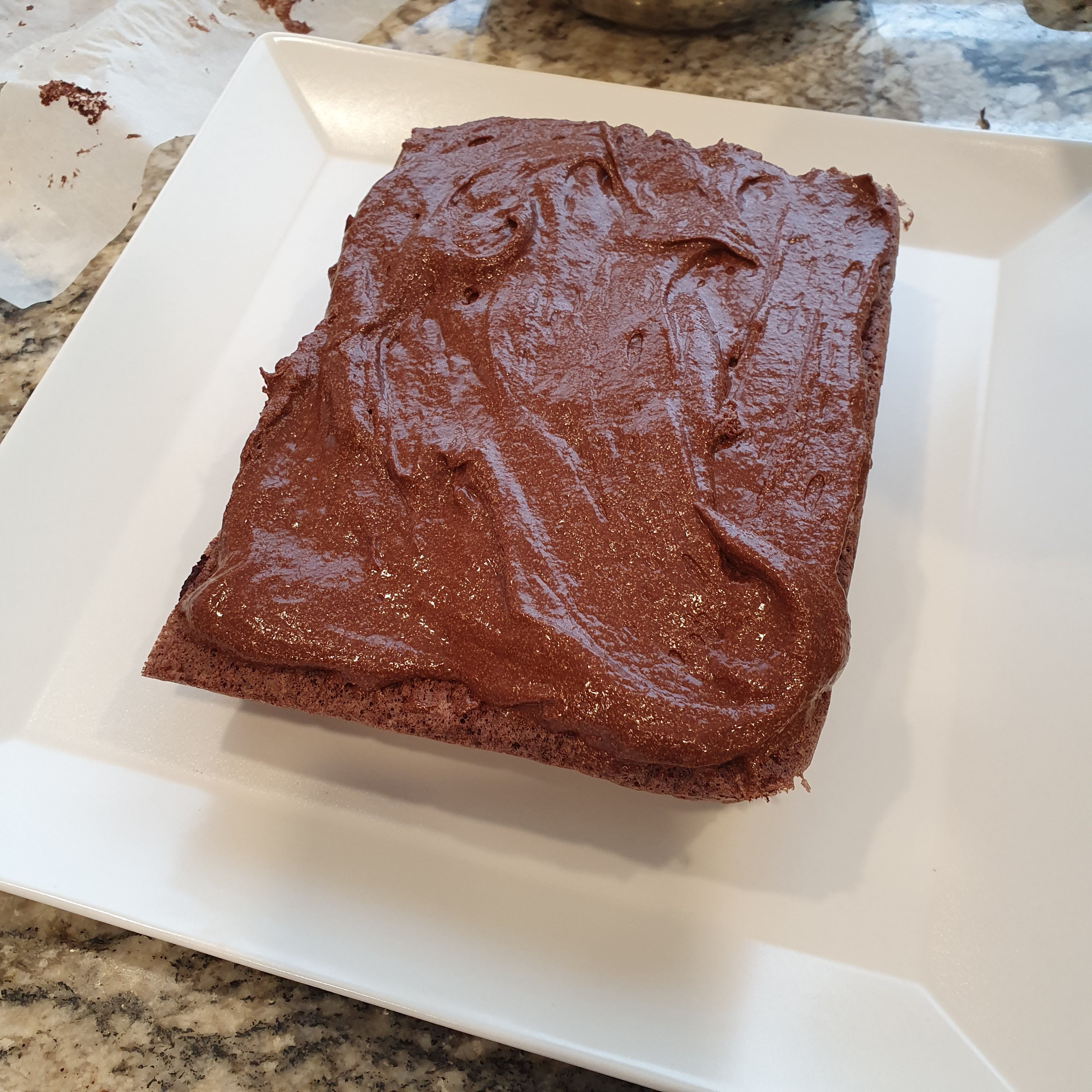
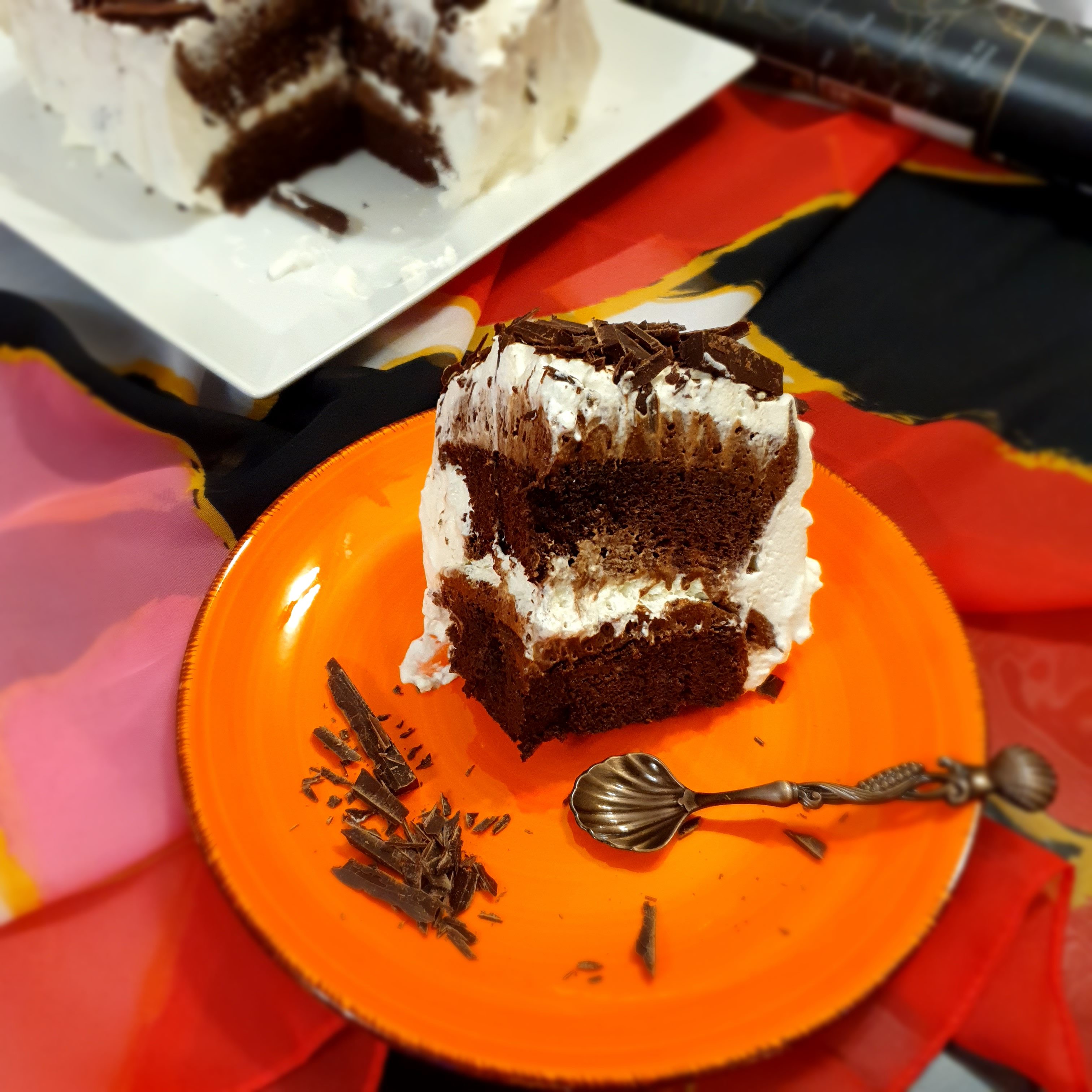
Spread cream on it and sprinkle with some of the chopped chocolate. Next is the second layer and the remaining chocolate cream. Cover the top and sides with cream and, to finish, sprinkle with the remaining chopped chocolate.
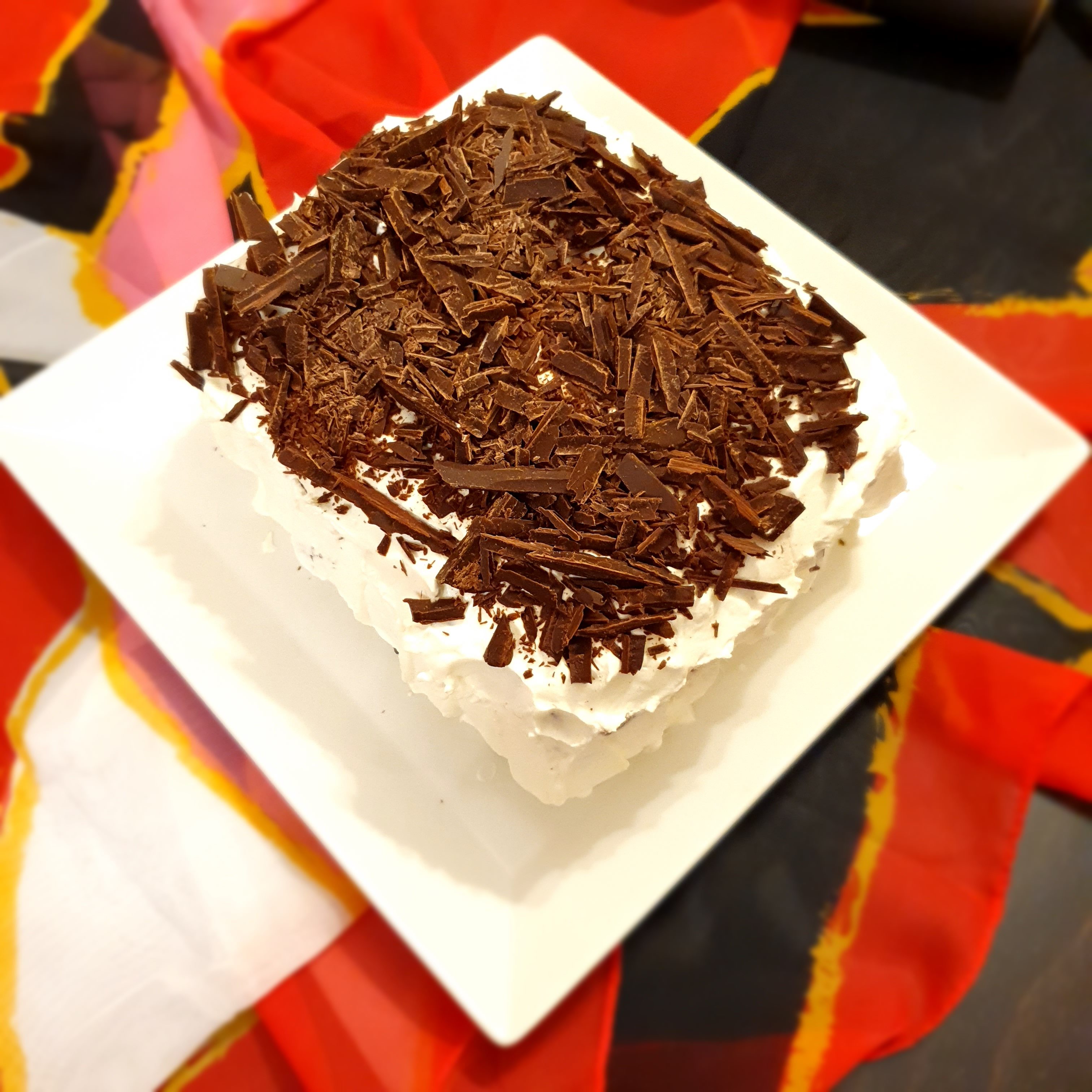
Leave for an hour (at most) in the fridge and attack! 🙂 I assure you that the cake is divine – airy, chocolatey and very light. This is told to you by a person who basically does not like chocolate cakes. 😀 Everyone who has tried it says the same thing, and also the pieces disappear from their plates very quickly.
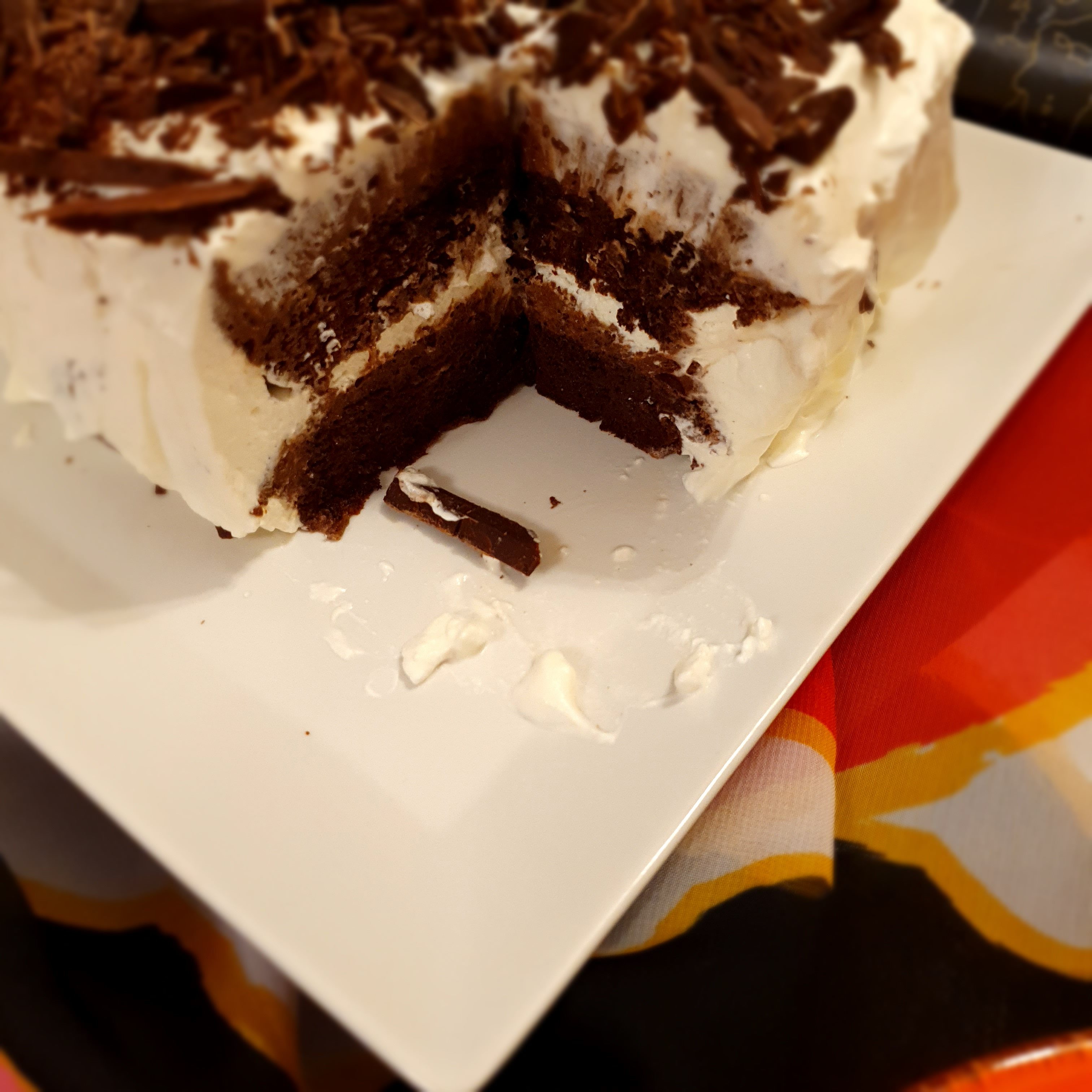
Do yourself a favor and make this relatively easy cake. If you are more than 8 people, make two. 😀 And as for the Cocos Islands…I’m unlikely to go there, but I’m glad I had the opportunity to brush up on my geography knowledge and enjoy some great views from the beaches there while doing my research. 🙂
Next destination – Christmas Island.

