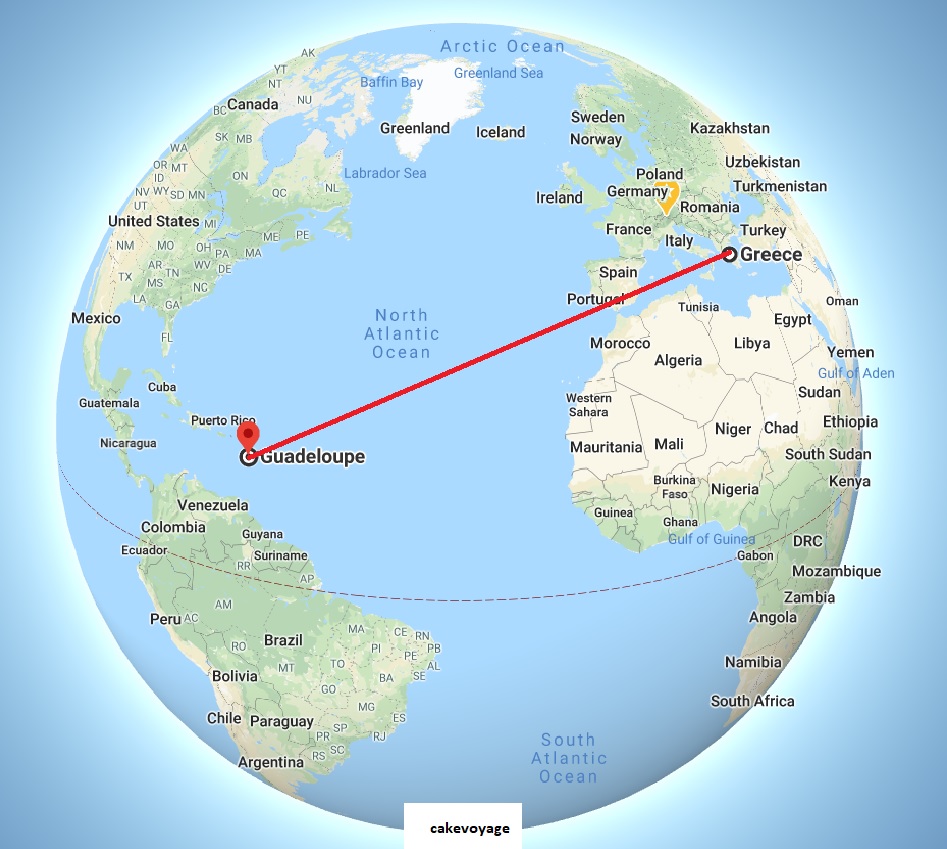

Today we are guests of neighboring Greece and although I do not like this country, I can not help but admit that its inhabitants today are descendants of one of the most ancient civilizations in the world. The capital Athens is one of the oldest cities in Europe – it has been inhabited continuously for more than 7,000 years. It is also the birthplace of democracy, philosophy, the Olympic Games, political science, literature, historiography, basic mathematical principles and theories of tragedy and comedy.
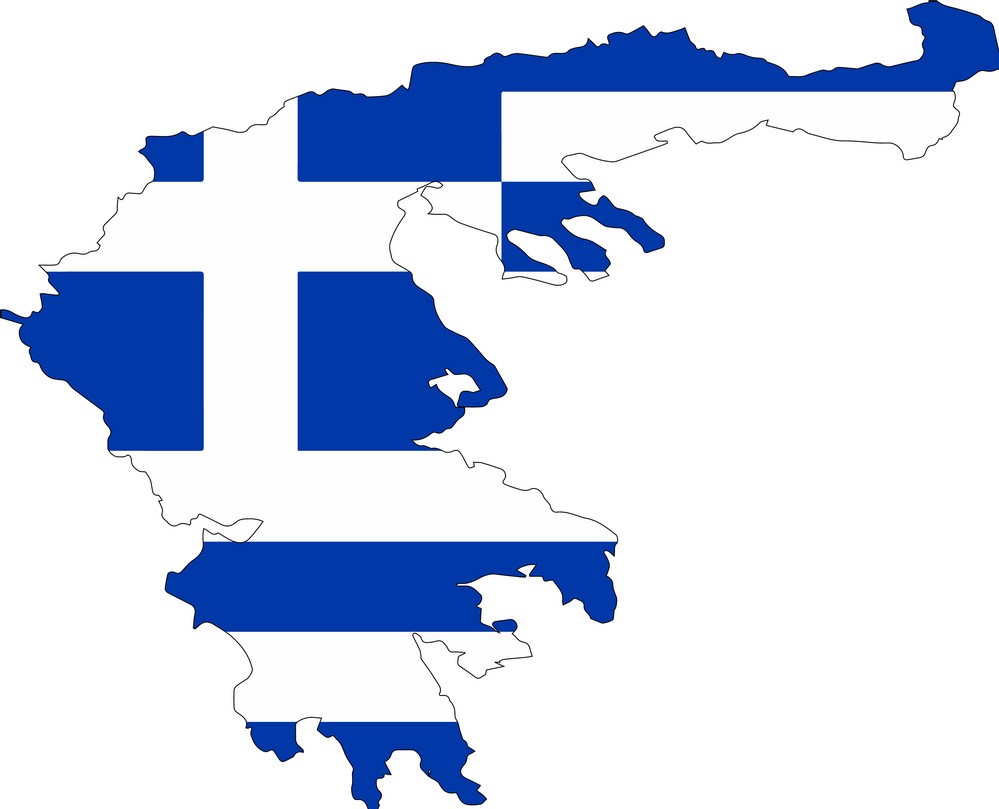
Ancient Greece is the common name of all areas of the ancient Mediterranean, inhabited by a population who spoke ancient Greek and called themselves Greeks. The ancient Greeks inhabited the territory of present-day Greece, the Asia Minor coast of the Aegean Sea (in present-day Turkey), Cyprus, Sicily and the southern parts of the Apennine Peninsula, as well as colonies on the shores of the Mediterranean and Black Seas. Ancient Hellenic colonies on the western Black Sea coast in today’s Bulgarian territories are Apollonia Pontica – today’s Sozopol, Mesembria – today’s Nessebar, Odessos – today’s Varna and others. Ancient Greece was made up of hundreds of separate city-states. Some were no larger than villages, while others were large cities such as Sparta and Athens. These city-states are called polises. Their laws, customs, and rulers varied, and often some polises waged wars with each other, despite their common Greek origins.
Life in Sparta was subject to strict discipline and full of deprivation. Boys and girls were trained in fighting, endurance and sports, and all young men were required to join the army. After helping Athens defeat the Persians, the Spartans conquered it in the Peloponnesian War and dominated all of Greece. Sparta also had the most powerful army in Europe. The life of the Spartans was entirely connected with the war and they were skilful generals. Greek cities were surrounded by fortress walls, and only Sparta was not fenced, which showed how much the Spartans relied on their army. From the 6th century BC Hr. Athens is governed by a democratic system (of the people) in which citizens have the right to vote. The Athenians celebrated their victory over the Persians by building a huge fortress – the Acropolis. The Parthenon, dedicated to the goddess Athena, is the most important temple on the Acropolis. Theatrical art and poetry also developed in Athens. The city enjoyed great wealth because it had many trading colonies. Before the creation of Alexandria, Athens was the capital of science.
The ancient Greeks believed that gods and goddesses watched ordinary mortals from a palace in the clouds above the highest Greek mountain – the snowy Olympus. The gods were named Olympic after the mountain. Each deity in the Pantheon had certain duties – Poseidon was the god of the sea, Athens – of wisdom and art, Apollo – of music and poetry, Demetra – of crops. The supreme god was Zeus, the god of heaven and earth. Every Greek city worshiped a certain deity as its patron. The Greeks also believed that the world was inhabited by giants called titans. Their ruler Cronus devoured his children alive so as not to be dethroned. However, his son Zeus escaped, as his mother Rhea gave Cronus to swallow a stone instead of the child. Zeus grew up hidden from Cronus. When he matured, he opposed his father and dethroned him. Then Cronus freed the brothers and sisters of Zeus. Thus began the battle between the gods and the Titans. The Titans were much larger and stronger than the gods, but on the side of the gods stood the Cyclops – mythical creatures with one eye. Zeus freed the “hecantocheirs” – the “one hundred hands” from a place called Tartarus (the distance from earth to Tartarus is as much as from earth to Tartarus). They forged thunder on Zeus and so the gods won. Thus, after a 10-year war, the Titans were exiled to the depths of the Earth’s core, and Zeus placed the “one hundred hands” as guards. The Olympian gods already ruled the Earth.
One of the most remarkable things in the country with 1,200 islands is not only the beaches, nature and culture, but also the food. Many people like Greek cuisine, but I find it quite modest and monotonous. At least in comparison with the Bulgarian one. 🙂 You’ve probably heard, and probably tried, tzatziki. However, see what else you should not miss when you sit at a table on Greek territory: 1. Tarama salad – made from smoked fish (cod, carp or mullet), mixed with olive oil and lemon.It’s good to try the home version – undoubtedly superior to the one sold in supermarkets, nothing that is also Greek. 2. Kolokitokeftedes – delicious meatballs of grated zucchini, flavored with onions, fresh mint, with added feta cheese, egg and flour. Perfect choice for vegetarians. 3. Tomatokeftedes – similar to kolokithokeftedes, but using tomatoes instead of zucchini as the main ingredient. Tomato meatballs are most delicious when made with cherry tomatoes from Santorini. These small fruits are full of flavor, thanks to the volcanic soil of the island. 4. Fresh fish dishes – people in the area have been consuming fish for 11,000 years. With its vast coastline and deep and clear sea, Greece is known for its excellent seafood. Fresh fish must smell of the sea, have bright eyes and red gills. 5. Moussaka – this dish is prepared from fried sliced eggplant, covered with tomato sauce with minced meat, onions, garlic and cinnamon, covered with béchamel and grated cheese. I like the Bulgarian version with potatoes more. 6. Pastisada – usually made with beef, tomato, onion, garlic and olive oil, as well as spices including cinnamon, cloves, cumin, nutmeg, paprika, black pepper and bay leaf and of course pasta (after all, this dish has Venetian origin). 7. Lamb kleftiko – this clear, whose name means “stolen lamb”, most likely dates from the Ottoman period of Greece. There are numerous options for its preparation, but the main one is roast lamb, seasoned with vegetables and herbs. 8. There is no way to go without a Greek salad (known to the Greeks as horoyati). It combines fresh tomatoes, cucumbers and red onions, generously covered with feta cheese and a handful of black olives, to which are added olive oil and oregano.
And let’s finish with the desserts: Bugata is warm, sweet and sticky. For most Greeks, it is the perfect dessert. If you are in Thessaloniki, bugatsa also means spicy pies filled with minced meat or tiri (cheese), as well as sweet cream (creamy cream), sprinkled with powdered sugar and cinnamon. Lukomadas are donuts prepared in the traditional way, soaked in honey and cinnamon. A more modern version presents them covered with melted chocolate, chopped walnuts and ice cream. I chose to make a cream-rich cake that turned out to have no name, but was Greek. 🙂 Here are the necessary products for it:
For cake base:
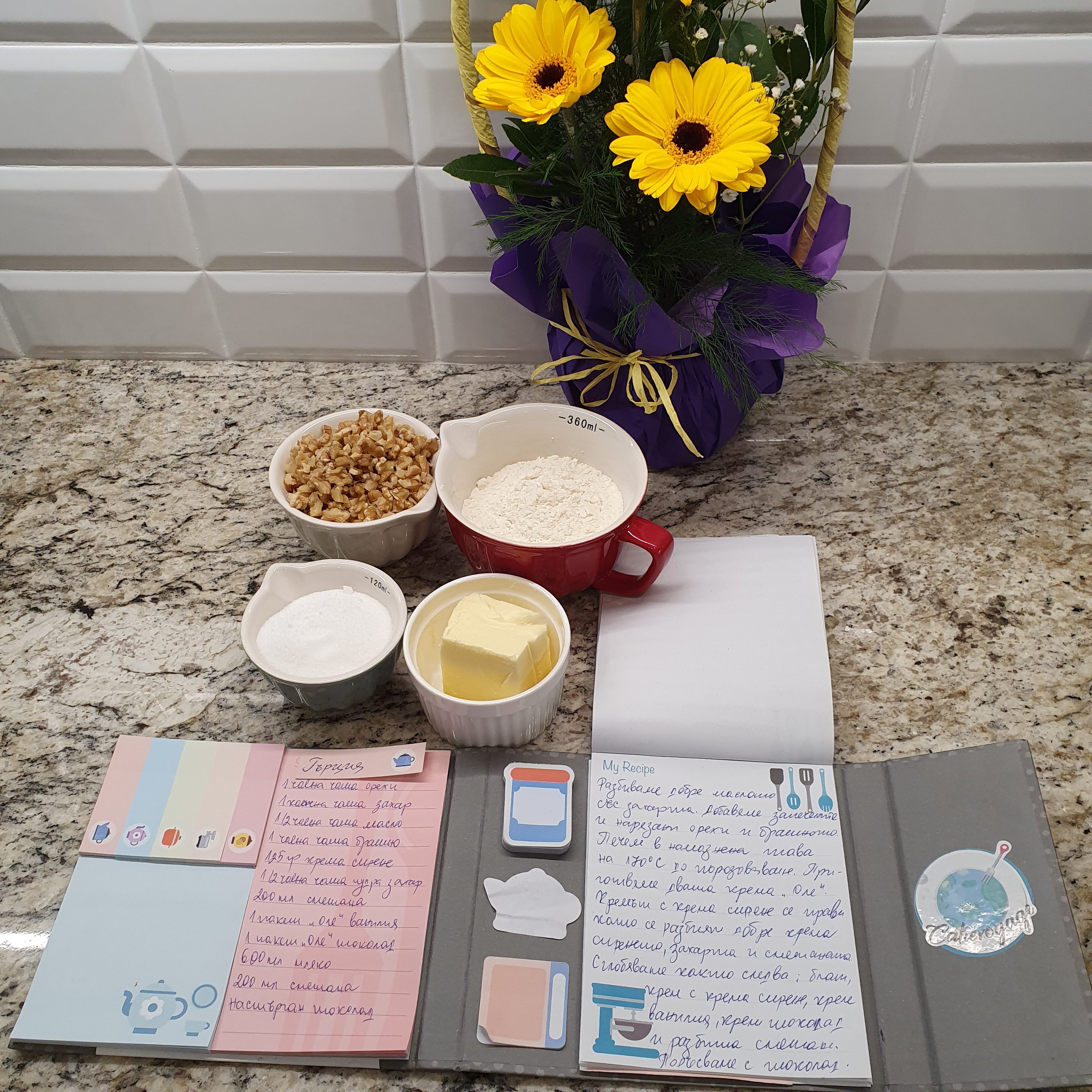
1 tea cup chopped walnuts
1 tea cup flour
1/2 tea cup butter at room temperature
1 coffee cup of sugar
For cream 1:

125 grams of cream cheese
200 ml cream
1/2 tea cup powdered sugar
For cream 2:
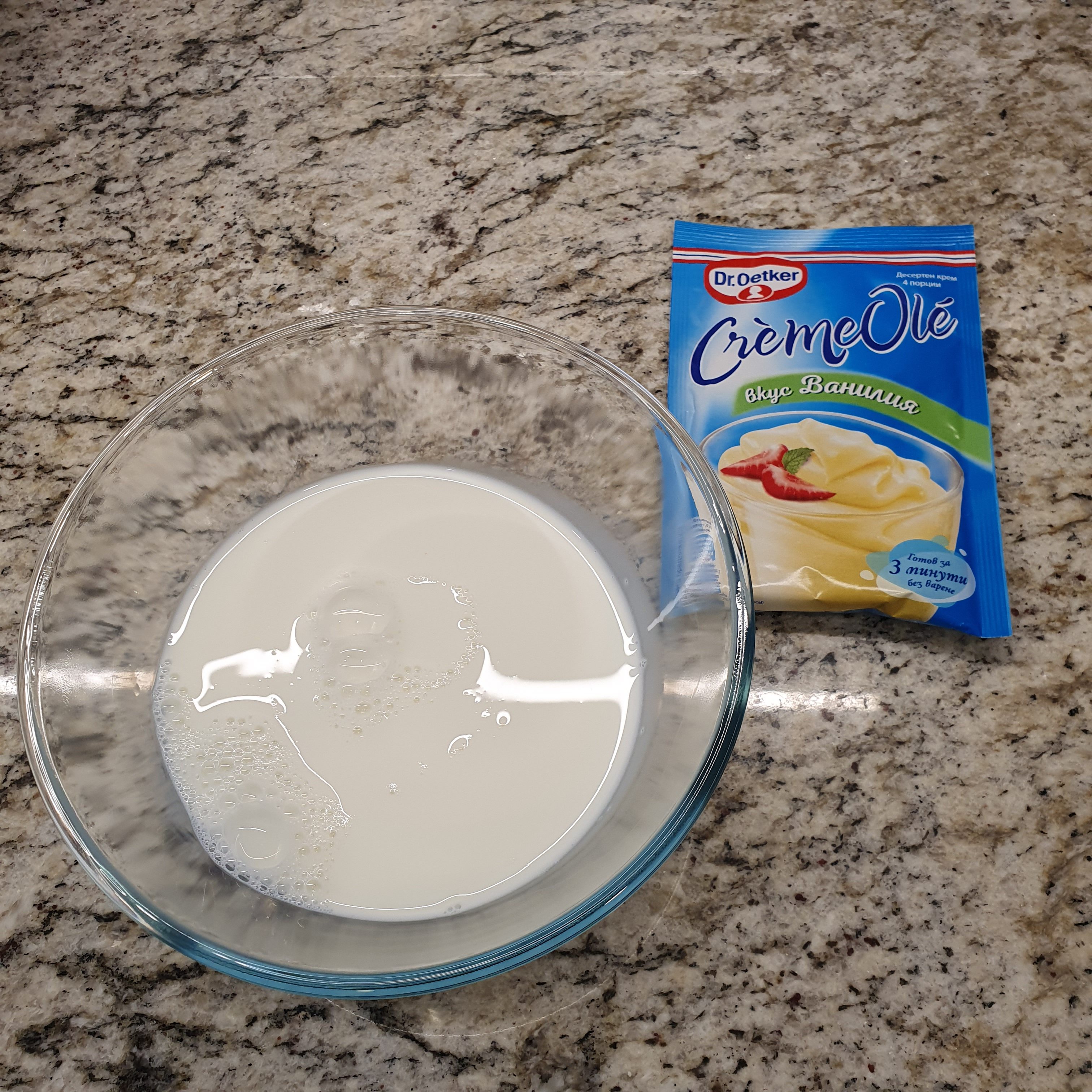
1 packet of cream “Ole” vanilla
300-400 ml of fresh milk
For cream 3:
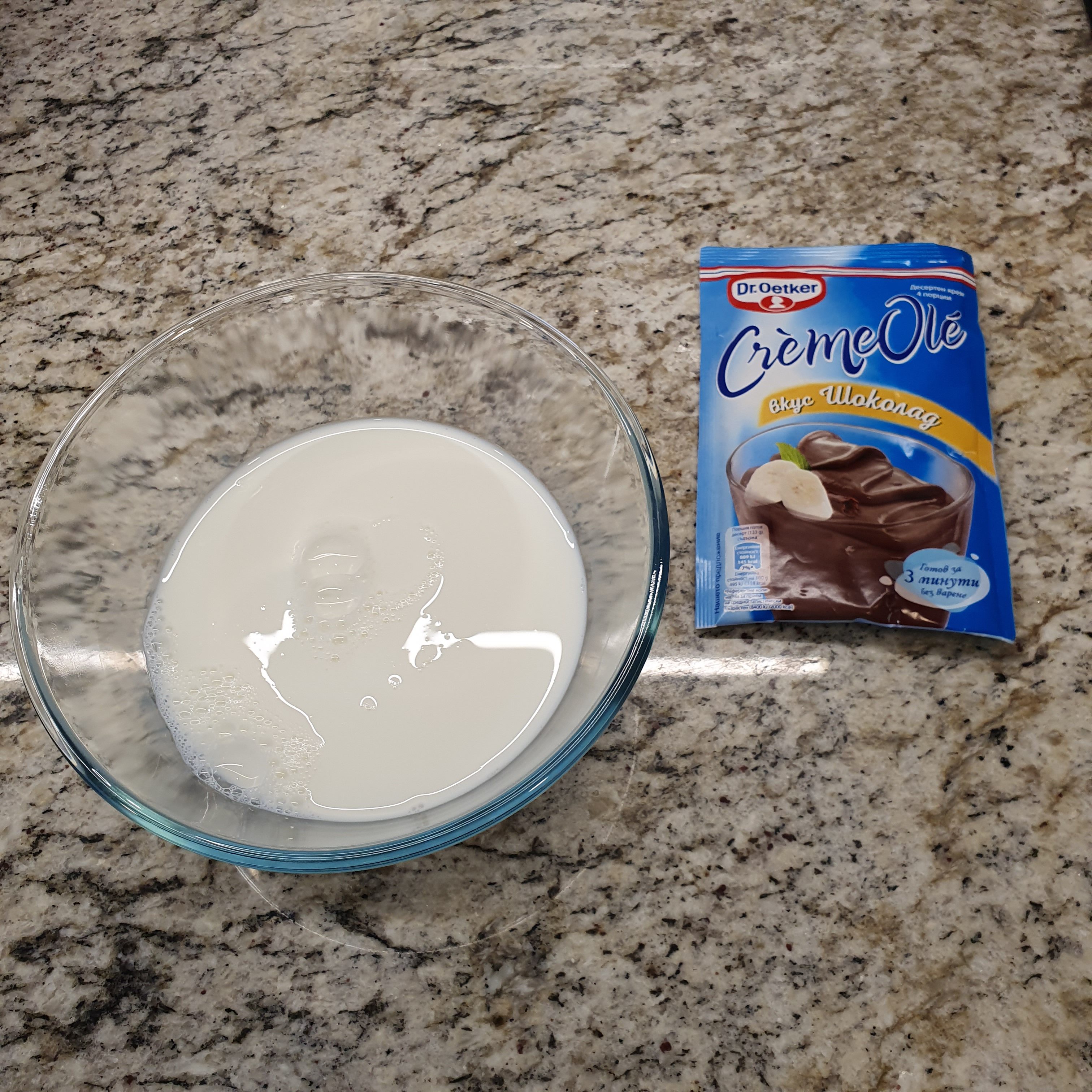
1 packet of cream “Ole” chocolate
300-400 ml of fresh milk
For cream 4:
200 ml cream
sugar on request
Steps of preparation:
Roast the chopped walnuts briefly in a pan to make them tastier. Beat the butter with the sugar into a fluffy cream. Add the flour and nuts. Bake at 170 degrees in a pre-oiled pan until it turns pink cake base.
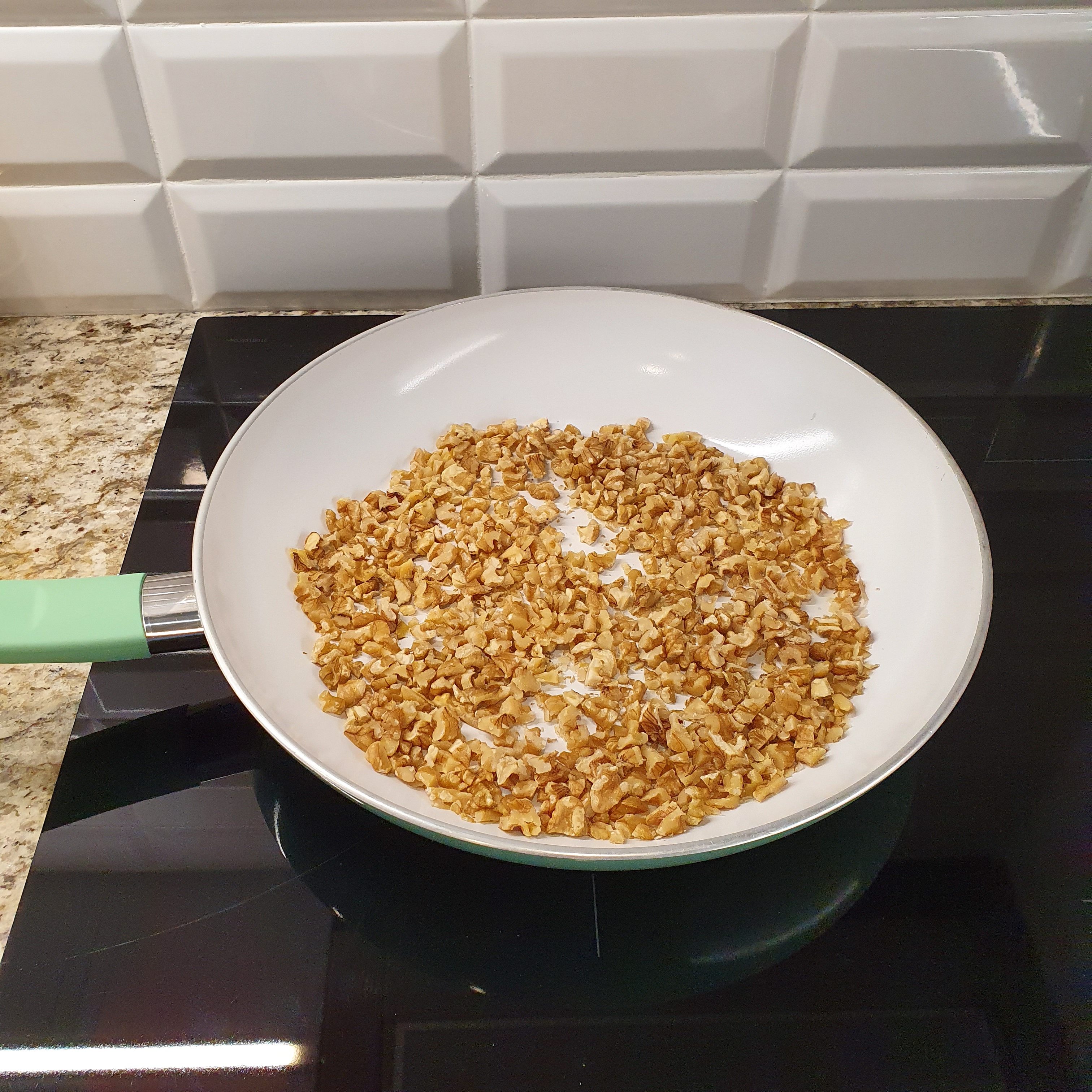
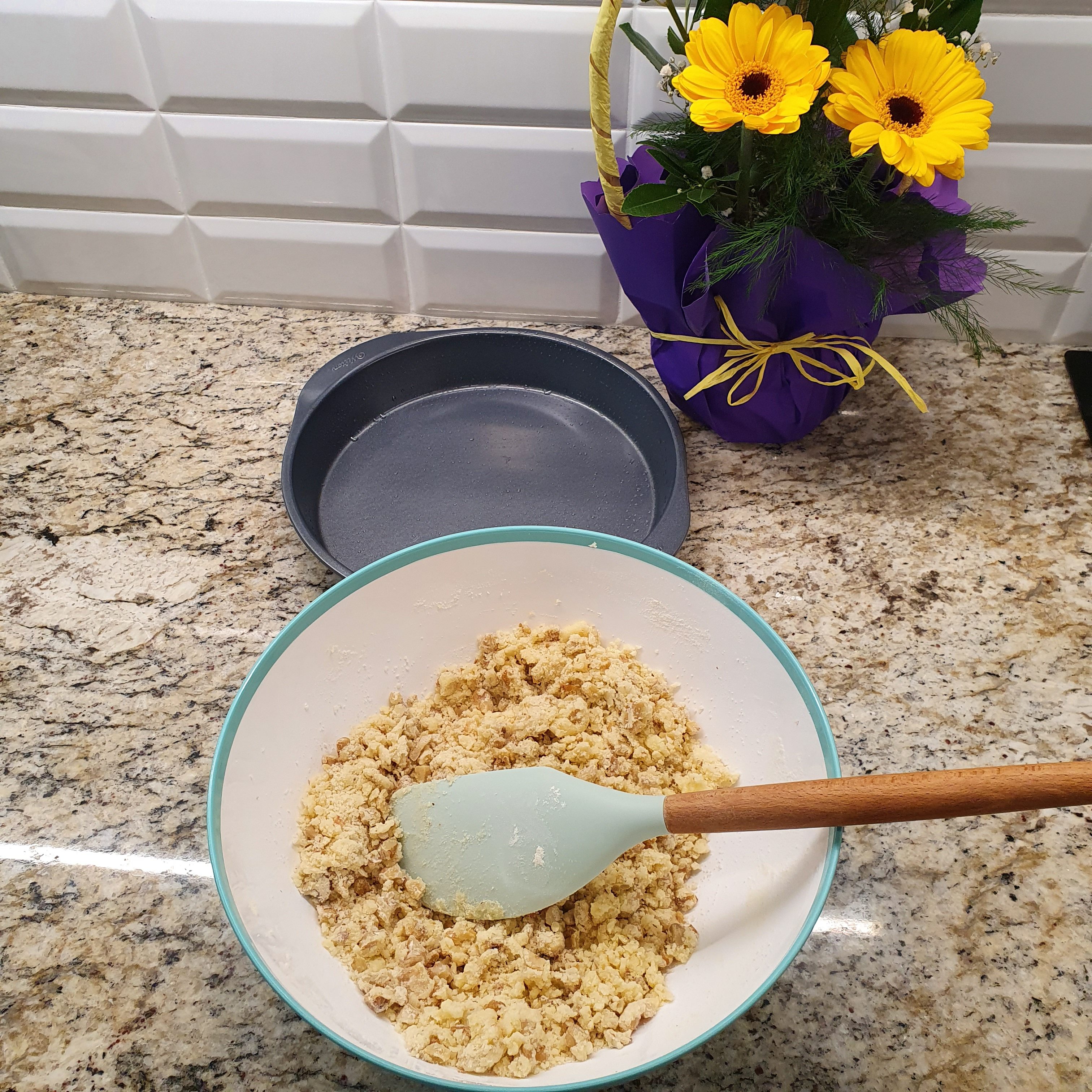
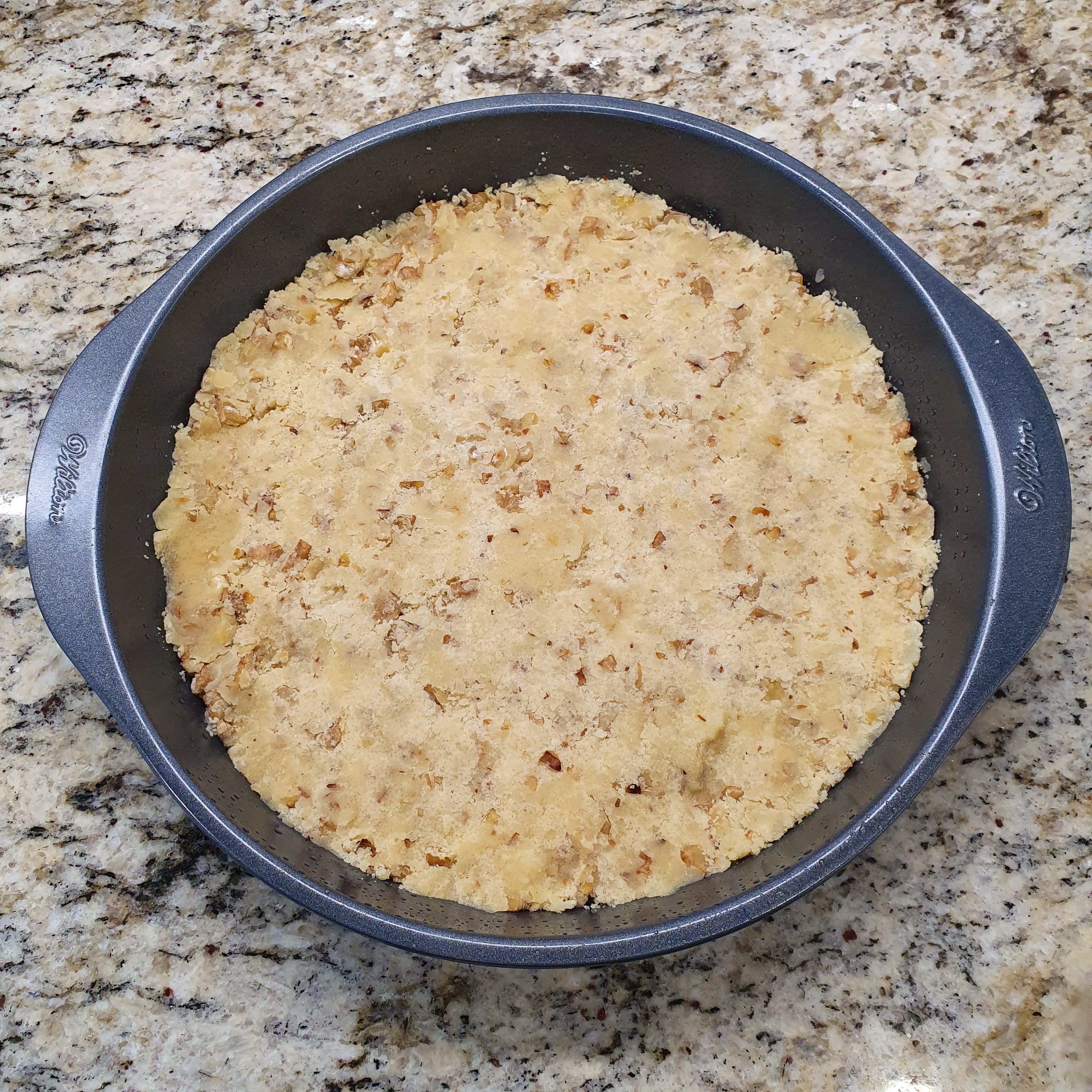
Allow it to cool before removing it from the pan.
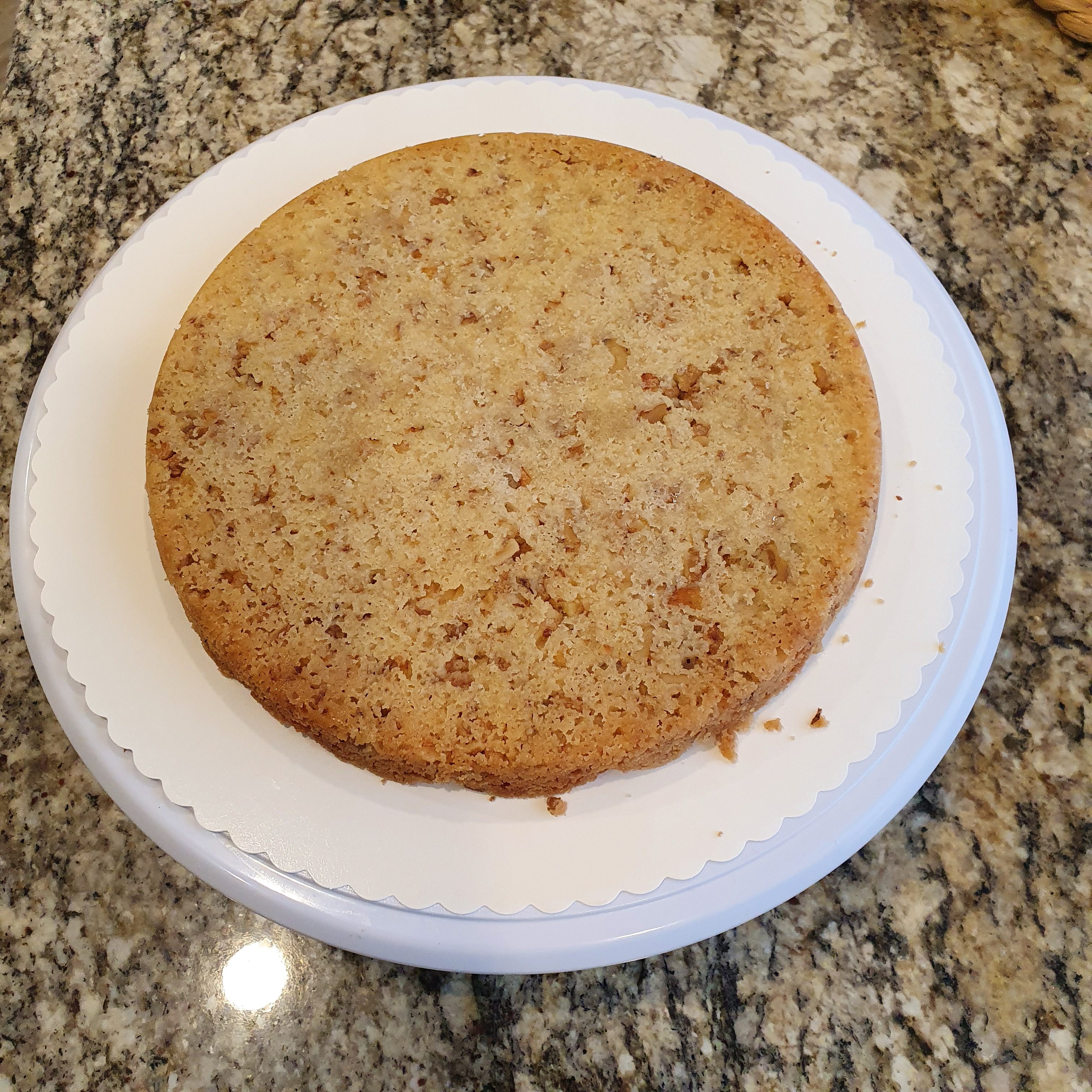
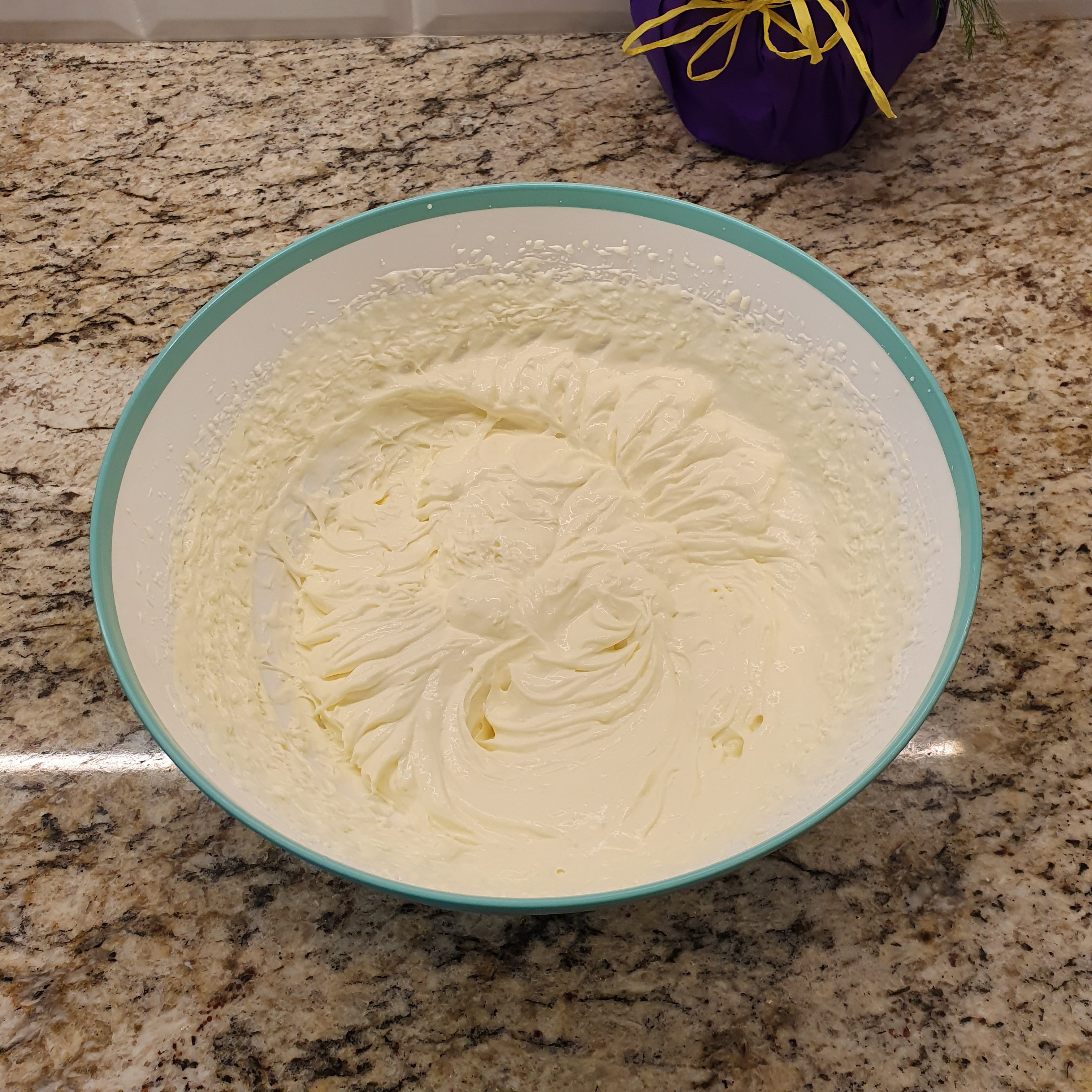
Prepare cream 1 by whipping the cream cheese, powdered sugar and cream into a thick cream. Pour it on the cake base and cool for 15-20 minutes in the refrigerator.

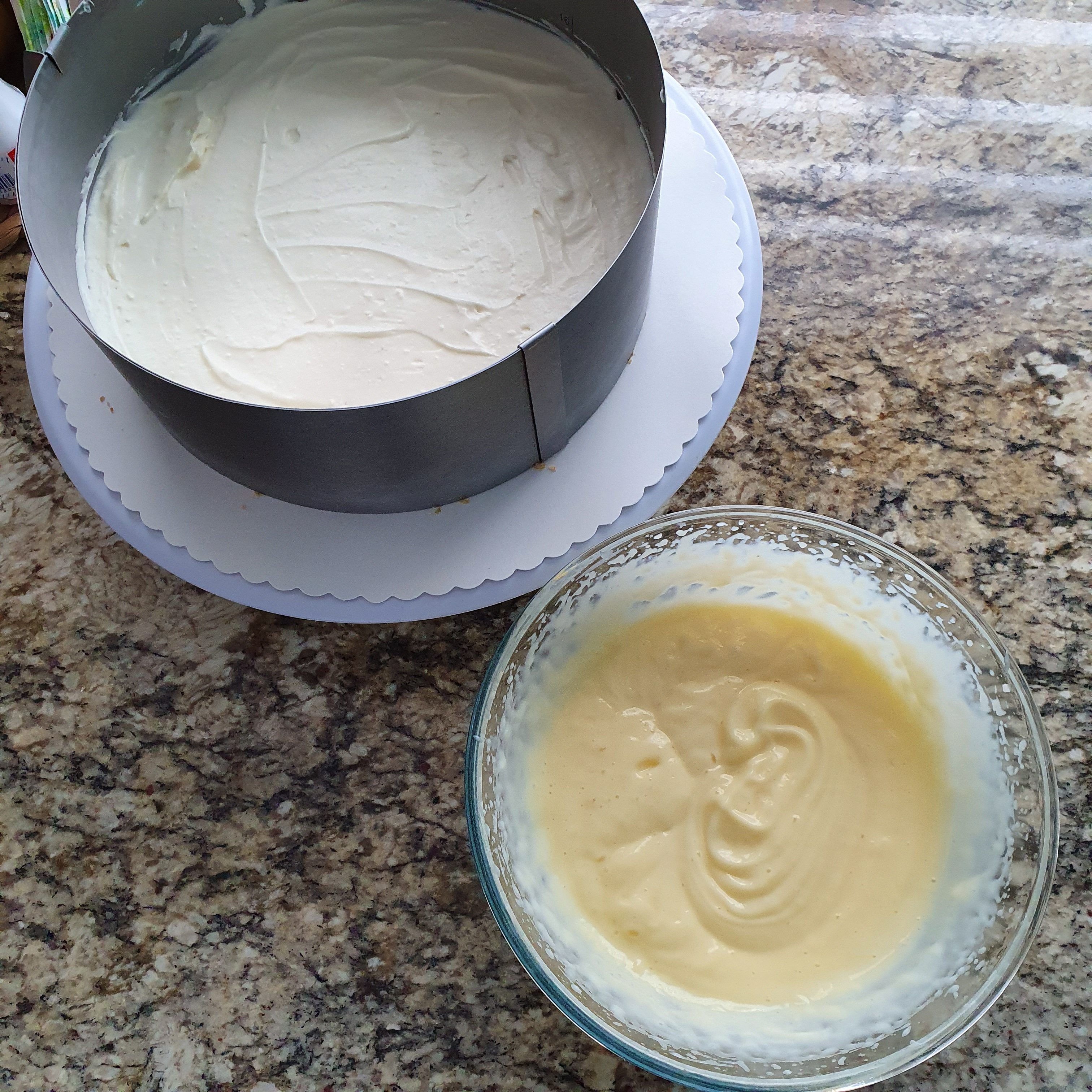
Cream 2 and 3 are very easy to prepare according to the instructions on the package. First we make vanilla cream, pour it on the cake, cool for a few minutes and then prepare the chocolate cream. Pour it on top and cool again.
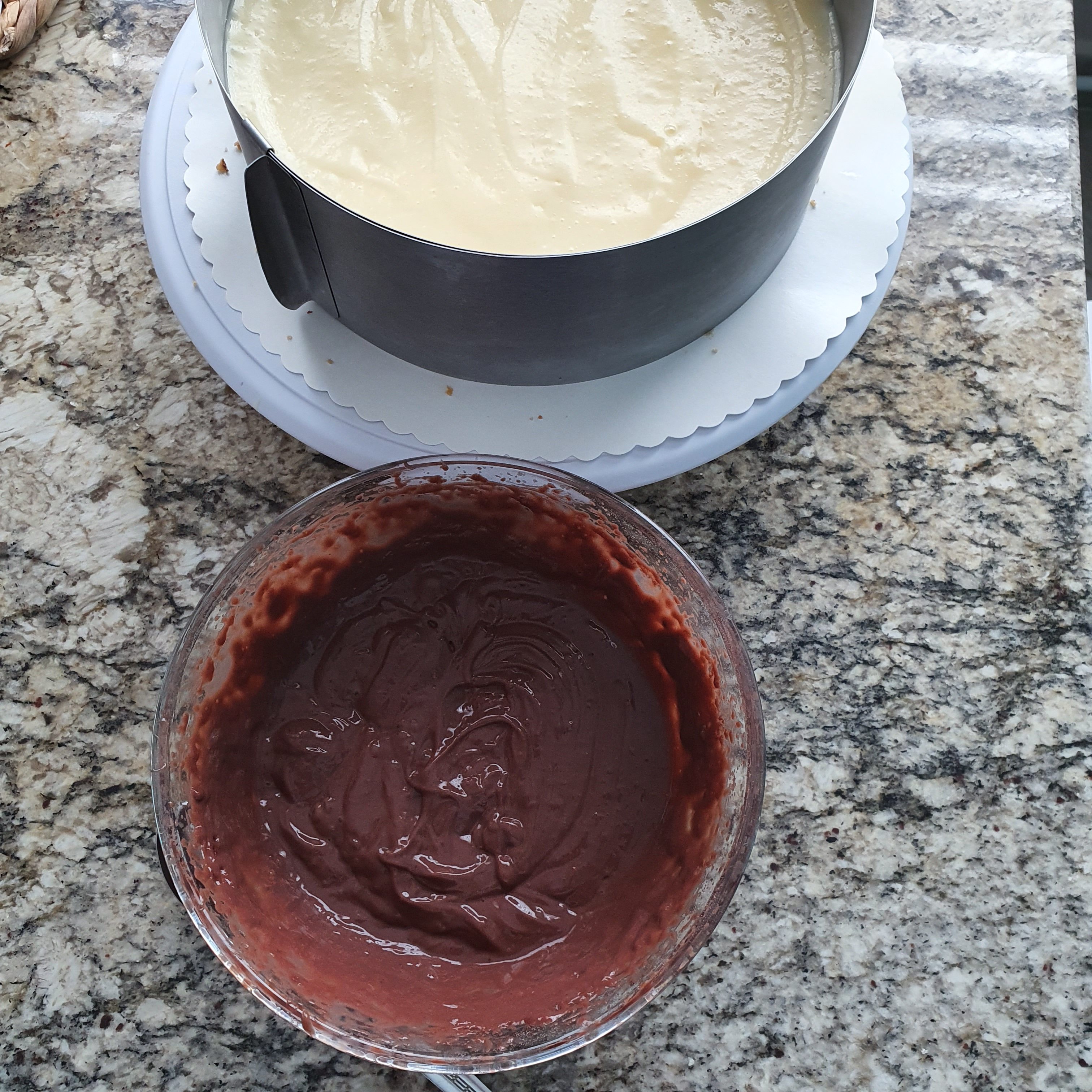
Finally we finish with whipped cold cream. Whether it will be sweetened or not leave to your taste. I did not add sugar.
You can decorate with chocolate shavings, crushed nuts, fruit or whatever you find appropriate.
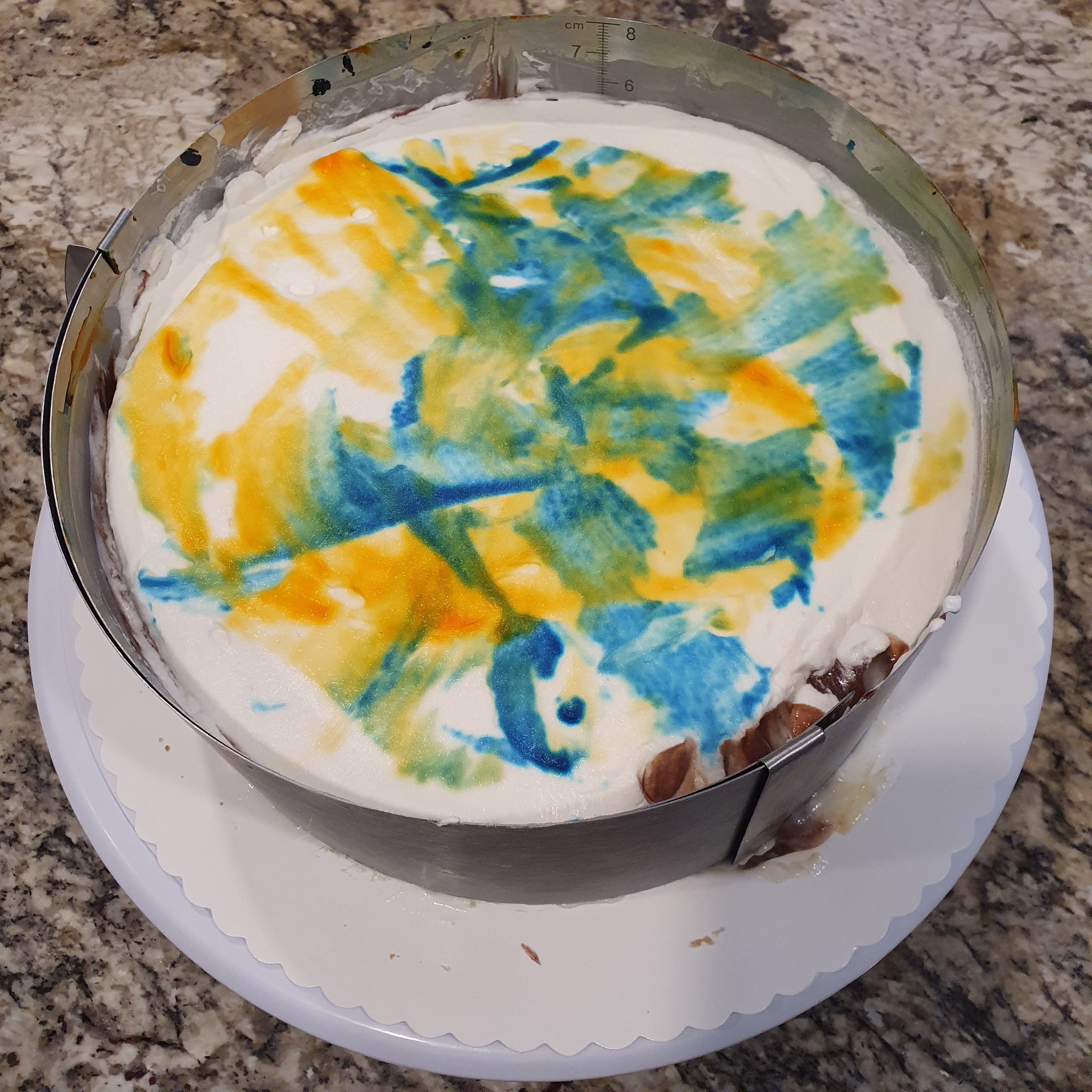
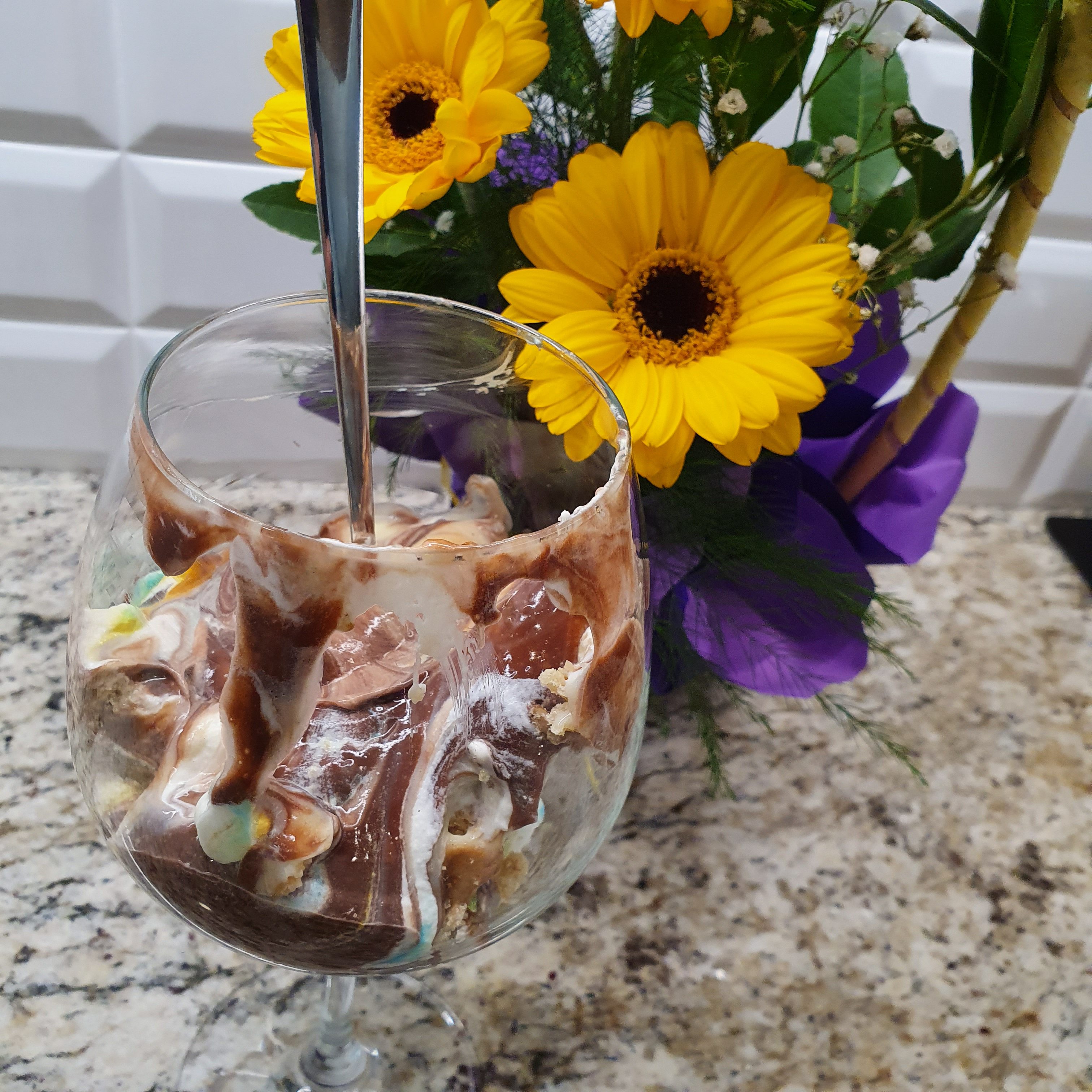
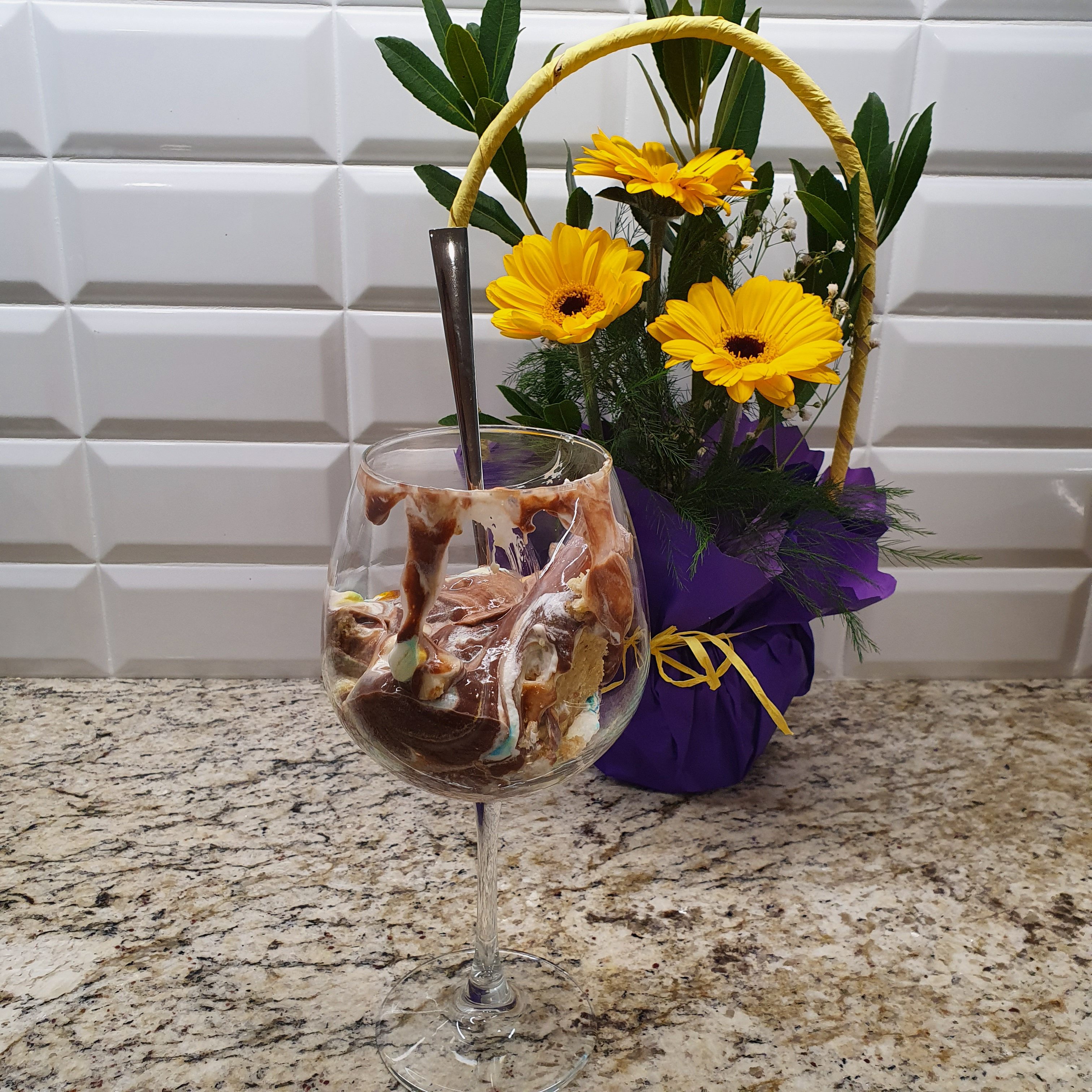
The cake is very rich in cream. And it’s the kind of cake in a cup (her favorite at home). Not to mention that it looks more like a cream with a cookie, but it’s very tasty. It is not complicated to prepare. On my scale of difficulty it is somewhere around 2 out of 10. I don’t know how much it can be identified with Greece. I haven’t eaten one there. In general, as I started, Greece is not one of my favorite destinations. I have walked twice and I have no particular desire to triple despite the many superlatives that are spoken of this country. I don’t like Greek “hospitality”, their cuisine seems modest, and their beaches can’t set foot on many of the ones I’ve been to elsewhere. That is why the sea of Greece is not in my plans. You know about your plans. 😉
Next destination – Guadeloupe.