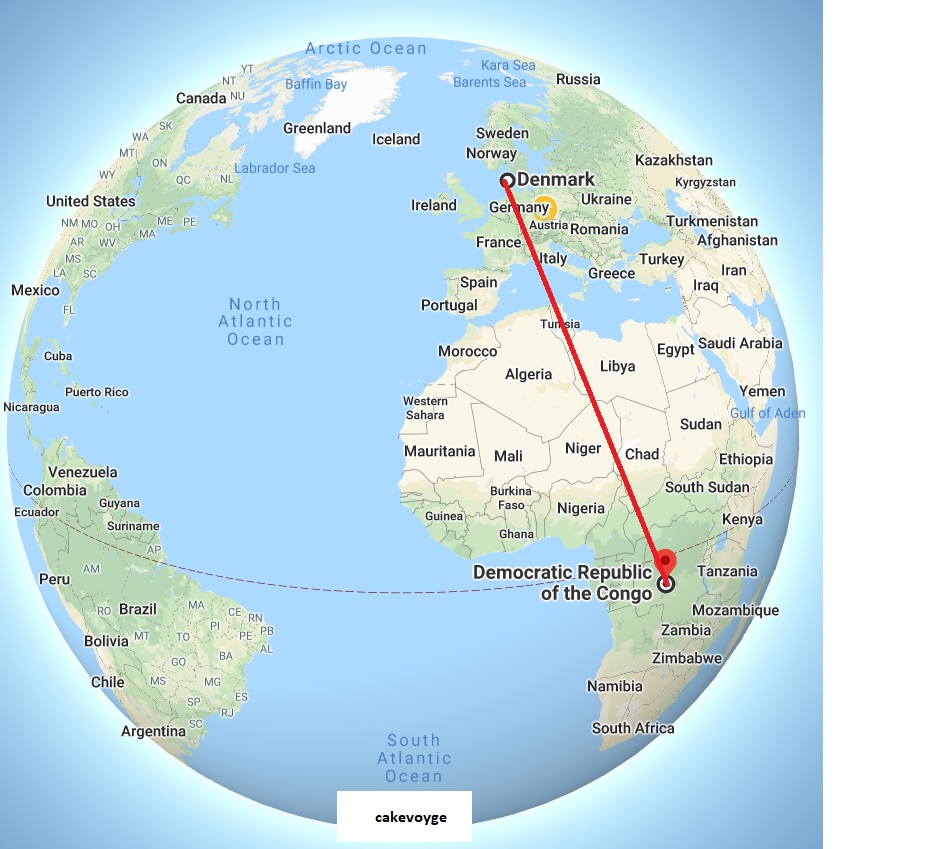

The country of the Vikings and one of the oldest countries in Europe is known for its harsh climate, Lego constructors and home comfort. The Danes have a special word expressing the comfort of home and the pleasant company of loved ones – hygge. Probably hygge helps them withstand the long cold winters. In Denmark, it rains half the days of the year, and average temperatures range from 0 in January to 16 in August. However, there are many winter festivals in the country related to naked bathing. 😮 On the other hand, there are no poisonous animals in Denmark and no earthquakes. Which can consider like some compensation.
An interesting fact speaks with a wink about the freedom of Danish society. Among the greenery in front of the parliament, located in the Christianborg Palace, there is a sculpture of a pig, because in urban folklore there is an opinion that all Danish MPs are pigs… In the country the sentences are quite light. For example, murder can result in three years in prison. But there is almost no crime. Which I personally find difficult to explain, but it is a fact. And last but not least – after recent research, Danes are the happiest people in the world, nothing that they do not use words like “Thank you” and “Please” in communication with each other. Also, in their daily communication, they do not have “small” conversations out of politeness. If you get into a taxi and ask the driver how he feels, the probability of him looking at you in amazement is almost 100%. 🙂
Denmark is known worldwide for its dairies, livestock and industrial fishing, as well as wind farms. It is said that Danish cattle farms produce 450 liters of milk per hour! 😮 Since the time of the Vikings, most of the time people have held hair, not a sword. They grew rye, barley, oats. They also raised cattle – goats, pigs, sheep – on small farms, which usually provided enough food to feed the family.
Danish food has come a long way since the days of cabbage, sausages and ribs. If, of course, you like the classic food for the country, which was popular in the Middle Ages, you should not worry, there are still many classic restaurants and “inns” where you can try old Danish cuisine. Pork, vegetable and fish dishes are the main part of classic Danish cuisine. Pork, vegetable and fish dishes are the main part of classic Danish cuisine. The meat is cleaned, smoked, salted and prepared for canning. Such a measure has been vital in years without cans and modern stabilizers. Today, Danish chefs still use many of the same methods and recipes to show the past of their country. At the same time, however, they have incorporated new tastes and modern views of Danish cuisine.
Since it takes you no more than 60 minutes to reach the sea from every corner of Denmark, it makes sense to have plenty of seafood in the country’s cuisine. The small fishing town of Skagen in North Jutland is the best place to try fresh seafood. In Lifjord, a little further south, you can try some of the best eel recipes in Denmark. The perfect accompaniment to this dish is cold beer.
South Jutland is famous for its sausages. This is the region where you can try the “cabbage sausage”. Especially in the days around Christmas it is extremely popular in the traditional inns in the region. The sausages are served only with cabbage and calmly 😉 – they are not made of cabbage! Solæg are another unusual regional specialty that sounds interesting to try. The eggs are prepared in onion skins and soaked in brine for up to three weeks. When ready, half of the onion peels are peeled and the yolk is removed. The opened hole is filled with a mixture of tabasco, butter, vinegar and mustard. The yolk is placed on top of the dish.
The world-famous, open rye bread sandwich, smørrebrød, became popular in the Danish capital, Copenhagen, in 1800. Today, chefs prepare the sandwich in the traditional way, but also become very creative with a variety of side dishes and new flavor combinations. Herring, egg, sausage, dried meats and seafood can be part of a rye sandwich. In addition, fresh local herbs and a variety of sauces are added. Denmark is one of the countries that are especially beautiful at Christmas and know how to celebrate in style. There is no fasting and on Christmas Eve the Danes traditionally have turkeys, ducks, all kinds of meat and the biggest delicacy – deer shoulder blade. Everything smells of marzipan, cinnamon and ginger, and the decoration on the streets and shops includes plenty of lights and big red hearts.
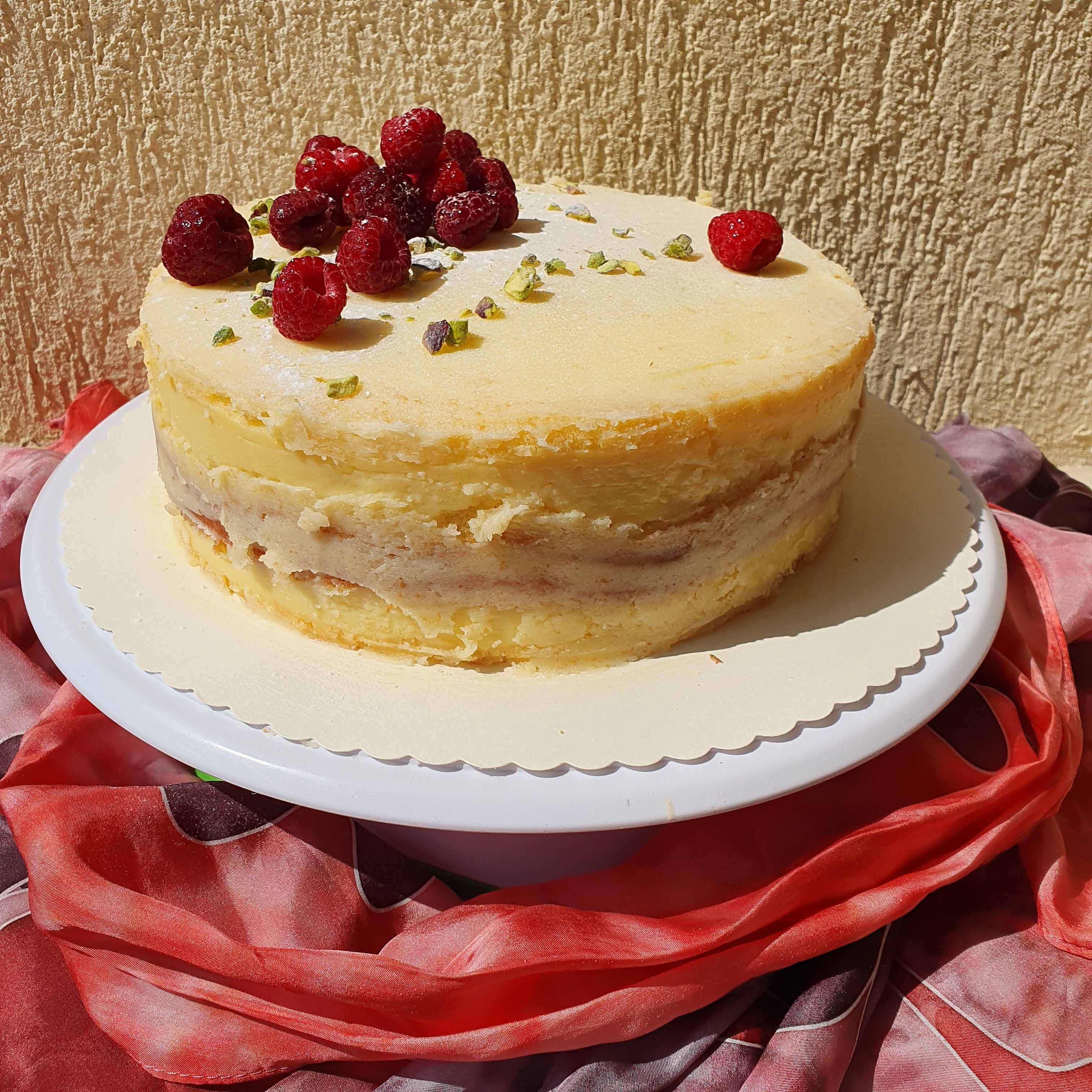
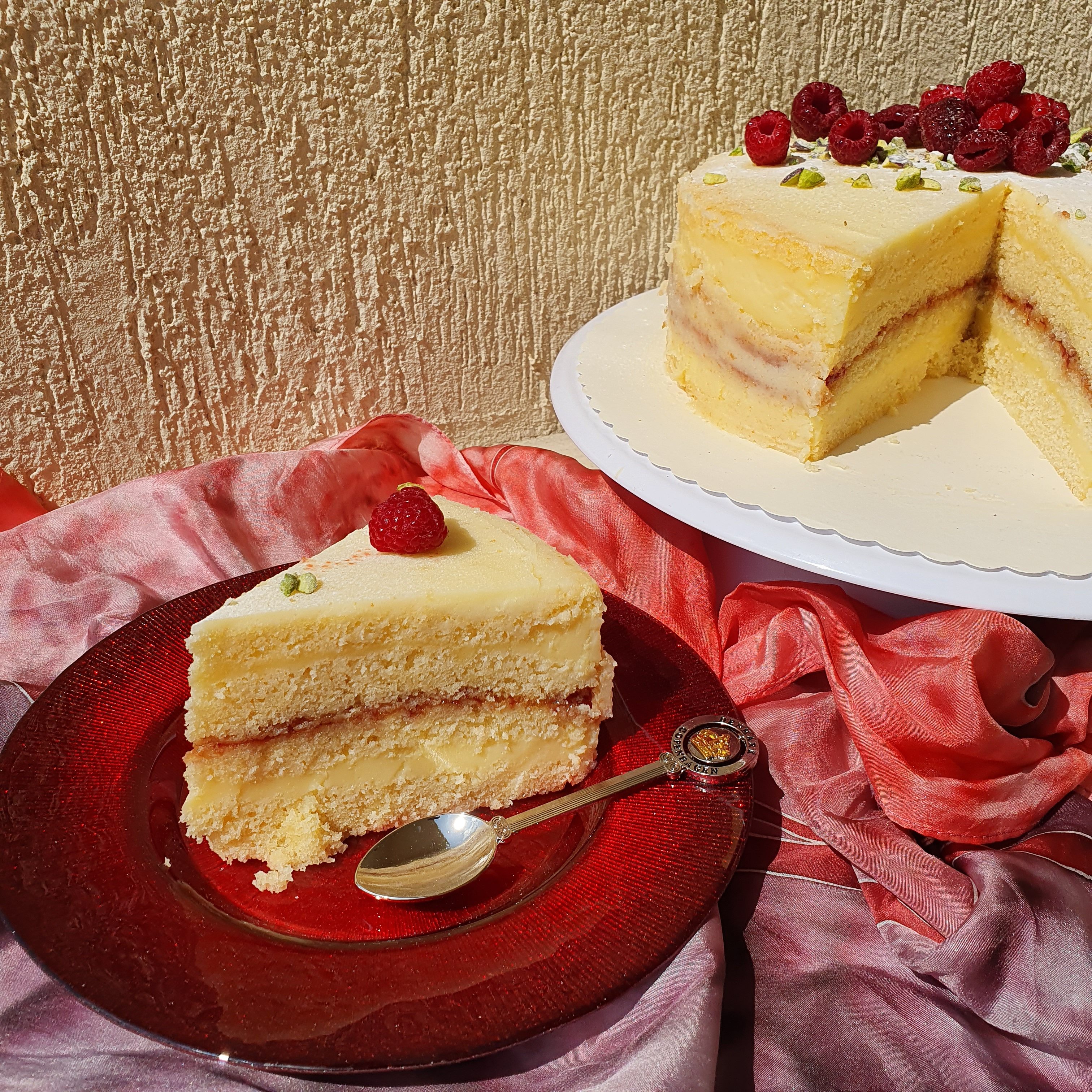
It’s not like there was no choice of cakes. I chose one that seemed fresh and suitable for the beginning of spring. The cake does not have an impressive name – Danish Layer Cake. Here are the necessary products:
For cake bases:
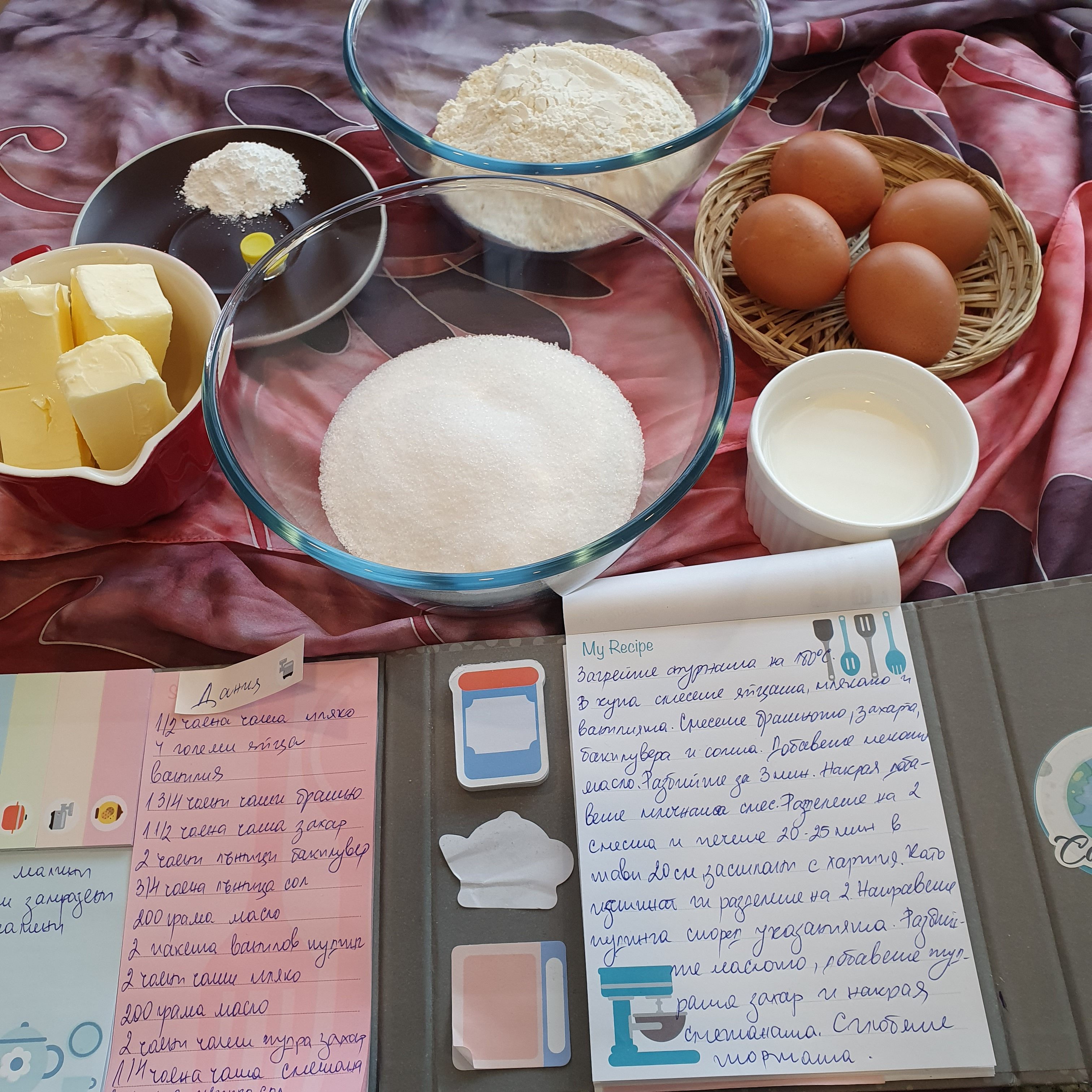
1/2 tea cup fresh milk
4 large eggs
vanilla
1 3/4 tea cups flour
1 1/2 tea cups sugar
2 teaspoons baking powder
3/4 teaspoon salt
200 grams of butter
For the milk cream:
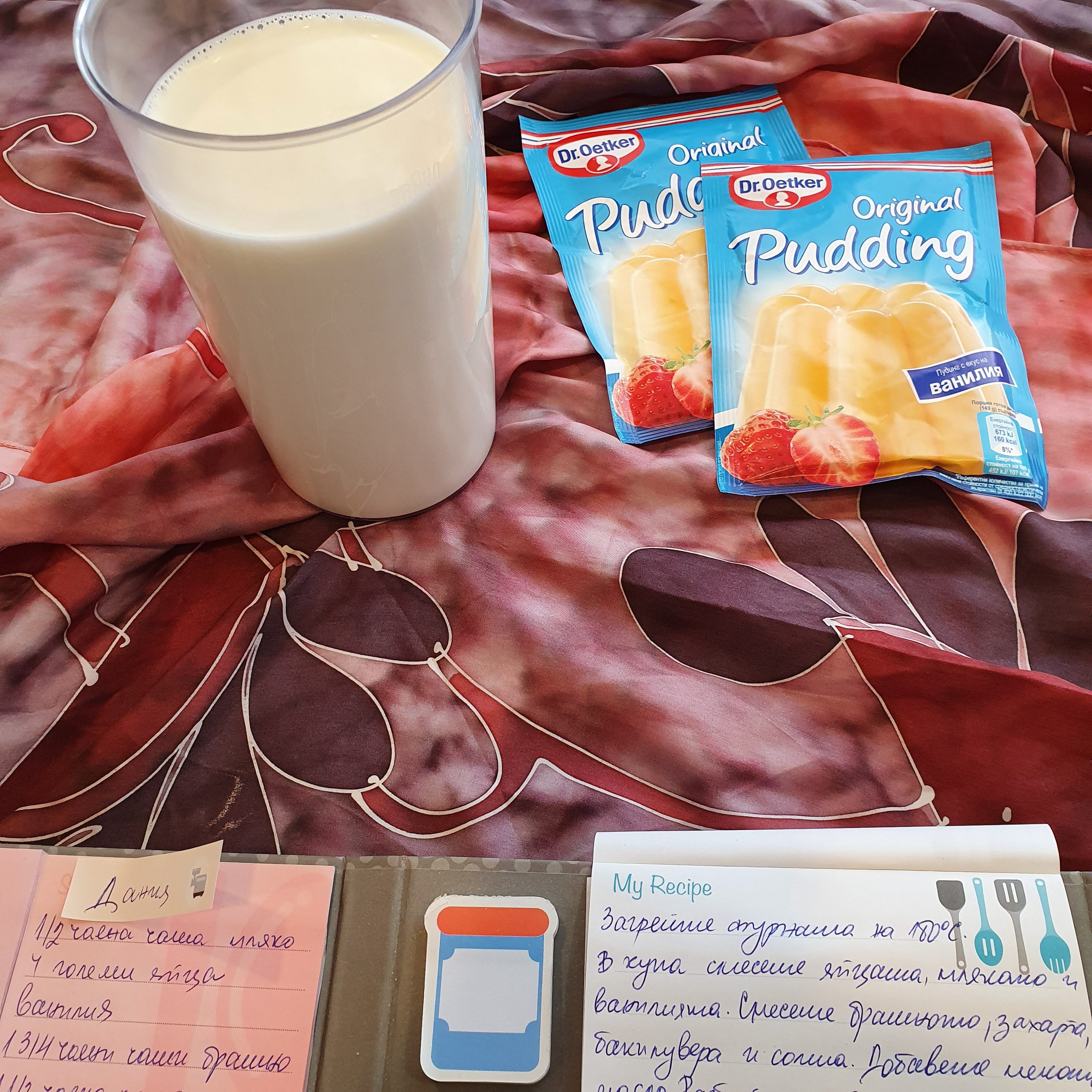
2 packets of Dr. Yotker’s vanilla pudding
700 ml of fresh milk
For the butter cream:
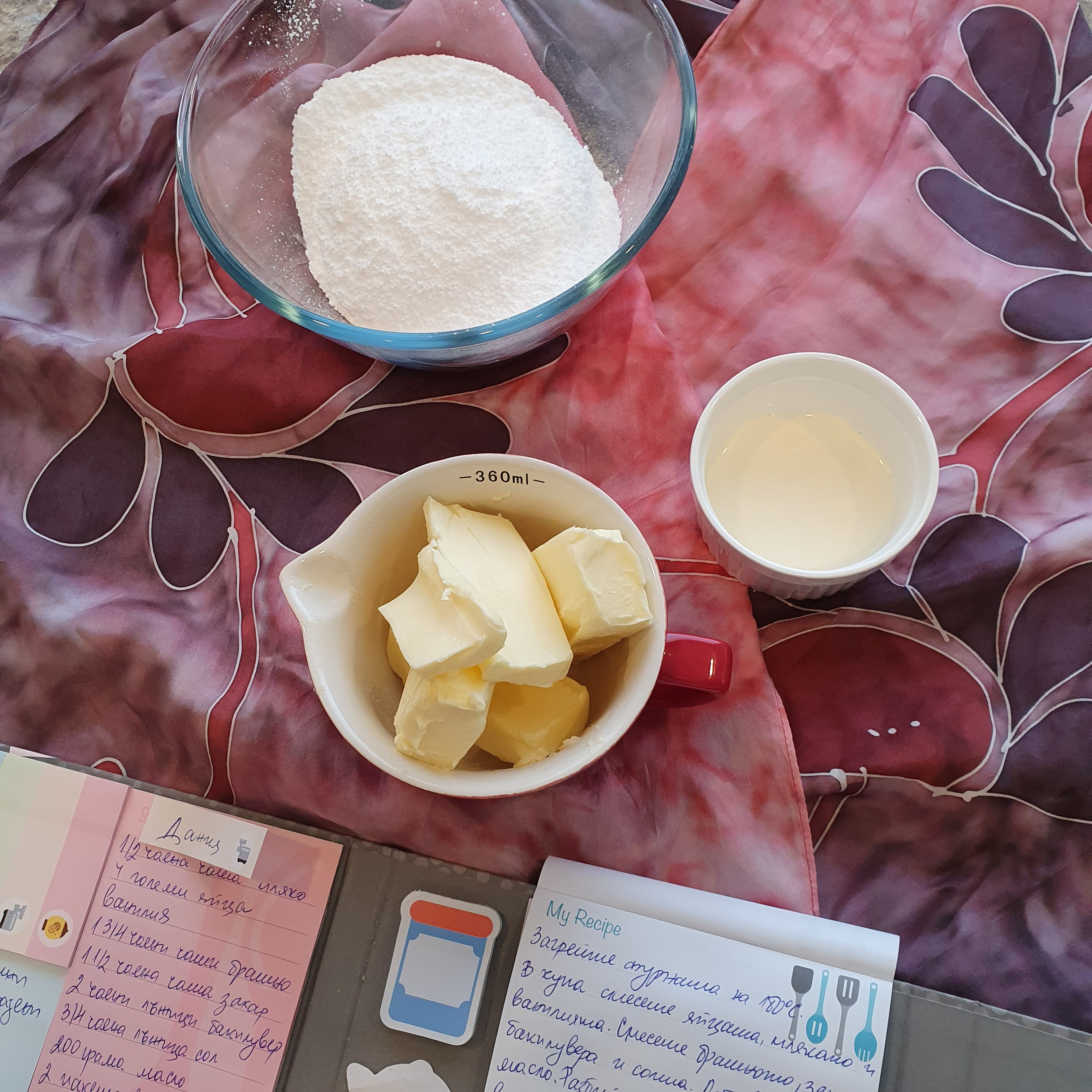
200 grams of butter
2 tea cups powdered sugar
1/4 tea cup cream
vanilla
pinch of salt
For decoration and assembly:
fresh or frozen raspberries
raspberry jam
Steps of preparation:
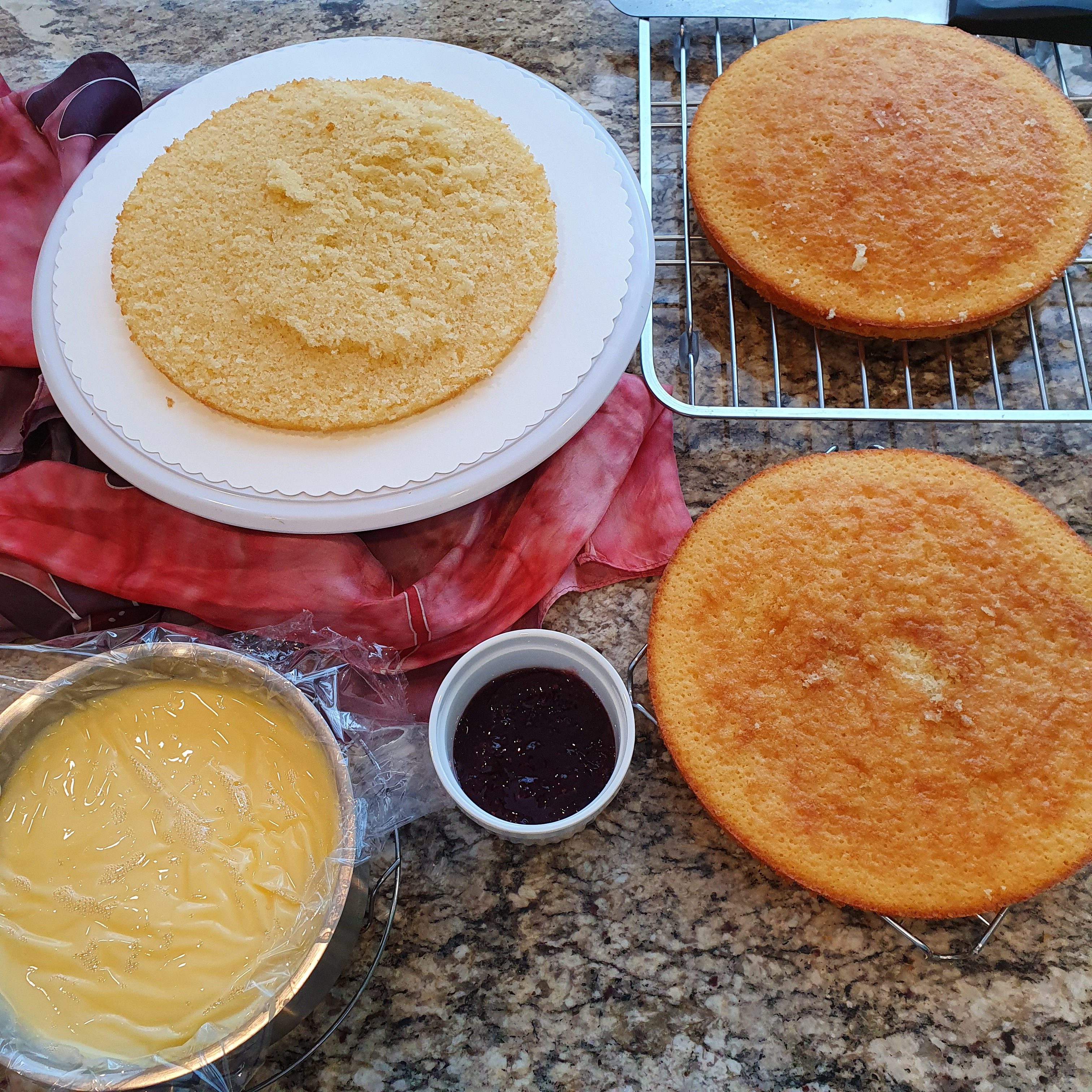
Preheat oven to 180 degrees. In a bowl, beat the eggs and add the milk. If you have liquid vanilla essence, add it as well. Separately mix the dry ingredients in a bowl. Add the soft butter and beat lightly until everything is mixed on low speed. Finally add the egg mixture and mix until homogeneous. Divide the mixture into two trays with a diameter of 20 cm, lined with baking paper.
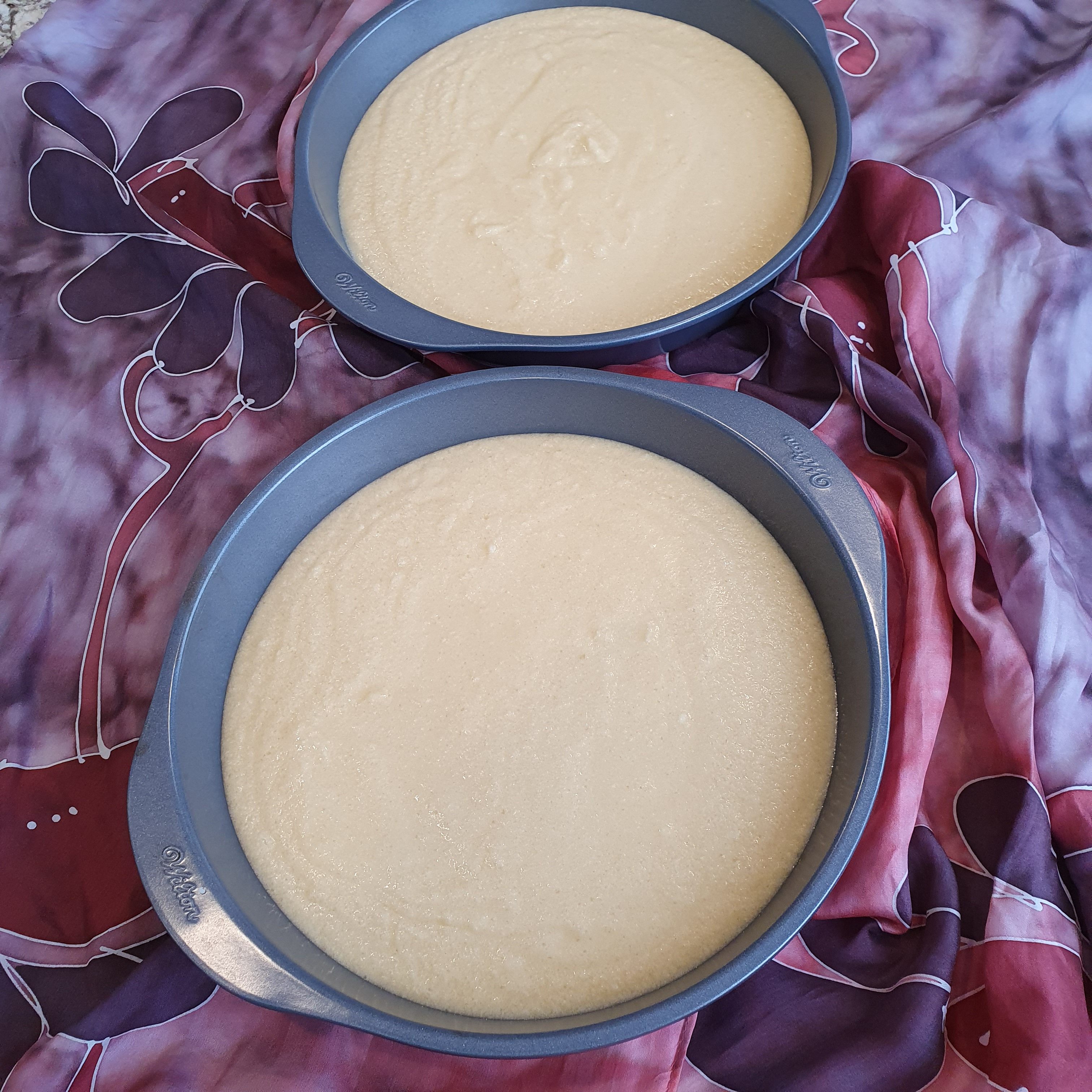
Bake for 20-25 minutes until the tops turn pink. It’s time to make the pudding. Boil the cream according to the instructions on the package. I personally reduced the amount of milk by 30% to make it a thicker cream. When it is ready, remove it from the hob and cover it with foil for fresh storage so that it does not catch a crust while it cools.
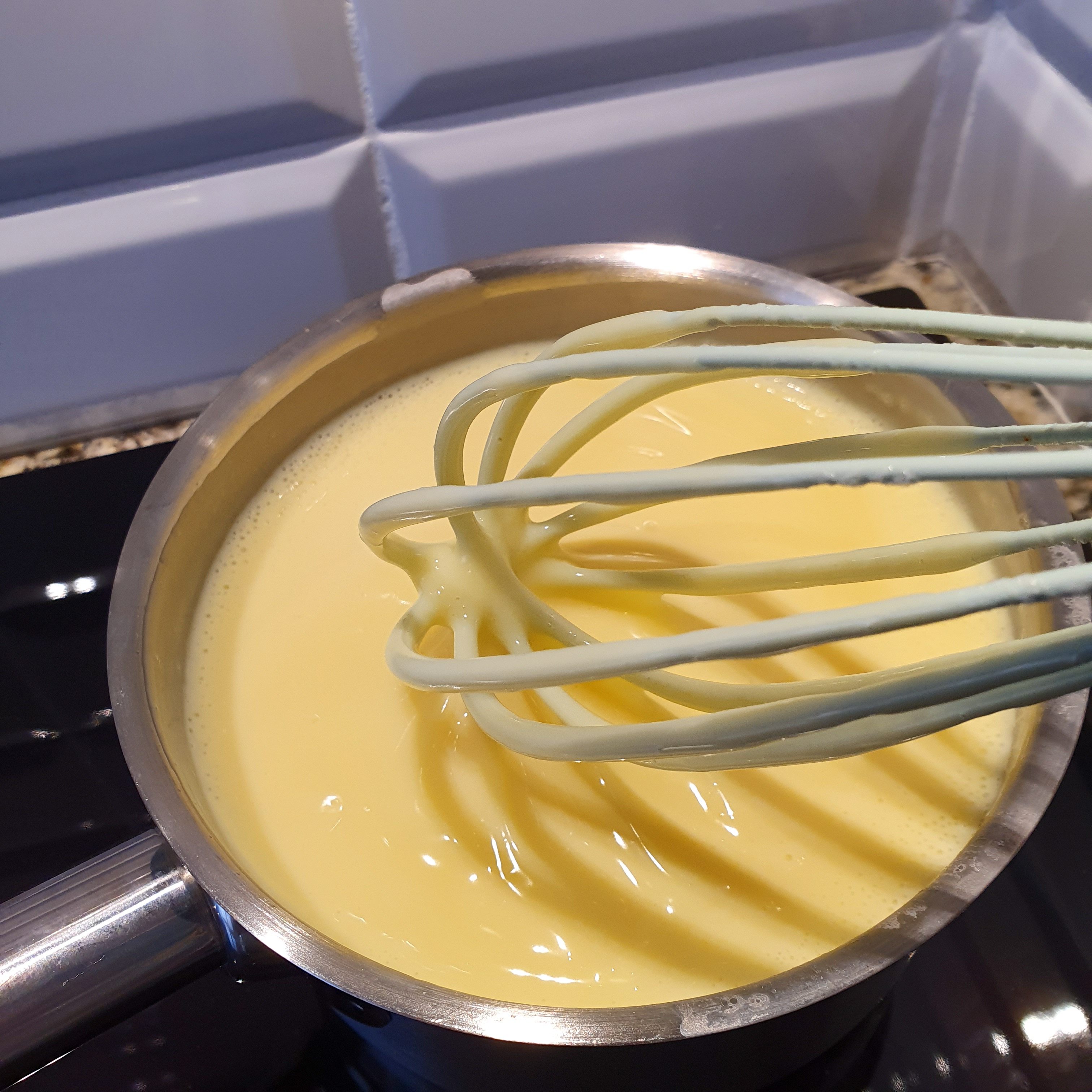
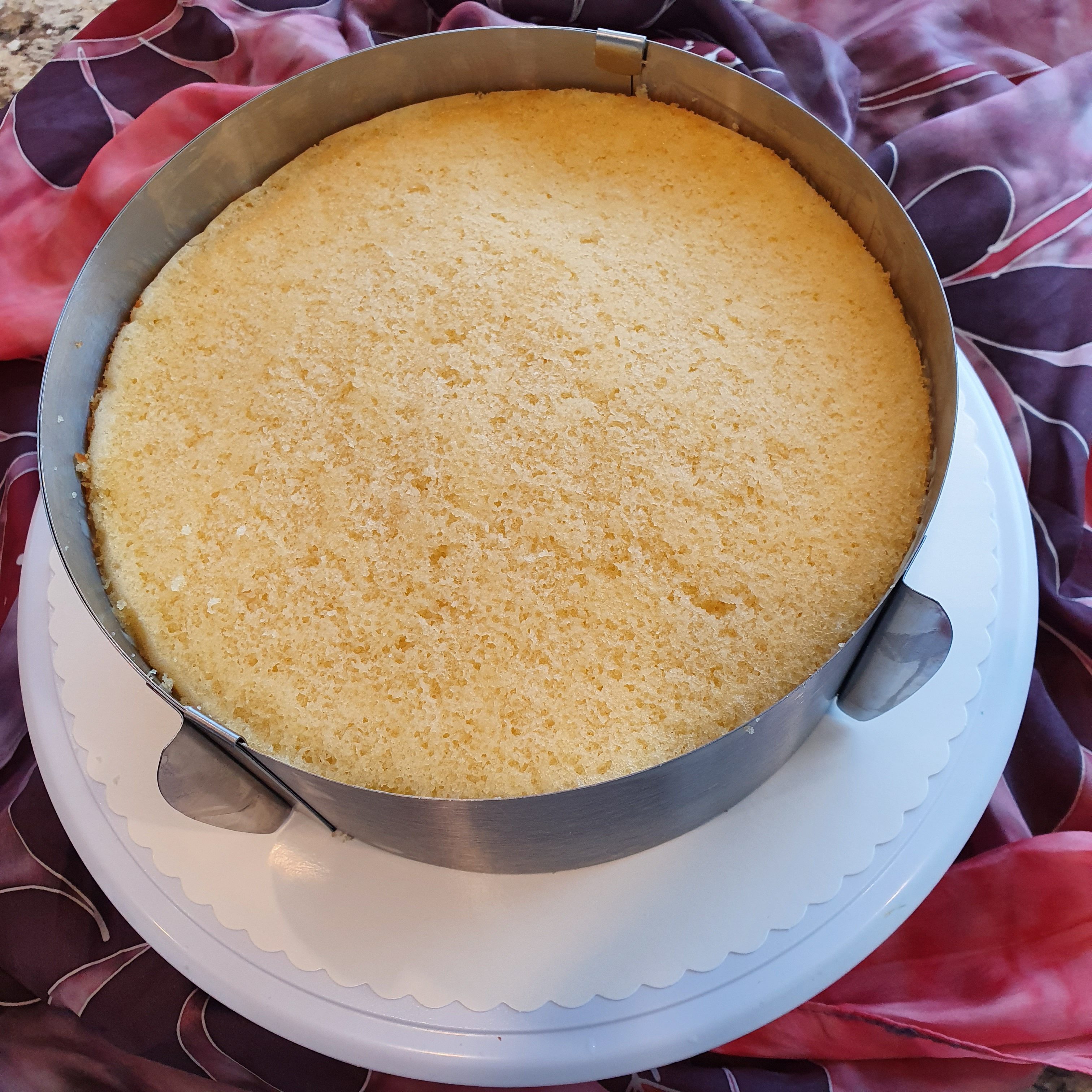
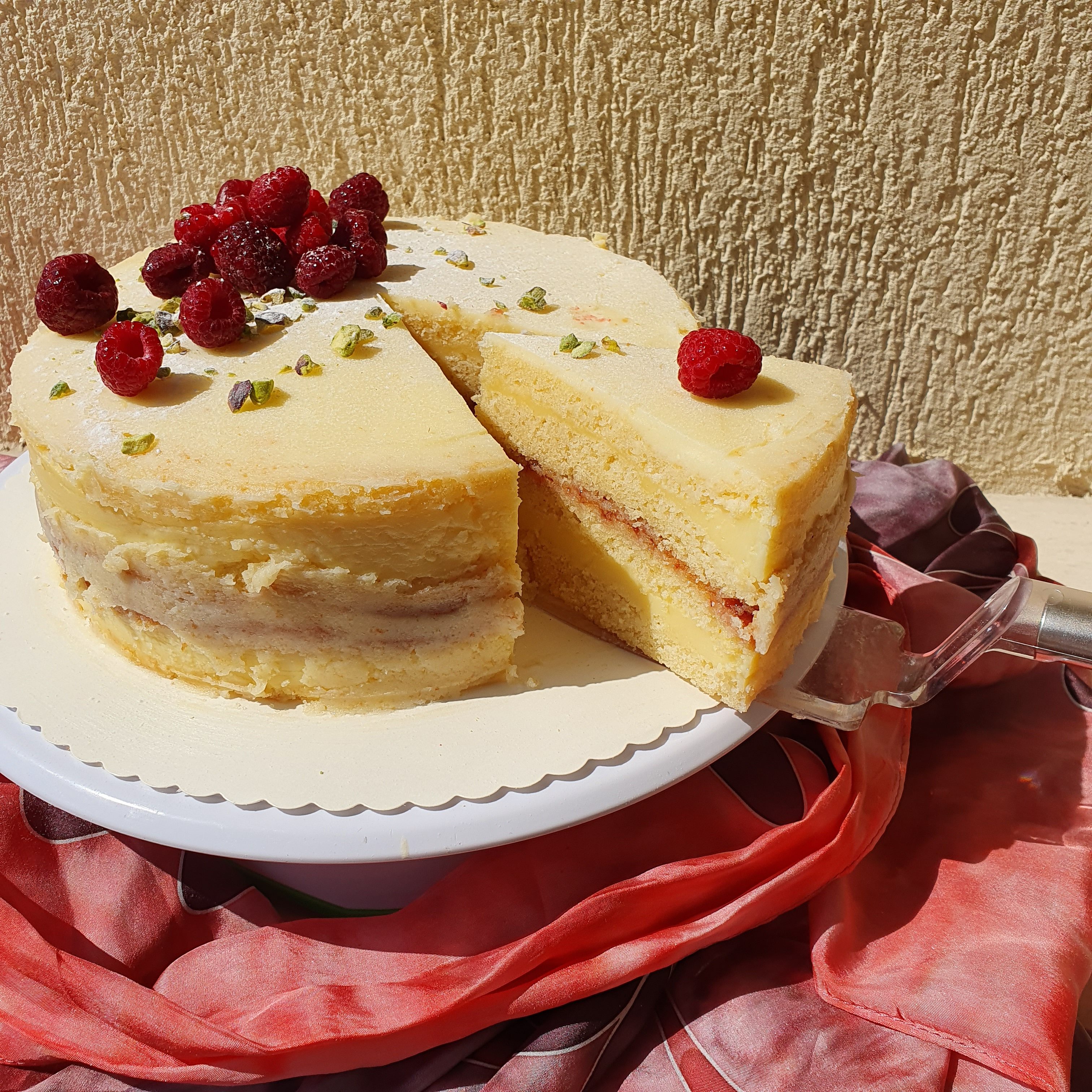
The cake bases should cool well before dividing them in two halves with a sharp knife. Place one cake base and place a ring to assemble the cake. Put half of the cream on it. Add the next tray. Spread a thin layer of raspberry jam on it.
The third cake base follows. After that, the rest of the cream and finally the fourth cake base. Leave in the refrigerator to cool.
It’s time to make the buttercream. Beat the soft butter until foamy and gradually add the powdered sugar. In the original recipe, the amount of sugar was double what I put, but for me the sweetness of the cake is so perfect. If you like sweeter you can increase the sugar. Finally, add the cold cream and beat until completely mixed with the other ingredients. Remove the cake from the refrigerator, remove the ring and apply the butter cream on top and on the walls. Don’t try to make it perfectly smooth. Give a little rustic radiance. 🙂 I finished on top with frozen raspberries and a little crushed pistachio for color.
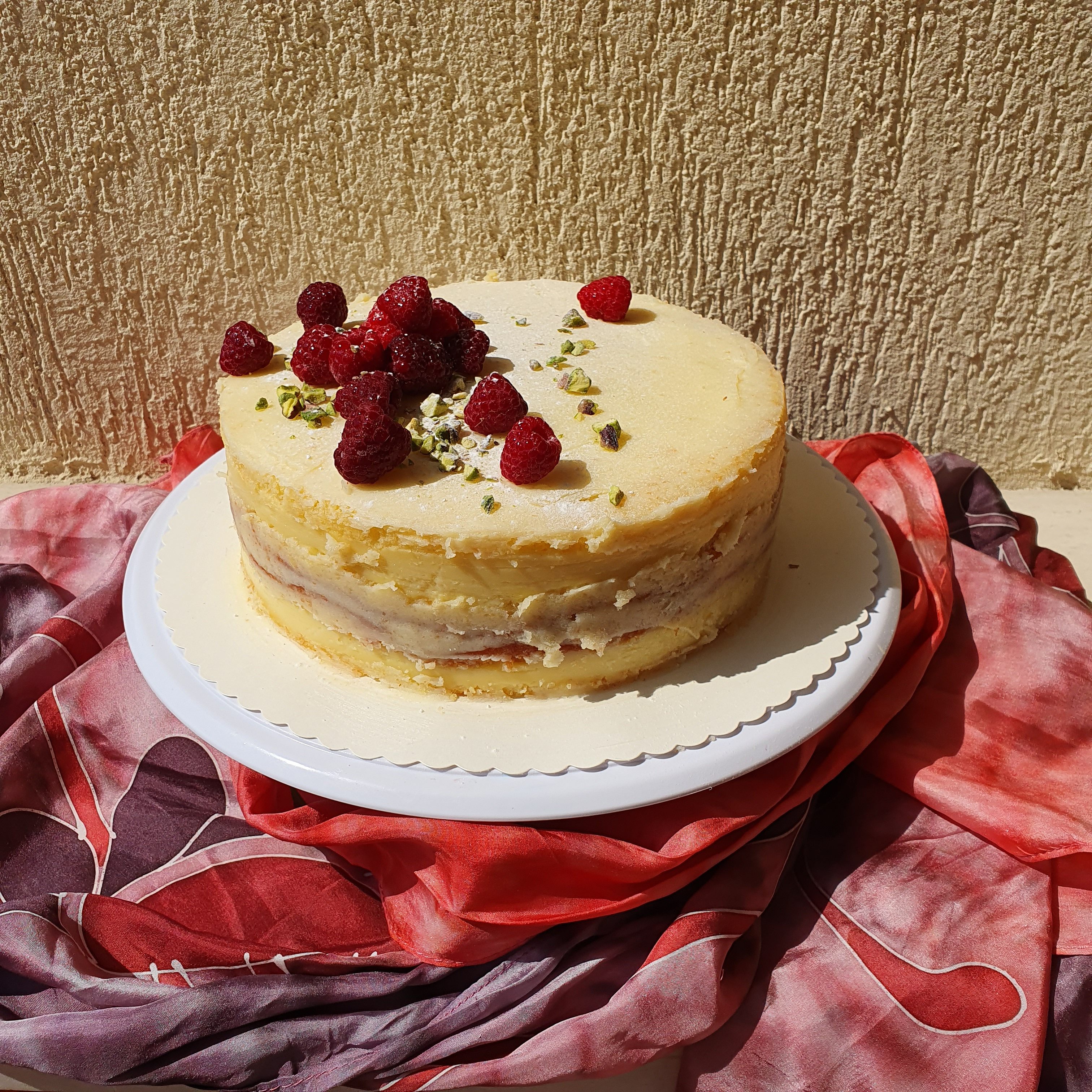
The cake has a very classic taste. I like all the ingredients. It is light, but at the same time has a great butter-milk taste. Raspberries add the necessary freshness, but you could also use strawberries, blueberries, red currant… What the season has to offer and what you like the most. It is not complicated to implement and does not take time. Try to do it in these days of forced stay at home and you will doing something and your loved ones will be happy. 🙂
Next destination – Democratic Republic of Congo.