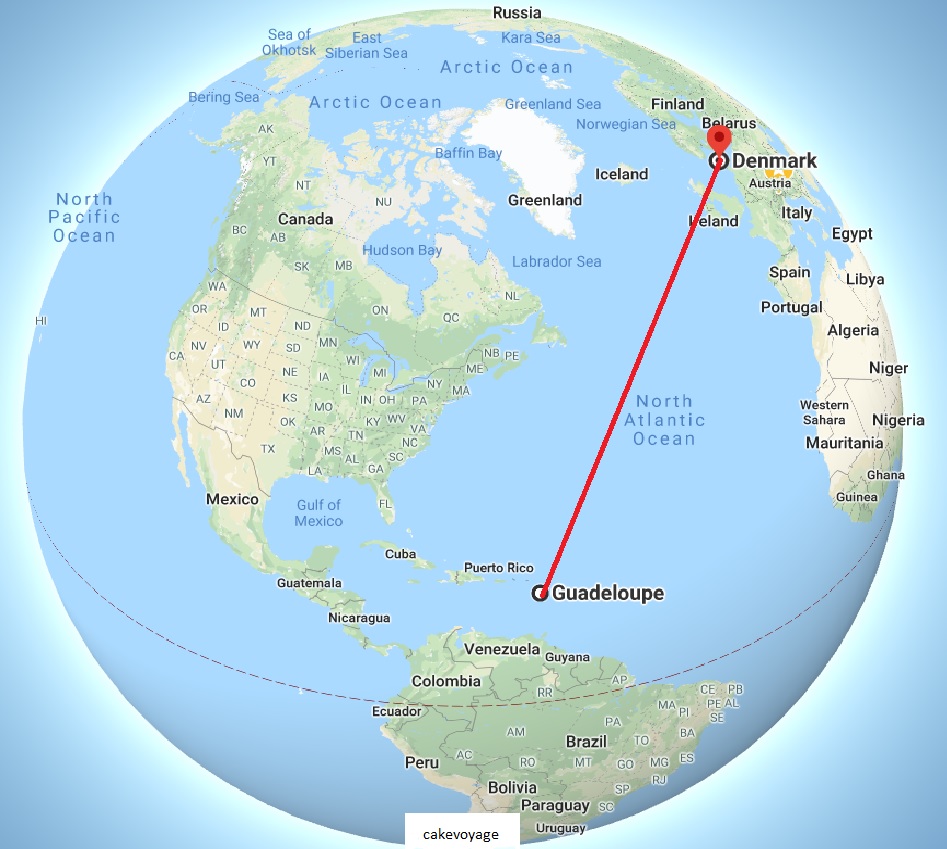
The island of Guadeloupe was once called Karukera, which means “island of good water.” It was renamed by Christopher Columbus in honor of the Virgin of Guadalupe in Extremadura, Spain. The country is an overseas department and region of France. It is governed by a prefecture and is headed by a prefect. The place is divinely beautiful and has everything you would expect from a Caribbean island – white sand beaches and bars painted in bright colors, over which cast their shadow palm trees, swaying from the salt marshes – the constant “commercial” winds that do not allow of temperatures to become very high. The wild volcanic landscape of the inland serves as a beautiful decoration of the coastline. The soil of Guadeloupe is so fertile that the plants almost appear before your eyes. The landscape is variegated with large wild representatives of the plant world, which tourists either know from their visits to the greenhouses of the botanical gardens, or grow with great care at home, but not in such sizes. 🙂
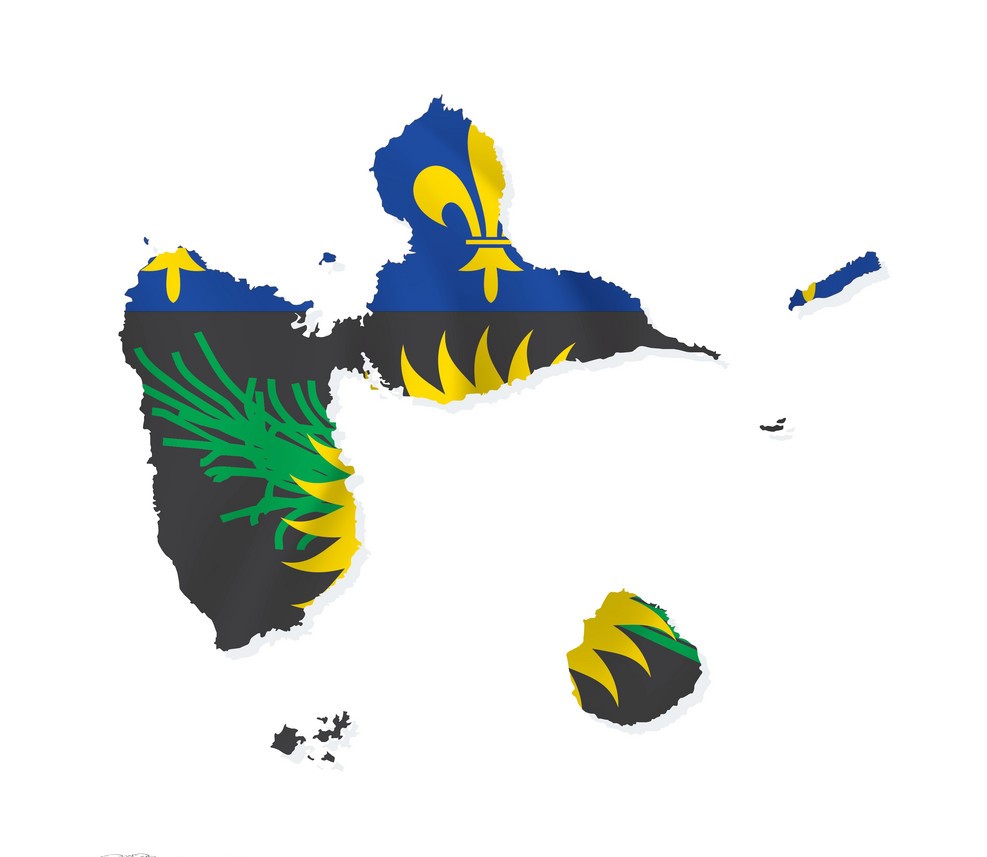
Guadeloupe consists of several islands, the largest of which are Gran Ter and Ba Ter. Ironically, Ba Ter (Small Land) is larger in area than Gran Ter (Big Land). Seen together on the map, the two islands have a beautiful butterfly shape, which is why they are called Ile de Papillon. Gran Terre is very similar to hummingbirds, which is found in these lands. Guadeloupe’s main industries are agriculture and tourism. Sugar cane, bananas, coconut palms, pineapples, etc. are grown. Guadeloupe is visited annually by over 500,000 tourists. As a French department, Guadeloupe is part of the European Union and the currency is the euro. An interesting fact concerning supermarkets in Guadeloupe and all the Caribbean is that there are supermarkets for blacks and supermarkets for whites. Everyone is shopping in their supermarket. It doesn’t sound very European, but it is a fact.
Guadeloupe’s cuisine can safely be called a “Caribbean branch of French cuisine”. You can find any French dish in almost the same version in Guadeloupe. With the difference that it will have the special charm of the Caribbean. There are restaurants that prepare all dishes according to an original recipe and profess their “pure” appearance. There have been a lot of influences from Mexican, Indian and Chinese cuisines in recent years. Predominantly on the table are seafood, which is cooked according to French, Creole or African and Asian recipes. The most popular dishes use lobster, red snapper, turtles, all kinds of crustaceans. Typical local dishes include stuffed crabs, boiled crabs with green bananas, grilled mussels with charcoal, all kinds of crustaceans with vegetable garnish, stewed with spices crabs “matuto de crabes”, boiled octopus, brioche with lobster, pork and a variety of fish with “tinin-lan-mori” vegetables, mussel broth, fish stew “la creole”, roasted wild goat meat with spices “gut-colombo” and “cabri”, fried chicken with rice and vegetables, stew with bacon or seafood ” kalalu ‘, rabbit stewed with vegetables, mussels stewed with wine, roasted pigeon. The use of local spices gives these dishes the characteristic aroma of Creole cuisine, and the delicate French methods of processing and serving – exquisite taste and excellent appearance.
All kinds of fruit juices made from pineapple, papaya, guava, passion fruit, tangerine, sugar cane are regularly present on the table. The islands also import excellent French wines and champagne, and rum is produced, as is the case everywhere in the Caribbean. 🙂
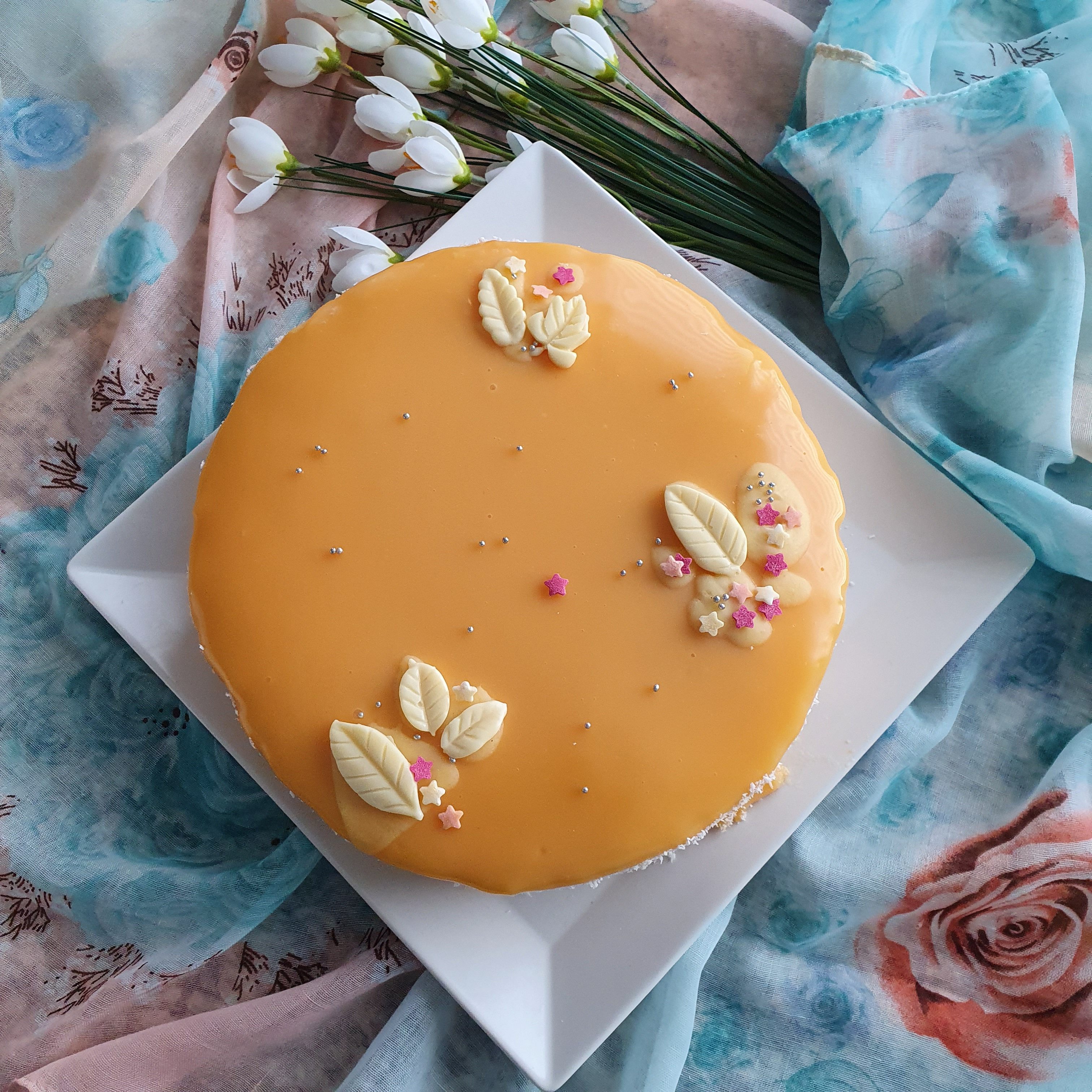
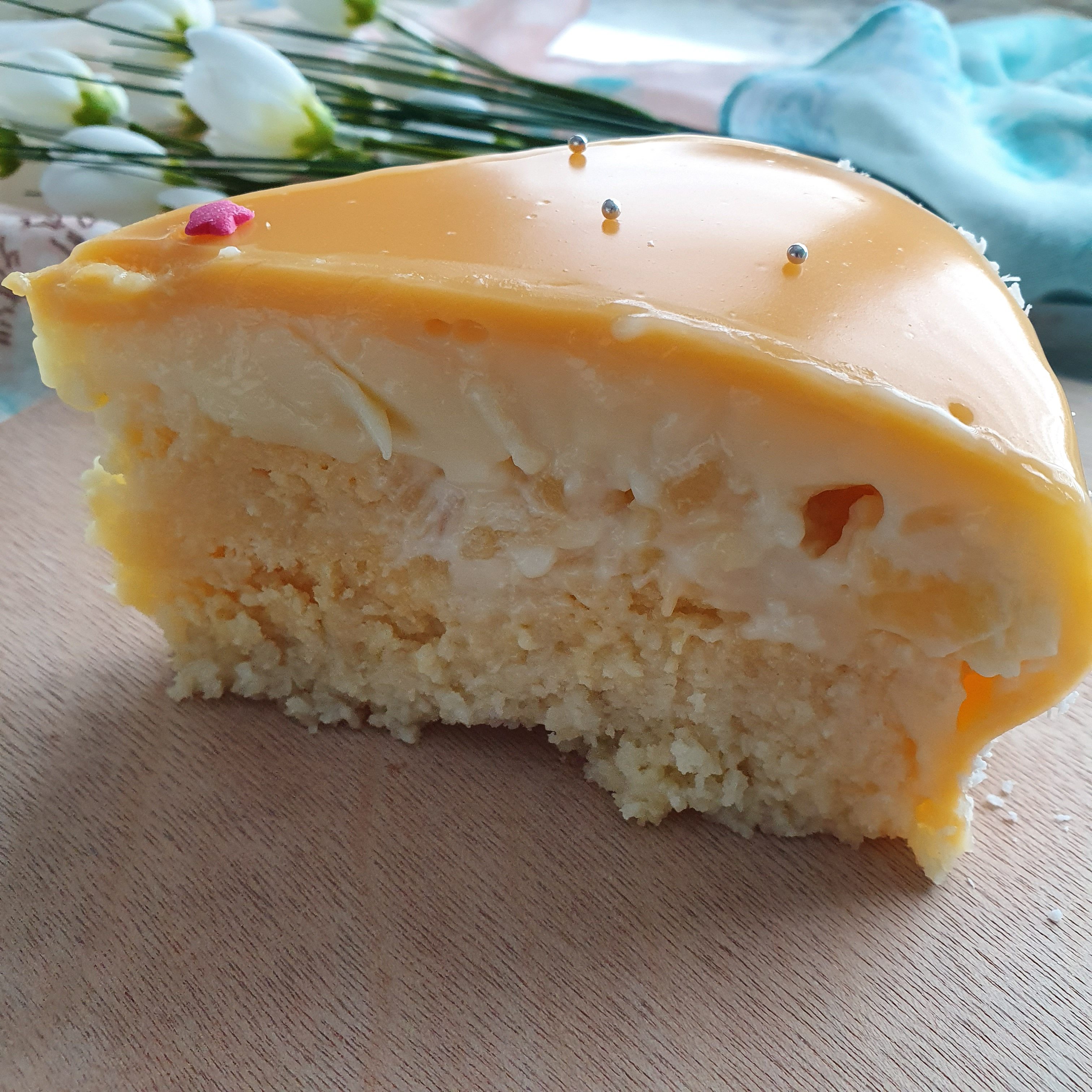
The cake has no name today. I found it as “Guadeloupe Dessert.” As a matter of fact, the recipe requires many and varied ingredients and the preparation of several layers, which takes time. Here are the necessary products:
For cake base:
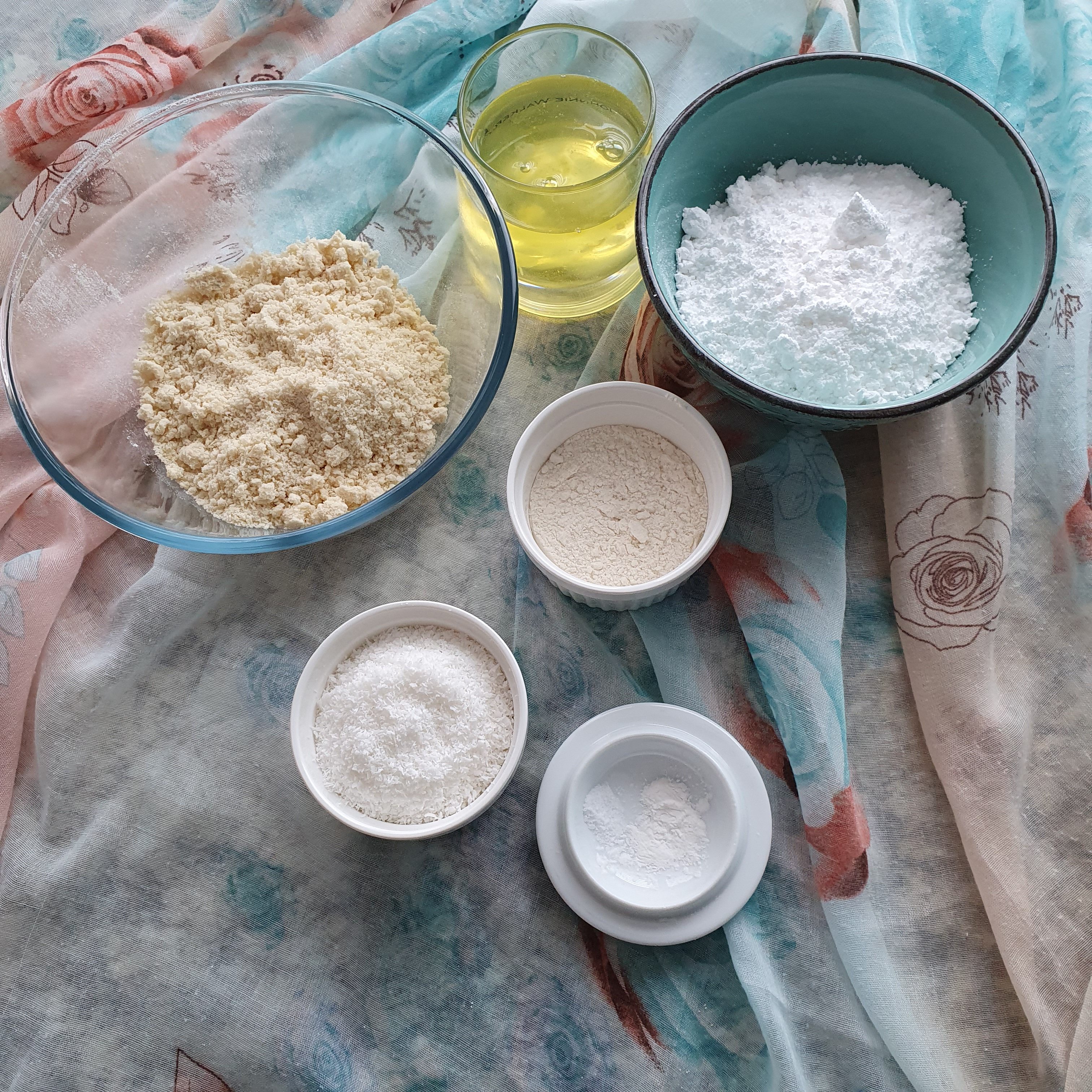
185 grams of powdered sugar
130 grams of almond flour
40 grams of flour
40 grams of coconut
190 grams of egg white
pinch of salt
1/2 teaspoon starch
For coconut butter crumbs:
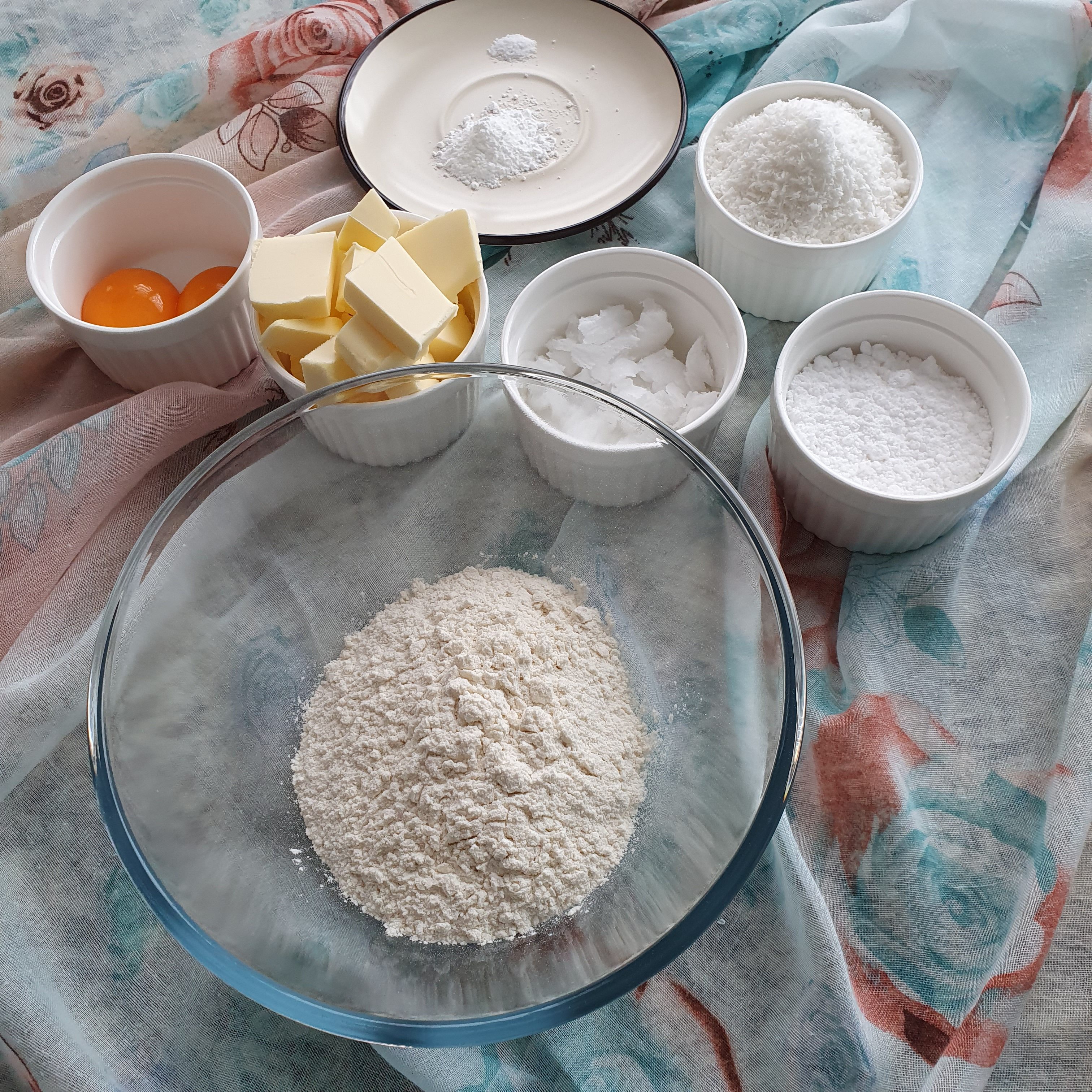
110 grams of flour
50 grams of coconut
50 grams of powdered sugar
3 grams of baking powder
95 grams of butter
pinch of salt
2 egg yolks
20 grams of coconut butter
For panna cotta 1 and 2:
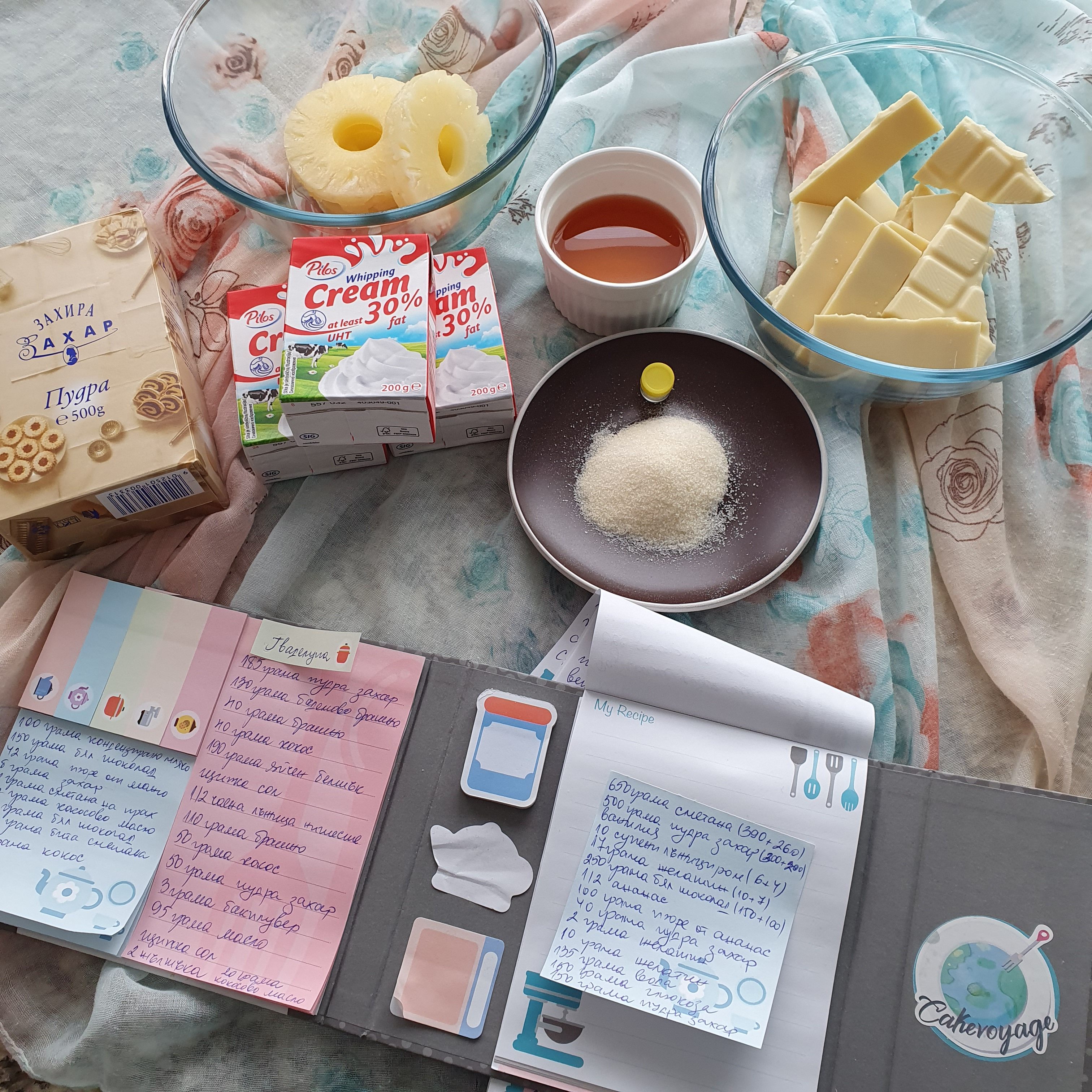
650 grams of cream (390 + 260)
500 grams of powdered sugar (300 + 200)
vanilla
10 tablespoons dark rum (6 + 4)
17 grams of gelatin (10 + 7)
250 grams of white chocolate (150 + 100)
1/2 pineapple (for panna cotta 1)
For the glaze:
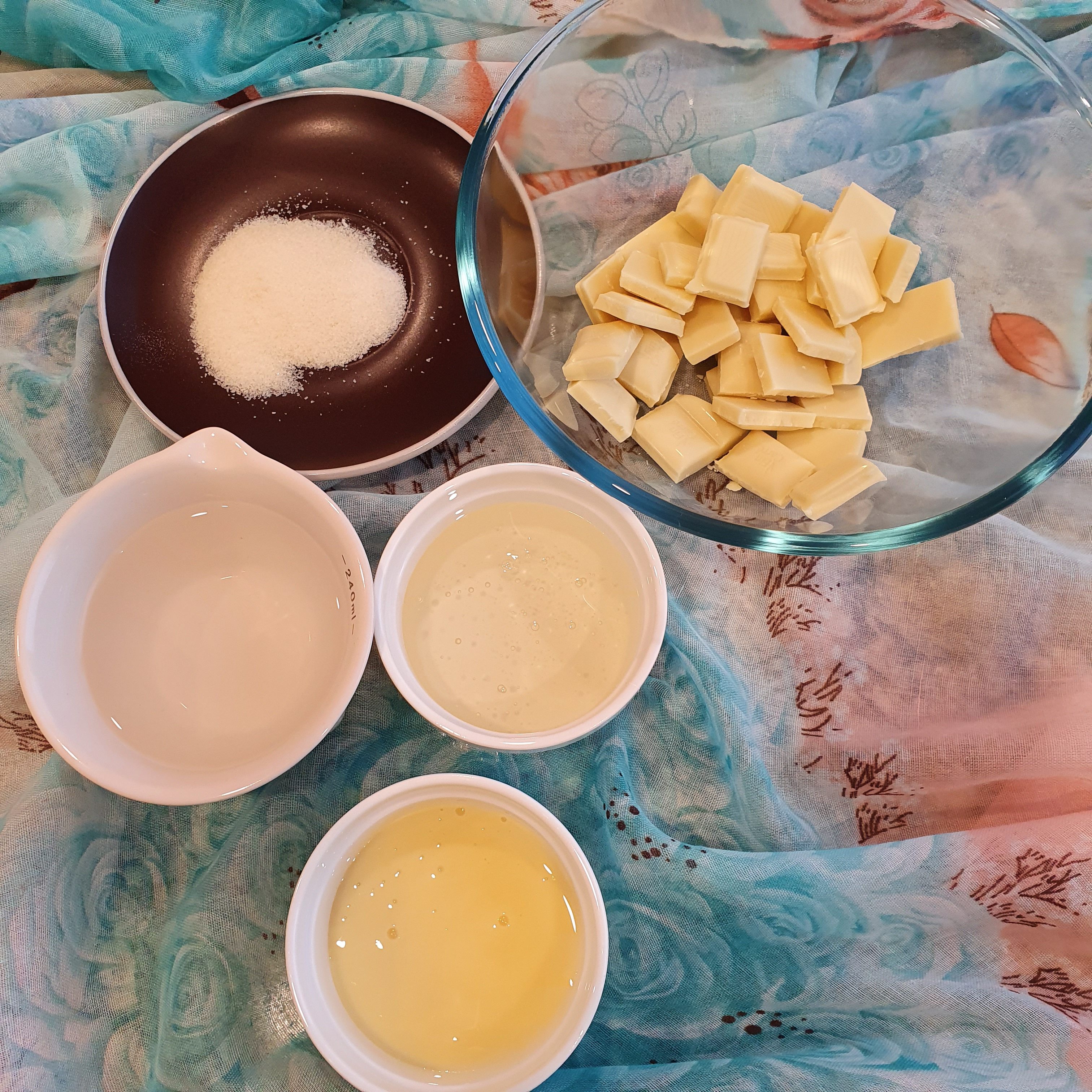
10 grams of gelatin
135 grams of water
150 grams of glucose
150 grams of powdered sugar
100 grams of unsweetened condensed milk
150 grams of white chocolate
yellow confectionery paint
For the mango puree:
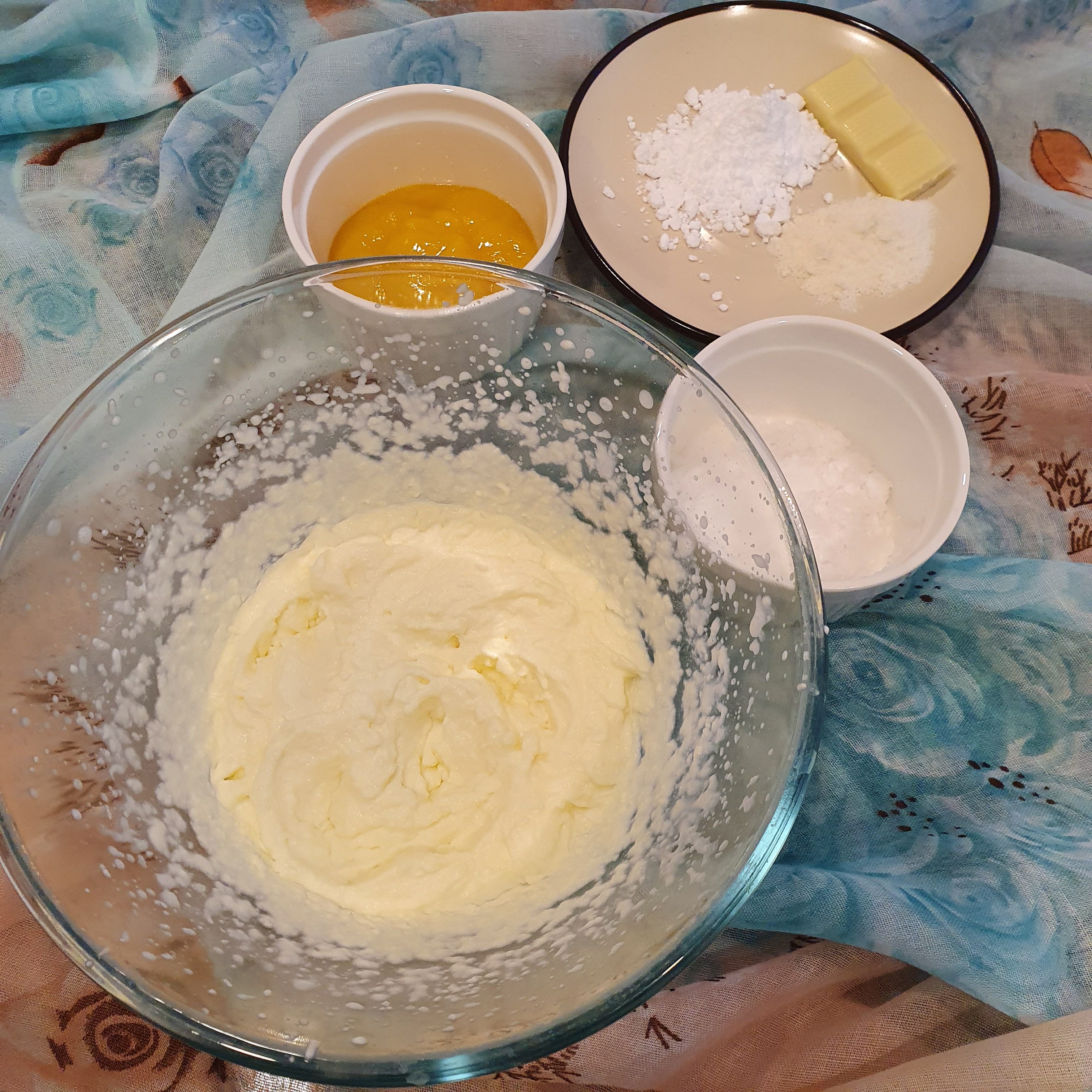
42 grams of mango puree
8 grams of sugar
4 grams of cream powder
12 grams of coconut butter
10 grams of white chocolate
125 grams of whipped cream
For decoration:
150 grams of coconut
edible flowers
Steps of preparation:
We start with one panna cotta cream first, because it needs time to cool down a bit. Heat the cream and sugar on the stove until boils.
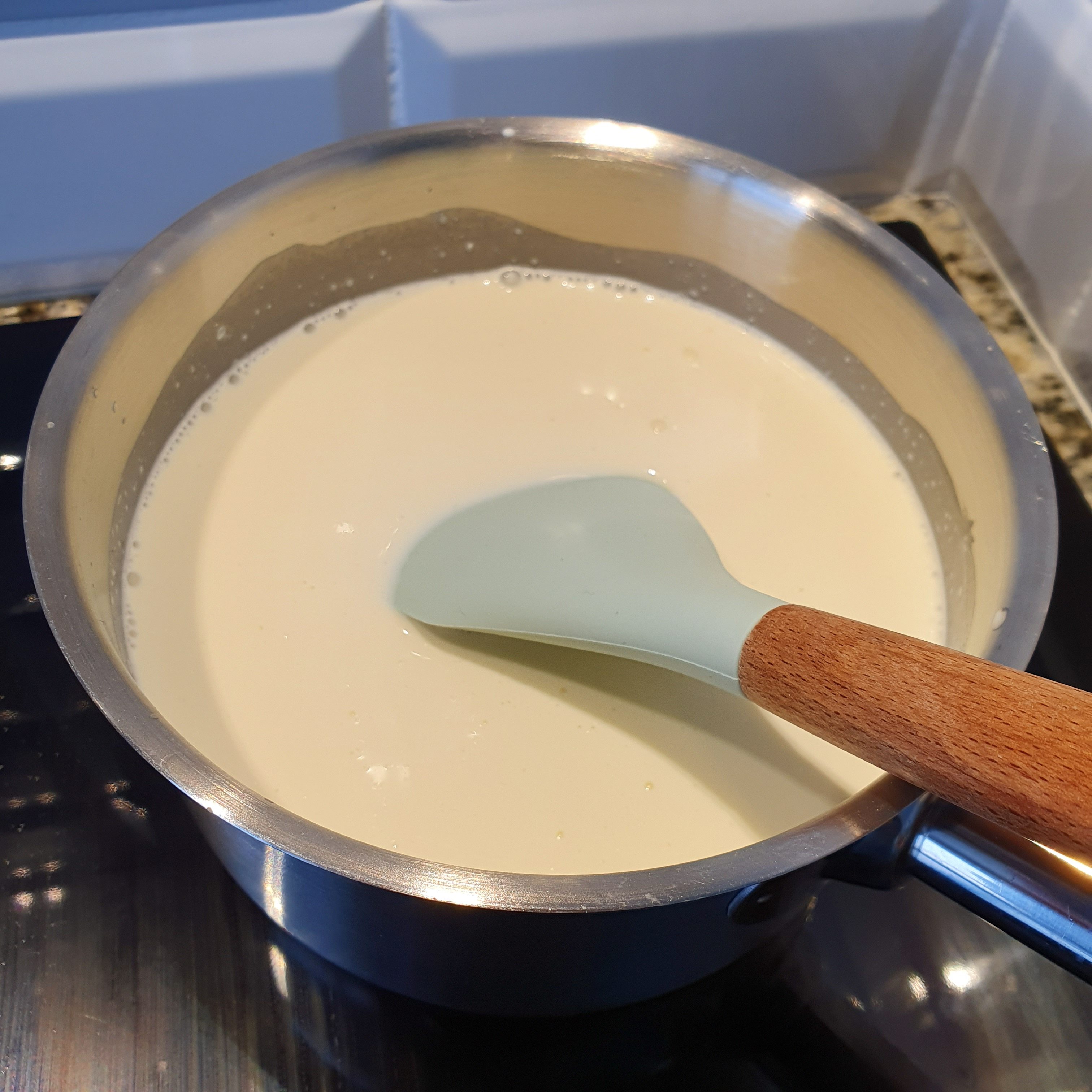
Separately soak the gelatin in a little cold water. Then melt it in a water bath and add it to the cream. Beat with a blender to make it homogeneous.
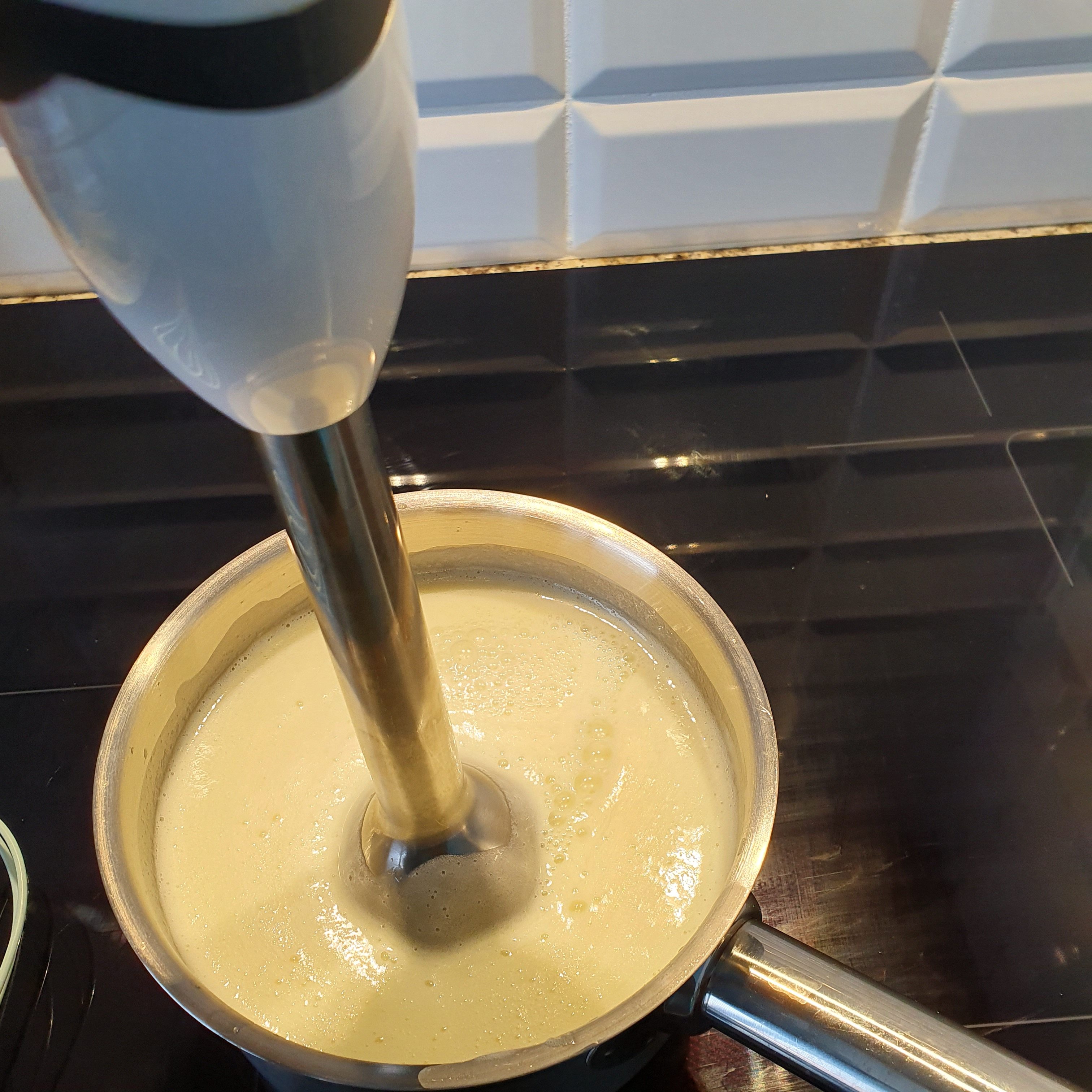
Add the vanilla if it is liquid or synthetic powder. If it is in pods, put it at the beginning of the stove, and before adding gelatin, take them out. Pour the chocolate with the cream mixture and mix until homogeneous.
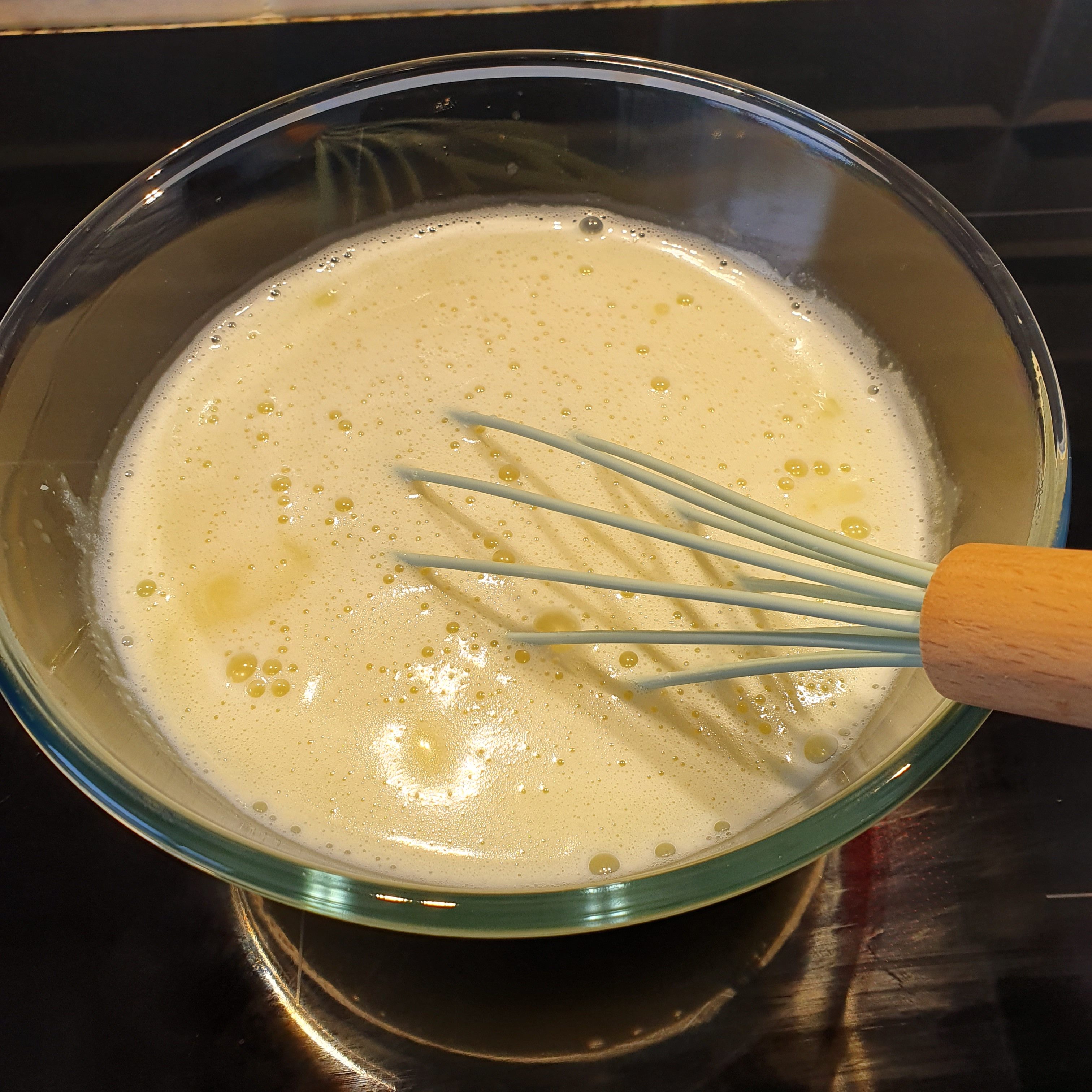
If necessary, beat with a blender. When it cools down a bit, add rum. We leave it aside.
We start preparing the coconut butter crumbs separately. Beat the cold butter (cow’s and coconut) together with the dry ingredients with a mixer and finally add the yolks. Do not stir for a long time, because the butter will melt. Just enough to collect the dough. In a tray lined with baking paper, place balls of equal size with an irregular shape of the dough. Bake at 170 degrees for about 5 minutes.
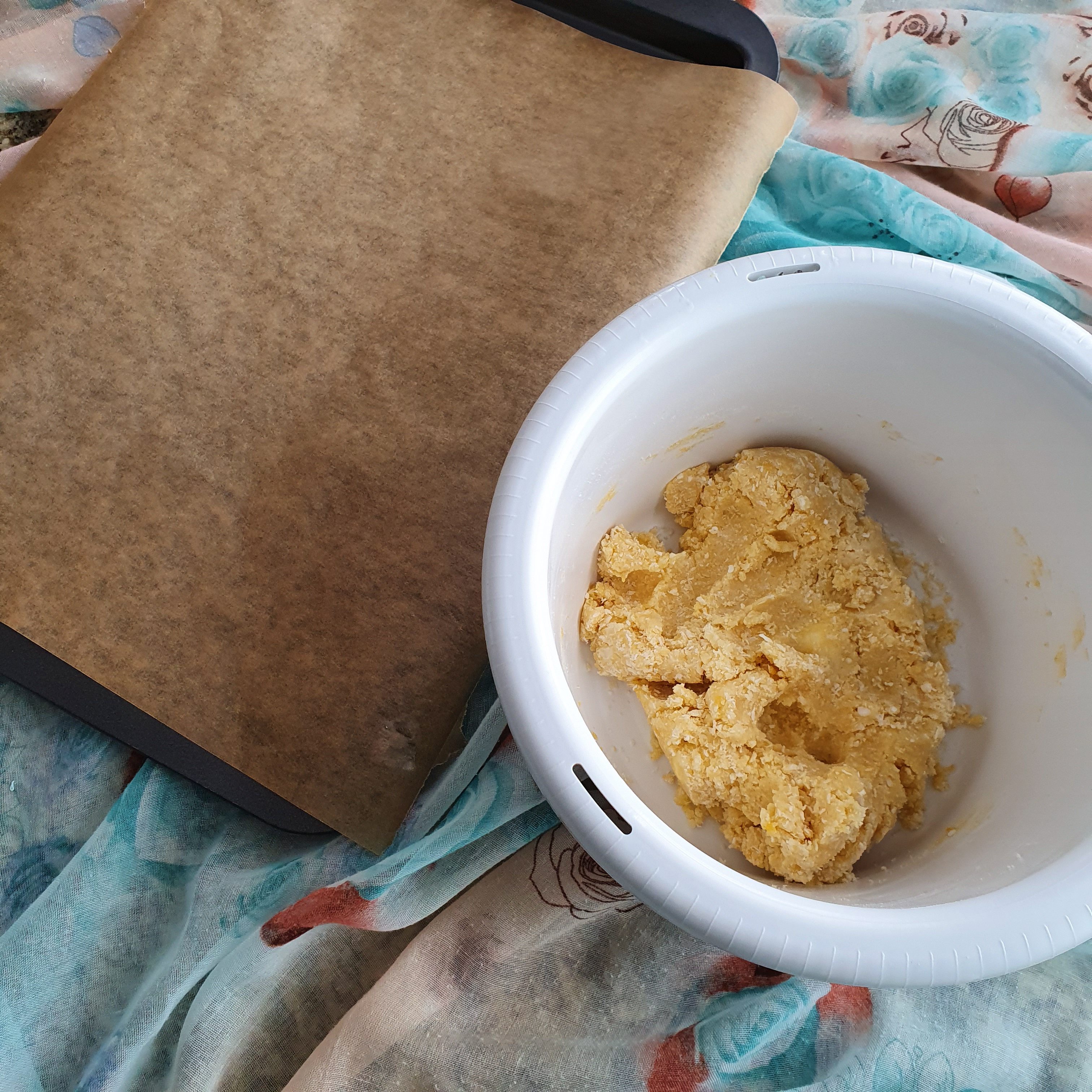
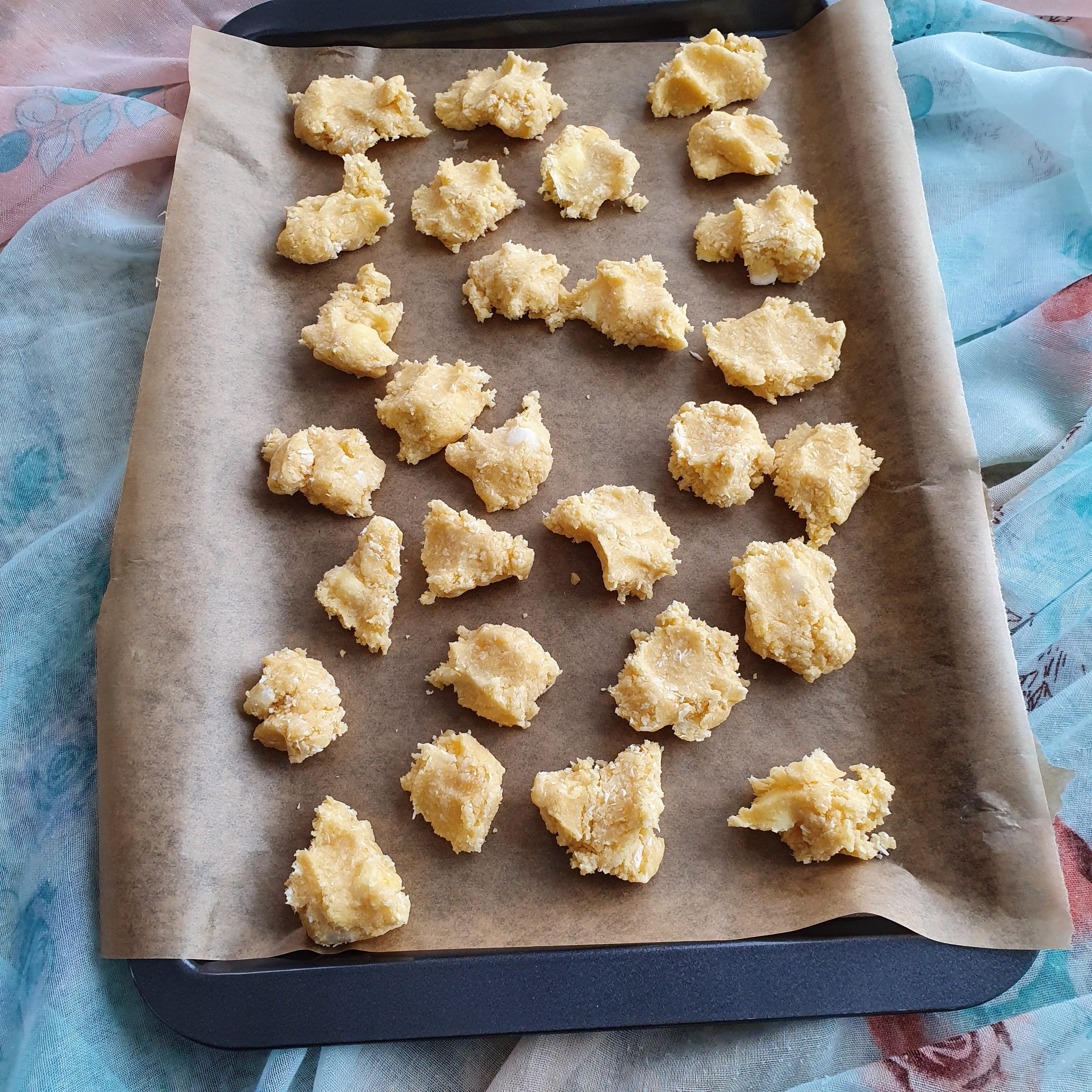
It’s time to make cake base while the panna cotta and coconut butter cookies cool down.
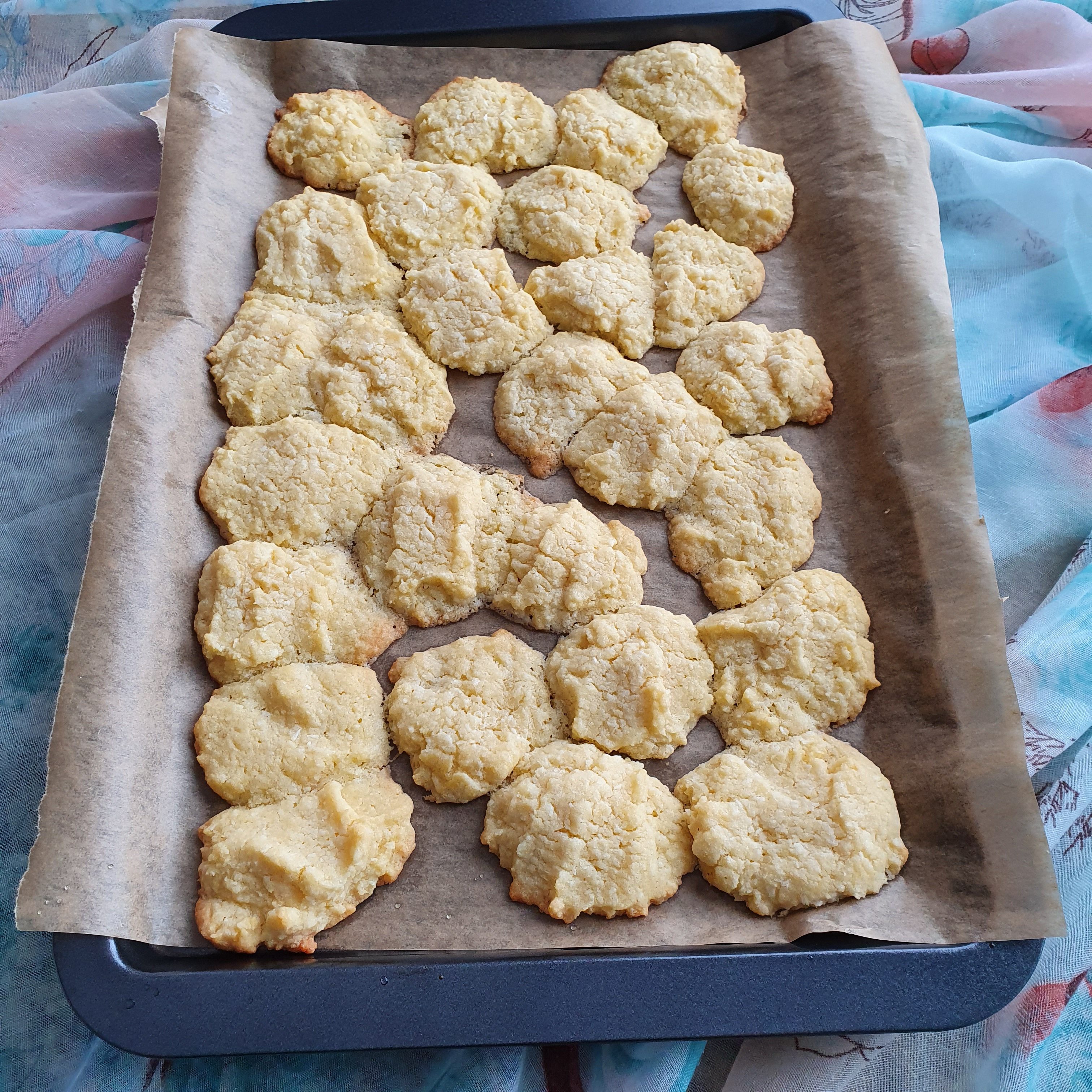
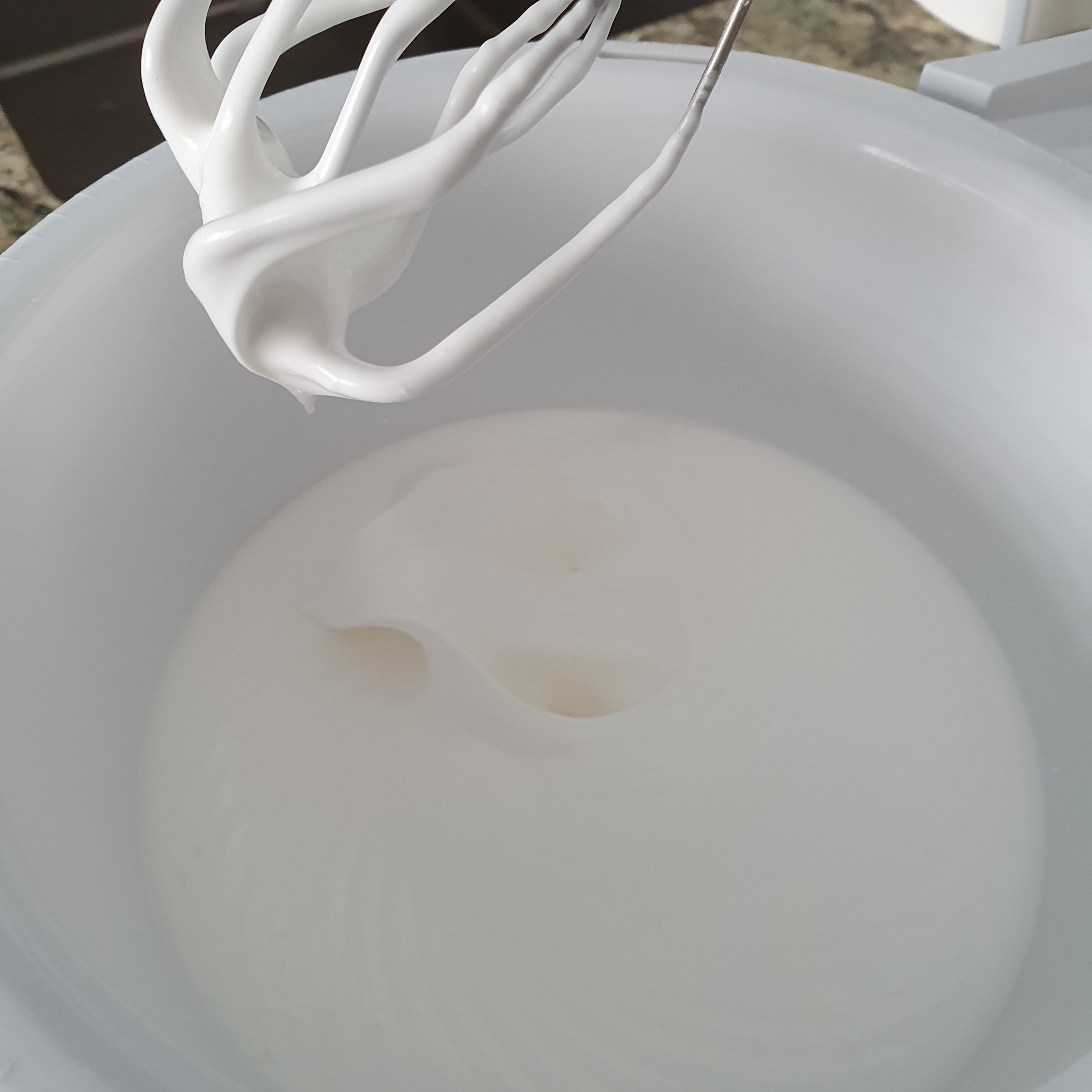
Beat the egg whites, a pinch of salt and sugar on hard tips.
Mix the two types of flour and starch and carefully mix everything.
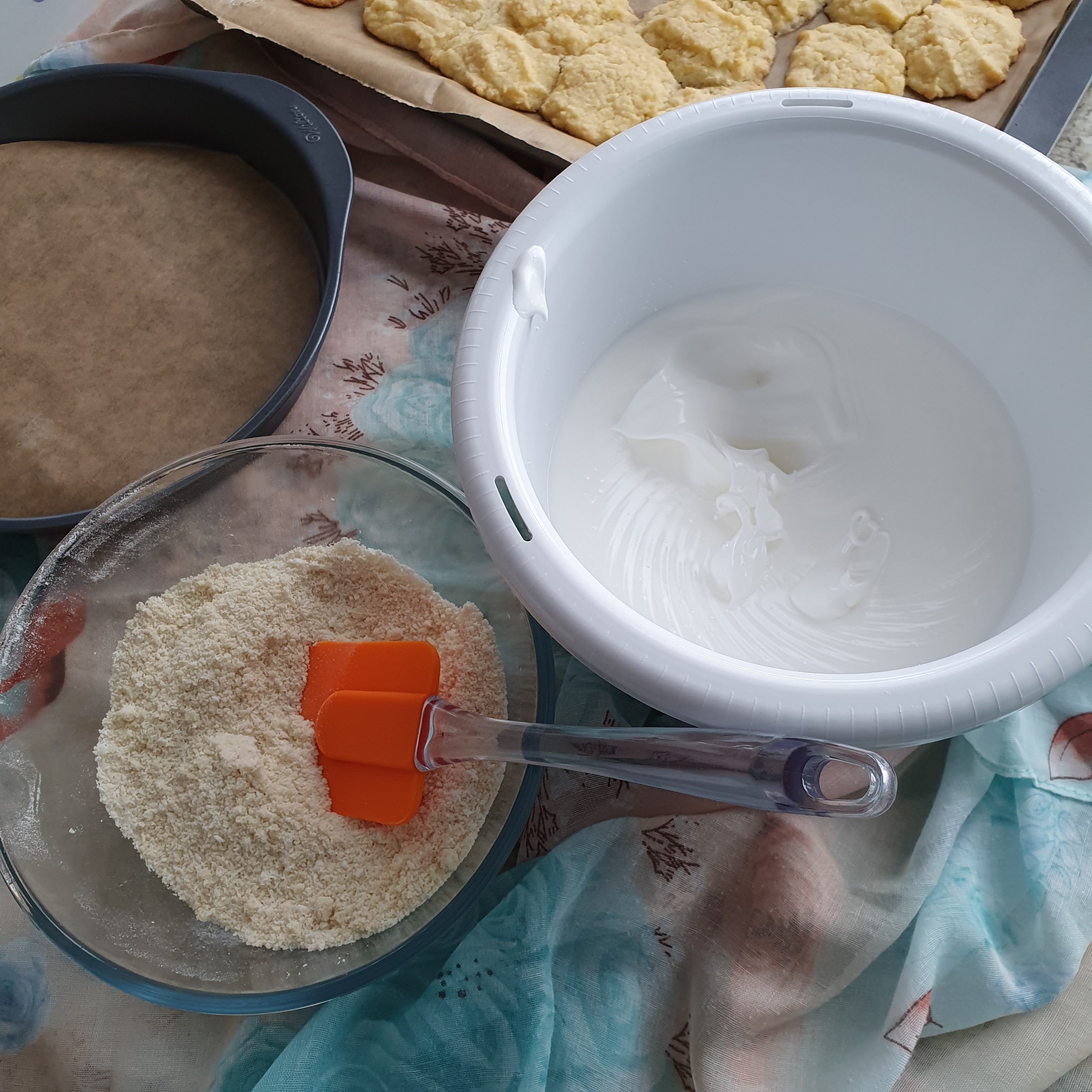
Bake in a pan lined with baking paper at 160 degrees for 15 minutes or until pink. Remove from the oven and allow to cool.
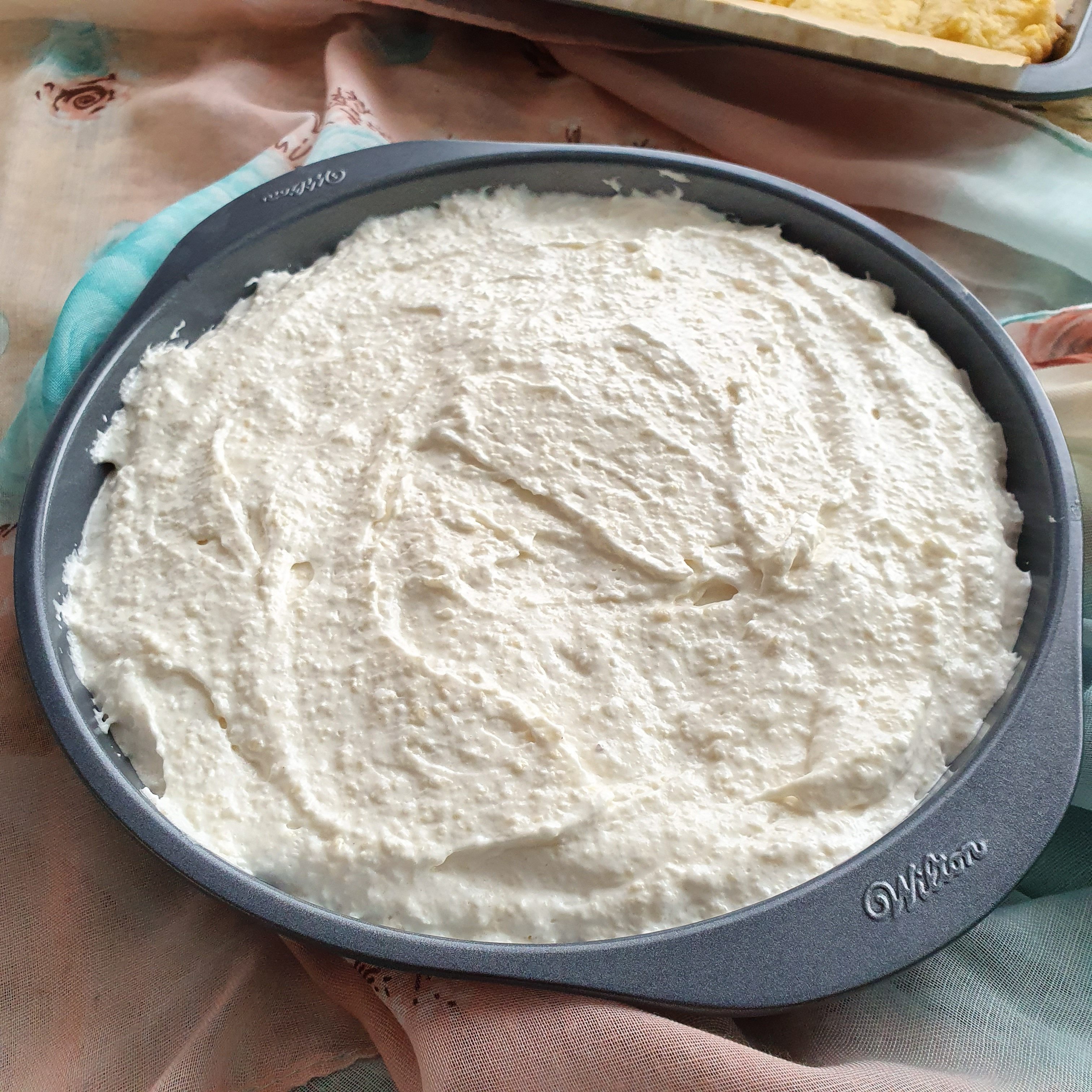
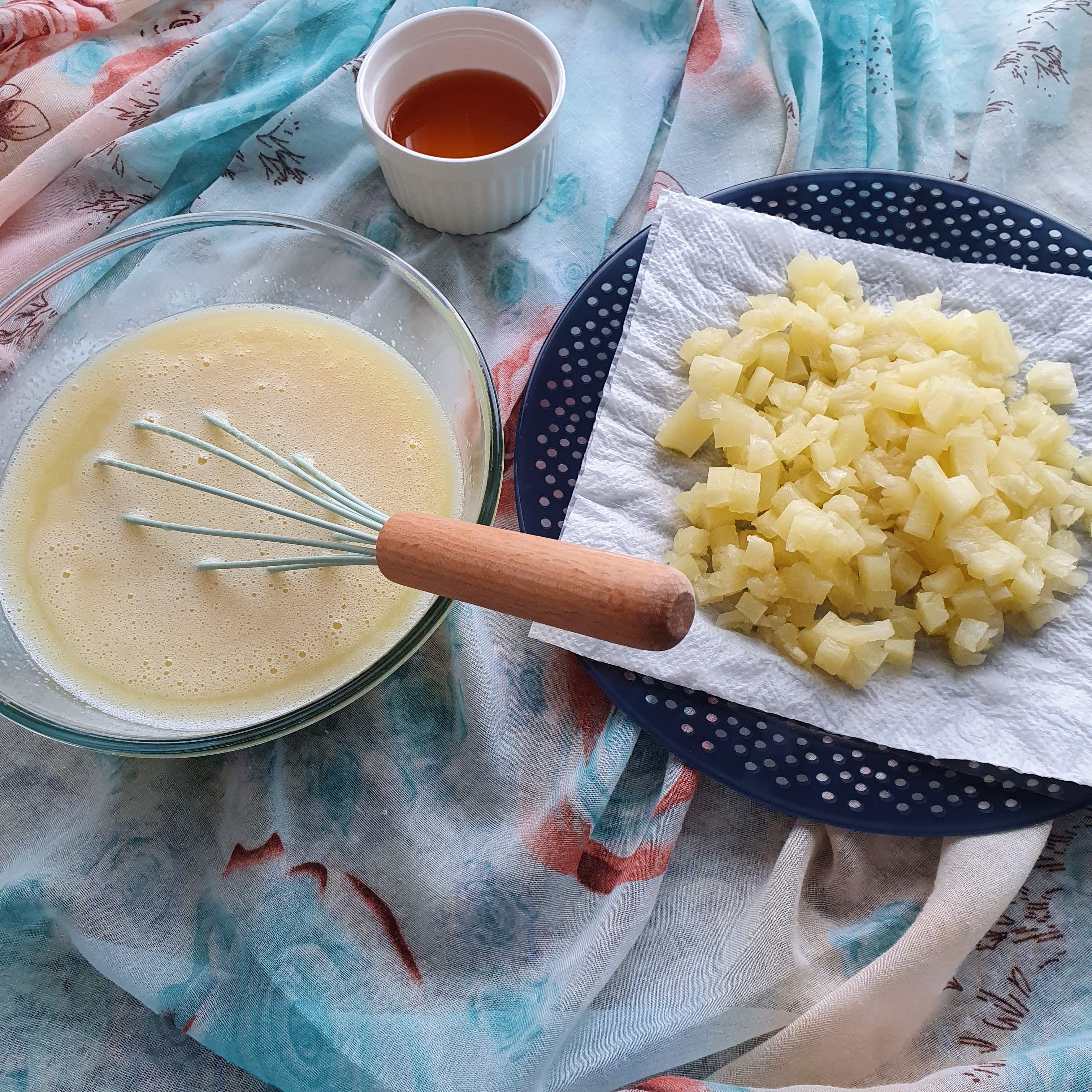
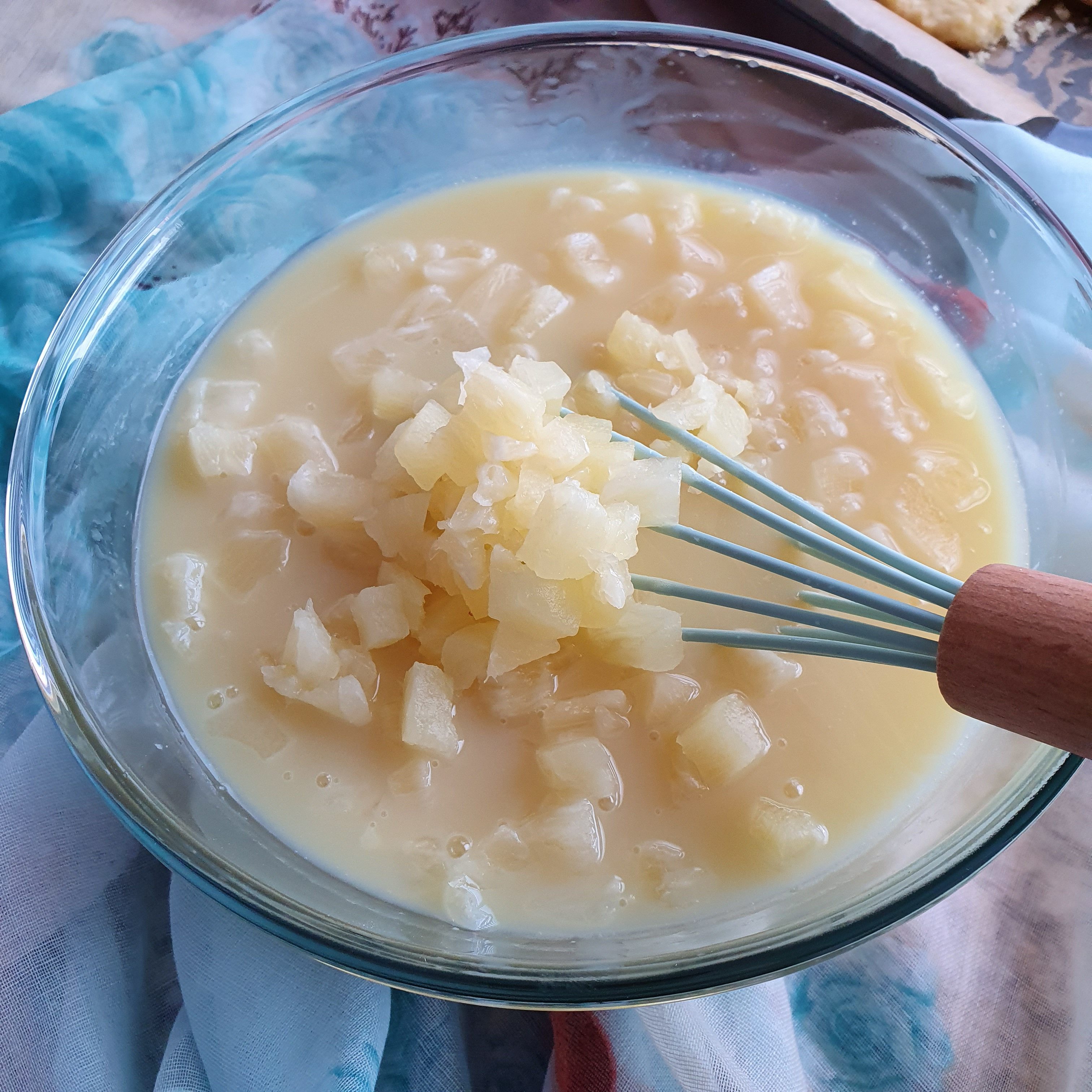
When the temperature of the panna cotta reaches 25 degrees, add diced pineapple, which we have left on kitchen paper to remove moisture.
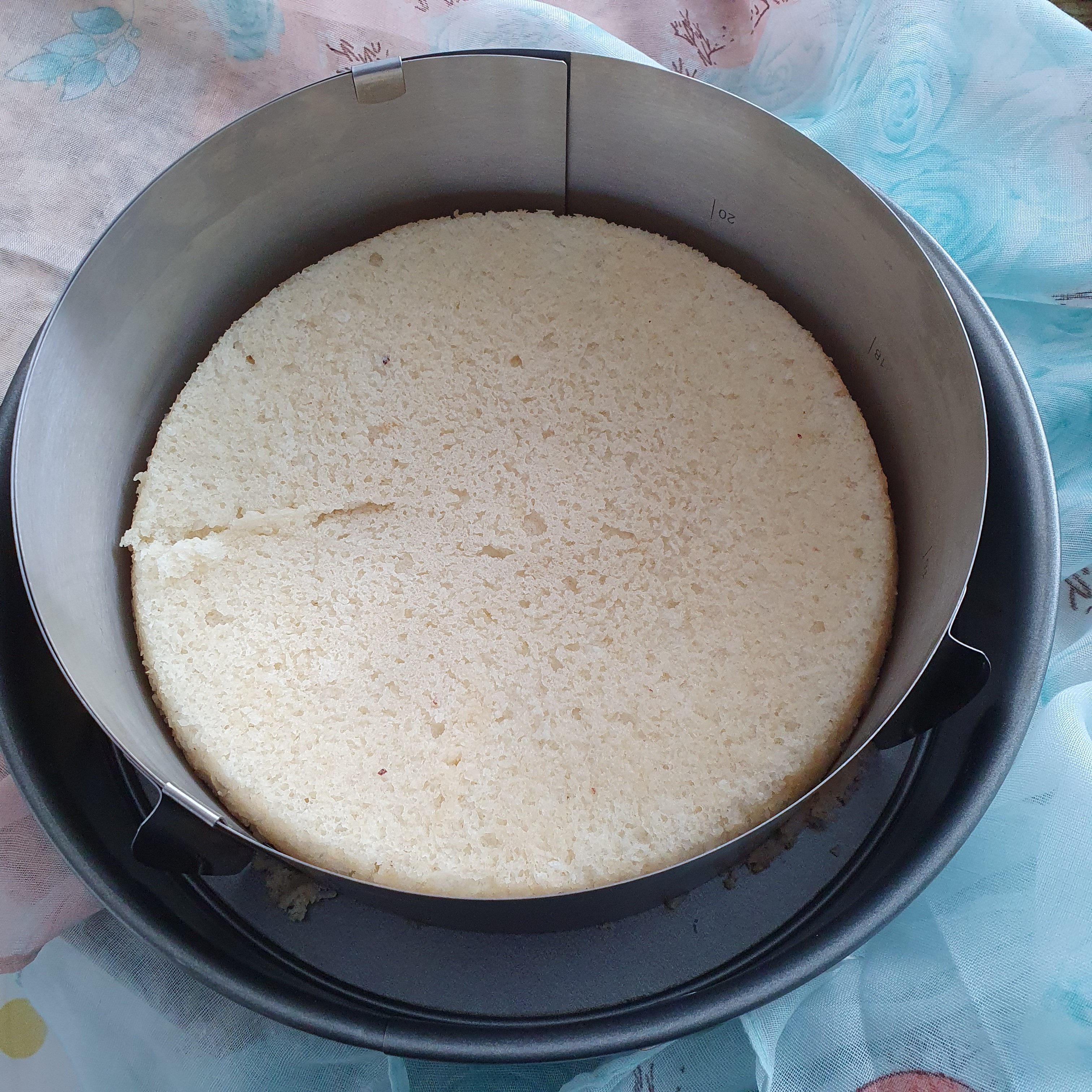
We start composing the cake. We put the cake base with egg whites in the basis.
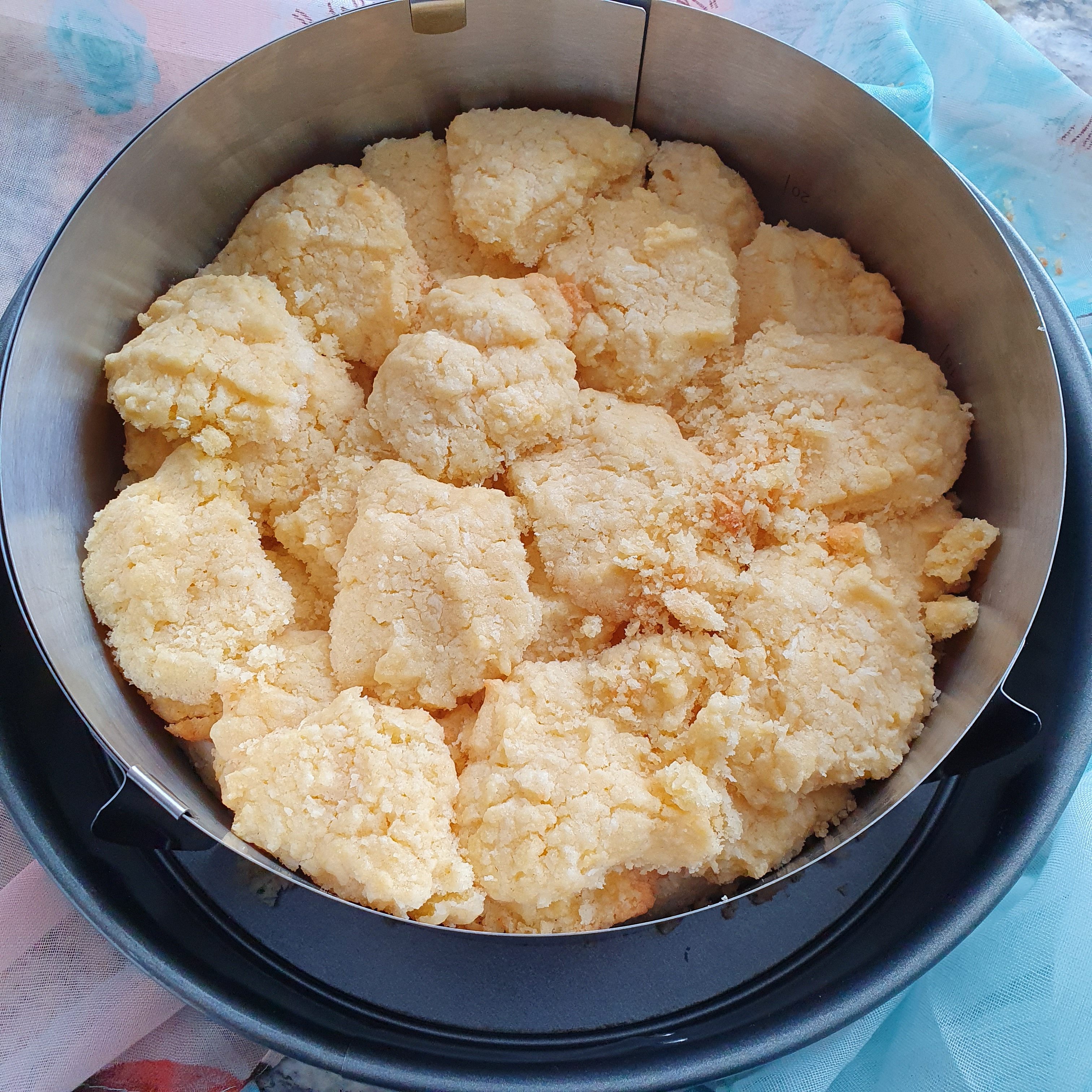
Arrange the coconut cookies on it.
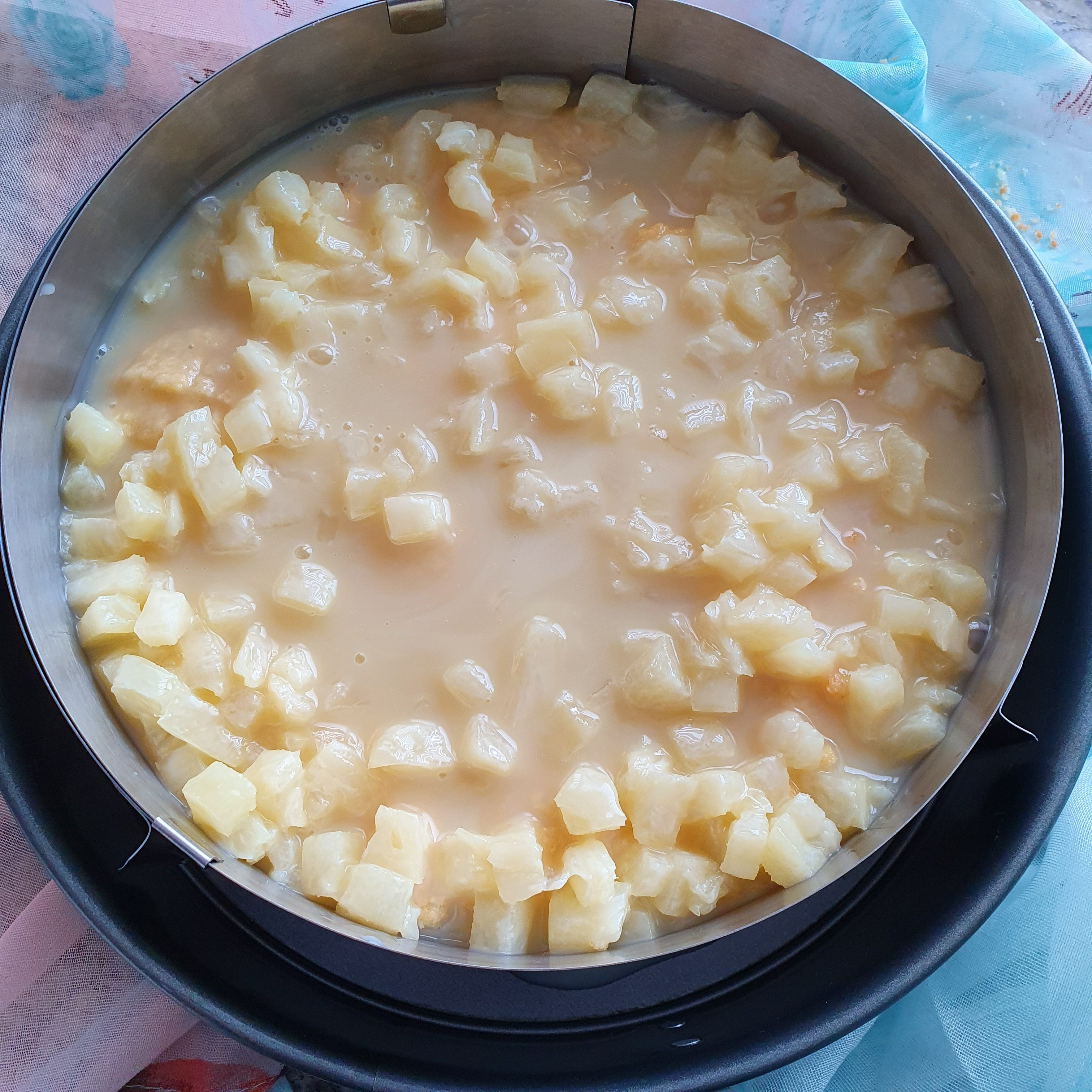
Finally, pour the panna cotta. Leave in the refrigerator to harden.
Prepare the second panna cotta cream in a similar way. The quantities for the two creams are total, but I have written in brackets how to divide them.
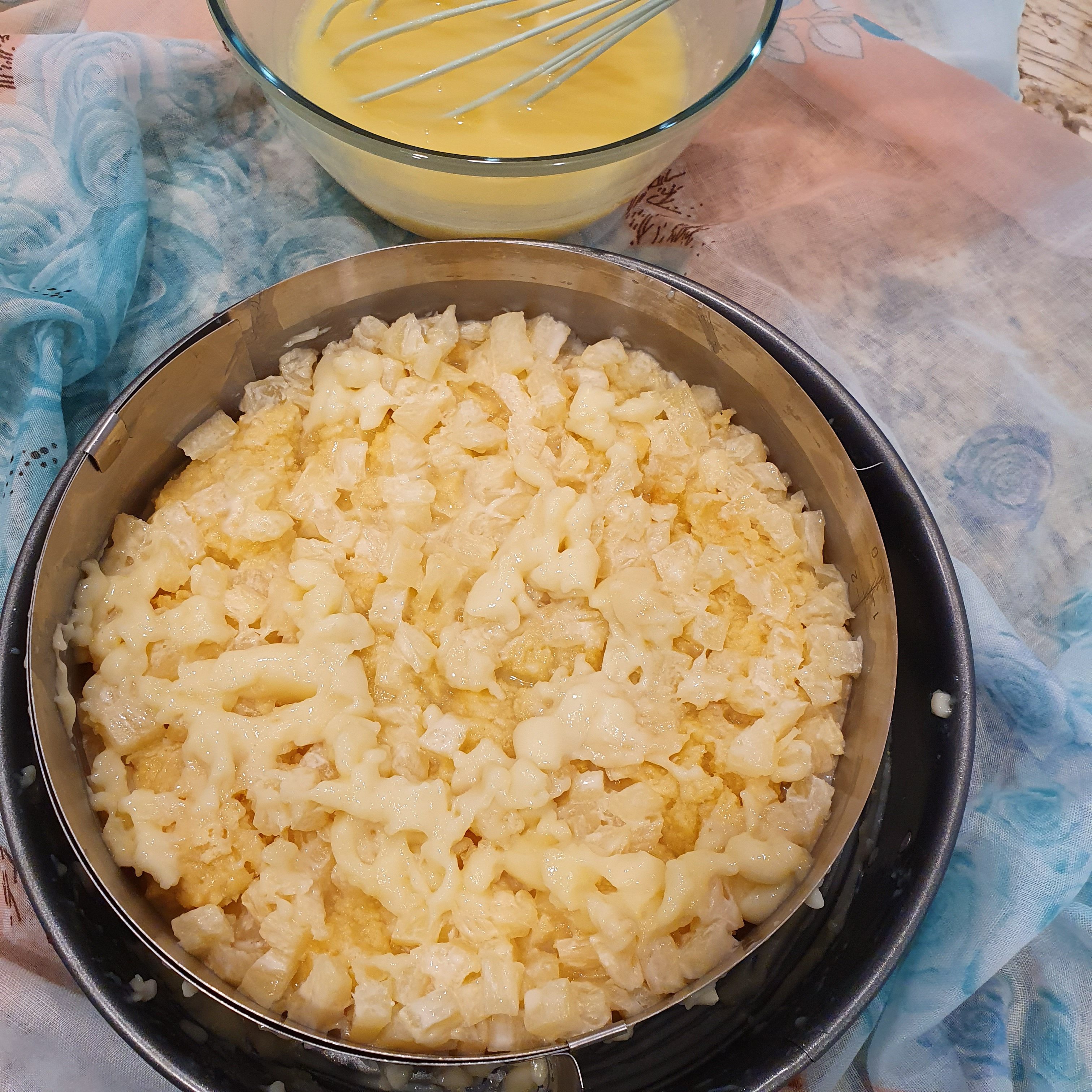
When the cream has cooled, take the cake out of the fridge and pour it on top. We return again to cool and tighten.
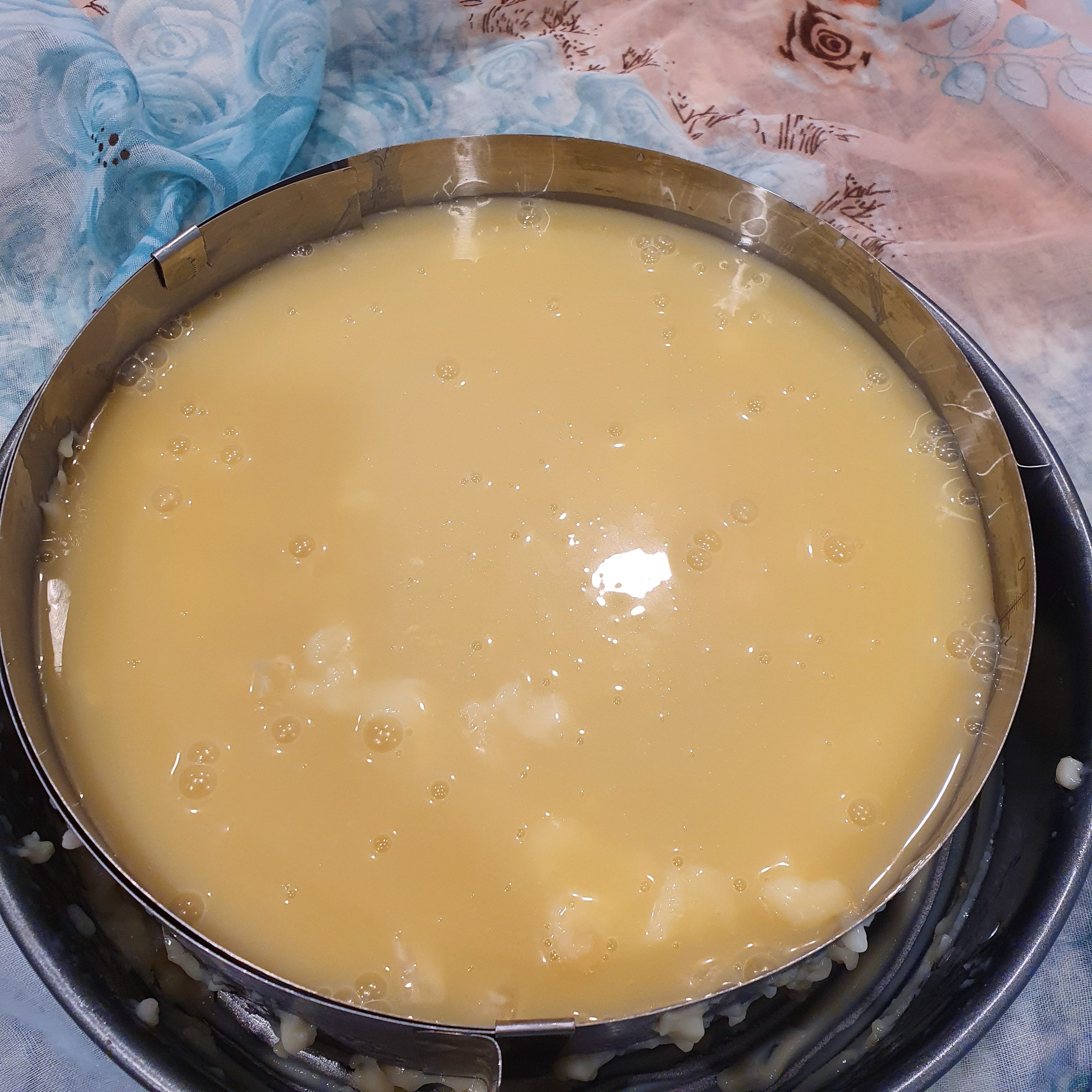
Soak gelatin in 60 ml of water. The remaining water, along with sugar and glucose, is placed on the stove until the mixture reaches 103 degrees. Add the condensed milk. Since I didn’t have one without sugar, I removed the sugar from the recipe. Add gelatin and beat well. Pour the mixture over the white chocolate and beat until smooth.
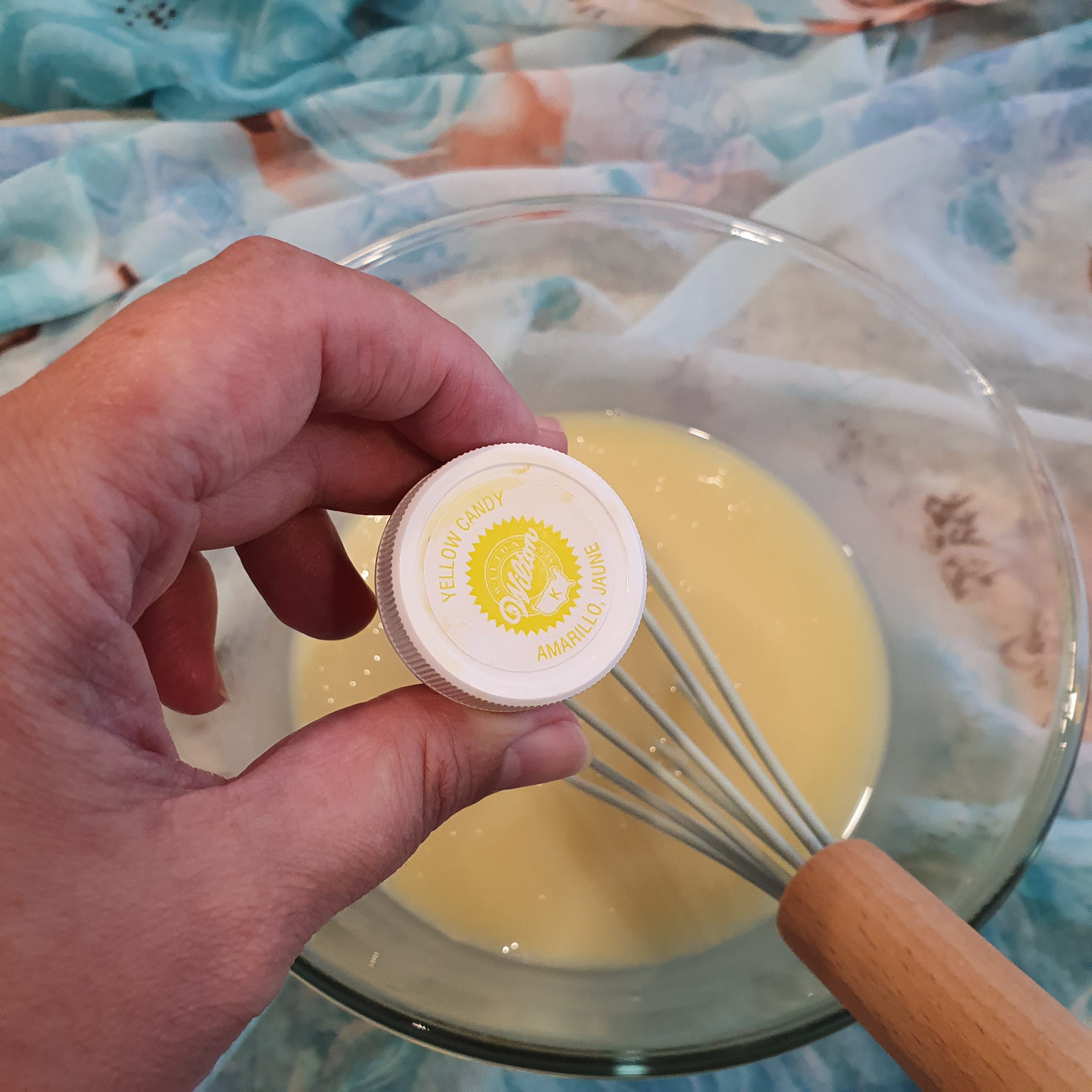
Add the confectionery paint and stir again. Allow to cool until the mixture reaches a temperature of 30 degrees.
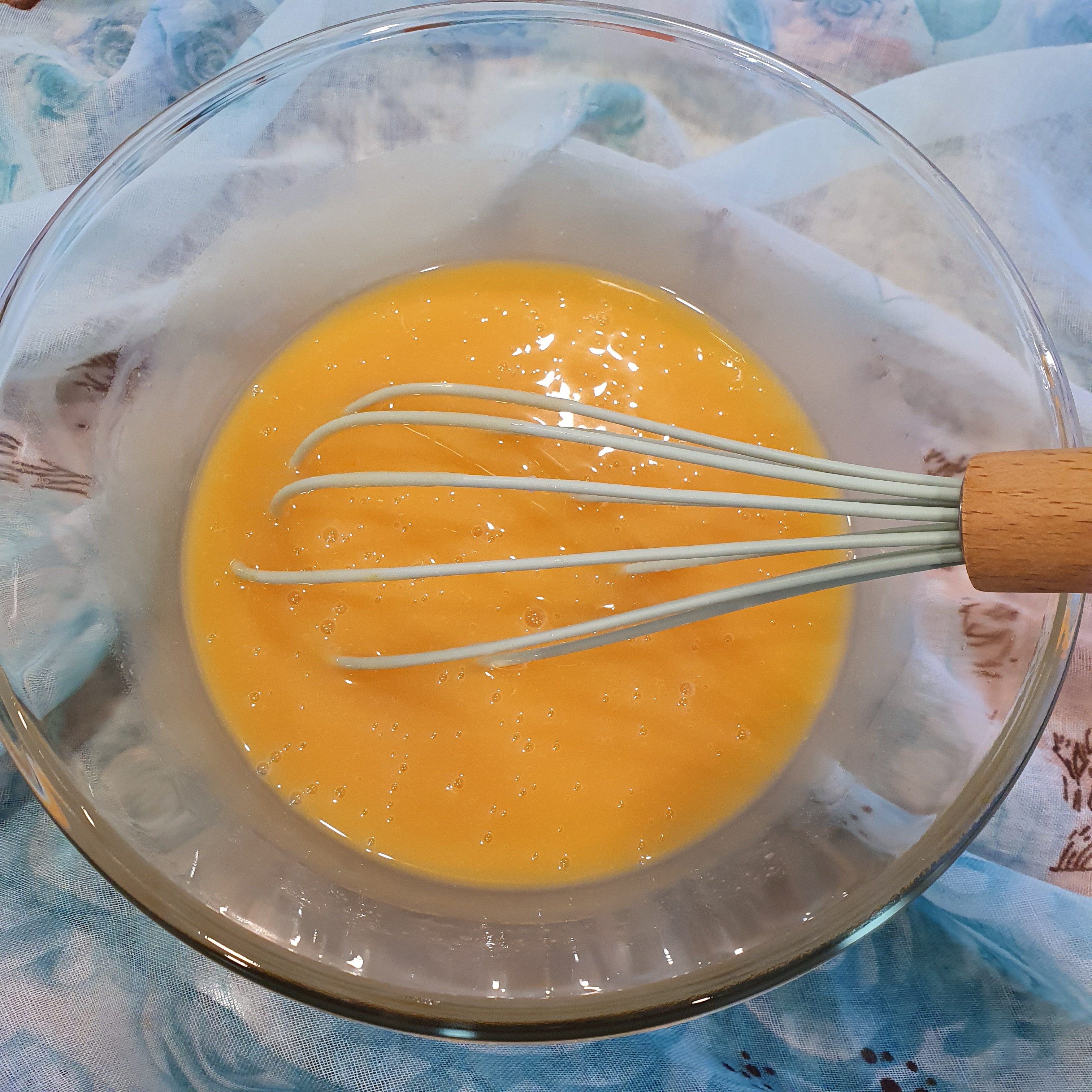
Mix the mango puree with the sugar and heat. Mix a small part of the puree with the cream powder and then return it to the rest. Add the coconut butter and white chocolate. Beat well and allow to cool. Stir occasionally.
Whip the cream and mix with the mango puree. With the mousse prepared in this way, you can make some decorations by put it into molds and then cooling it.
Take the cake out of the fridge and release it from the ring. Place it on a wire rack on pan.
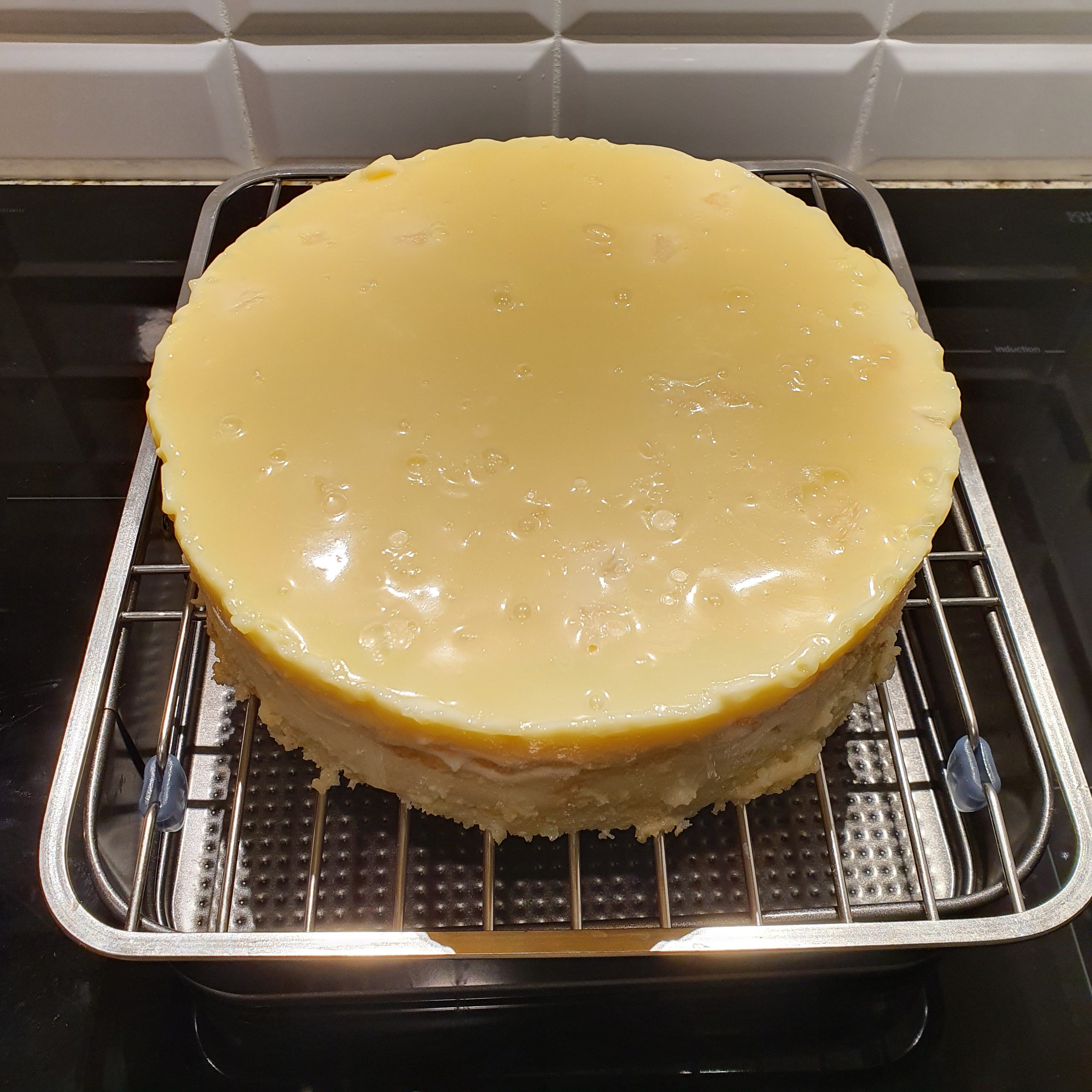
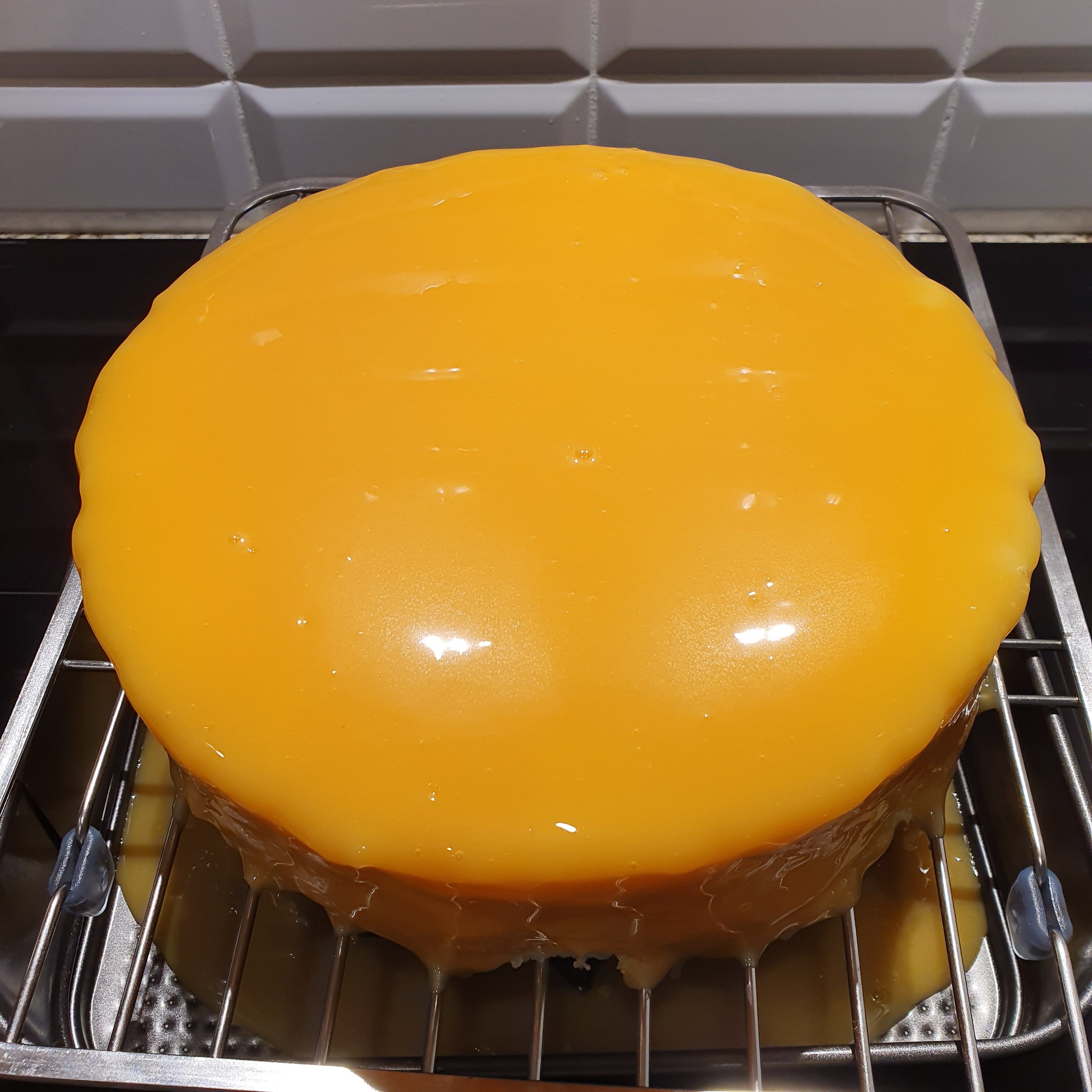
Pour the glaze.
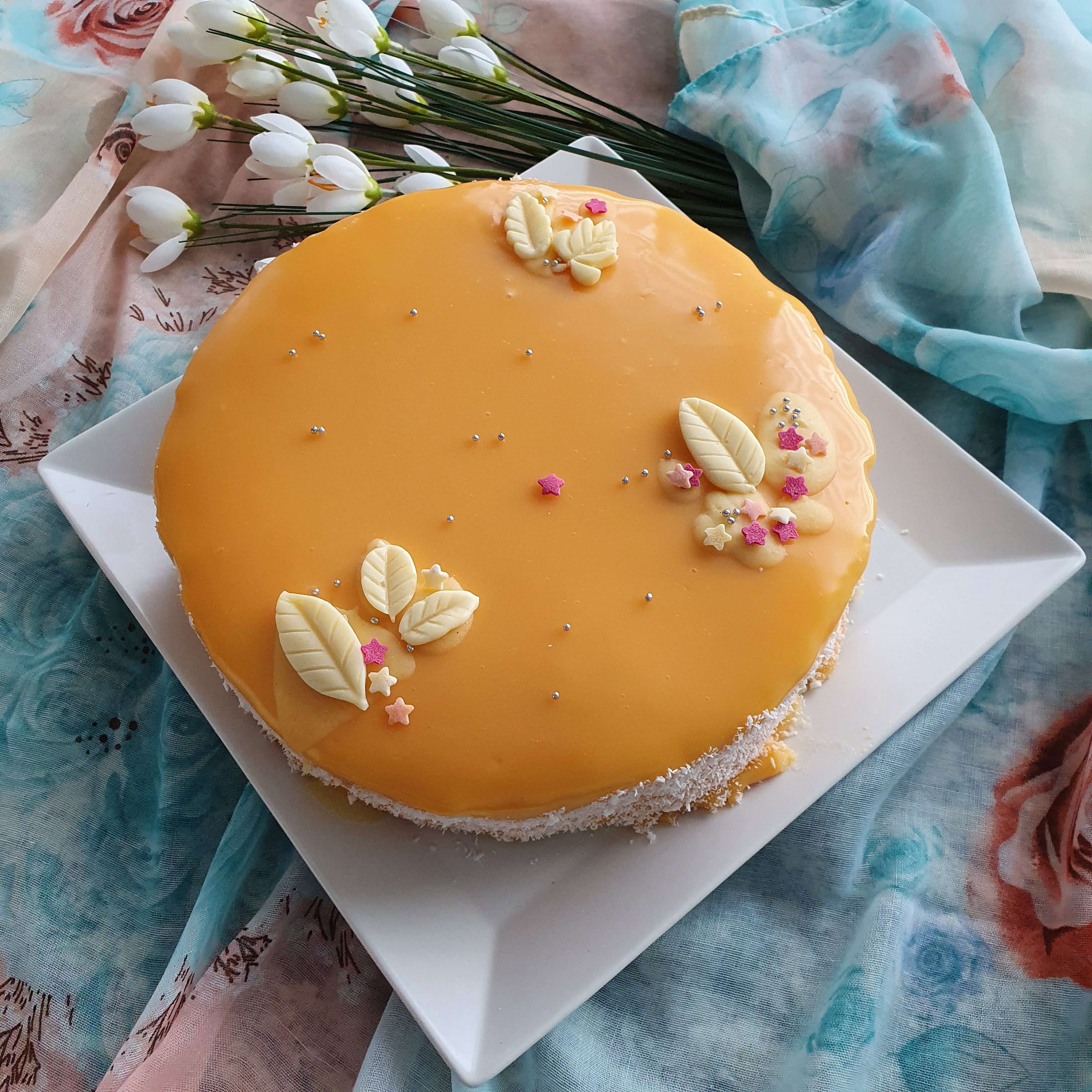
The cake is quite complicated to implement. There are many stages and it takes time to cool the individual layers. Long live the cans in times of isolation! It turned out that I had hidden stocks of canned pineapple and mango. 🙂 Definitely the fact that I’m constantly at home helped, and on the other hand making such a cake kills a lot of time. It has recently turned out to be more. Kill boredom by trying to do it these days. The taste is definitely worth it. 😉
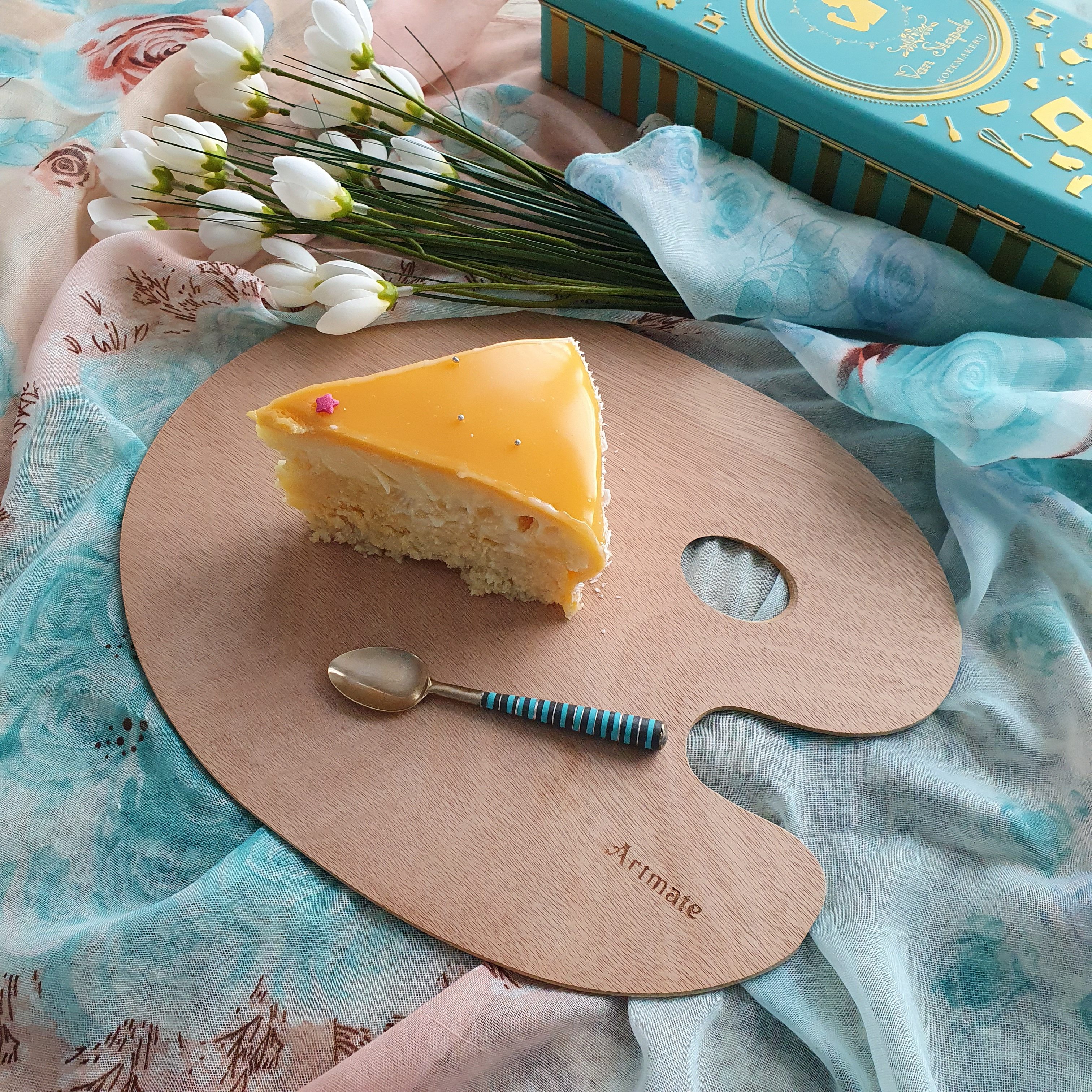
Next destination – Denmark.