

There is no way that when Colombia is mentioned, the word cocaine does not come to mind. The country probably has other things to identify with, but drugs are such an essential part of its news that one makes an instant association between the two. And the second that comes to mind is Pablo Escobar – one of the richest and most influential drug lords in the world in the last century. In the 1970s, Escobar was responsible for 80% of the cocaine supply in the United States. At its height, the Medellin cartel was smuggling 15 tons of cocaine a day, worth more than half a million dollars (and that’s just to the US). Escobar became one of the richest men in the world. His money from illegal activity was so much that he could not deposit it in the banks. That’s why he stacked the bundles like bricks. However, 10% of all money stored in this way was eaten by rats or damaged by water. 😮 The cartel’s accountant estimated that $2,500 was spent each month on rubber bands to tie the bundles. In the mid-1980s, Pablo was one of the most powerful men on the planet. Forbes magazine describes him as the seventh richest person in the world (with a personal fortune of nearly 25 billion dollars). The local people looked at the drug lord as Robin Hood. He spent millions of dollars to build parks, schools, football stadiums, hospitals and churches. He gave money to the poorest to build houses. In 1982 was elected a representative in the House of Representatives of the Columbian Congress. How has he succeeded over the years? On the principle of “plata o plomo” or “with silver or lead” – he did not shoot immediately – first he bribed, and if the desired result was not achieved – he shot. Escobar is responsible for the murders of several presidential candidates, generals, judges, over 1,000 policemen and hundreds of journalists. In the 1990s, the authorities persuaded him to turn himself in, in exchange for “good treatment” in prison. El Patron was “housed” in a luxurious private prison known as La Catedral. However, the bars did not stop him from running his business. So the authorities decided to move him to another place. As soon as he found out about their intentions, Escobar fled. He was killed in 1993 in a shootout with the police, with speculation that he may have committed suicide.

But enough about drugs, drug lords and the not-so-flattering side of Colombia. Just two hours away from Medellin lies the most colorful place in Colombia – Guatape. The small village is the perfect place to escape from the chaos of the big city with its colorful streets, neat squares dotted with many restaurants and shops. Locals paint homes and shops in irresistible bright colors. They also decorate the lower part of each house with characteristic frescoes called “zocalos”. Sunflowers, pigeons, sheep – these are just some of the details above the curbs around the houses. Some murals are designed to advertise a local business: painted loaves of bread or sewing machines show exactly what the merchant across the street has to offer. But the paintings on Gutape’s walls also tell stories. Many of the panels feature whimsical imagery showing journeys, historical scenes and biographical excerpts from the life of a local musician. The constant sun and heat have spoiled the locals. They believe that at + 15 ° C it is already cold. This temperature, however, is common for the capital of Colombia, which is located in the mountains. Because of this, people give it the name “Nevera”, which translates as “Fridge”. Today, this name is used on an equal footing with the official one. 😀
Only accessible on foot, Ciudad Rerida (The Lost City) in Colombia is one of the most haunted ancient cities on Earth. It is believed that it predates even Machu Picchu in Peru by 650 years. Sometimes the place is called Teyuna and Buritaka. The city is made up of a series of 169 terraces carved into the mountain, a network of roads and several small circular squares. The entrance to the settlement is accessible after climbing 1,200 stone steps through the dense jungle. Typically, a tourist tour of the area lasts six days and includes 42 km of walking, steep ascents and descents and river crossings. Probably for this reason, the streets and streets of the city attract much smaller visitors, which makes it much more pleasant to visit and explore than other top destinations. Travelers now have the opportunity to rediscover the treasures of the Teyuna people, their culture and the site’s history. There are no ticket booths, tour buses and WiFi to connect you to the modern world. The six-day trip connects visitors only with the local people who still inhabit the Sierra Nevada and nature. The large engraved stones encountered along the trek are thought to be a regional map of the old city of Teyuna, and although in a written language unknown to us, the series of stars and intersecting lines carefully carved into stone suggest the presence of a civilization with its own communication system. From the highest point of Ciudad Perdіda, the jungle reveals breathtaking beauty. The carved platforms are majestic and architectural masterpieces viewed from any angle. Stone walls and manicured lawns set the stage for magnificent views of the Sierra Nevada, and there’s hardly a bird chirping or any other sound to disturb the tranquility. It feels like being in the clouds, sometimes above them.
In the middle of the Colombian jungle, about 400 km southeast of the capital Bogotá, in 2017 a rock was discovered with drawings that are supposed to be more than 12,500 years old, since some of the animals depicted disappeared a long time ago. The region was controlled until 2016 by rebels and was completely inaccessible to archaeologists. The rock paintings are amazing and large-scale. Tens of thousands of geometric figures, drawings of people and animals – turtles, fish, reptiles, birds, as well as horses from the Ice Age and a species of ancient camels that have long since disappeared – are depicted on nearly 12 kilometers of rocks. People are depicted dancing, holding hands, wearing masks, and there are many handprints. The images are extremely detailed and believable. Some of them in the Serrania de la Lindosa mountain are located so high on the rock that they can only be seen from a drone, and how they were painted is another matter.
There is a legend about the golden prince and the lake full of jewels, which gave rise to the legend of Eldorado – a city of gold hidden deep in the jungles of unexplored lands, dreamed of and searched for in vain by the Spanish conquistadors in the 16th and 17th centuries. And although the golden city of Eldorado has remained only a legend, the sacred lake where the Muisca Indians from the tribes of the high Andean plateau near today’s Bogotá performed the lavish ceremony for the ordination of each new ruler exists. The crater-like highland Lake Guatavita is today one of the many tourist attractions on the outskirts of the Colombian capital. Drained several times in the past without significant finds of gold objects, today the lake is declared a national park where swimming and diving are completely prohibited. Gold can certainly be found in the gold museum, which houses about 55 thousand exhibits, most of them pure gold. It is the world’s largest and most impressive collection of pre-Columbian gold objects and one of the most impressive museums in Latin America. There are interesting exhibits of gold tubes and vessels for traditional rituals, including plants with hallucinogenic properties – coca leaves and iodo – a powerful hallucinogen extracted from the bark of the Anadenantera tree, which was inhaled using a small spoon or a hollow bird bone. When the shaman was under the effect of these plants, they endowed him with inhuman abilities and he connected with the different worlds and could visit the Middle World, the Upper World and the Lower World.
Interwoven aromas of stewed meats, exotic fruits and vegetables, the pleasant sound of a guitar – all this is Colombia and Colombian cuisine. Traditional dishes for Colombia are not many in number because their cuisine is heavily influenced by various other culinary cultures. Chorizo is quintessentially Colombian and is a spicy sausage that is prepared differently in different parts of Colombia. The main ingredient, apart from pork, is red pepper or, more commonly used in Colombia, chili. The sausage is cut into pieces and added to various dishes or served with a side dish, it can be added to a sandwich. It can be smoked, dried, barbecued or grilled. Typical of Colombian cuisine is the rice soup, which is most often served with boiled and ground beef, sweet banana and chunks of avocado. Meat and other products are served separately and added to the soup. Another popular soup is called ahikama. It is a combination of chicken, potatoes and yucca. Both soups are made thicker. Fish is a beloved and preferred food in Colombia. It is wrapped in a palm or banana leaf in the form of a package. It is then subjected to heat treatment. In this way, both the leaf and the fish release their juices and mix. Various vegetables or fruits are added to all this. However, if this seems too ordinary for you and you are curious to try something particularly exotic, Colombia will offer you sweet-tasting fried ants. 😮
A source of huge income for Colombia is coffee. Unlike Brazil, which exports and sells many brands that differ in taste and acidity, Colombia produces only one type of Arabica coffee, which, however, cannot be confused with anything. The control is incredibly strict, starting from the cultivation of the trees, picking, transportation and reaching the preparation of the coffee itself. At the borders, they even spray the cars with special preparations to protect the trees from damage. Because of these measures and not only, an incredible combination of taste and aroma is obtained, which makes this culture so famous and valued. Colombia is the third largest producer of coffee in the world after Brazil and Vietnam, and is in first place in the production of the lighter variety of coffee, which is said to be of the best quality. On the streets of Colombian cities, women sell hot coffee, which they pour from a knapsack similar to the ones used to spray the vines against pests. They will tell you that a real Colombian drinks his coffee black, or, as they call it, red. For many, Colombia is only associated with coffee, but this is a stereotype. For many decades, the country has been one of the main cocoa exporters. Colombians do not imagine their day without an aromatic drink and start with it every morning, and even in a cafe, to show hospitality, guests are often offered a free cup of cocoa.
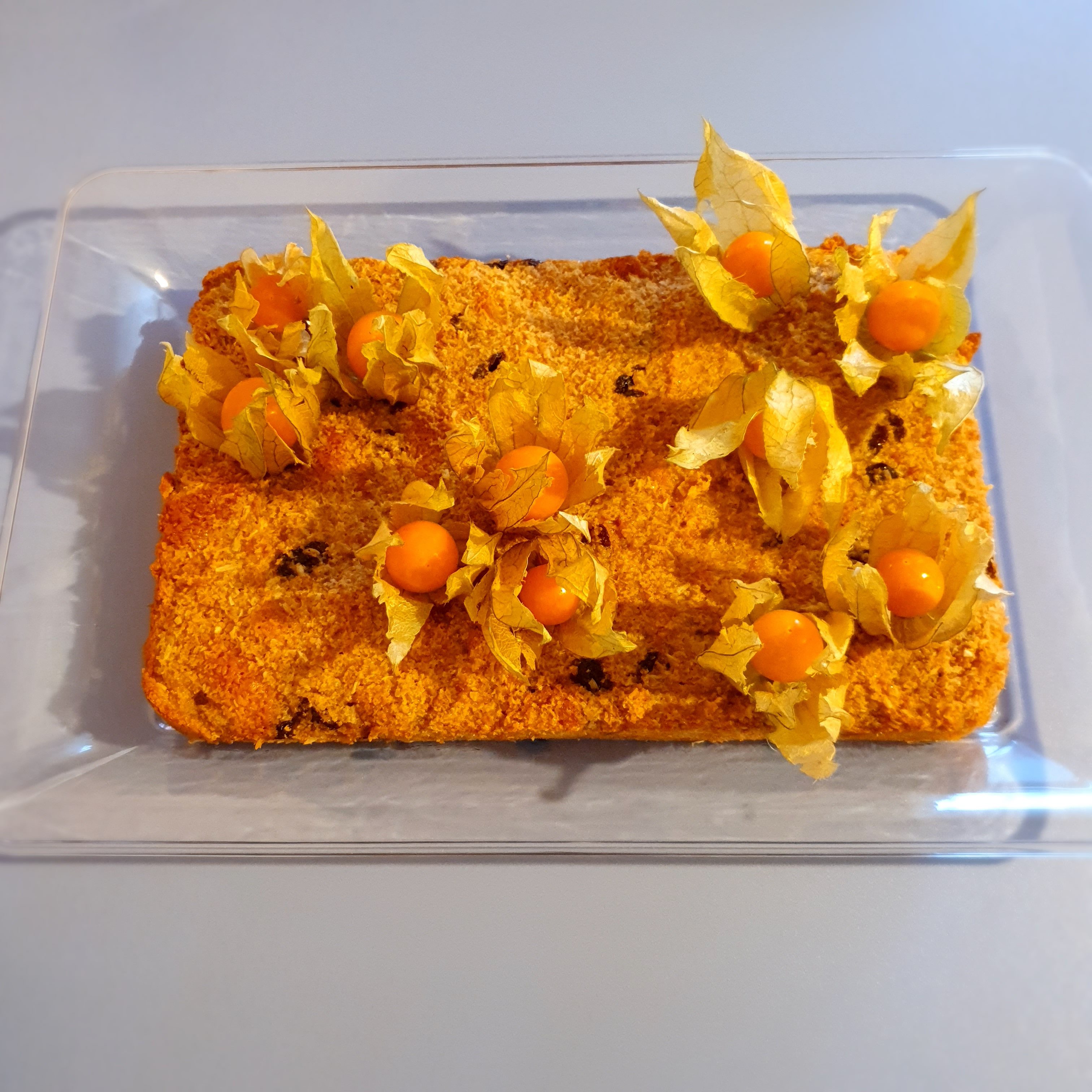
Mainly in Colombia, the sweets are some kind of cream (“natilia”), fried strips of fruit dough (“ohuelas”), guava and other fruit pastries (“bocadillo”), fruit pie (“el carmelo”), bananas , fried with cinnamon, sugar and vanilla (“tentacion”). There are also a few cakes that I discovered, but I have already made for countries neighboring Colombia. So I decided on something different – Torta de Dulce de Coco (Columbian Coconut Pudding Cake). Here is what is needed for its preparation:
for Dulce de Coco:
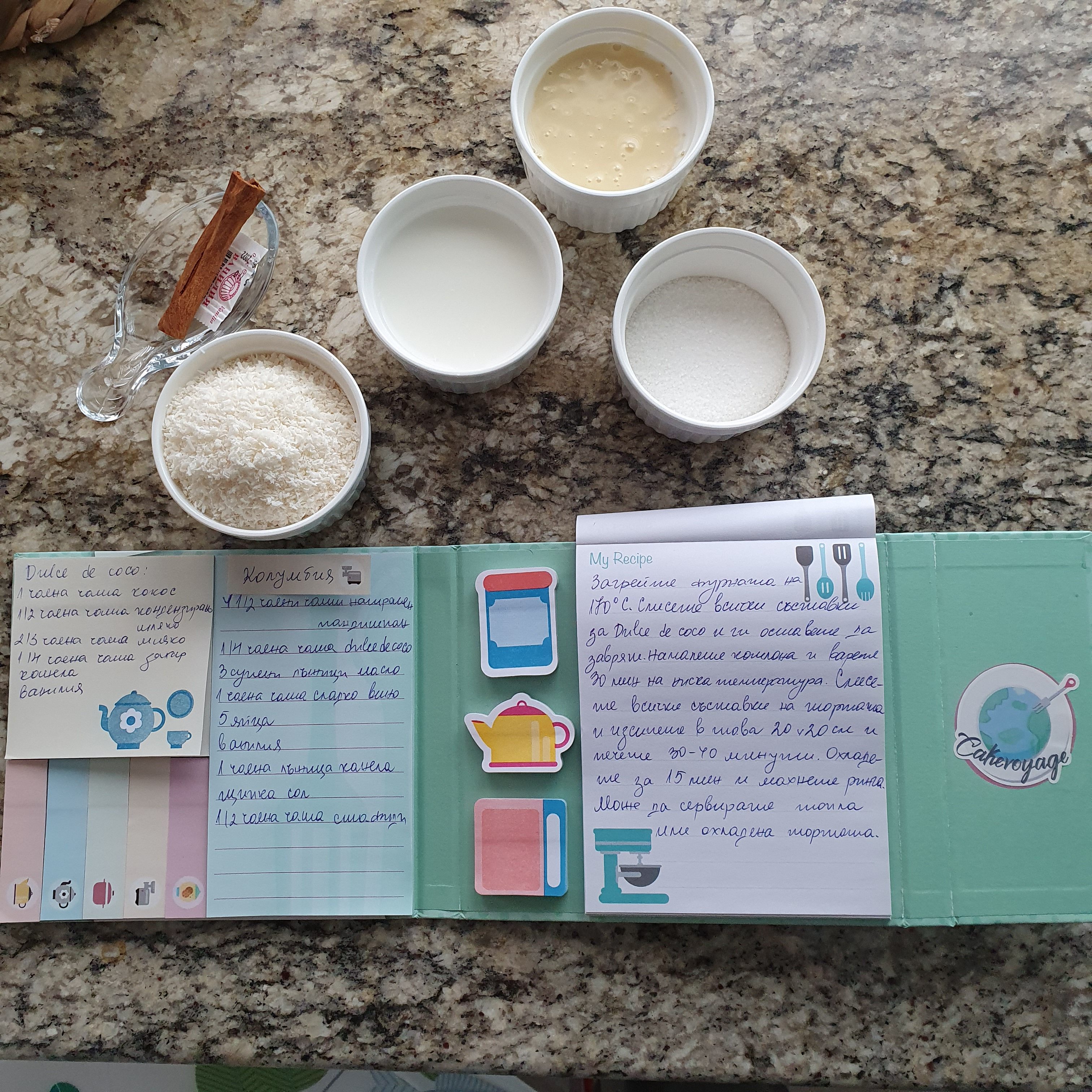
1 tea cup coconut
1/2 tea cup condensed milk
2/3 tea cup fresh milk
1/4 tea cup of sugar
cinnamon stick
vanilla
for the cake:
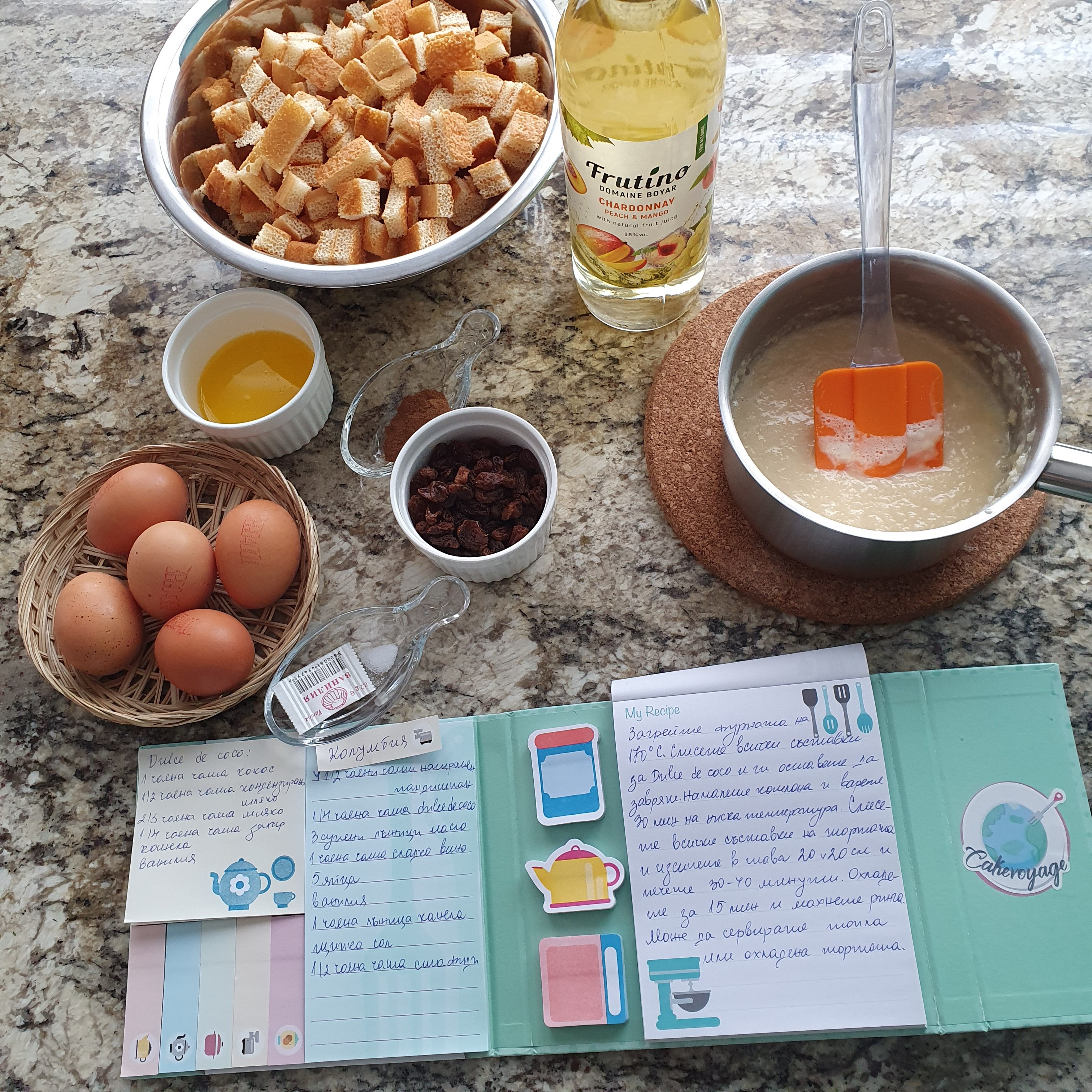
4 1/2 tea cups of cubed sponge cake
1/4 tea cup Dulce de Coco (I used the whole amount I made)
3 tablespoons of melted butter
1 tea cup of sweet wine
5 eggs
vanilla
1 teaspoon of cinnamon
pinch of salt
1/2 cup raisins (optional)
Steps of preparation:
Since the recipe contains something called Dulce de Coco, which is not sold in our stores, I had to prepare it first. Good thing I found a recipe. 😉 I mixed all the ingredients in a saucepan and put it on the stove to boil. Then I reduced the temperature to as low as possible and boiled for 30 minutes, stirring the mixture from time to time.
I will not describe how to make sponge cake. I have blogged several times about other cakes. I had some scraps left over from another cake. I had wrapped them in cling film and kept them in the fridge. Now they fit the recipe perfectly. You can also buy ready-made sponges for this purpose. I cut them into cubes while the Dulce de Coco was brewing.
I beat the eggs lightly, added the cinnamon and vanilla, and then the wine.
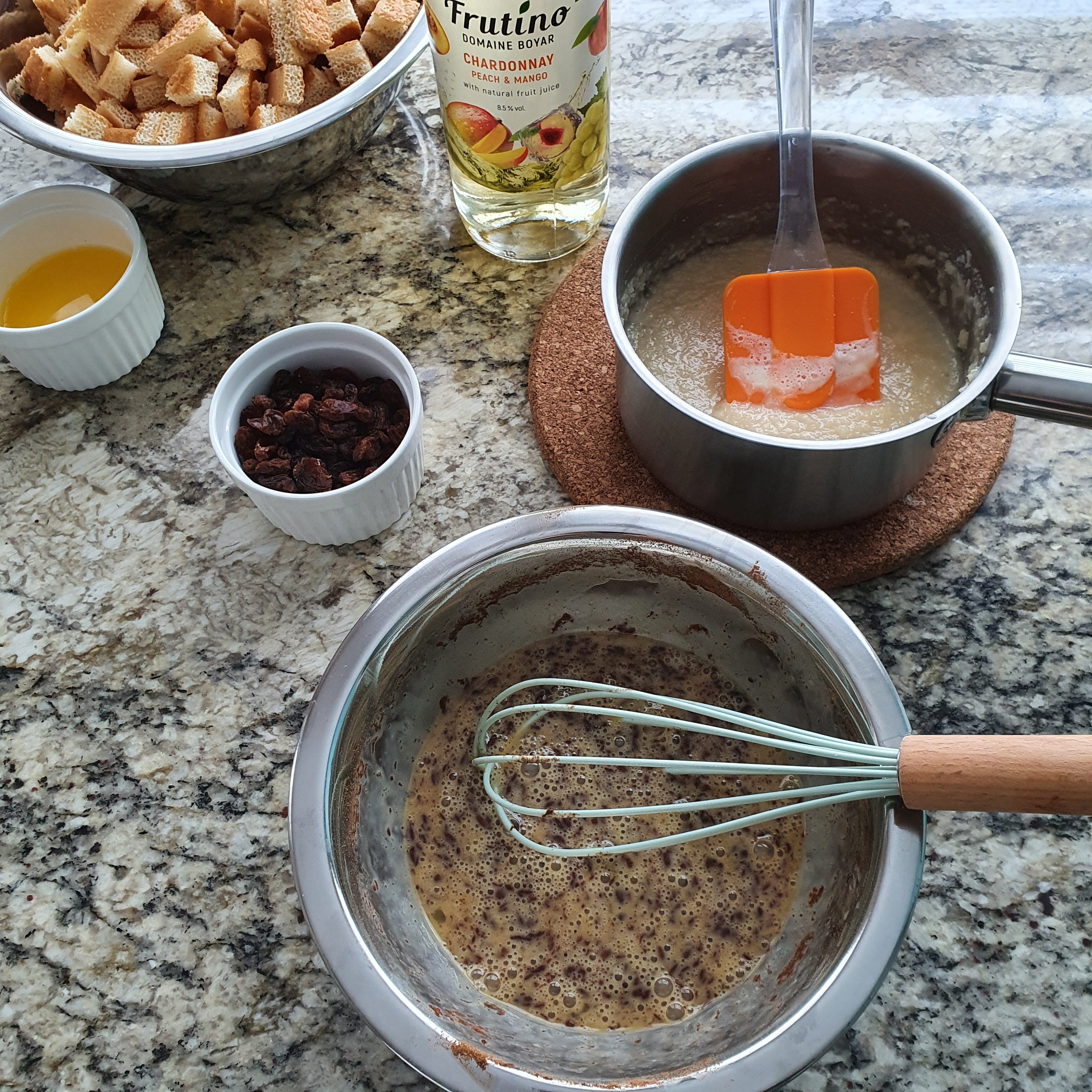
Then I added the butter and Dulce de Coco and whisked to combine all the ingredients.
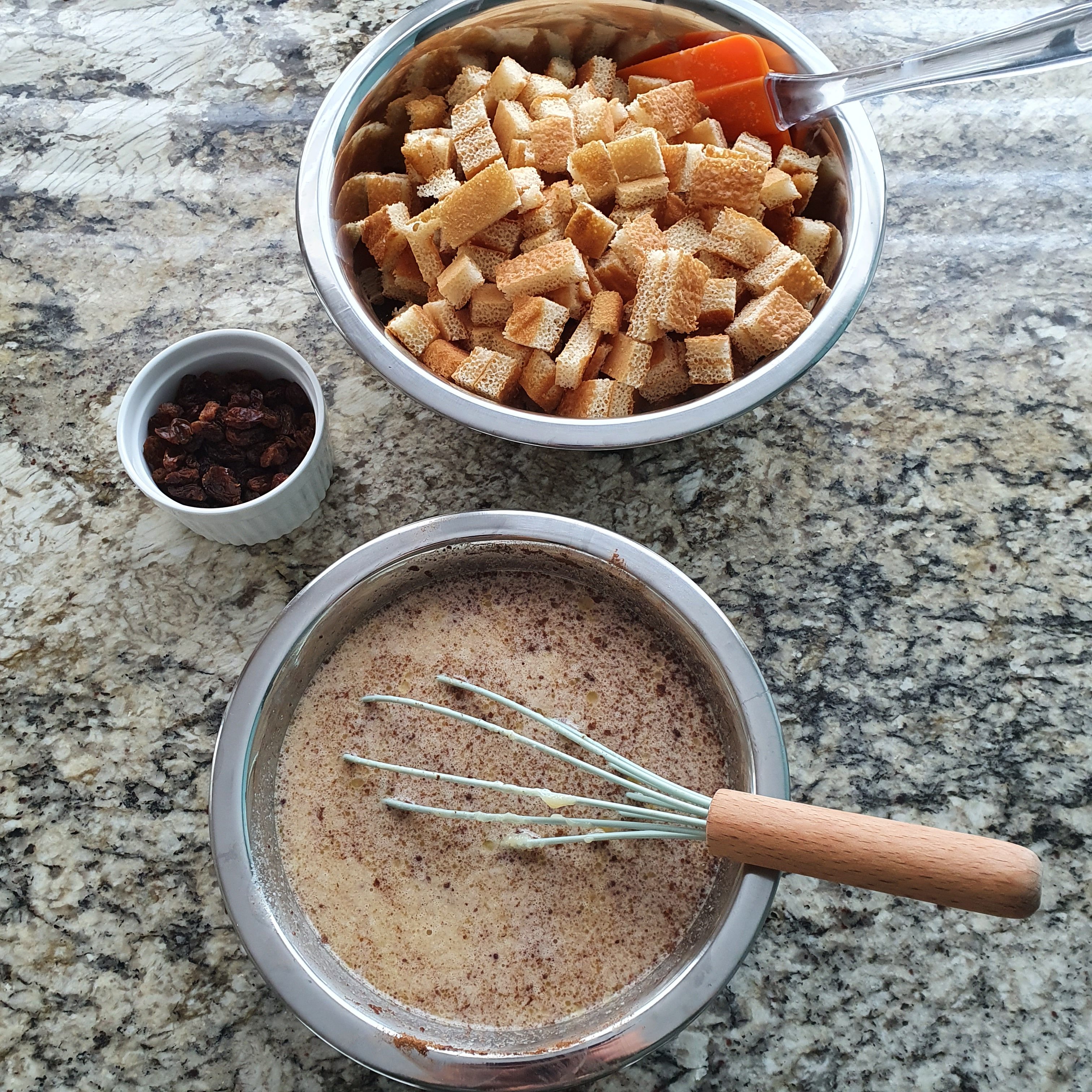
Raisins are not a mandatory product, but I advise you to put them. So the cake has a richer taste. I added them to the sponge cake pieces and stirred to combine. Finally, I mixed the wet and dry mixture and it became a kind of pap. 🙂
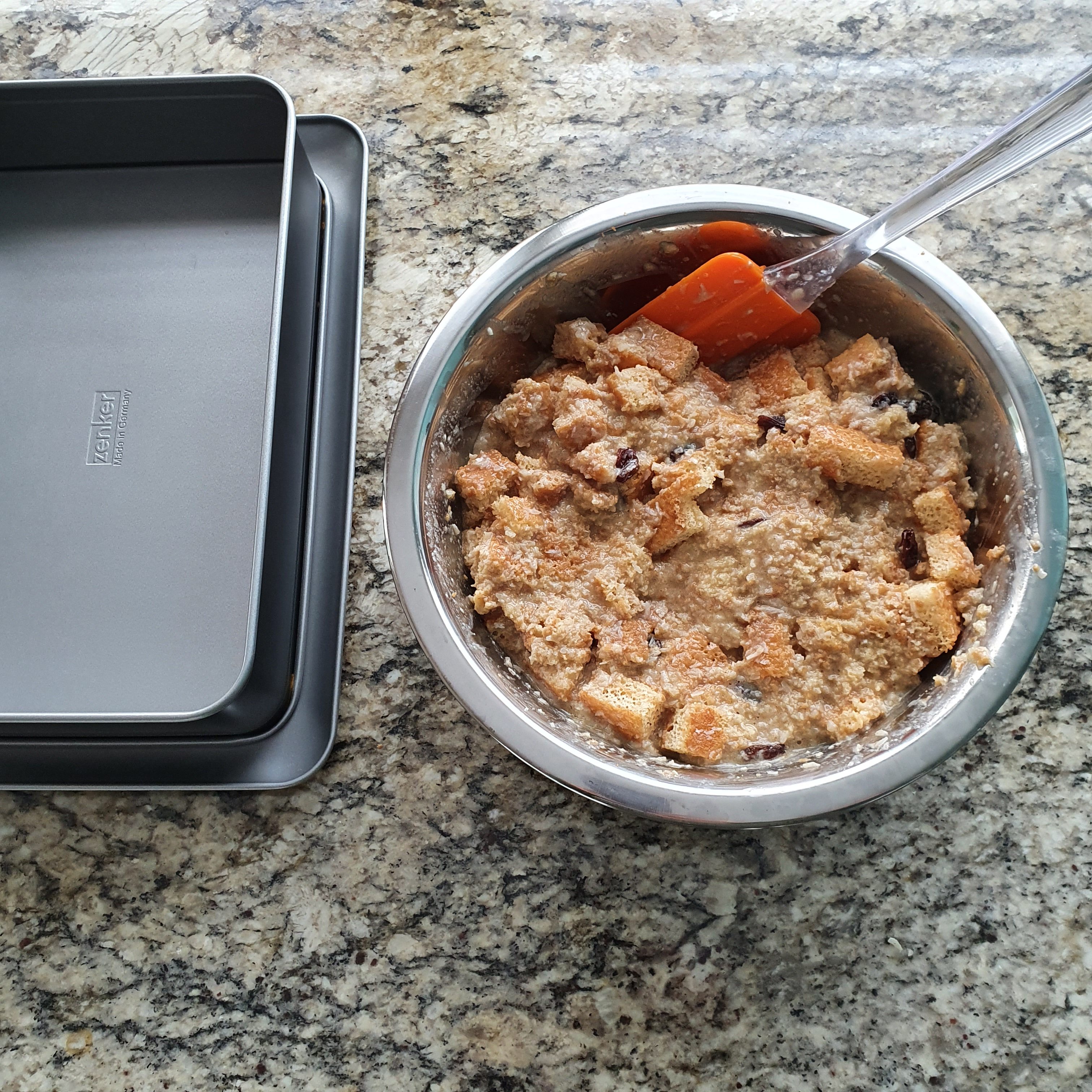
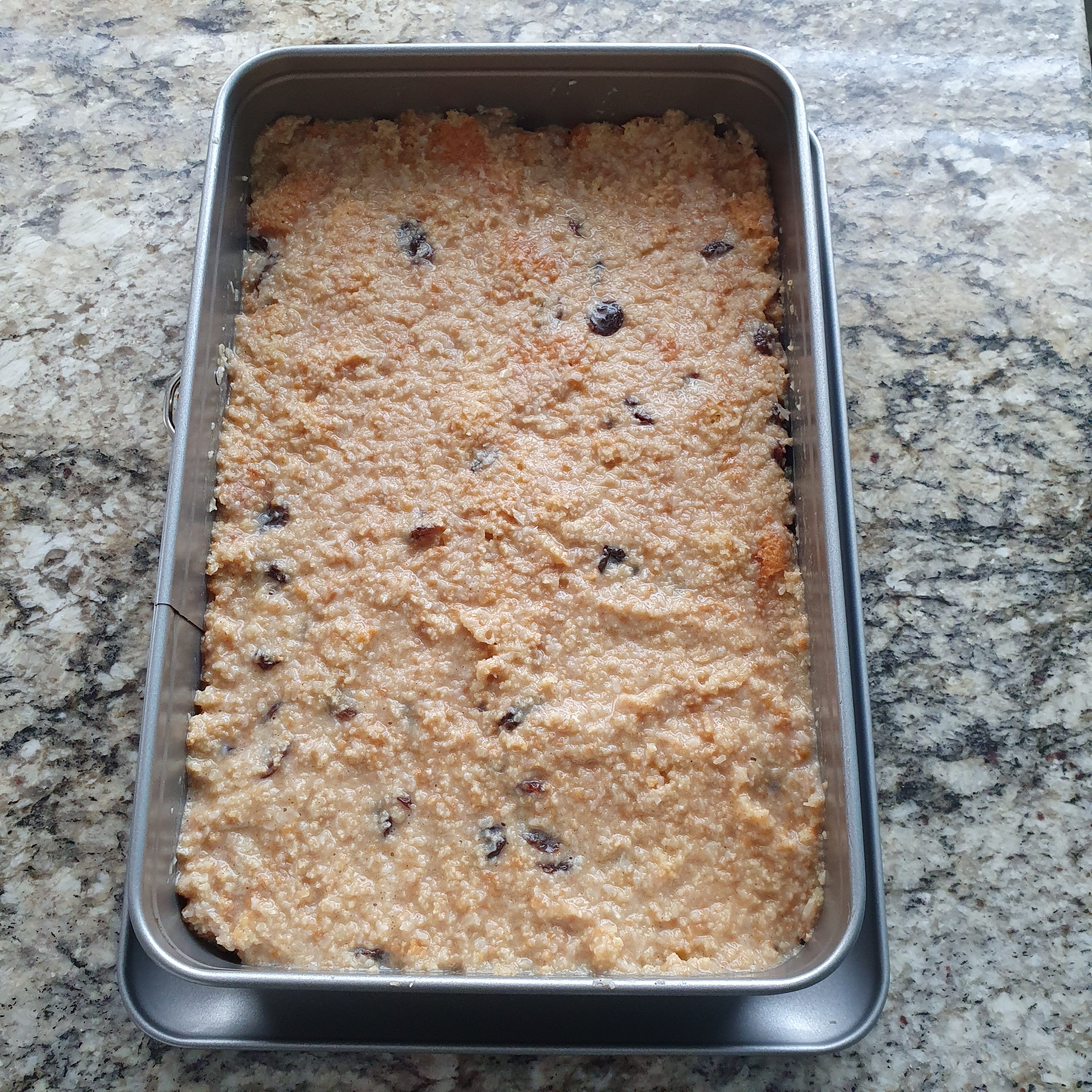
I poured it into a rectangular pan and put it in the oven preheated to 170 degrees to bake for 30-40 minutes. That’s the whole philosophy of the dessert, which looks a lot like bread pudding to me.
After it was baked I let it cool in the pan for 15 minutes before I decided to take it out.
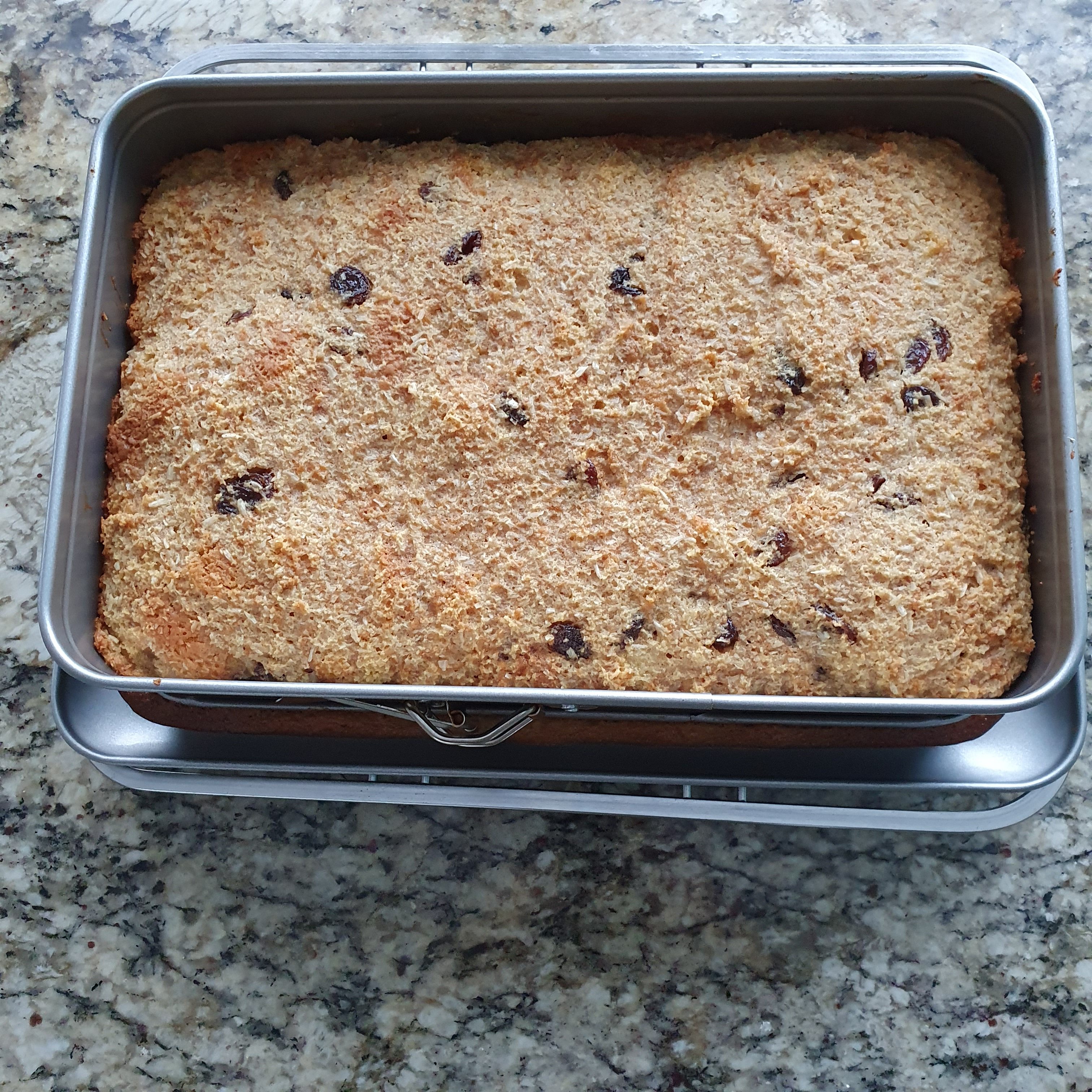
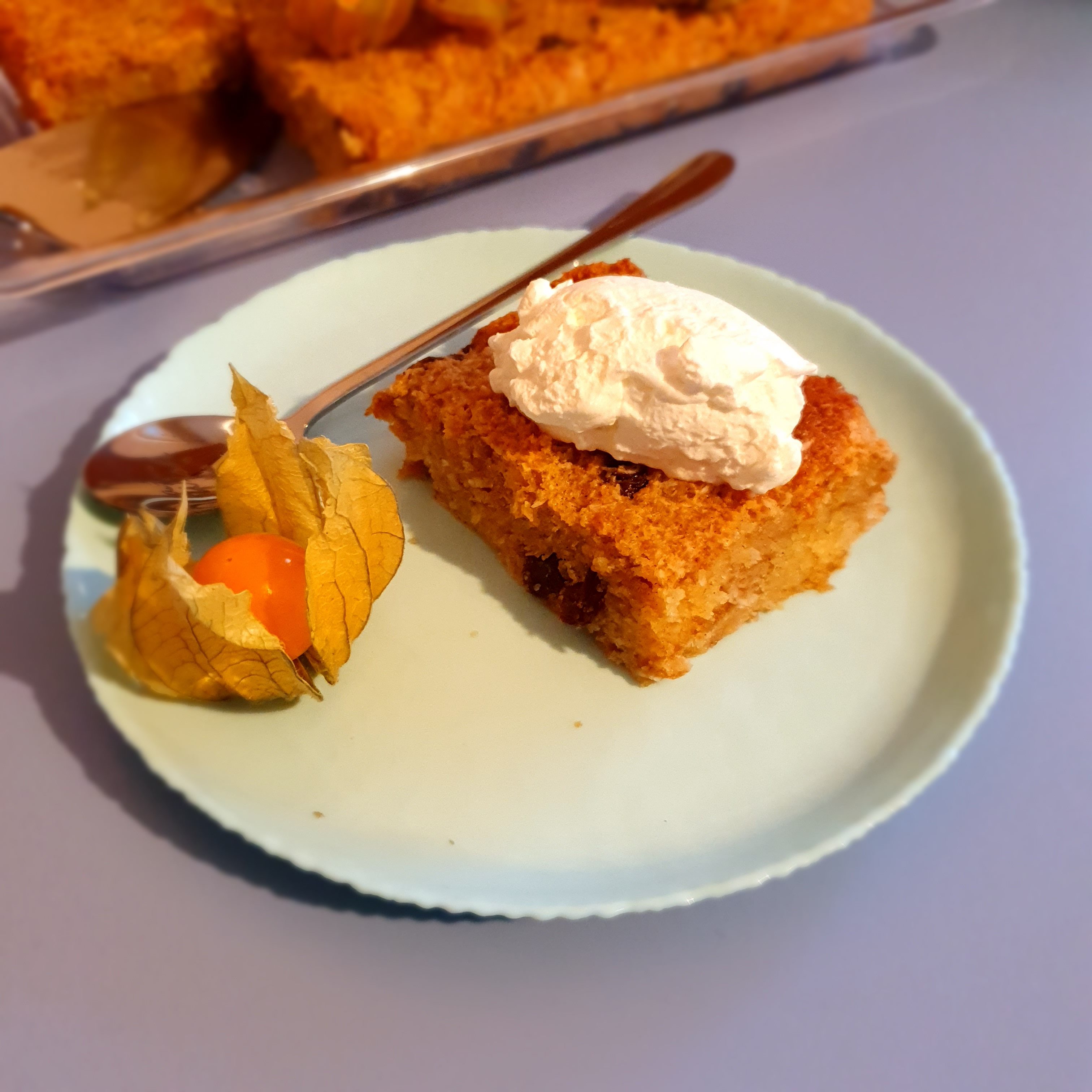
And the recipe ends here. I myself added some physalis for garnish and whipped full cream for topping. I wished it was more colorful, like for Colombia. 🙂

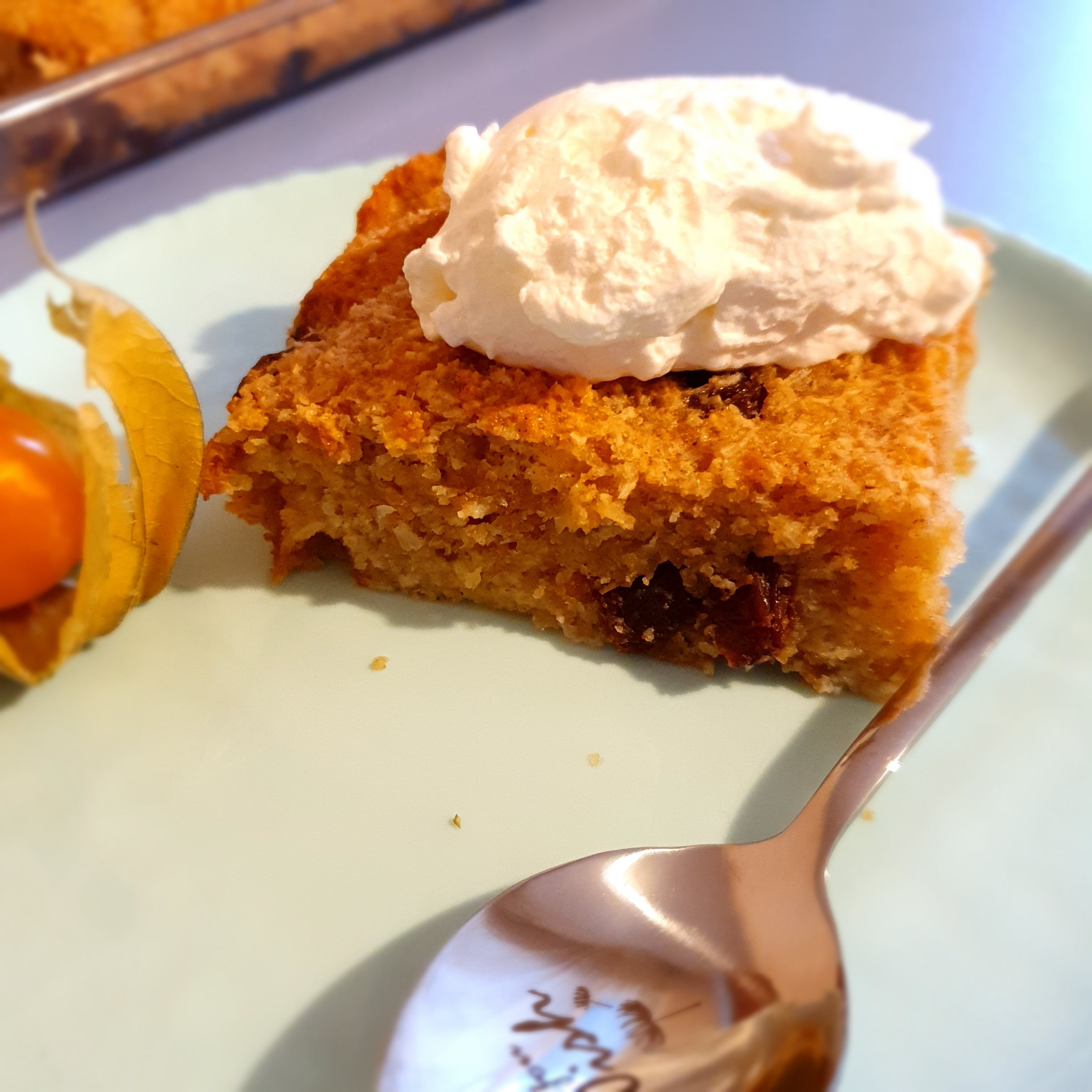
The cake has a very balanced sweetness. It can also be served warm or chilled. It is juicy and very tasty. For easy, I guess you convinced yourself that it is.
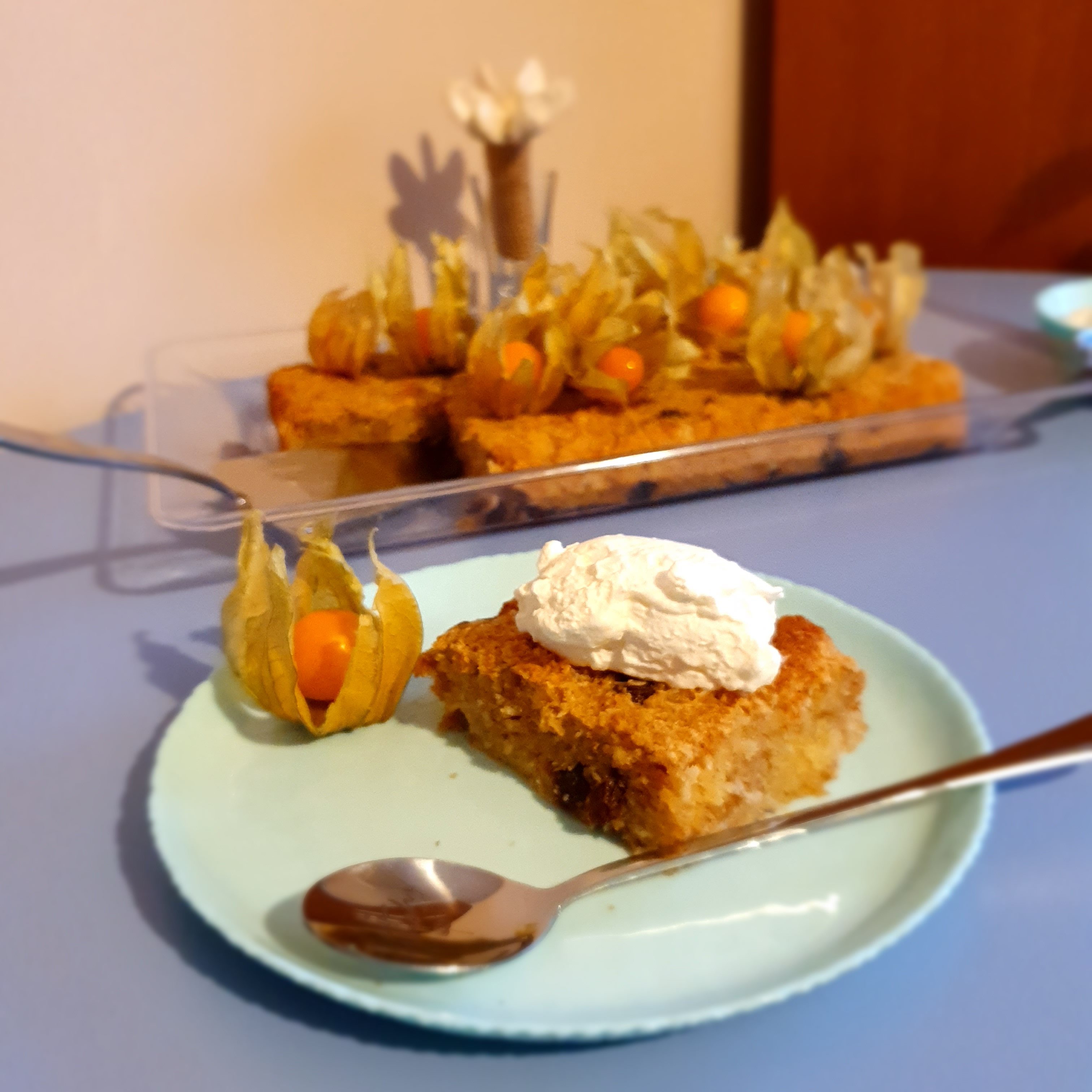
It would go great with Arabica black coffee (which is what I drink), but I suppose you could also serve it with dessert wine or tea. There are many options. Try to prepare it and enjoy its simple and aromatic Colombian taste. 🙂
I don’t know if I will go to Colombia. The idea of ancient ruins in the jungle tickles me. But I still can’t count the country as a safe destination. Maybe in years…I don’t know. So far I’m pass.
Next destination – Comoros Islands.

