

Gently encircled by the blue waters of the Caribbean Sea, kissed by the sun and gentle all year round of trade-wind, the island of Aruba is an amazing vacation spot. It is located about 17 km to the north coast of Venezuela and is part of the Small Antilles group. Aruba is an overseas possession of the Kingdom of the Netherlands and has an autonomous status since 1986. The first Europeans to have stay here were the Spaniards in the 15th century. Since the 17th century, it has been occupied by the Netherlands. At present, the population is just over 100,000 people. But every year millions of tourists visit this beautiful island.

The northeastern shores of the island seem rather harsh and not very inhabited. The vegetation is grassy, the relief is plain and the shores are mostly rocky. Seawaters typically have a characteristic dark blue color and waves are often large. Wind, strong sun and drought are the reason why half-desert landscapes prevail here. There is rarely something on the northeast coast except cacti.
In the eastern part of the island, in the middle of its wildest part, is the Arikok National Park. Here landscapes resemble California or the Canary Islands – a lot of sun and dry-hearted vegetation. One of the most interesting representatives of the local flora is the Divi-Divi tree, which has a very strangely curved stem. The crown of the tree is no less strange – instead of growing up, as with most trees, the Divi- divi tree crown grows on sides. On the territory of Aricoc National Park is the highest point on this flat hilly island – Yamountota peak, only 188 meters high. To the north of the park is one of Aruba’s great attractions – Natural Bridge. This is a rock formation that really resembles a bridge.
The southwest side of this paradise is totally different. The landscapes are so contrasting with the eastern parts that you will feel as if you have come to the other end of the world. Here the waters of the Caribbean Sea are calm with azure shades and extremely clear. Under the water surface there is a very rich variety of forms of life. The shore is protected by beautiful coral reefs.
In the western part of the island of Aruba is concentrated most of the population, including the capital Oranjestad. This city has a completely European vision and is a little like Amsterdam. This applies not only to architecture, but also to the excellent infrastructure, expensive hotels and shops, small charming cafes and restaurants that will make you feel the atmosphere of old Europe even here on the other side of the world. There is much more greenery on the west coast of Aruba and everything looks quite different. Around the white sandy beaches grow coconut palm groves. Тrees that love moisture, shrubs and flowers make this place a true oasis. Since the climate here is subequatorial, the greener western part of the island is quite reminiscent of the African savannah.
One of the most attractive places for tourists in Aruba is Palm Beach. Situated in the northwestern part of the island, Palm Beach has the finest beaches, the most sought-after hotels and the most entertainment options.
But now for the food on the island. Aruba’s kitchen is a great blend of Caribbean, Latin American and Dutch dishes, with added taste. Very fresh fish and seafood, fried delicious treats, light fish soups and hearty dishes. These are the most popular traditional foods you should try while resting in Aruba. Let’s start with the bread. You should first try Pan Bati. Fluffy, slightly sweet flat bread that melts in your mouth. It’s prepare like the way you would make a pancake, but despite the strong resemblance of this bread with a pancake, it is always eaten with savory or soup and is not covered with anything sweet. That’s how local people eat it. As an island in the Caribbean, Aruba has access to fresh fish and seafood every day. The most common fish that can be found in Aruba are mahi-mahi, red lucian and grupo. The lion fish is also found on the island’s menu. It is naturally widespread in the South Pacific, where its population is controlled by other predators, but during Hurricane Andrew in 1992 a huge coastal aquarium broke and at least 6 fish lions fled to the waters of Biscayne Bay. This species has now spread to the Caribbean Sea, Mexico and the South East of America. This invasion is dramatic and leads to an imbalance of the entire ecosystem as the lion fish eats other species and has no natural enemies in these waters. The locals found it to be very tasty and thus falling into their menu can cope with the environmental problem.
Shrimps are also very popular. They are tender and fresh and are prepared in many ways. True, traditional food can not go without soups and stews – from goat or chicken or fish, and less often from beef and lamb. It is strange that on this island with eternal summer, people consume hot and nutritious foods that we associate with the cold winter months, but it is a fact and they are the most traditional home made. Keshi yena is another traditional dish, influenced to a large extent by the Dutch. It is a spicy meat, mostly chicken, wrapped in cheese (most commonly gouda). Ayaca is another food that deserves special attention. Stewed meat in banana leaves, cashew and various dried fruits. This impressive dish has Venezuelan roots, as many Venezuelans call Aruba their second home. The jelly is prepared with a large number of ingredients, resulting in a unique combination of flavors and usually gathers families at Christmas, but you can find it in restaurants throughout the year .
One of the most popular traditional desserts in Aruba is Pan Bollo, which is a bread pudding with Ponche Crema or rum served with ice cream. As soon as you try it, it will remind you of the traditional Christmas pudding we know in the UK. You may also want to try Bolo di Banana (banana pudding), which is another traditional dessert for Aruba. If none of them attract you, you can just finish your dinner with Caribbean coffee!
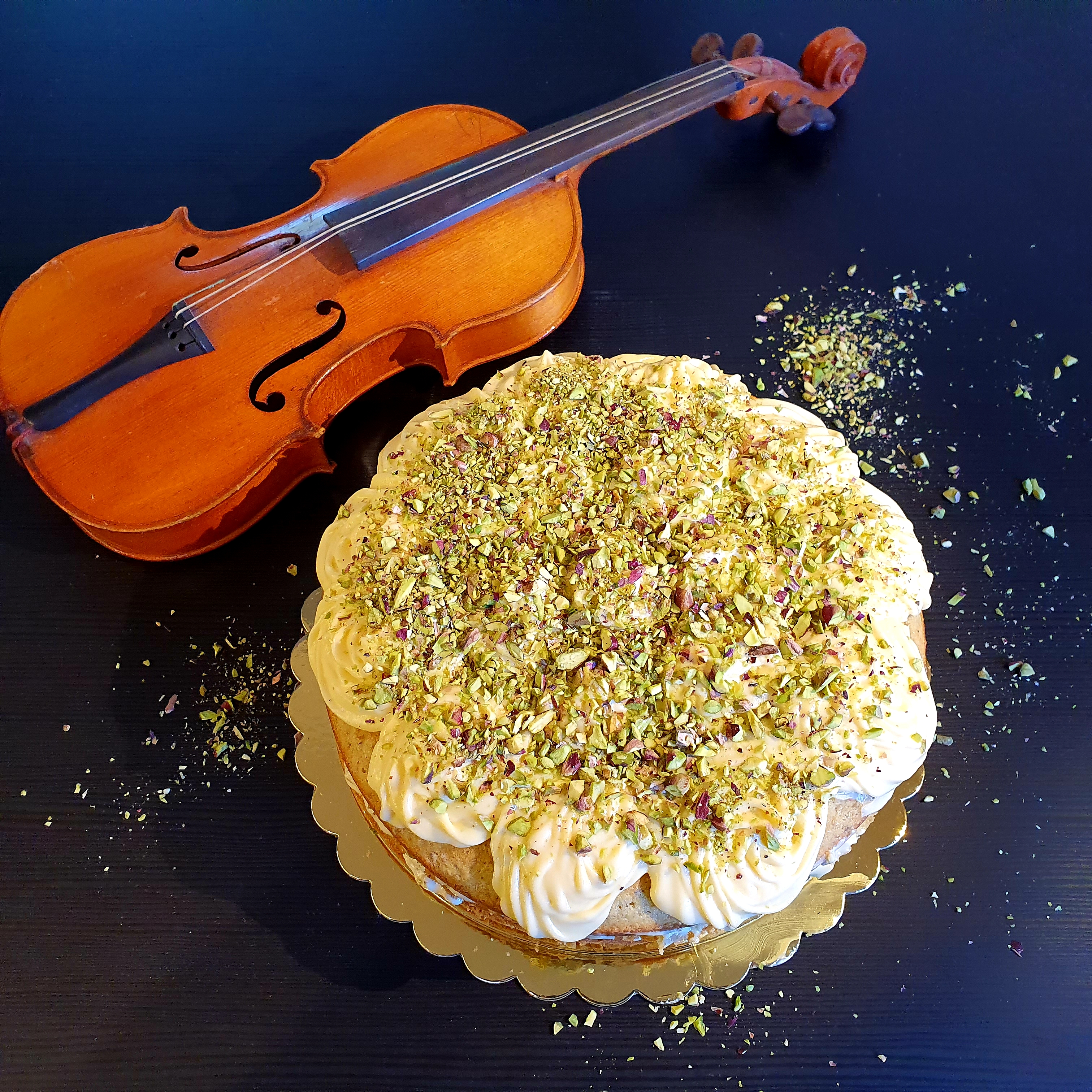
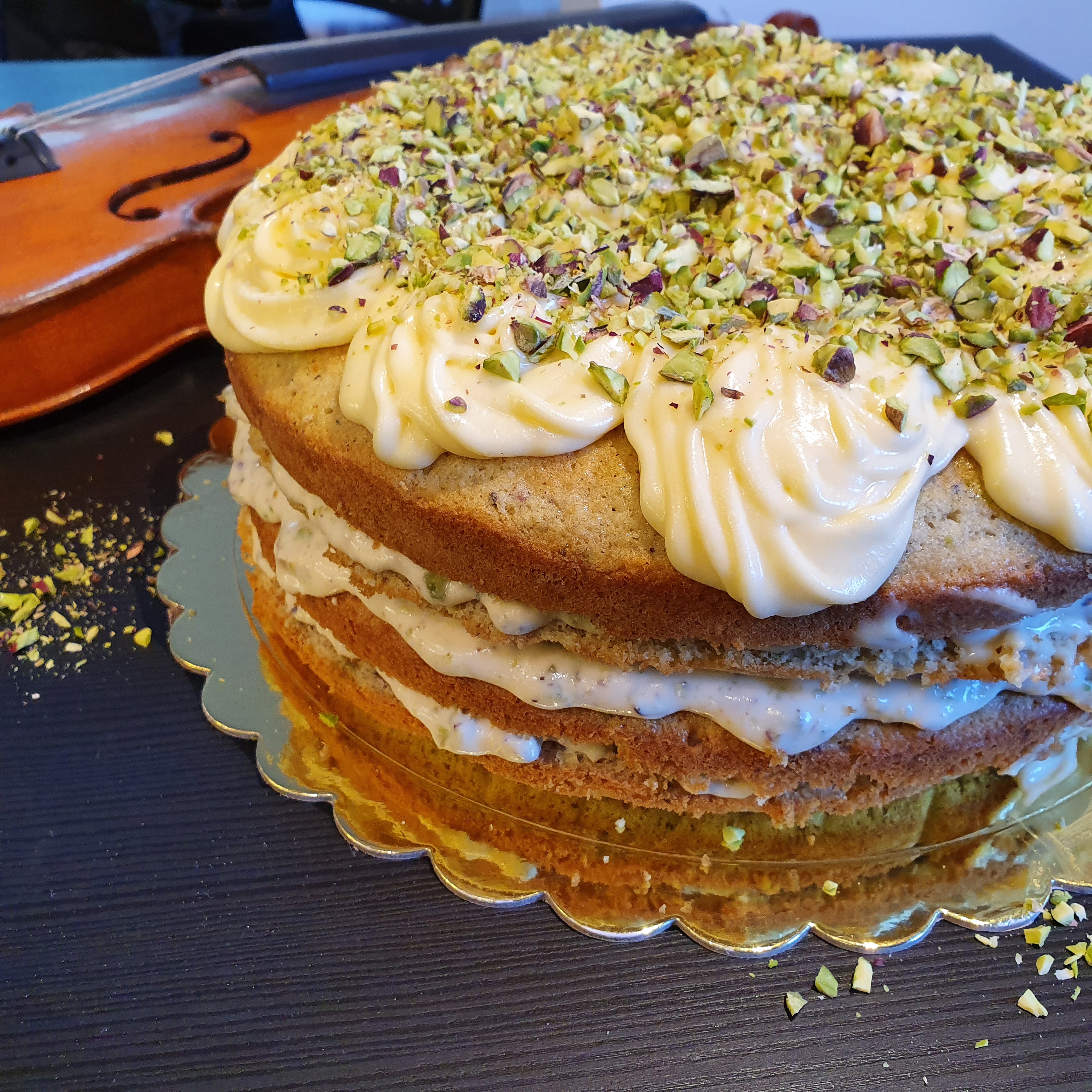
I chose to make a cake that I was sure my family would like. And I was right. To your attention – Pistachio cake.
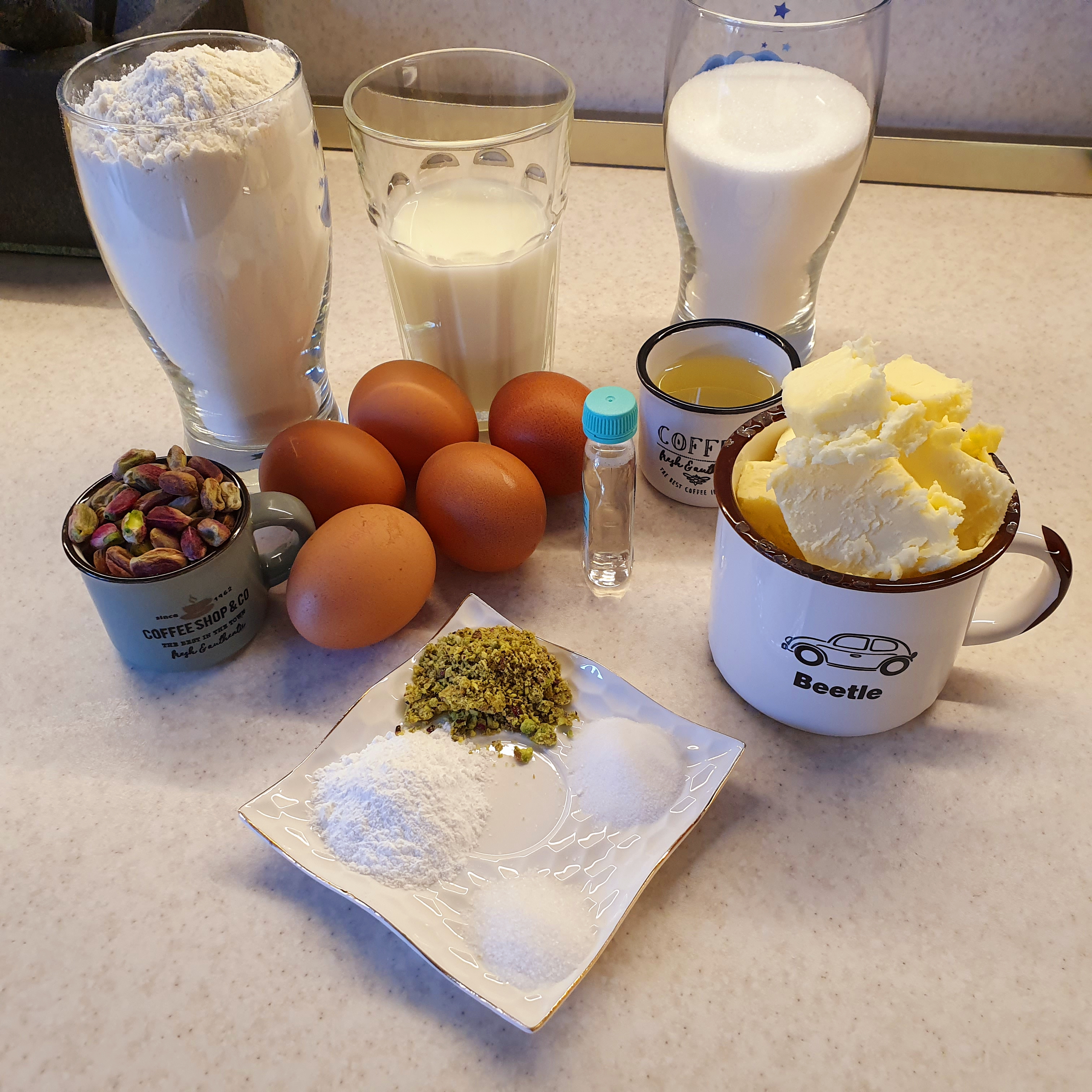
About cake:
170 g of unsalted butter at room temperature
1/4 tea cup of vegetable oil
1 3/4 tea cup of sugar
5 eggs divided into egg whites and yolks
vanilla
1 tablespoon of pistachio paste
1 tea cup of buttermilk or ayrian
2 teaspoons of flour
1/3 tea cup of ground pistachios
2 1/2 teaspoon baking powder
1/2 teaspoon of baking soda
1/2 teaspoon of salt
Half of a 1/4 teaspoon cream of tartar
* Peanut paste is obtained by grinding pistachios, which, given that they have a high concentration of vegetable fat, make a pure paste that can be used to flavor many recipes. Can be found in baking shops.
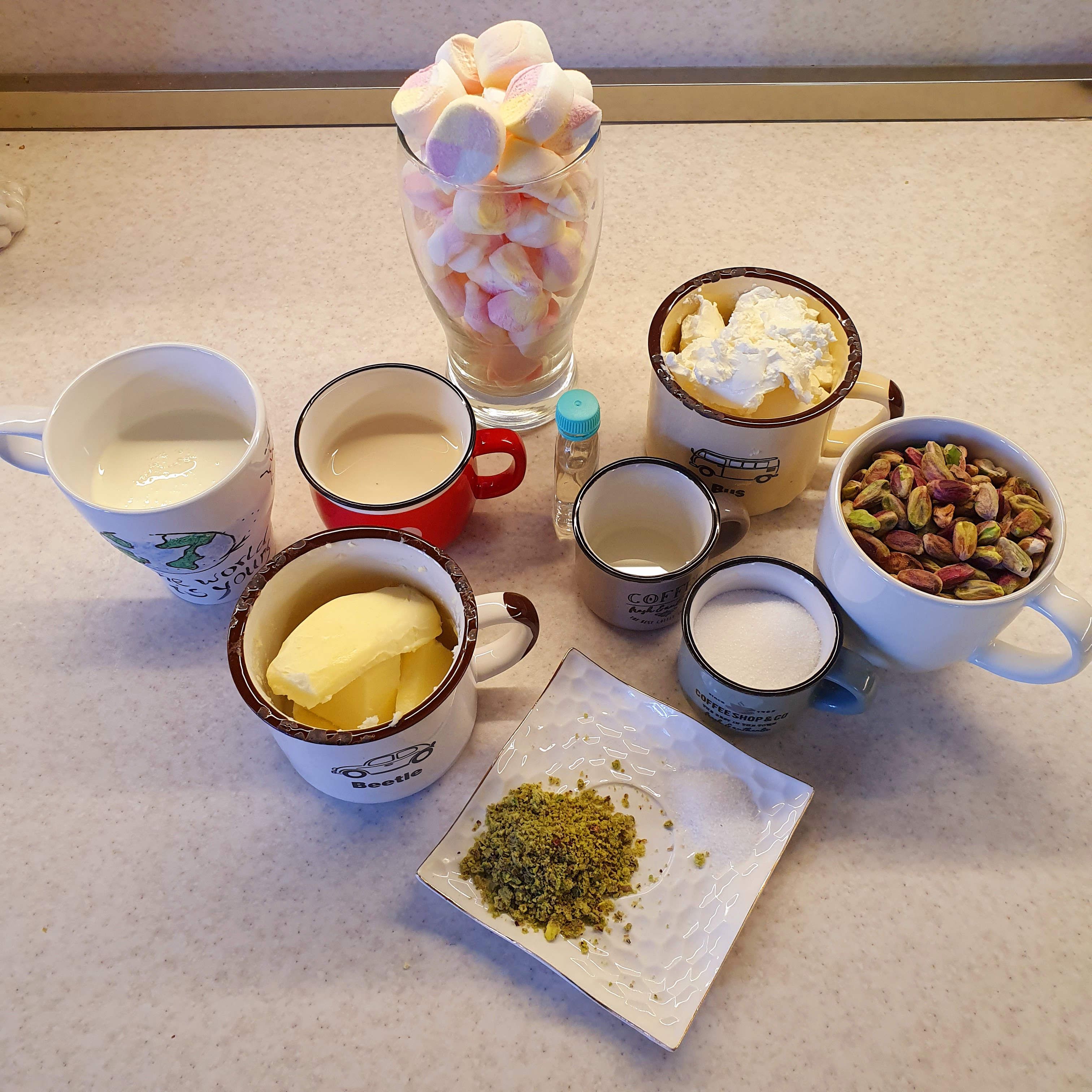
For filling:
190 grams of cream cheese at room temperature
90 grams of non-salted butter at room temperature
1/4 tea cup sugar
1/2 teaspoon of salt
vanilla
2 teaspoons of pistachio paste
1/2 tea cup of small white marshmello
1 tablespoon of vegetable oil
100 ml of condensed milk
140 ml of cream
1/2 cup pistachios – finely chopped
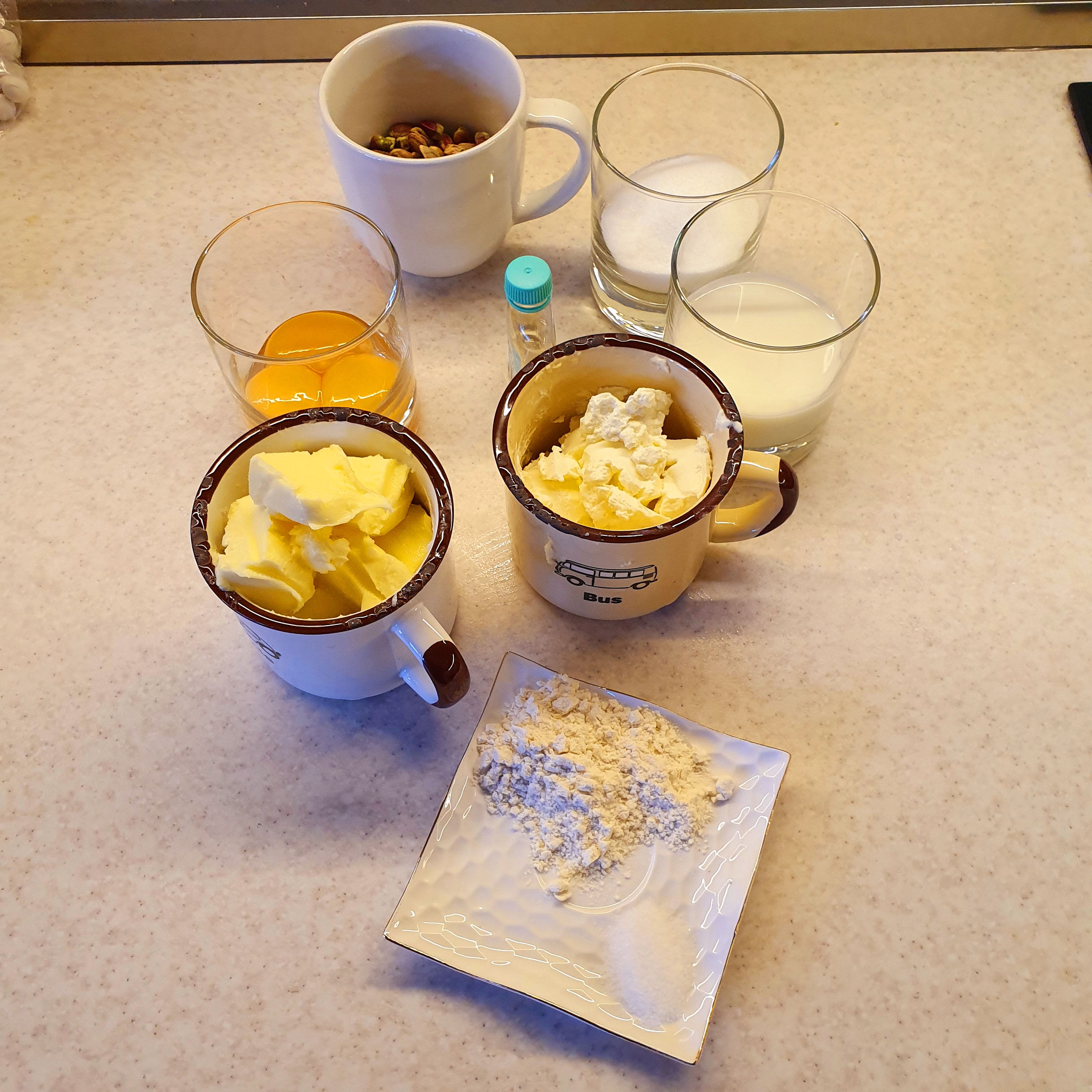
About the Glaze:
½ tea cup + 2 tablespoons of whole milk
vanilla
1/2 tea cup sugar
3 egg yolks
3 teaspoons of corn starch
150 grams of cream cheese
150 grams of non-salted butter at room temperature
1/2 teaspoon of salt
2 tablespoons of sugar
1/2 tea cup pistachios – finely chopped
Steps of preparation:
For the cake:
1. Start the oven at 180 ° C.
2. In a large bowl, sift the flour, ground pistachios, baking powder, bread baking soda and salt together. Mix with a spoon and leave aside.
3.In another bowl, with a mixer, whisk the butter and 1 cup of sugar for 2 minutes until you get a fluffy mixture.
4. Add the egg yolks in the butter mixture one by one, whipping after each addition.
5. Add the vanilla, oil and pistachio paste and mix for another 3 minutes until the mixture becomes really fluffy.
6. Add the dry ingredients of tree times, alternating with buttermilk, starting and ending with the dry ingredients (after adding the dry ingredients, it is important not to mix much, only until the mixture is homogenized).
7.Make sure that the mixer stirrers are clean and completely dry in another clean bowl, whisk the egg whites with the rest of the sugar (3/4 cup) and the cream of tartar for 4 minutes until hard peaks are obtained.
8. Add egg whites to the base mixture three times using a rubber spatula and stir slowly and carefully from the bottom up.
9. Place the dough in two trays (23 cm in diameter) pre-greased with oil and sprinkled with flour and bake for 40 minutes or until a wooden stick comes out clean.
10. Allow the marshes to cool for 10 minutes inside the trays and then remove them and place them on a grid to cool them completely.
For filling:
1. In a large bowl, whisk the cream cheese and butter lightly until a fluffy mixture is made.
2. Add salt, vanilla and pistachio paste until everything becomes homogeneous.
3. In a small bowl, mix the marshmello sweets with the vegetable oil and melt them in a microwave or on a hot plate until they form something like a sticky mixture. Immediately add this mixture to the cream cheese mixture and stir until it becomes homogeneous.
4. Add the condensed milk and stir for another 1 minute until you get a soft creamy mixture.
5. Finally, add the cream and whisk for 20 seconds.
6. Add the chopped pistachios.
7. Put the cream into refrigerator for 1 hour or until you need it.
For glaze:
1. In a small saucepan, put the milk together with half of the sugar and vanilla and heat it on low heat.
2. In a small bowl, mix the rest of the sugar with egg yolks and corn starch. Add a little milk mixture and stir to equalize the temperature.
3. Pour the egg yolk mixture into the pan with the milk and cook at medium temperature for 3 minutes, stirring continuously until it thickens.
4. Turn off the hotplate, pour this cream into a clean bowl, cover it with a fresh storage foil (which should touch the surface of the cream, otherwise crust) and refrigerate for 1 hour.
5. Meanwhile, in a large bowl, using a mixer, mix the butter together with the cream cheese, sugar and salt. Beat for 3 minutes or until the mixture becomes fluffy and lighter.
6. Add the cream from the refrigerator to the mixture and stir until the glaze becomes soft and creamy. Cover the bowl with foil and put in the refrigerator until it is time to assemble the cake.
For assembling:
1. Take the cake filling from the refrigerator.
2. With a really sharp knife, cut each cake base in two to get 4 thin layers for the cake.
3. Place one of the layers in a large plate and smear 1/3 of the filling. Repeat this step twice.
4. Put the cake in the fridge for 30 minutes to cool.
5. Decorate the cake with the glaze as you want and decorate with the sliced pistachios.
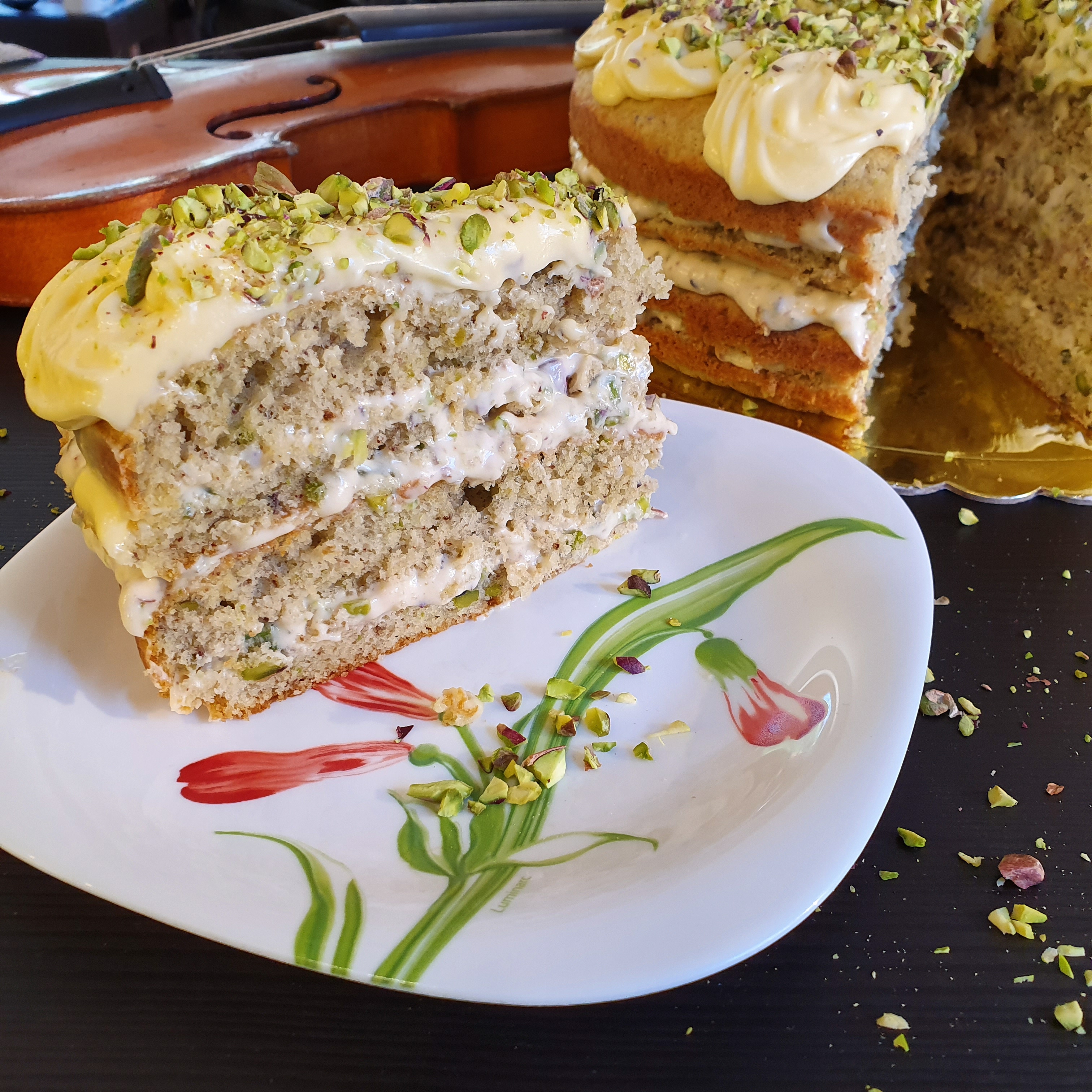
Aruba “Pistachio cake” proved to be a very tasty temptation. Very fresh. It’s true that it’s not the quick and easy cake, but nothing fast and easy can match it to taste with that which has put a lot of time and energy. It was a pleasure for me to have fun for about 4-5 hours with the preparation of this cake. Try it too. 🙂
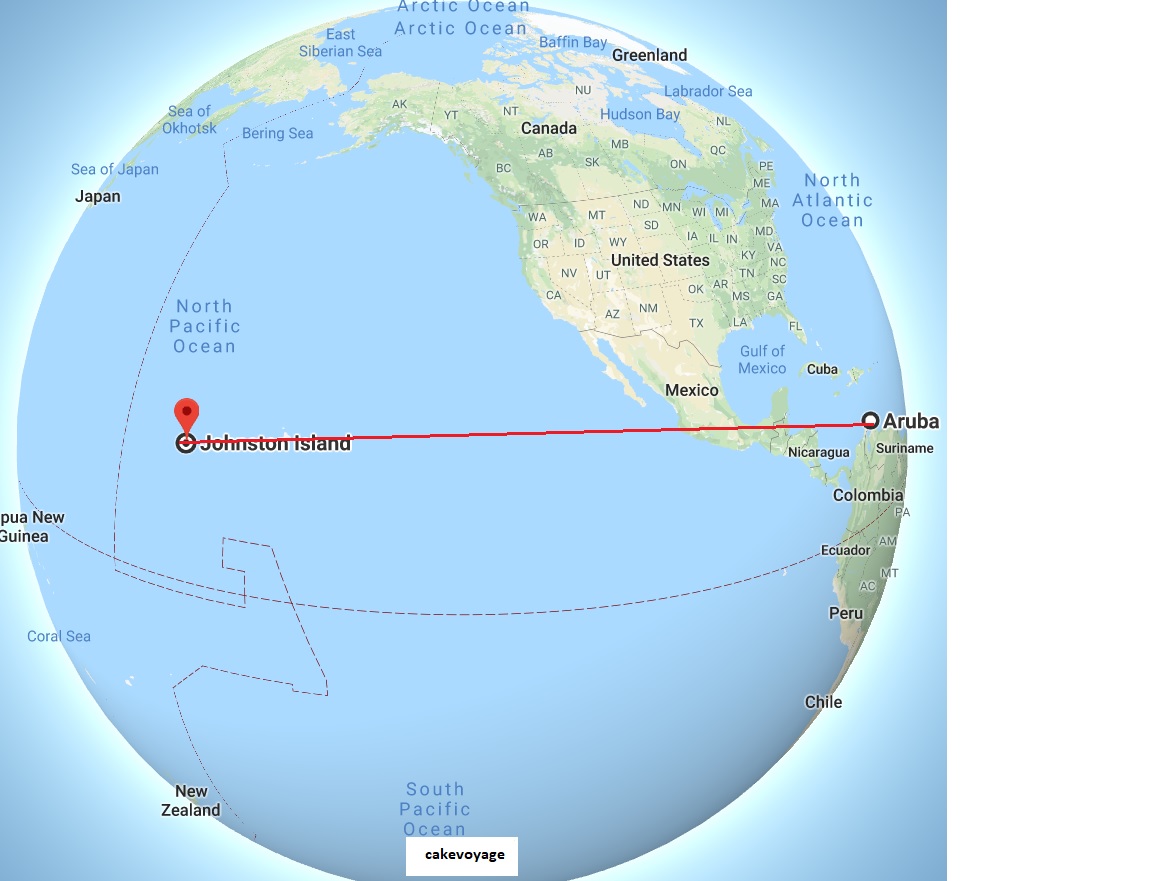
Next destination – Atol Johnston.

Spot on with this write-up, I actually suppose this web site wants far more consideration. I’ll in all probability be again to learn far more, thanks for that info.
I am glad to be a visitant of this stark web blog! , regards for this rare info ! .
I have read several good stuff here. Definitely worth bookmarking for revisiting. I wonder how much effort you put to create such a great informative site.