

Years ago, a colleague recommended classic Clavel’s “Whirlwind”. The book is very fascinating, but the story in it is strange. I still can’t explain how people can evict a monarch who takes care of their health by building hospitals, taking care of their children to be educated by building schools, taking care of improving their lives by building water pipes and replacing it all with a human , who is fanatically associated with Allah and offers them nothing but blind faith in God. It is true that everyone has the right to choose how to live, I do not judge them. I just can’t explain it.
Iran is an Islamic republic whose laws are in line with the views of Islamic law – Sharia. It is led by the supreme leader of the Islamic Republic of Iran (Ayatollah, the spiritual leader of the Muslims in Iran) and by a president who is elected for a term of 4 years. The current Iranian flag was adopted in 1980 and has three horizontal green lines – symbol of Islam and growth, white – symbolizing honesty and peace, and red in honor of courage and martyrdom. In the central part of the white ribbon is an image symbolizing “Allah” with meaning – “no one is worthy of worship except Allah”, and in the inner part of the other two lines 22 times the expression “God is great” is written.

Iran is one of the few countries in the world where a couple can have a “temporary marriage.” These “marriages” can be valid for a minimum of one hour. I don’t know how it fits into Islam, but they obviously don’t have a problem with that. At the same time, the country has mandatory rules of conduct and dress, including sports, at work, on the street, in public places, when traveling, etc. This is especially true for women, who are required to wear headscarves and long clothes covering the ankles. When visiting Iran, it is mandatory for women to wear a scarf covering their hair, but open shoes and short-sleeved T-shirts are allowed. At least that. Men can wear clothes with short sleeves, but not shorts, earrings, necklaces and other jewelry. It is also not customary in Iran to wear ties. Close relationships between men and women cannot be demonstrated in public. Penalties for violations can be very large. Taking pictures of or near military or government sites and installations is strictly prohibited. In Iran, the import, use and trade in alcoholic beverages and psychotropic substances is strictly prohibited and severely punished by law, and possession of drugs is particularly severe, including death. In 2012, Google was declared an espionage tool by the Iranian police chief. Due to this fact, the Iranian government is working to create a “national Internet” that will be under state control. In order to increase control in Iranian households, it is forbidden to have satellite TV.
Iran is considered the capital of pistachios. After oil and natural gas, it ranks second in the country’s exports. Iranian cuisine is one of the most delicious national cuisines in the world. It has a long history. The main products used by Iranian chefs are meat (most often lamb), poultry, rice, vegetables and legumes. In the Iranian culinary tradition, fish dishes are almost completely absent. We must definitely mention the rice. In Iran, it is consumed a lot – as a side dish for most dishes. For cooking, the Iranians choose long grain rice. It is served in a separate plate and usually looks like this: white rice is sprinkled on top with yellow rice prepared separately with curry or saffron. Among the most remarkable Iranian dishes that use this cereal, it is worth noting rice with meat and vegetables with nut sauce and many recipes for Iranian pilaf.
The lion’s share of Iranian cuisine recipes is dedicated to cooking meat dishes, the most popular of which is dizi. Also known as Abgoosht, this dish with meat and bean broth dates back hundreds of years. It is essentially a stew composed of lamb and tomato-based chickpeas. It is usually served in a stone plate called dizi – hence the name. The recipe for the dish may vary in additives. For example, it becomes really unusual if you add quince to it. Another heart-warming, traditional dish is Ash Reshte, which is usually served in the winter. Strong and delicious, this soup is made from chickpeas, beans, noodles and many herbs.
Kabab – If you dine at an Iranian restaurant that the locals enjoy, you are likely to be served rice-Iranian-style kebabs. Iranian-style kebabs are known to be especially juicy and tender and are available in several varieties – koobideh, barg, chenje and bakhtiari. Khoresht Gheimeh is a beef meat and pea stew made with dried lime and tomato-based, usually served with french fries to finish. In the month of Muharram (a holy month in the Iranian calendar), this dish is cooked and served on the street for the needy. Fesenjan is an iconic dish dating back to 515 BC. It is made from walnuts, paste
of pomegranate and chicken or duck and is often served at wedding ceremonies in Iran. On the ancient ruins of Persepolis, archaeologists have found a plaque detailing the ingredients used to make Fesenjan, making it one of the oldest beloved dishes. One dessert worth trying is Iranian ice cream with saffron. Faloode is also a cold dessert consisting of rice noodles mixed in semi-frozen rose water and sugar syrup similar to sorbet. Both can be found in ice cream shops in Iran and make a delicious the afternoon snack in the hotter months of the year.
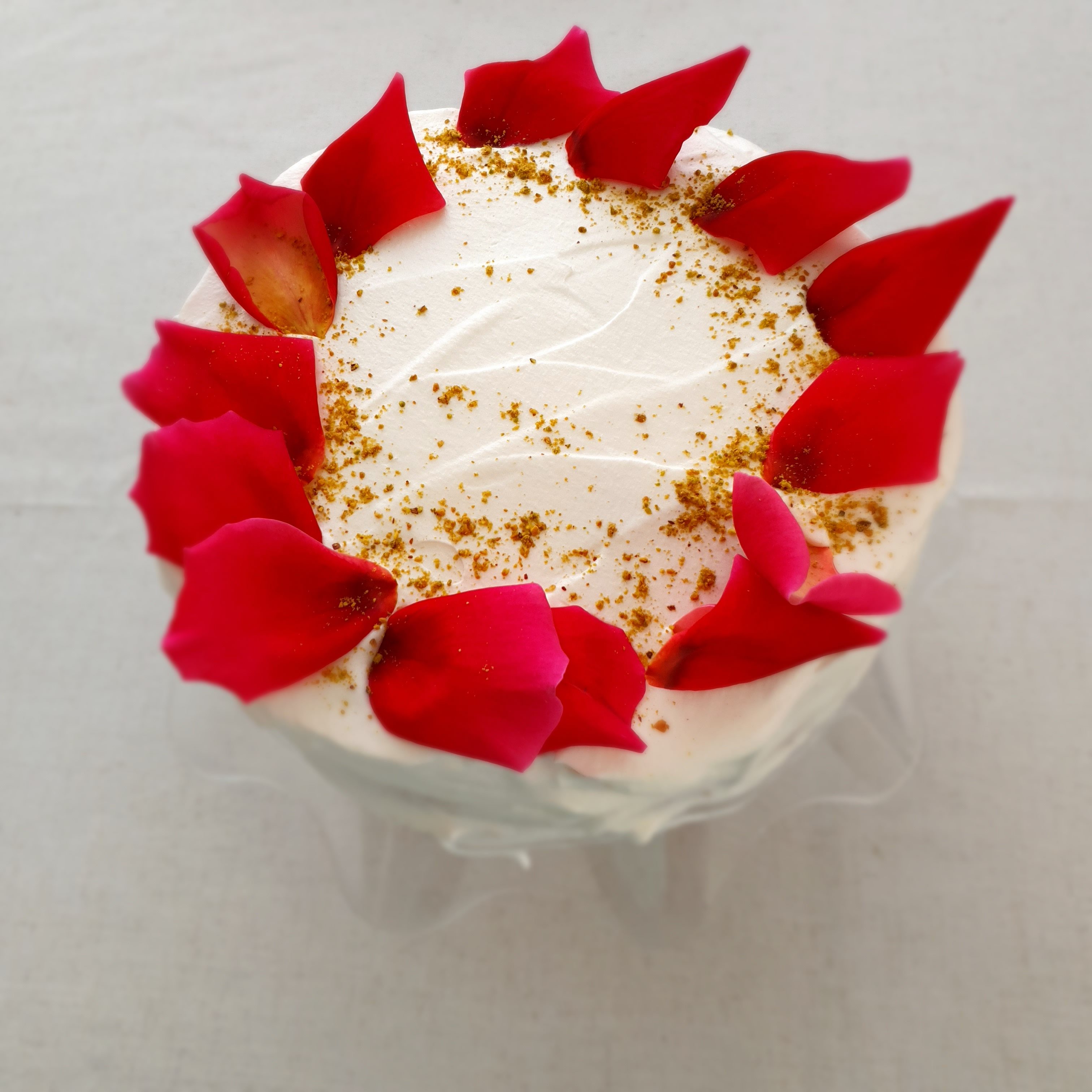
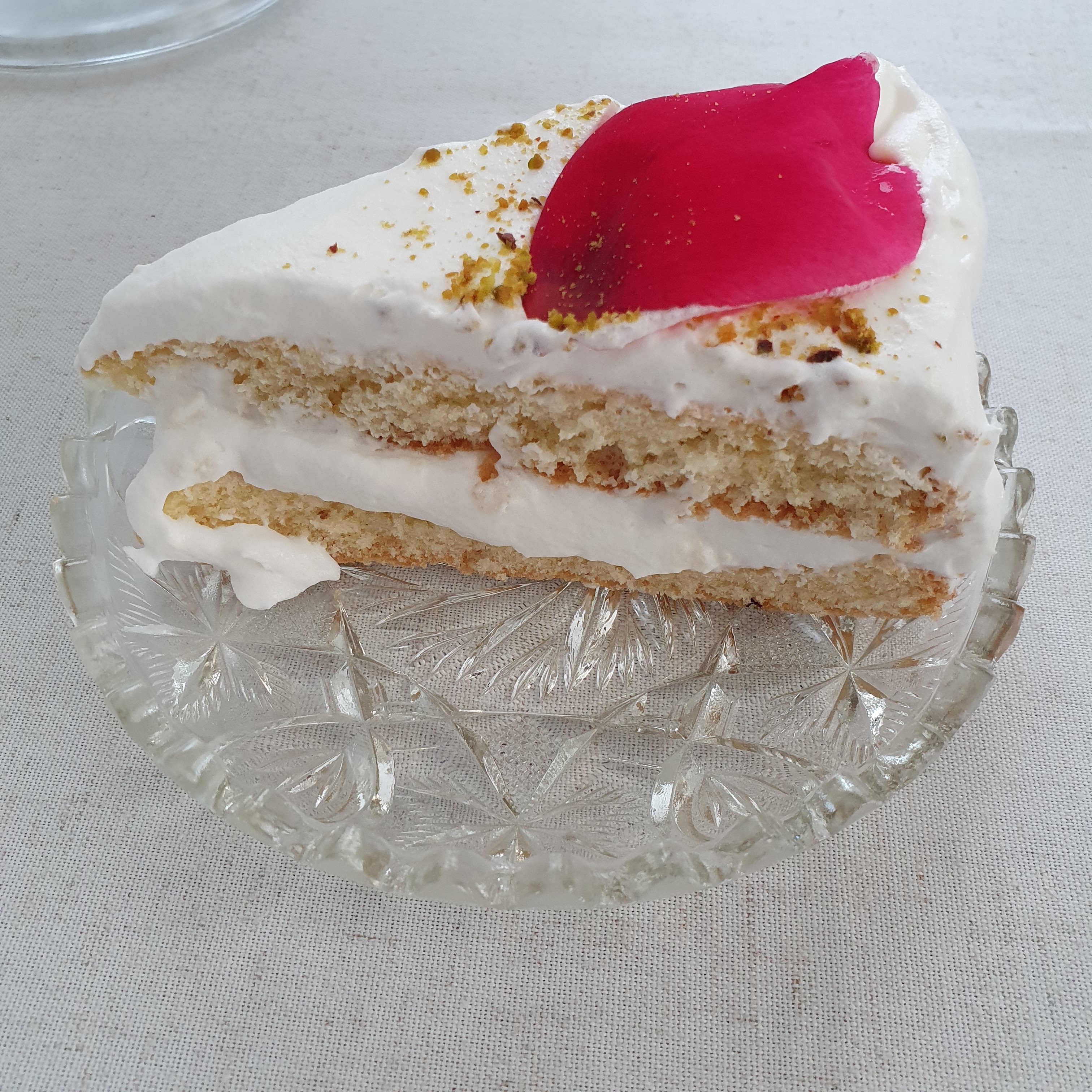
To mark Iran in the blog, I prepared a very tender, fragrant and easy cake – “Persian love cake”. Her name is given by Yasmin Khan – author of Pakistani – English – Iranian cookbooks. The cake bases are fluffy and light, and the aroma of cardamom is so elusive, but at the same time it makes it with a unique, different taste. Here are the necessary products:

for candied rose petals:
the whites of two eggs
1/2 tea cup sugar
rose petals
for cake base:
1 tea cup flour
14 tablespoons sugar
1 1/2 teaspoons baking powder
1/4 teaspoon salt
3 eggs
6 tablespoons water
1/4 tea cup vegetable oil
1 teaspoon grated lemon peel
1/4 teaspoon cardamom
for cream:
500 ml cream
a pinch of saffron
2/3 tea cup powdered sugar
1 teaspoon rose water
for decoration:
about 2 tablespoons pistachios
Steps of preparation:
The day before you make the cake, prepare the candied rose petals. If possible, pick rose petals from the roses in your yard (if you have any). Wash them gently and leave them on kitchen paper to dry. Using a paintbrush, brush the petals with whipped egg whites and roll gently in granulated sugar. Allow them to dry on kitchen paper for a few hours. I have some that I keep in a tightly closed jar, but today I decided to put natural petals for decoration. 🙂
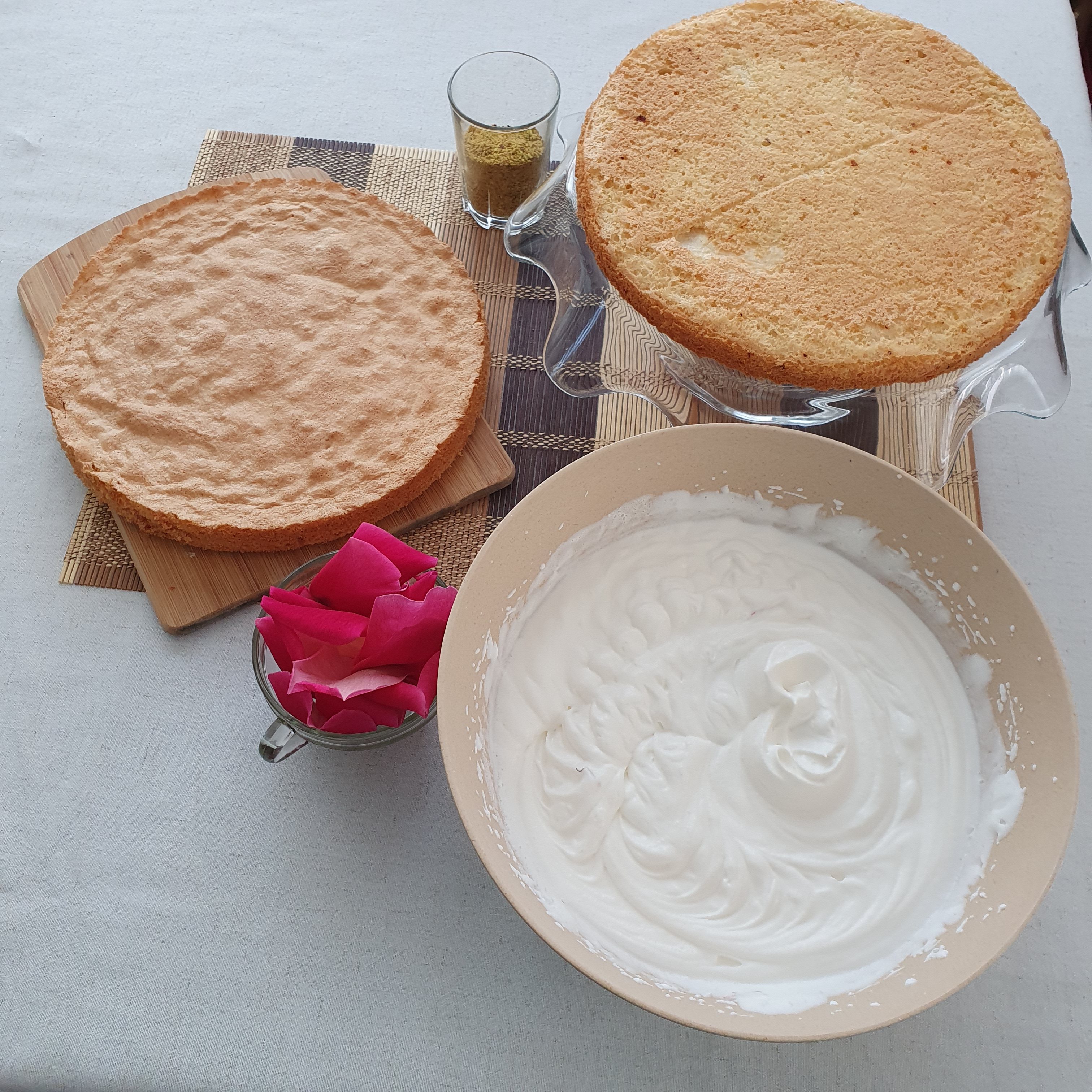
Preheat oven to 170 degrees. Divide the eggs into whites and yolks. Beat the egg whites and add half the sugar. Beat until soft peaks. Then beat the yolks with the remaining sugar until white. Add the vegetable oil and water. Mix the dry ingredients and gradually add them to the yolk mixture. Finally, add the beaten egg whites, stirring gently and slowly with a spatula.
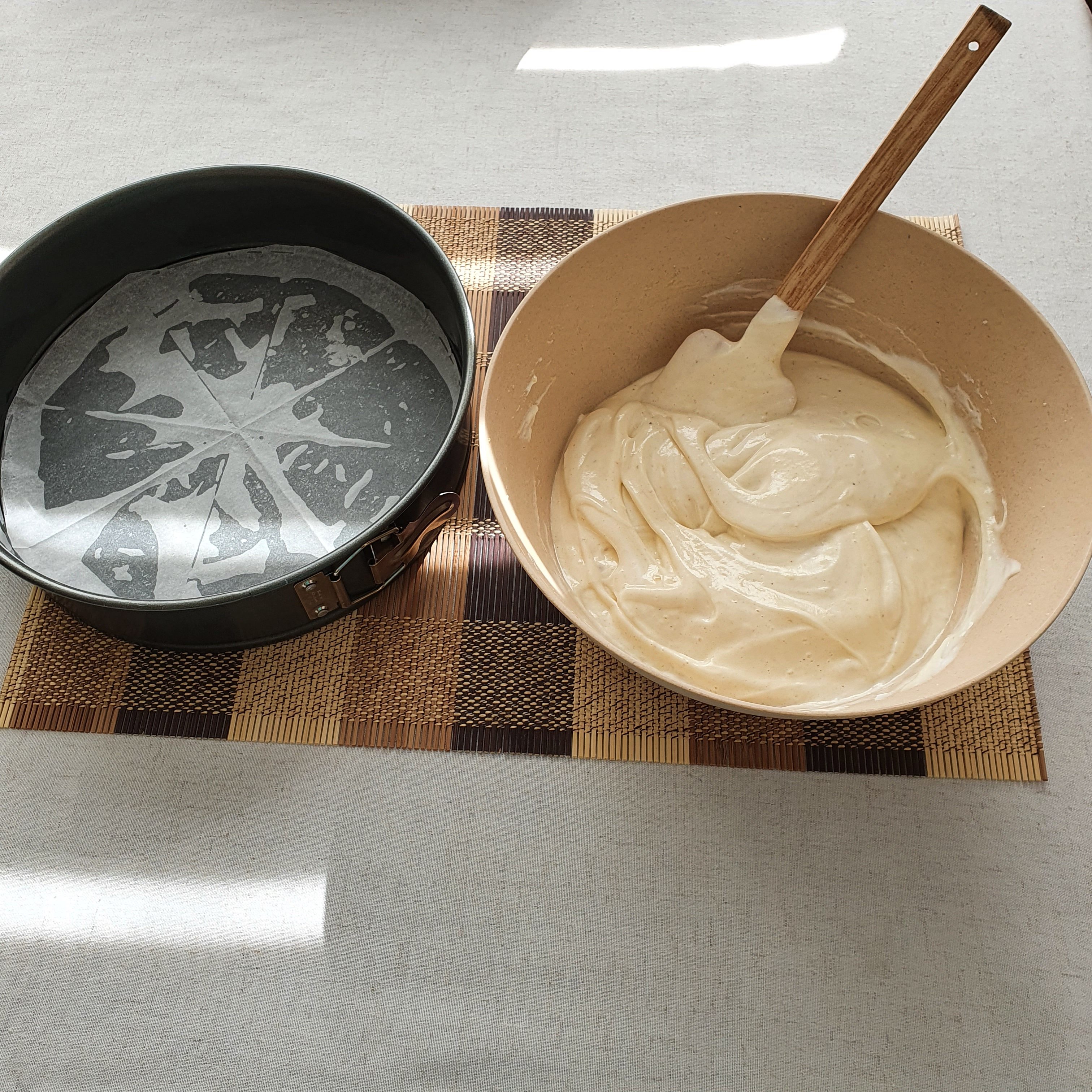
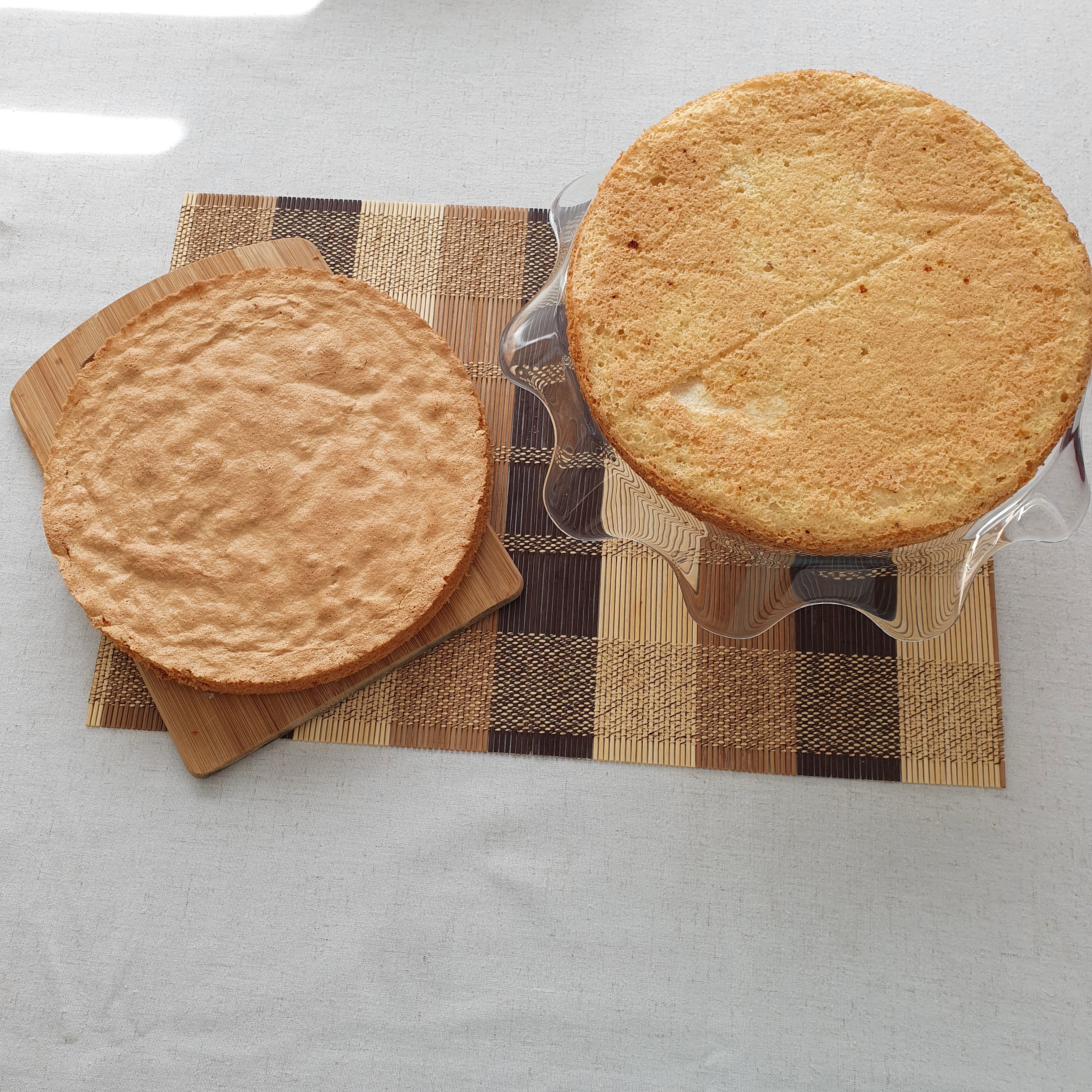
Line two baking trays with parchment paper and pour the mixture. Bake for about 25 minutes or until done. Remove the cake bases from the pans and cool completely for about 15 minutes.
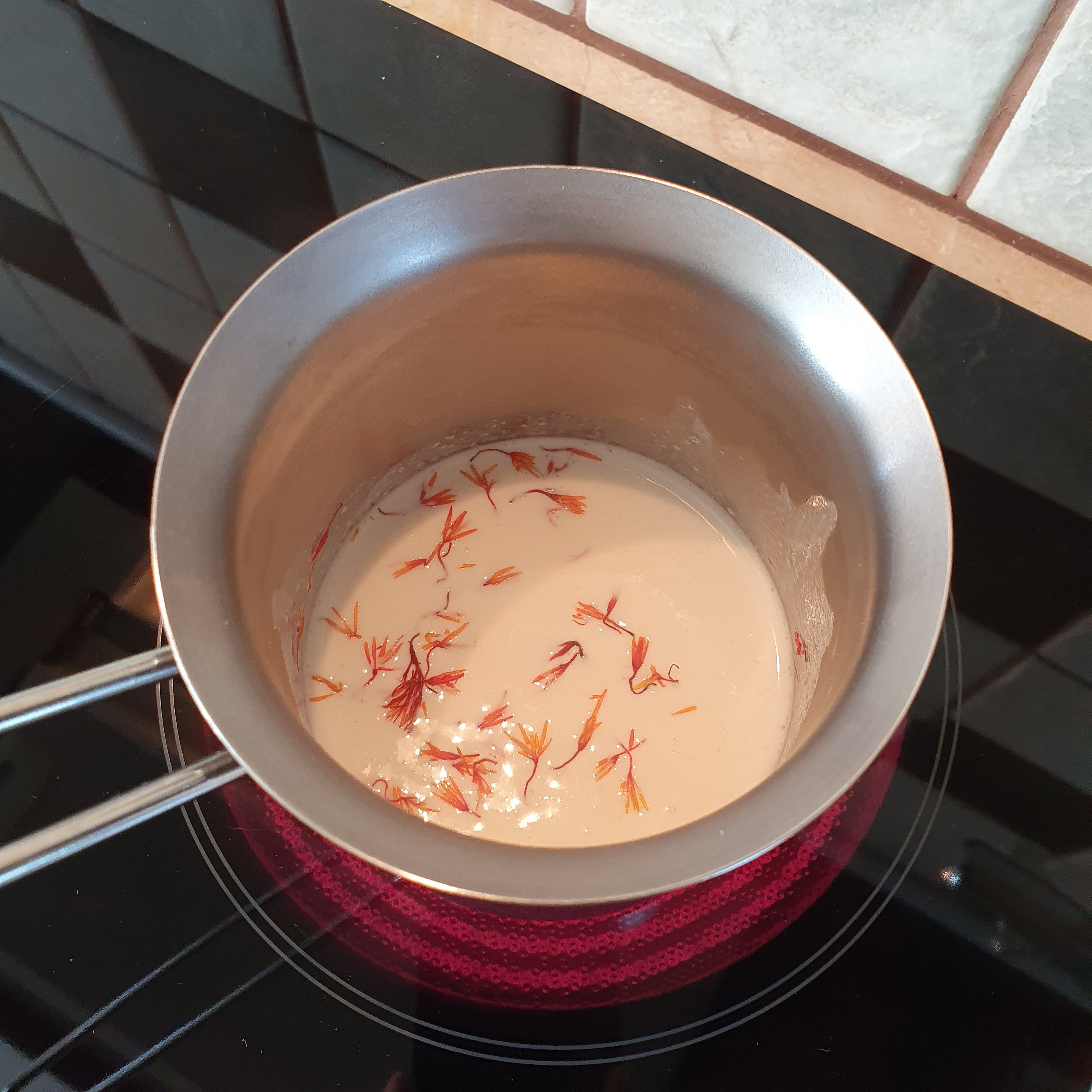
Separate 100 ml of cream and bring to the boil with saffron. Set aside to cool nicely. Whip the chilled cream plus the one with the saffron and powdered sugar. Add the rose water. Beat until soft peaks.
Assemble the cake by alternating cake bases and cream and finally finish with a decoration of rose petals and pistachios.
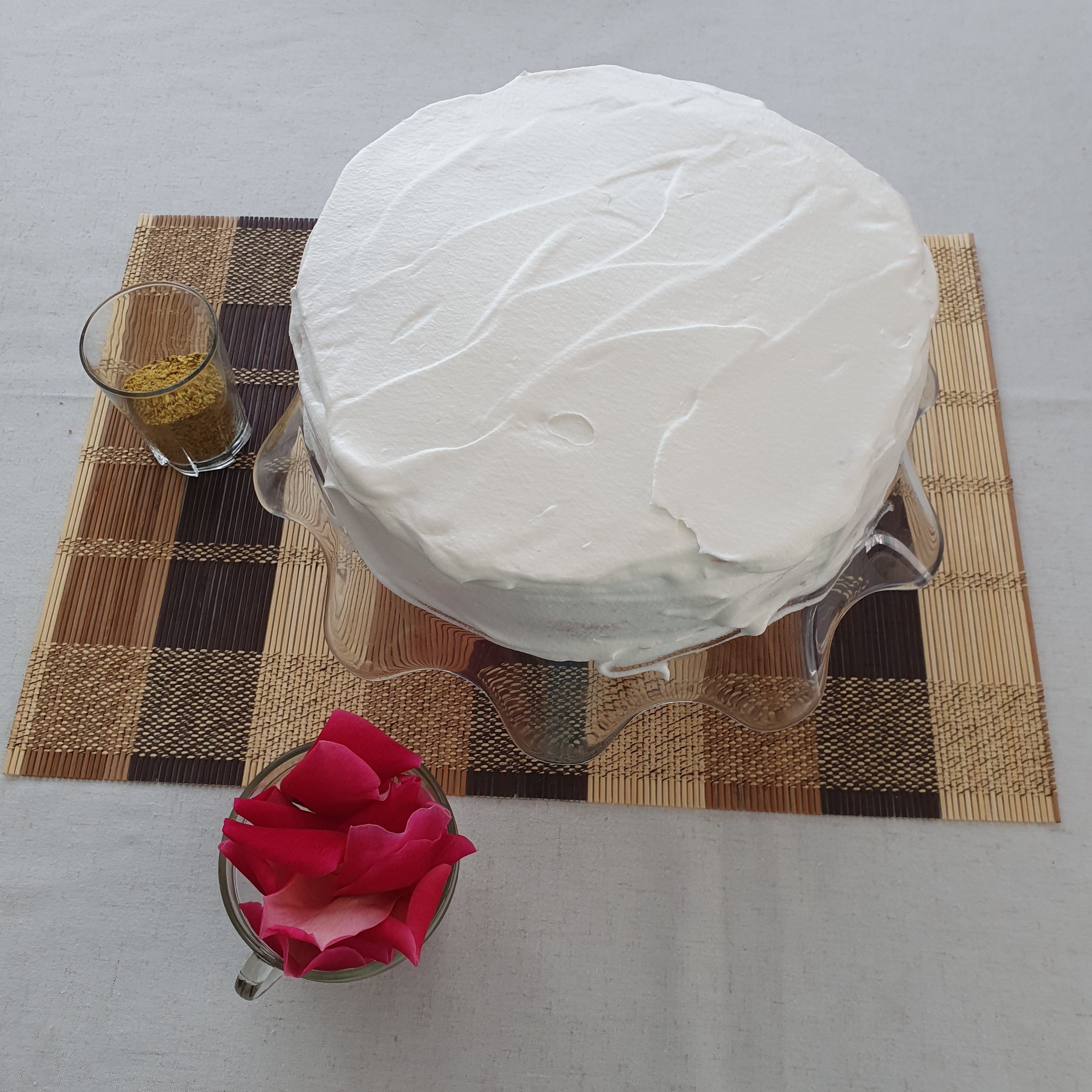
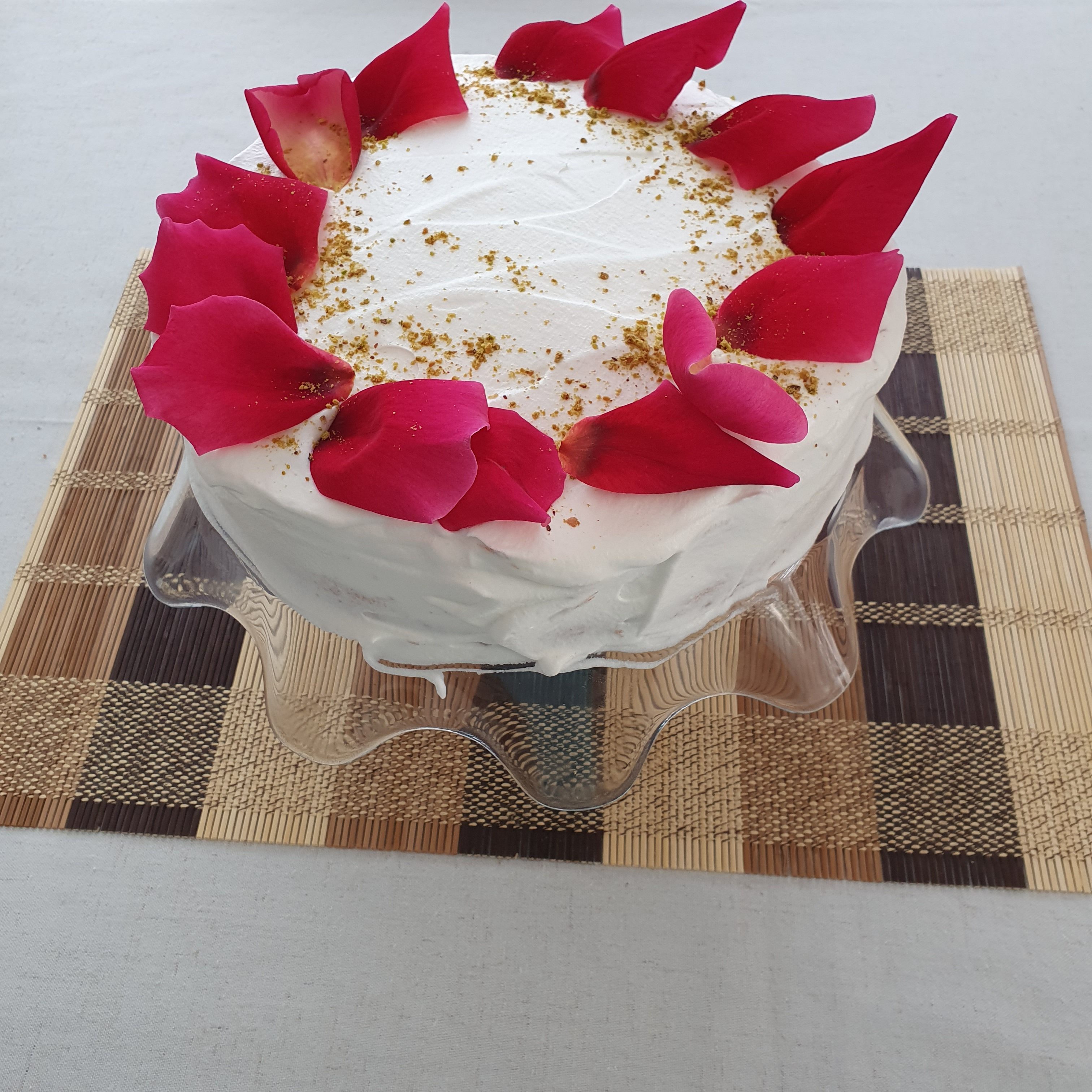
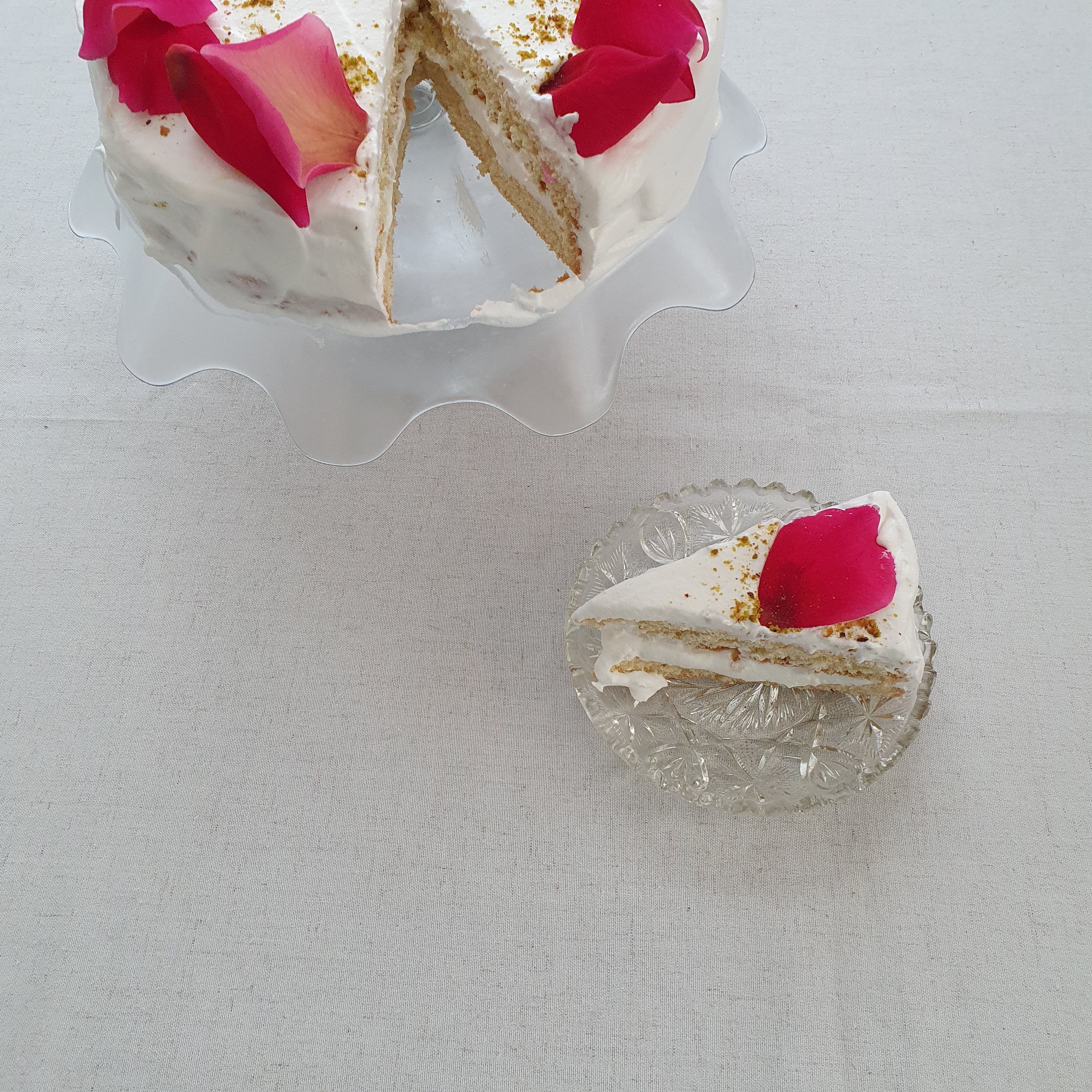
Well, that’s it. Simple and very tasty. Leave in the refrigerator to cool for at least an hour, preferably six hours. The tops are like cookies, but with a cardamom aroma. They are very tasty and airy. I guess you can make a cake with cream cheese and powdered sugar. In any case, they should not be made with a cream that makes them very soft like the classic confectionery. With this cream the cake will fall apart and will have to be eaten with a spoon. 😀 Not that it won’t be tasty, but it won’t look good.
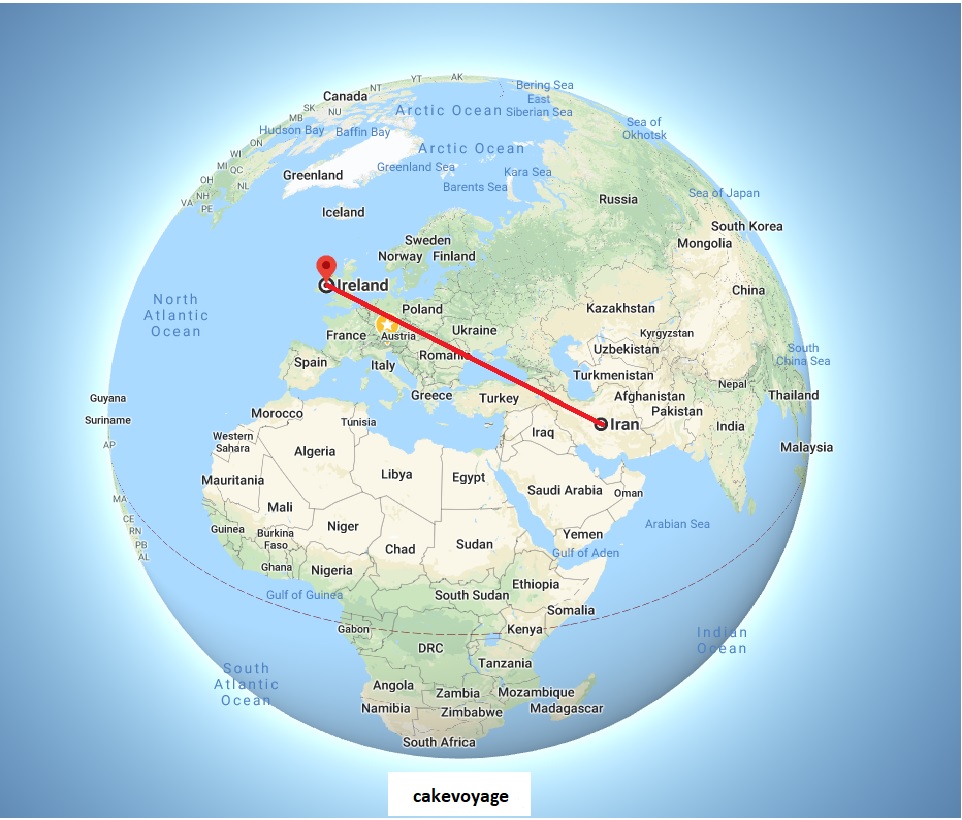
Next destination – Ireland.

Major thanks for the blog article.Really looking forward to read more. Keep writing.