

The only country in the world that is located simultaneously in the northern, southern, eastern and western hemispheres – Kiribati. Admittedly, I hadn’t heard that name until it was my turn to make a cake from this side. Nor in a political, tourist, sports context. Absolutely nothing. It is high time I filled in my gaps with you. Maybe I want to see everything with my own eyes after reading it and I liked it. 🙂
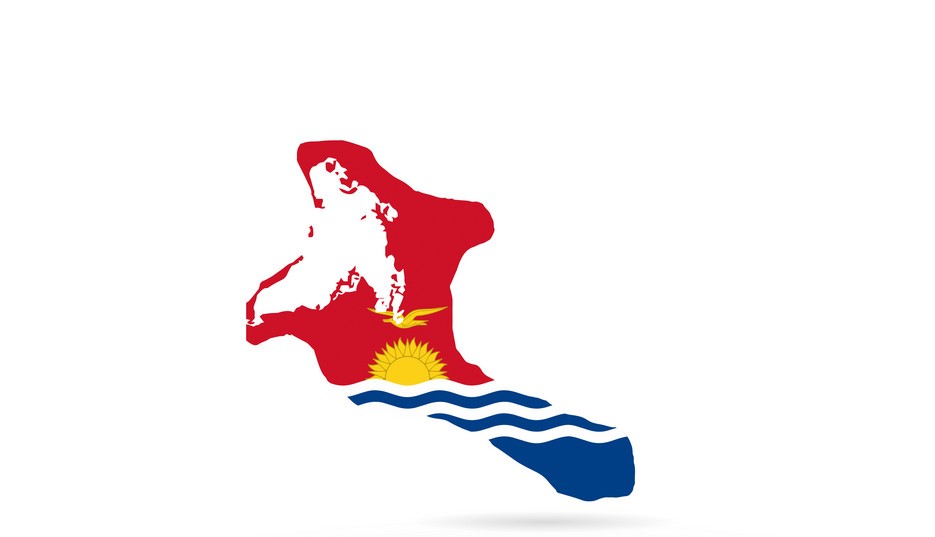
The Republic of Kiribati is halfway between Hawaii and Australia. The island is huge. The three island groups Gilbert (including Banaba), Line and Phoenix are distributed over about 5 million km of water in the central part of the Pacific Ocean. Atolls covered with only a thin layer of earth are actually peaks of underwater volcanoes. Only Gilbert Island and three of the Lane Islands are habitable. Banaba Island is 80 meters high, and the other 32 coral islands and atolls rise at most 3 meters above the height of the tide and are surrounded by coral reefs and rocks. The island is threatened by rising ocean levels due to global warming. But there is also the possibility of being saved. A Japanese company is developing a plan for cities that will be able to sail on platforms resembling large water lilies on the surface of the Pacific Ocean. The project envisages each city-lily to have space for 30 thousand people, offices, arable land and livestock and, among other things, will be environmentally friendly. Sounds great, but there’s one big “but”. The cost of the project is 3,000 times more than Kiribati’s gross domestic product, or 317 billion pounds. The director of the company assures that the prices will become more affordable. However, it is unclear when this will happen. Nor whether the citizens of Kiribati will find a sponsor to save the floating lilies.
The people of Kiribati are mostly Micronesians, and there are small minorities of Chinese, Europeans and Polynesians. While the island groups Phoenix and Line are largely uninhabited, the main island of Tarawa continues to attract people. The people of Kiribati are still firmly attached to their traditional way of life, where social ties within a clan are of great importance. Women have strong positions in society. On the outer islands, in most cases, they run the farms. Hospitality is an important feature of the people, and their motto is: “Tomorrow is another day”. The survival of this small nation revolves around ambition and motivation to live day by day. To feel all this you need to stay on the islands for at least a week and get in touch with the dances and customs of the locals.
Because Kiribati is located on the equator, the climate of the islands is warm and mild. That is why the houses are built only of wood and palm leaves. The roof is made of coconut leaves, the walls are made of logs and the corals are used as flooring. Carpets of palm leaves are laid on the floor, and carpets of pandan leaves are used as tablecloths. The kitchen is usually located in a separate house. The houses of the people of Kiribati rise 1.5 meters above the ground and are supported by four supports. Prior to the arrival of Europeans and Americans on the islands, the men of the Gilbert Islands did not wear any clothing at work. During meetings and ceremonies, they wore something like a skirt made of pandan leaves, the upper body left naked. Women and girls who reached puberty wore graceful skirts or riri made of palm leaves. Nowadays, men in the Gilbert Islands wear shorts and shirts, or lavalava. Women wear mostly imported clothes and rarely wear traditional ones. During religious holidays such as Easter and Christmas, people from Kiribati go to church. Gifts are not exchanged on holidays. Birthdays are also not celebrated, except for the first son’s birthday.
If we summarize all the rules related to blood relationship, the prohibitions on marriage in Kiribati are the following: 1. to relatives in the direct line; 2. to all representatives of one of the branches of the family genealogical tree, who had common ancestors, both in male and female line; 3. cousins; 4. non-blood brothers and sisters. Incest is severely punished. On Tamana and Arora Atolls, the perpetrators of such actions have drowned in small bodies of water. In the northern islands of the Gilbert Archipelago, the perpetrators are tied to a log, which is then thrown into the ocean. The lightest punishment is to drive the incest perpetrators off the island, forcing them to sail with a small supply of coconuts in a canoe that has paddles but no sails.
In the streets, wide-eyed children can tease you and boldly greet you with “mauri” (hello), while adults tend to communicate more succinctly – just raising eyebrows in greeting. Nothing happens fast here, so hold your breath, relax and enjoy life on the island. 🙂 Why am I not surprised?!?!? I’ve been to four islands with different people and cultures, but all four really seem to have stopped time – the movements of people, music and the rhythm of life in general are very casual. You will not see haste and stress, which is one of the good sensations in these places. The trip to Kiribati is very long and expensive, which hinders tourism, although the country has excellent opportunities for scuba diving, there are great lagoons and beaches.
Islanders traditionally live on a rather limited range of food available. For centuries, local cuisine has been based on three main ingredients – seafood, root vegetables such as taro or sweet potatoes and coconuts. However, in recent years, under the pressure of the ever-growing influence of developed countries, traditional local cuisine is rapidly losing ground to Chinese, Japanese, American and Indian dishes. In addition, unlike many neighboring countries, this trend is clearly visible not only in urban areas but also in rural areas.Kiribati’s national dish is fried fish, pork (on holidays) or chicken with palu-sali – a roasted mixture of coconut porridge, onions and curry. As a side dish to many dishes there is fried fruit pandanus (Pandanus), which is prepared in dozens of ways – baked on charcoal, ground into flour or cut into thin slices and stewed in coconut milk. The ripe fruits of pandanus are used to make kabubu-i and tuya (a type of salad with meat or fish), sometimes cut into small pieces, resulting in te-kabuba – a universal base for many dishes and drinks.
Taro and all types of root crops are processed in the same way, and rice, traditional for the countries of the region, is often replaced by the fruits of the Bero tree. Many local plants and algae are used to make sauces and spices. Pork, fish, poultry, mussels and other seafood are usually baked in a clay oven, using dried seaweed instead of charcoal.
Although all kinds of imported drinks are offered on the islands, the traditional ones for these places are still preferred – kaokioki – fermented coconut juice, which ferments for 15-20 hours, resulting in a low-alcohol beverage, which the missionaries simply called punch. In fact, the technology of making kaokioki differs significantly from ordinary fermentation, and each clan has its own method of preparation. Unfermented amino acids and sugars give a special taste that differs from the classic punch.
Sun-dried or smoked worms are often eaten as a snack. But the most popular cooking method is fried worms with coconut. 😮 Popular dishes are: Teia – noodles with coconut cream, onion and lime. Waro- shrimp with rice and coconut. Te baan ni mai are pieces of fried breadfruit. Te bua toro ni baukin is canned pork with pumpkin and cabbage. Coconut rice is also popular – rice made with coconut milk.
Since Kiribati was a British colony and is now a member of the British community, I allowed myself to make a rather British cake with citrus, fresh taste and aromas that suit this time of year (after Christmas 😉). I have prepared Orange pudding with rum sauce for you. Here’s what you need for it:
for the sides of the cake:
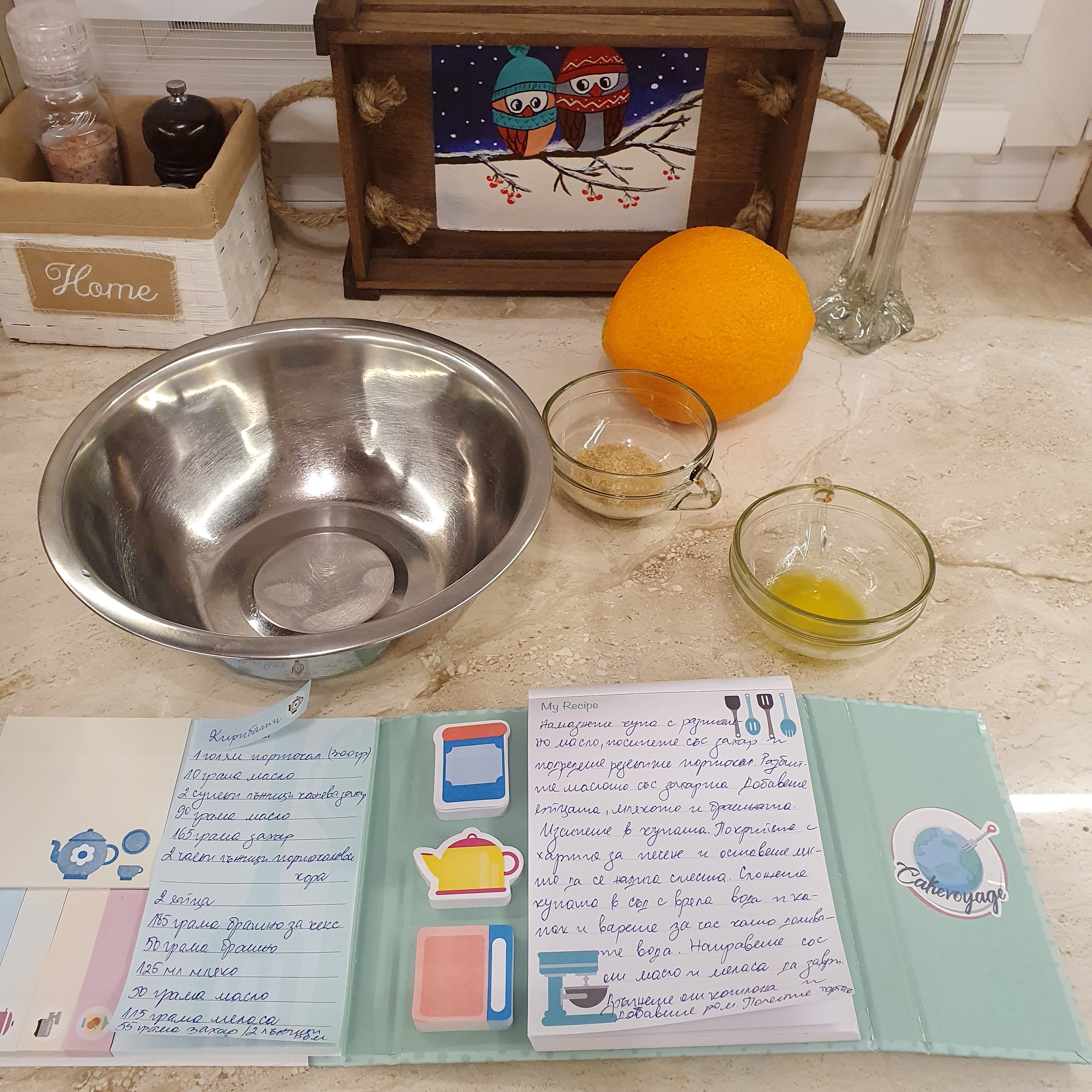
1 large unpeeled orange (about 300 grams)
10 grams of butter
2 tablespoons brown sugar
for the cake:
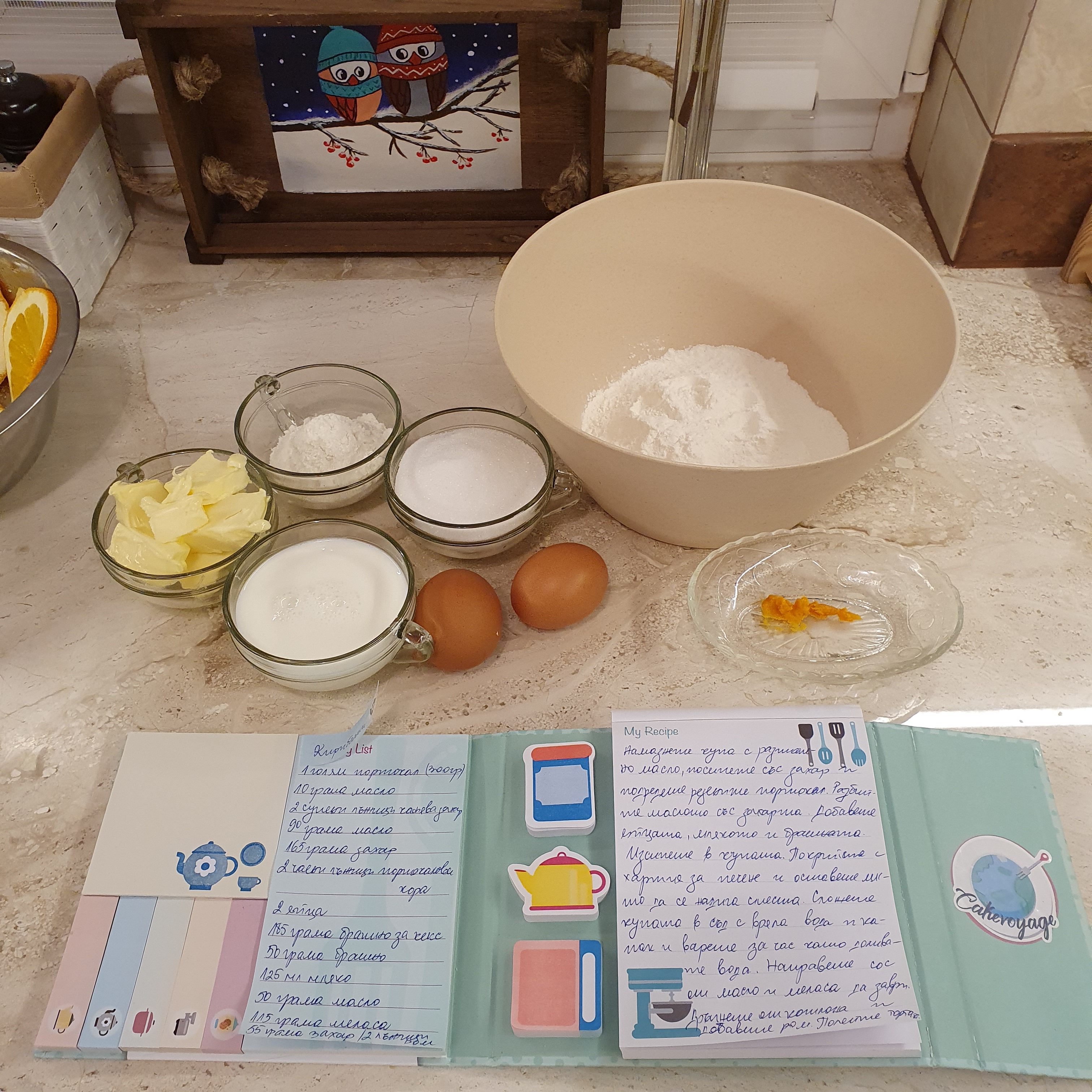
90 grams of oil at room temperature
165 grams of sugar
2 teaspoons grated orange peel
2 eggs
185 grams self-swelling flour (cake flour)
50 grams of flour
125 ml of fresh milk
for caramel sauce:

50 grams of butter
115 grams of molasses
55 grams of brown sugar
2 tablespoons dark rum
Steps of preparation:
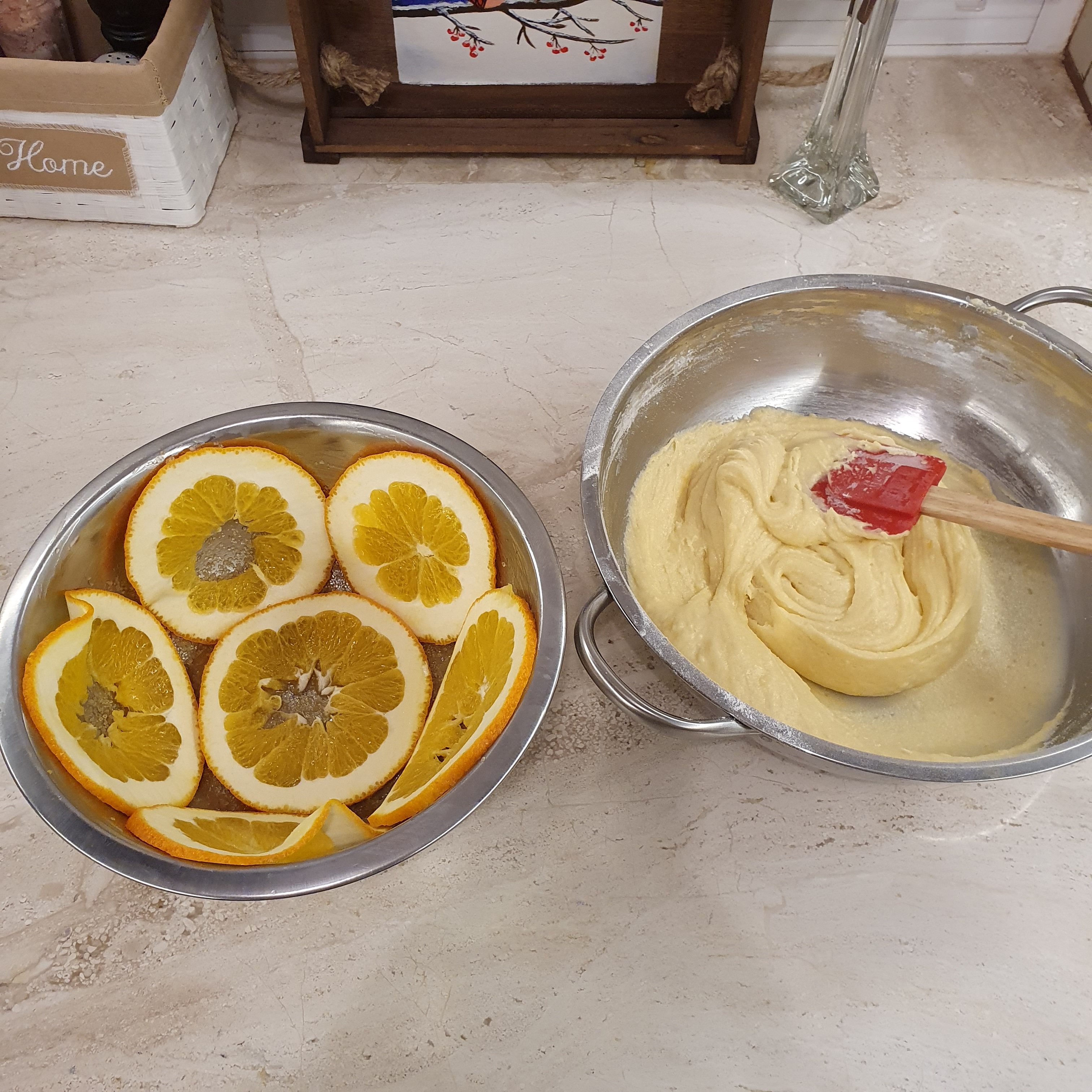
Grease the bottom and walls of a 2 liter bowl with melted butter. Sprinkle with brown sugar and try to cover everywhere. Cut the orange into 3 mm thick slices and cover the bottom and walls of the bowl.
Beat the butter with the sugar until fluffy. Add the eggs one by one, beating until smooth. Mix the two types of flour and alternately with the milk add it to the butter mixture. Finally, add the orange peel. Pour the mixture into the bowl.
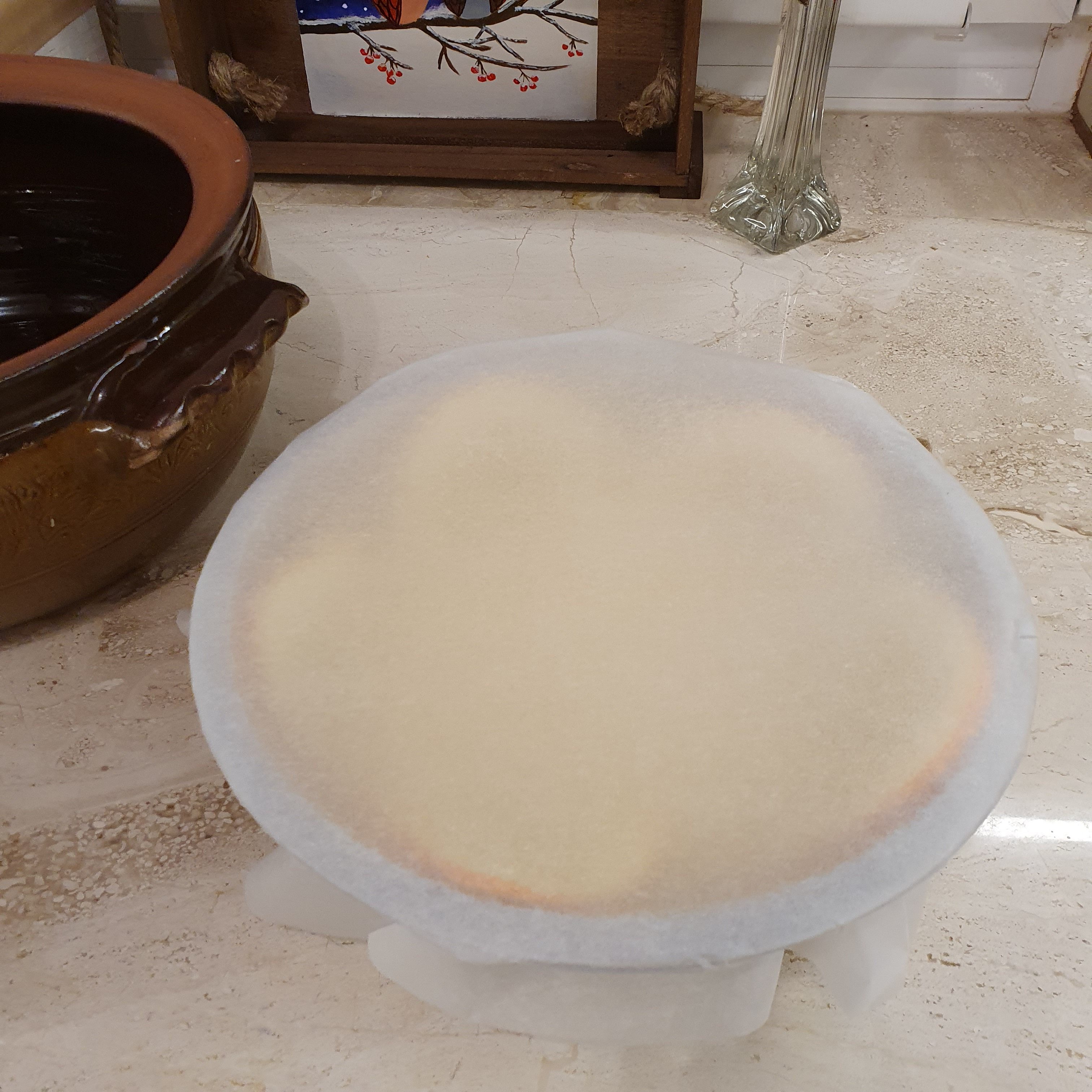
Put baking paper on the bowl and tie with kitchen thread, but make sure there is room, because the mixture will swell.
The original recipe states that the bowl should be placed in a saucepan and boiled. Only I don’t have such a big and wide pot and I have nothing left but to use the available one, namely a clay pot. 😀
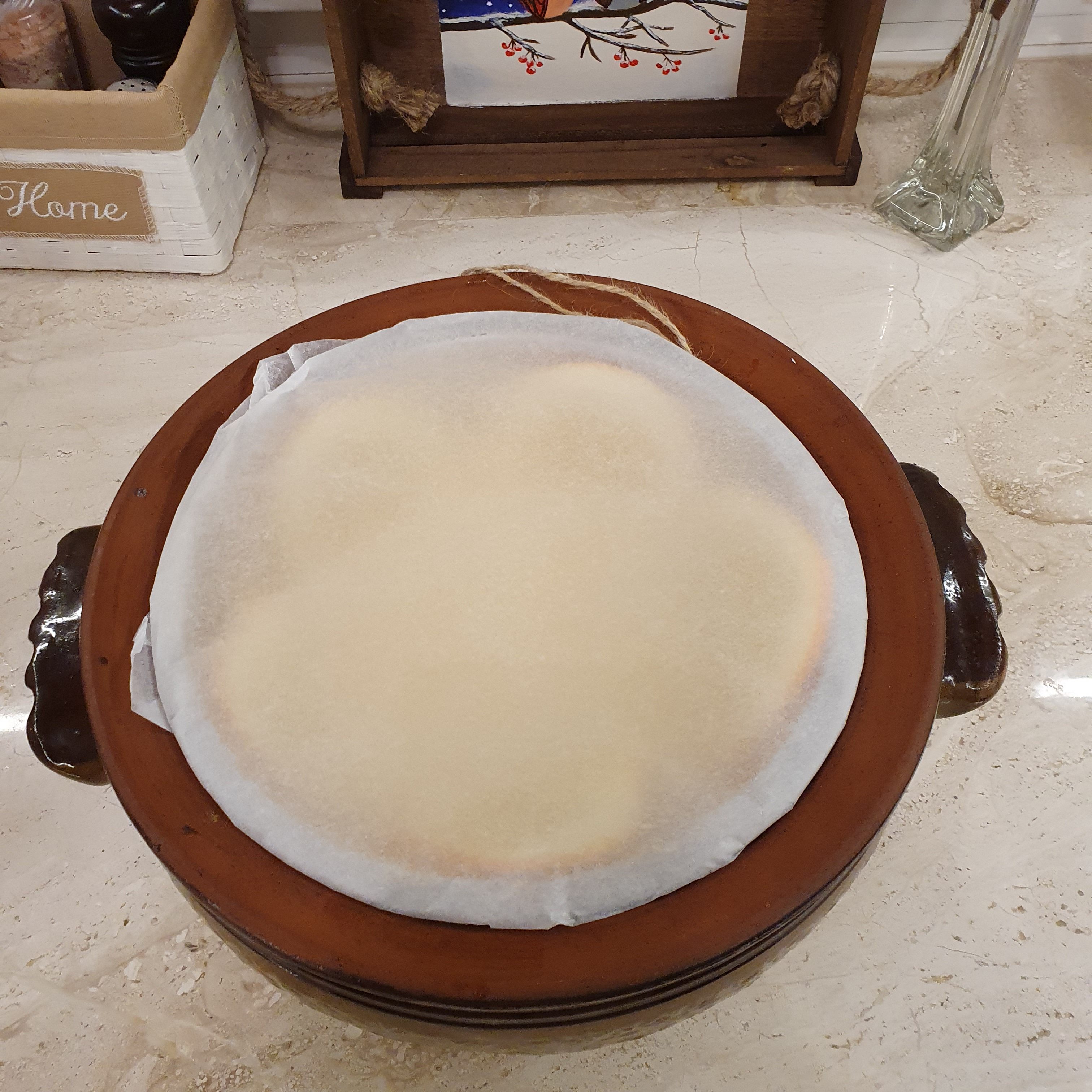
Before placing the bowl, pour boiling water. Put the lid on and boil for an hour, adding boiling water if necessary. I didn’t put the casserole on the stove, but in the oven, because I thought it would be better that way. If I had a suitable pot I would use the hot plate.
Carefully remove the bowl and remove the baking paper.
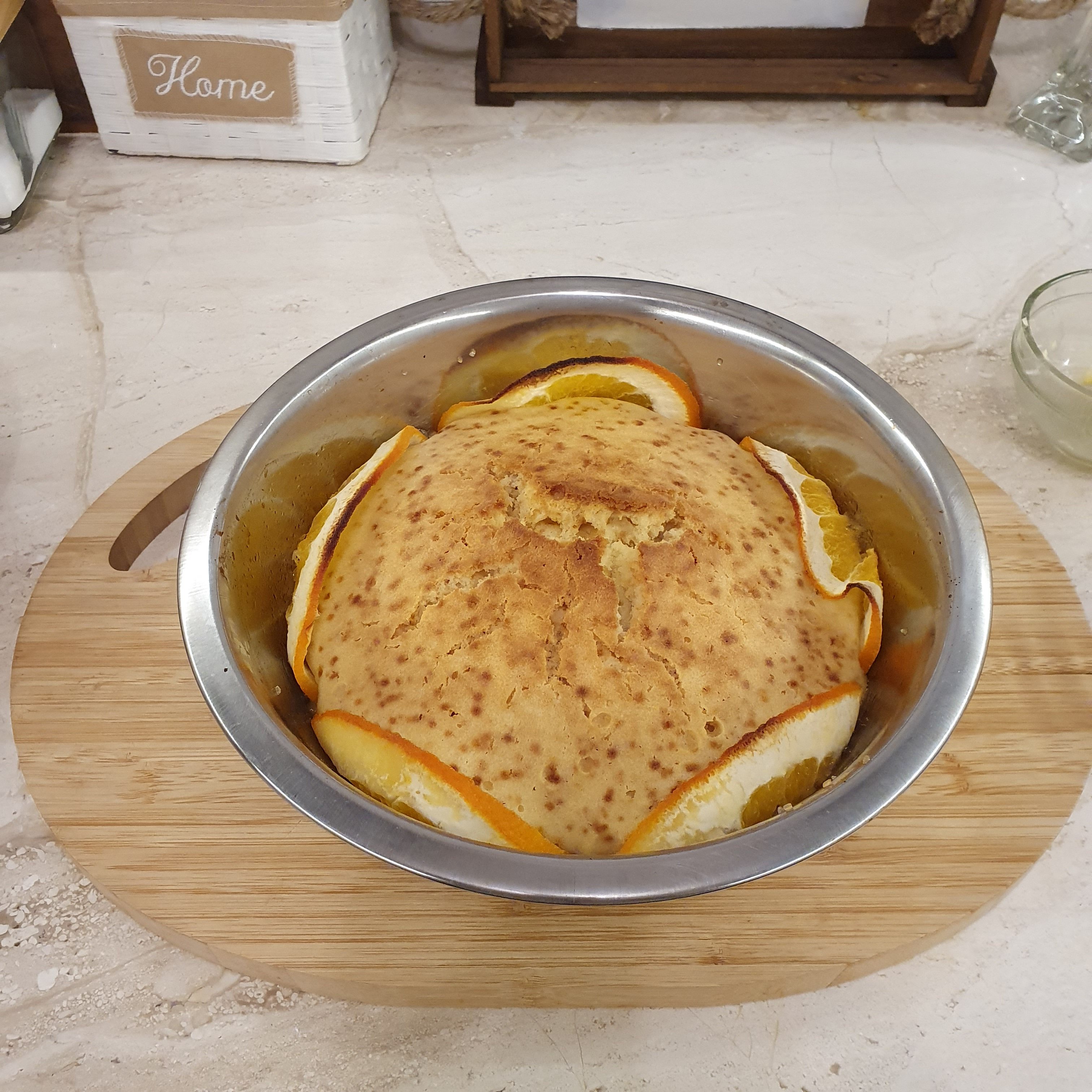
I had no idea if the cake was baked or not. I baked absolutely blindly and I was really curious what happened. Well, it was baked. 😀 And it looked promising. 😉
While it cools, make the caramel sauce. Bring the butter, sugar and molasses to a boil and cook until the sugar melts and thickens. Remove from the heat and add the rum.
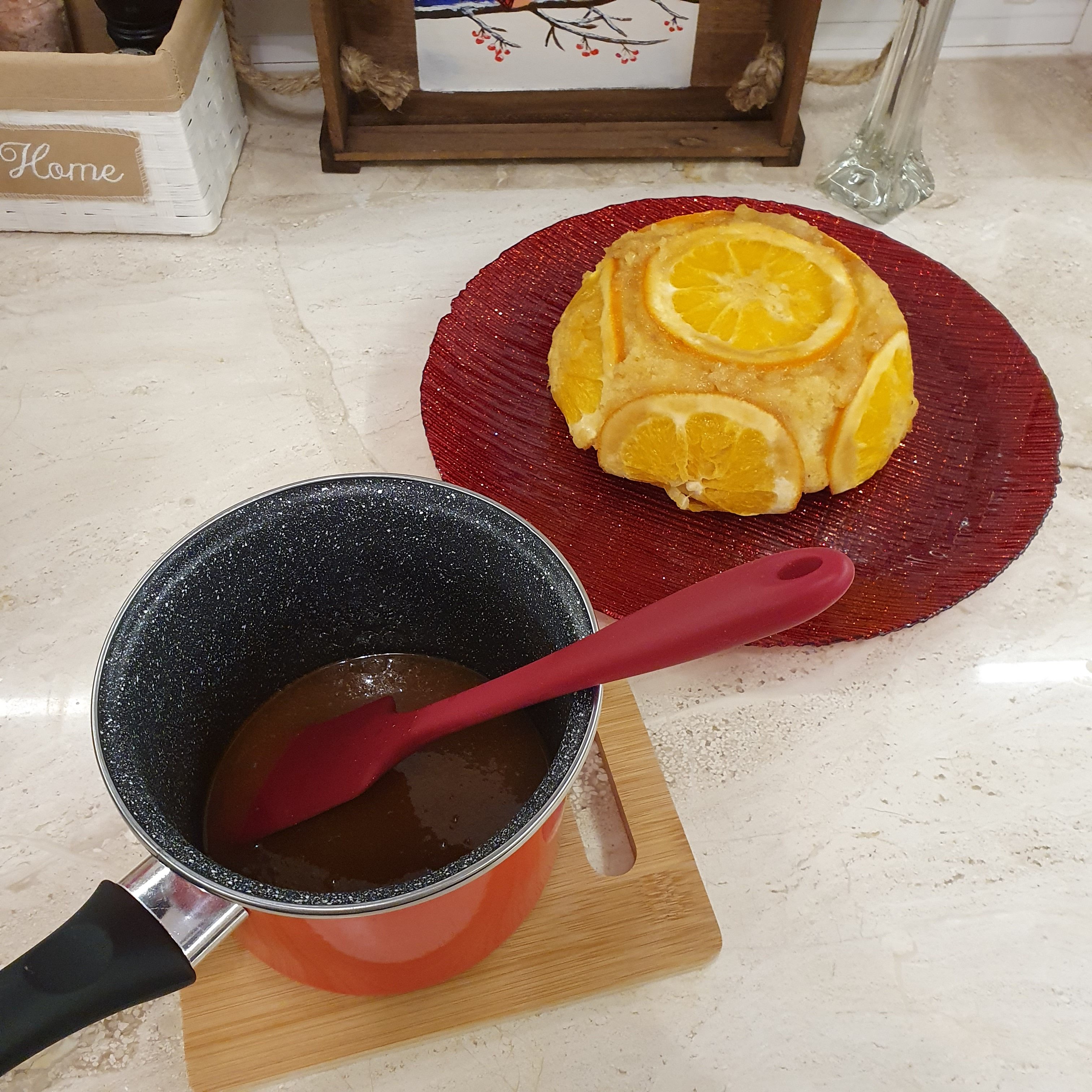
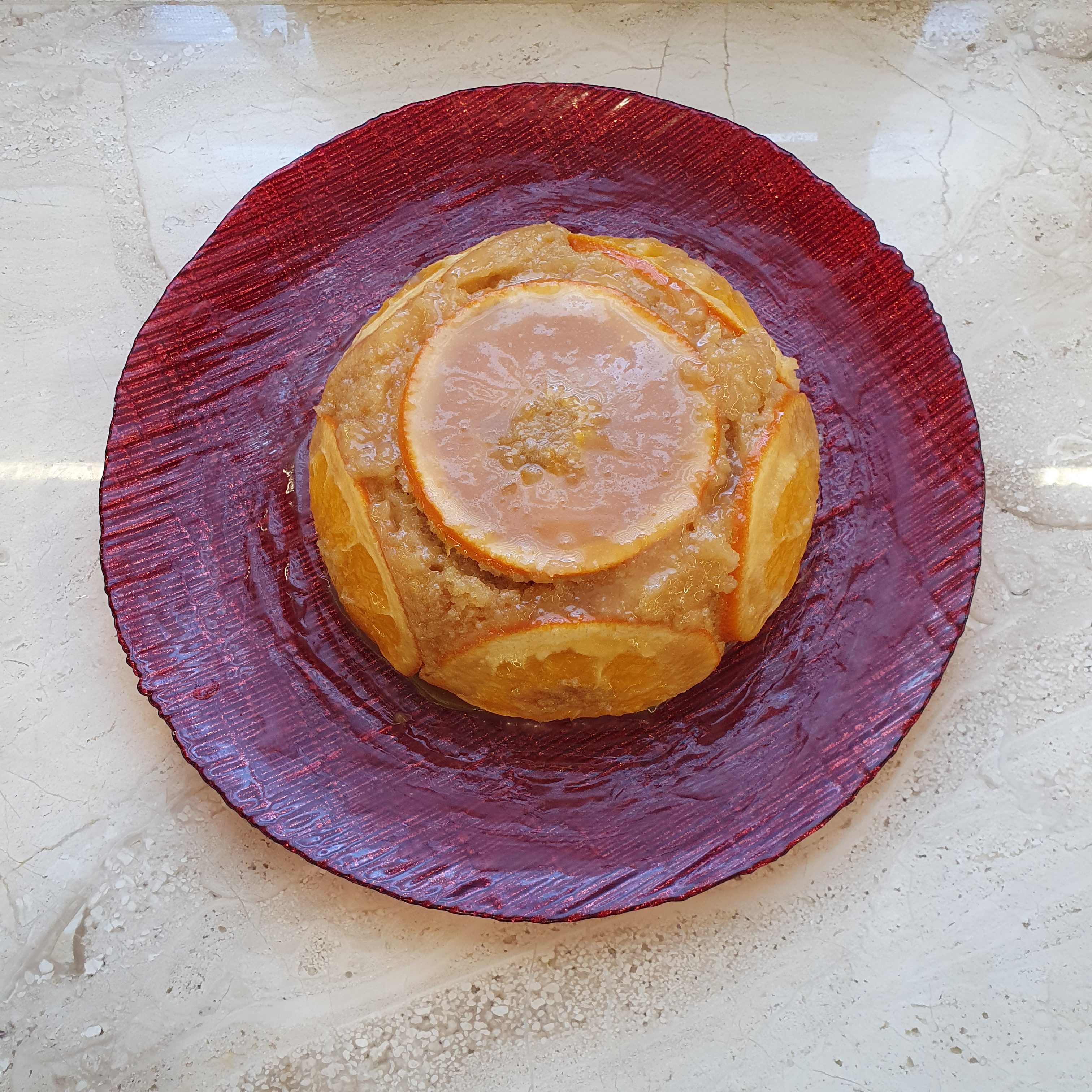
Turn the cake on a serving platter and when it has cooled completely, pour the sauce over it.
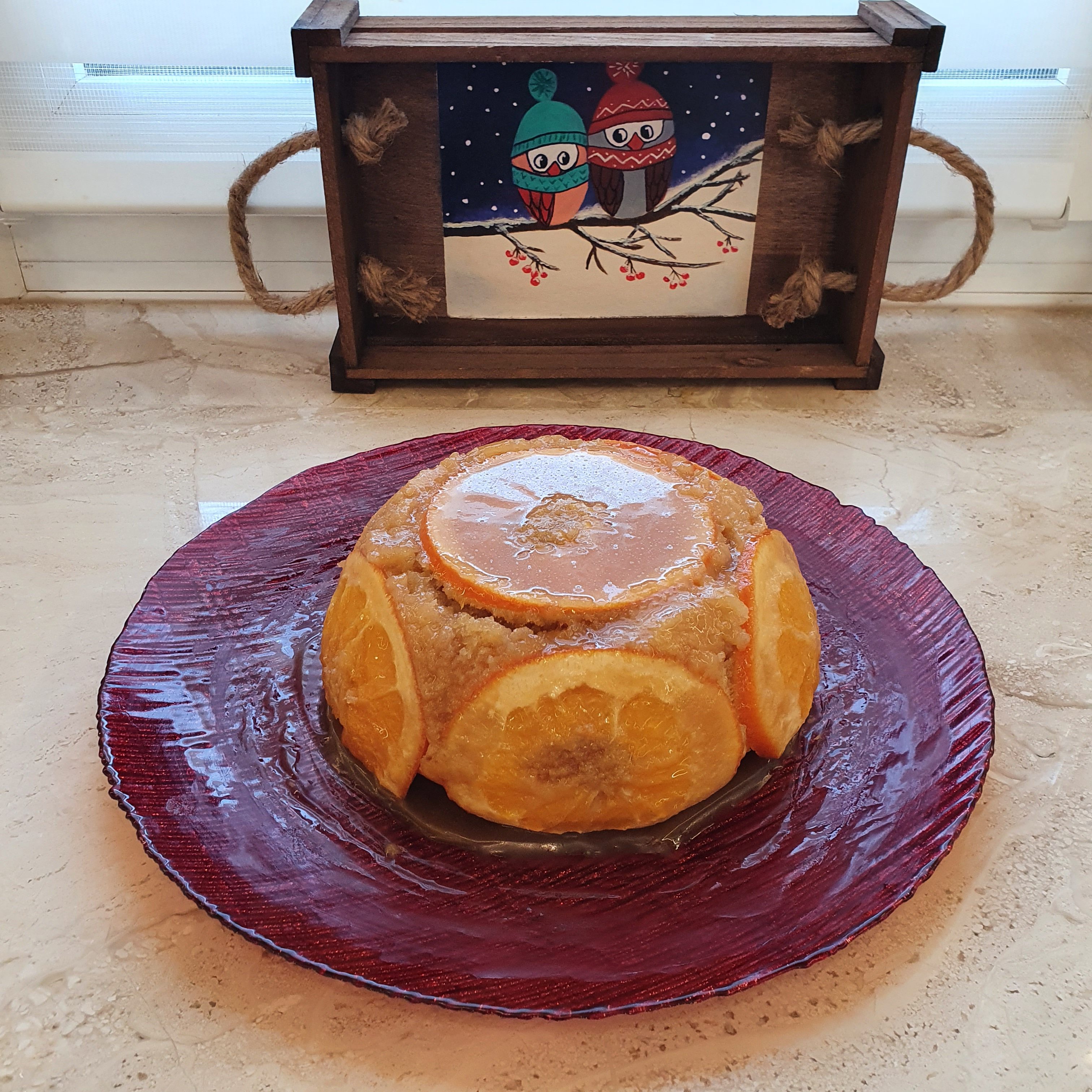
That is all. The cake has a pronounced citrus flavor, but also a rich aroma of molasses, butter and rum. One such cozy and post-Christmas thing is happening to your soul… This year I exposed myself and missed a week of writing on the blog, but I have an excuse 😀. I made so many Christmas cookies that there was no time left for the cake. I thought of making only two, three types, but in the end it seemed to be 6 🙂 🙂 🙂 Not that there were dissatisfied and not that there was anything left 😉 I love Christmas perhaps the most of all holidays. It is so warm and cozy in my soul. The whole family together, the great aromas from the kitchen, the festive tables, the lights from the Christmas tree and the fireplace, the sparkle in everyone’s eyes when they fiercely unpack their presents and then the smiles on their faces. Priceless! This is the last cake for 2020. A strange year – isolation, fear, almost no travel, work from home, disinfection a hundred times a day, reduced meetings with family and friends… Sad… I want the new 2021 to be totally different! Let’s get our normalcy back! Let’s smile more! Let’s travel! That’s why I wish you health! And we can get vaccinated soon, and then it should be easy. 🙂
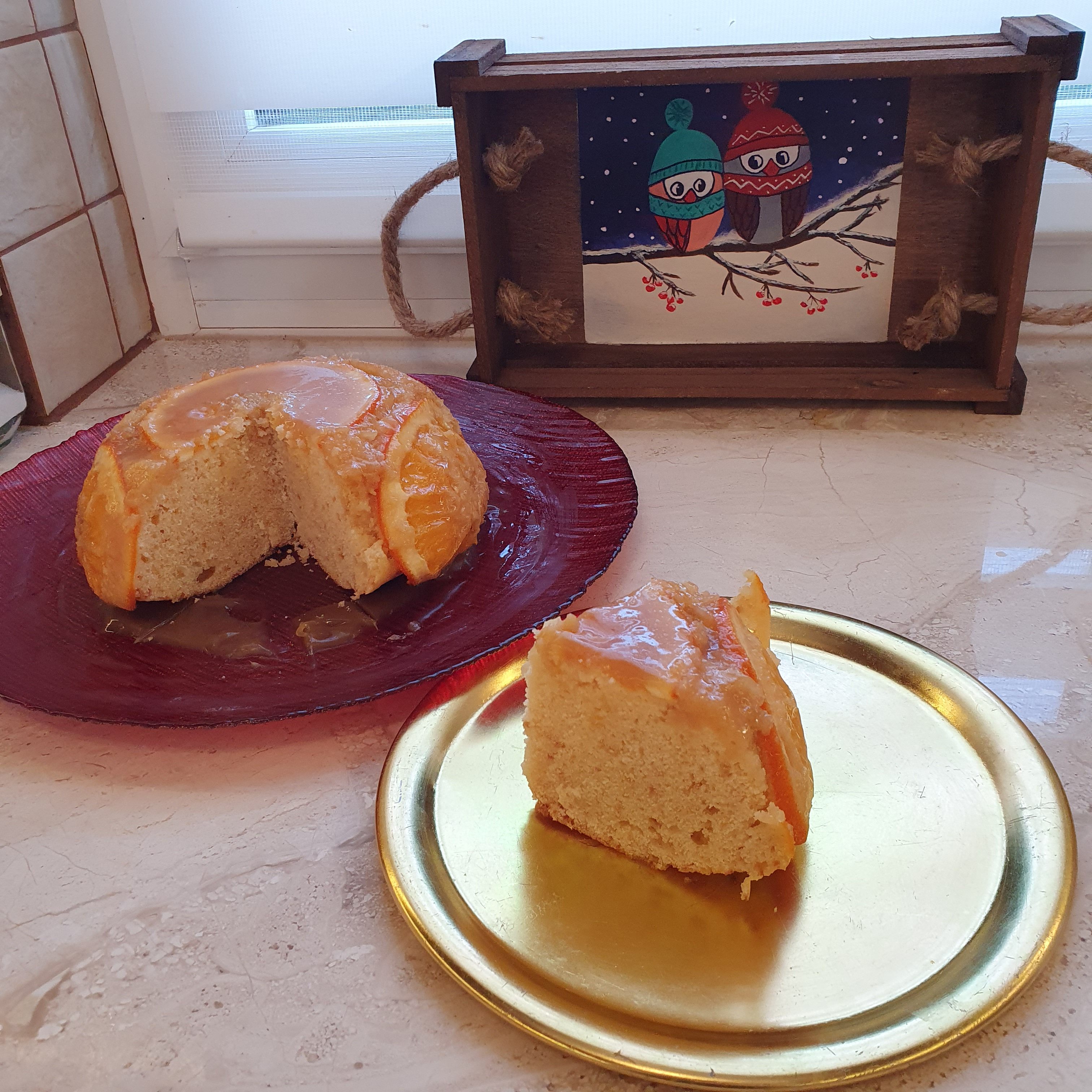
Be healthy and love each other! Until new meetings in 2021.
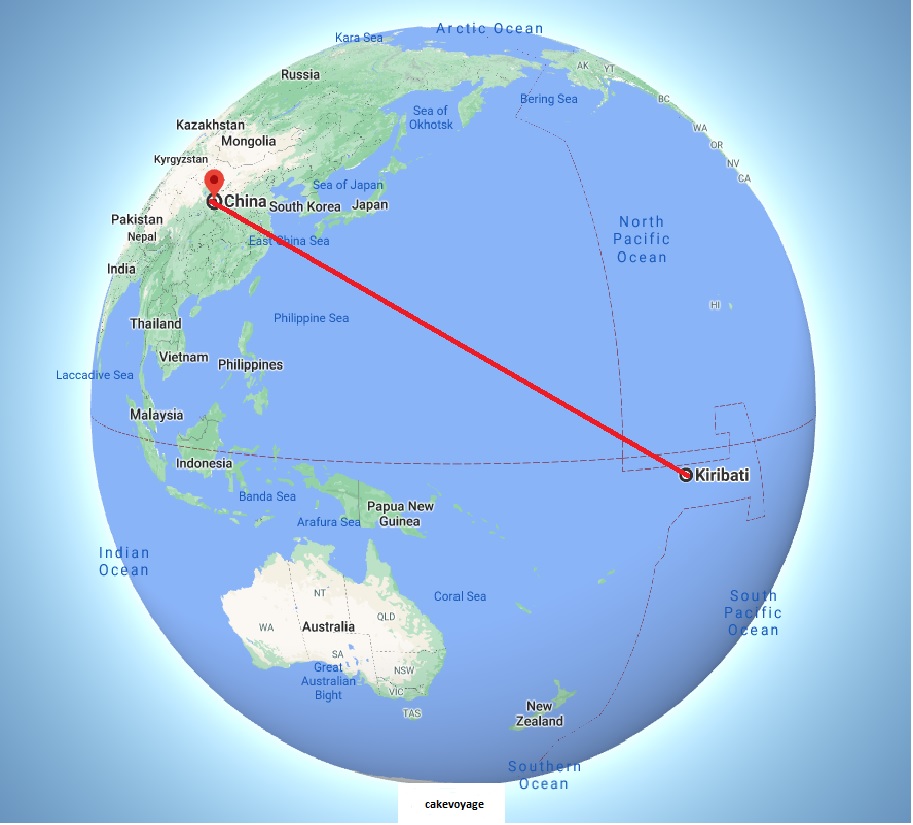
Next destination – China.

Thank you very much for the information provided
I really enjoy the article.Really looking forward to read more. Fantastic.